What are Custom Vape Boxes? TL;DR: Custom vape boxes need two separate types of compliance. The CPSC requires child resistant packaging for open e-liquid bottles under the Child Nicotine Poisoning Prevention Act. The FDA requires a nicotine warning label and PMTA authorization for the product itself. Packaging Ship builds both, starting at 50 units with no minimum order. Table of Contents At Packaging Ship, we’ve built packaging for regulated brands, vape, CBD, and tobacco companies, for years. Here’s what actually matters before you order your next batch of packaging. How do you define Custom Vape Boxes? Custom vape boxes are printed cartons and mylar pouches built to hold vape cartridges, pods, and disposable devices. In 2026, US brands need packaging that meets FDA labeling rules and CPSC child resistant standards, while it still looks sharp on a shelf. Good packaging protects your product and keeps your brand legal. Do Vape Boxes Need Child Resistant Packaging? Not every vape box needs child resistant packaging. That rule comes from the Child Nicotine Poisoning Prevention Act, a law the Consumer Product Safety Commission enforces, not the FDA. It covers open e-liquid bottles. If a child can reach the liquid during normal use, the container must pass CPSC testing under 16 CFR 1700.15 and 1700.20. Sealed, prefilled cartridges and disposable pens usually skip this rule. The liquid stays locked inside during normal use, so most disposable vape packaging falls outside the child resistant requirement. Many brand owners miss this detail. Some pay for testing they don’t need. Others skip testing they actually need. One study from Nationwide Children’s Hospital tracked poison control calls and found child exposure to e-cigarettes and liquid nicotine jumped 1,500 percent between 2012 and 2015. That data pushed lawmakers to pass the child resistant packaging law in the first place. Packaging Ship builds child-resistant vape cartridge boxes that pass CPSC testing without hiding your branding under bulky hardware. FDA Packaging Rules for Custom Vape Boxes in 2026 The FDA controls a different part of the box. Every vape package must carry the required warning statement: “WARNING: This product contains nicotine. Nicotine is an addictive chemical.” That text must cover at least 30 percent of each main display panel, in bold sans serif type, with strong color contrast, per FDA labeling requirements. The FDA also runs the PMTA process. This is the marketing authorization a vape product needs before it can legally sell in the US. As of May 2026, the FDA had authorized 45 e-cigarette products, and it updated its enforcement guidance to focus on products with no PMTA on file, youth appealing designs, or packaging that looks like candy or toys. Your box design and your PMTA status are two separate things, but they work together. Compliant packaging can’t save an unauthorized product. And a great product can still get flagged for weak, misleading packaging. Custom Vape Boxes: Types and Materials for US Brands US vape brands order custom vape boxes in a few core styles. Cartridge boxes hold prefilled pods and carts. Mylar bags protect loose pods and small parts from moisture and light. Tuck end cartons work well for disposable pens sold at gas stations and smoke shops. Here’s a quick breakdown of which style fits which product, and whether child resistant packaging applies: Box Type Best Material Child Resistant Needed? Typical Use Cartridge Box Rigid or cardboard Only if the cartridge is open or refillable Prefilled pods and carts Disposable Vape Carton Cardboard or kraft Usually no, sealed cartridge exemption applies Gas station and smoke shop disposables E-liquid Mylar Bag Mylar Yes Loose bottles and refill pouches Vape Pen Tuck Box Kraft or cardboard Depends on the cartridge type inside Starter kits and vape pens Cardboard and Mylar Choices for Custom Vape Boxes Cardboard suits lightweight, single use items. Rigid board adds a premium feel for higher priced kits. Kraft stock gives a natural look that many younger buyers trust more than glossy, plastic looking finishes. Packaging Ship offers custom vape cartridge boxes in cardboard, kraft, and rigid stock, plus matte, gloss, and soft touch finishes. You can also browse the full vape packaging options to compare styles before you request art. FAQs Question Answer Do vape boxes need to be child resistant? Only if the box holds open e-liquid a child could reach during normal use. Sealed disposables are usually exempt. What does the FDA require on vape packaging? A nicotine warning statement on at least 30 percent of each main display panel, plus PMTA authorization for the product. What is the minimum order for custom vape boxes? Packaging Ship ships custom vape boxes starting at 50 units, with no minimum order required. Can disposable vape packaging skip child resistant testing? Most sealed, prefilled disposables qualify for the exemption since the liquid isn’t accessible during normal use. How long does custom vape packaging take to produce? Standard production runs 7 to 10 business days after you approve your free design proof. Vape Packaging Pricing and Timelines Custom vape boxes usually start under a dollar per unit at low volume, and the price drops as your order grows. There’s no die charge and no plate fee added at checkout. Most brands finish production in 7 to 10 business days, with rush options available. If you want an exact number for your box size and quantity, get a free quote before you commit to a print run. Get Your Free Vape Packaging Quote Stop guessing on compliance and start shipping boxes that protect your brand. Packaging Ship builds custom vape boxes that are child resistant and FDA ready, with no minimum order and free US shipping. Request a Free Estimate → Final Thoughts Custom vape boxes do more than hold your product. They carry your compliance record on every panel. Get the CPSC and FDA pieces right, then let the design do the selling. Packaging Ship handles both sides, compliant construction and sharp branding, starting at 50 units with free design support and fast US shipping.
Soy-Based Inks on Packaging: What the Label Means and Why It Matters What Is Soy-Based Ink in Packaging? (2026 Quick Answer) Soy-based ink replaces some or all of the petroleum oil in printing ink with soybean oil. It is not automatically food safe, and it is not 100 percent soy either. The American Soybean Association sets the real minimum, and that number changes by print method. Knowing it helps you ask sharper questions before your next order ships. In this article: A customer once asked our team a simple question. Is the ink on this box food safe? Nobody on the call had a clean answer ready. That gap sent us digging into what soy based inks packaging labels actually promise, and what they quietly leave out. If you’re already comparing box materials, print methods, or suppliers before you order, this is one more line item worth checking. As a custom packaging manufacturer that prints with soy-based ink on request, we think you deserve the same clear answer our own team had to go find. Is Soy-Based Ink Food Safe? Soy-based ink is not automatically food safe. Food safety depends on the whole packaging system, not just the ink. The FDA regulates any material that touches food directly, including coatings, adhesives, and the substrate underneath the print, not the ink alone. So a soy-based label tells you the oil source changed. It does not tell you the box passed food-contact testing. That’s the real test behind any food safe packaging ink claim. If your product touches the printed surface, ask your supplier for the food-contact rating in writing, not just the soy claim on its own. Soy-Based Inks in Packaging: The Real Percentage Here’s the fact that almost nobody states clearly. The American Soybean Association runs the SoySeal certification, and its published standards set different minimum soybean oil percentages depending on the ink type. Sheet-fed offset ink needs at least 20 percent soybean oil to carry the seal. Heat-set ink only needs 7 percent. Color news ink needs 30 percent. So soy-based is not one fixed number, it’s a range, and the range is public record. Separate research from the USDA’s Agricultural Research Service found a soy-oil formulation for heat-set web printing running past 50 percent soy oil, well above the licensing minimum, and that soy-based ink breaks down roughly five times faster than standard petroleum ink. That gap between the legal floor and what a formulation can actually hold is exactly why the SoySeal license number is worth asking for by name, not just the word soy. What to Check Before You Order Soy-Based Ink Packaging Once you know the standard exists, the real work is asking your supplier the right questions before you commit. Here’s what that conversation should cover, whether you’re comparing options for retail packaging or placing a first custom box run. What to Ask Your Supplier Why It Matters What a Good Answer Sounds Like Can you show your SoySeal license number? Confirms the soy percentage claim is certified, not just marketing A specific license number tied to the American Soybean Association Is the ink rated for food contact? Soy-based does not equal food safe on its own A written food-contact compliance statement, not a verbal yes Which print method will you use? Offset and digital carry different soy oil minimums A direct answer naming the method and its minimum percentage Does it work with my box material? Soy ink performs differently on kraft versus coated stock Confirmation your specific stock has been tested with soy-based ink Will pricing change for soy-based ink? Cost varies by supplier, not just by ink type A clear line item in your quote, not a vague upcharge Soy Ink vs Petroleum Ink: What Actually Changes Soy ink swaps petroleum oil for soybean oil as the main carrier for pigment. That single change affects a few things buyers actually care about. Color tends to run brighter, since soybean oil is more transparent than petroleum oil, so pigment shows through more clearly. Cleanup during printing runs faster too, and soy-based ink separates from paper fiber more easily during recycling. Volatile organic compound output tends to run lower, though the EPA does not treat vegetable oil the same as a fully VOC-free material. So low VOC is the accurate claim for any VOC ink packaging comparison, not zero VOC. Drying time can run a little slower than petroleum ink on some high-speed presses. That’s a real tradeoff worth knowing, not a reason to avoid it for most box printing. Both offset and digital count as a legitimate eco packaging print method once soy-based ink is specified correctly on the order. Where Soy-Based Ink Shows Up in Packaging Soy-based ink shows up across cosmetic cartons, food boxes, and specialty items like custom incense packaging and custom cube boxes, wherever color needs to stay sharp on kraft or cardboard stock. It pairs especially well with kraft-based formats. Custom kraft pillow boxes, for example, already lean into a visibly natural look, and a soy-based print keeps that same honest, unbleached feel instead of fighting it with a glossy petroleum-ink finish. For eco packaging soy ink custom boxes wholesale USA orders, this pairing between material and ink is often what a customer notices first, long before they ever read the fine print on the label. Get Packaging Backed by Real Standards You now know more about soy based inks packaging than most labels ever tell you. If your next order needs proof, not just a green claim, get a free estimate and ask us directly about soy-based ink on your run. Conclusion Soy-based ink is a real, documented standard, not a marketing word. It replaces petroleum oil with soybean oil, it changes by printing method, and it still needs a food-contact check before it touches food directly. That’s the honest version of soy based inks packaging, and it’s the version worth asking your next supplier for. FAQs About Soy-Based Ink Question Direct Answer Is soy-based
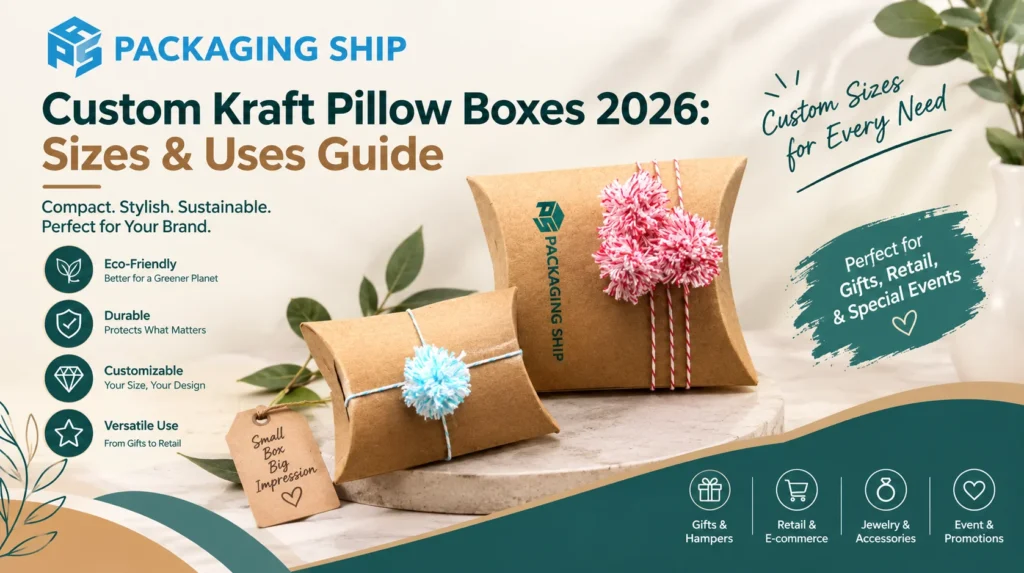
Custom Kraft Pillow Boxes: Sizes, Uses, and Why Small Brands Love Them What Are Custom Kraft Pillow Boxes in 2026? Custom kraft pillow boxes are curved, self locking boxes made from brown kraft paper stock, used to package small products like candles, soap, jewelry, and gift items. The curved shape comes from a die cut fold line, not glue, so the box holds itself shut. Small brands work with manufacturers like Packaging Ship because these boxes cost less than rigid packaging, ship flat, and still look intentional when printed with a logo instead of left plain. This isn’t a niche shift. The global paper packaging market, valued at roughly $416 billion in 2025, is projected to climb to more than $611 billion by 2033 as brands move away from plastic-based formats, according to Grand View Research. Kraft-based formats like the pillow box sit right in the middle of that shift, since they combine the recyclability buyers want with a die-cut structure that skips the extra cost of rigid packaging. Table of Contents What Is a Kraft Pillow Box A pillow box gets its name from its shape. Picture a small couch cushion made of paper, rounded on the ends, flat in the middle. The kraft version uses uncoated, unbleached paper, so it keeps a natural brown, textured finish instead of the bright white you see on coated cardstock. Here is the part most product pages skip. The curve is not decorative. It comes from a die cut line that lets the paper fold in on itself and lock shut using two tabs, no glue and no tape needed. That is why pillow boxes assemble in seconds and why they ship flat before your first order goes out. Standard Custom Kraft Pillow Box Sizes Sizing is the question most buyers get stuck on before they ever request a quote. Below are the sizes that show up most often across US packaging suppliers. Size Category Approximate Dimensions Best For Small 3″ x 1″ x 5″ Earrings, rings, small favors Medium 4″ x 1.1″ x 6″ Soap bars, candles, cosmetic samples Large 5″ x 1.25″ x 7″ Bath bombs, hair accessories, gift sets Extra Large 7″ x 2″ x 9″ Apparel accessories, bundled gift kits Because pillow boxes are die cut, you are not locked into these numbers. Packaging Ship builds custom pillow boxes in the exact length, width, and depth your product needs, so a candle brand and a jewelry brand never end up ordering the same off the shelf size and hoping it fits. What Products Are Kraft Pillow Boxes Used For Candle and bath product brands use pillow boxes because the curved shape cradles round items without shifting during transit. Soap makers like them for the same reason, plus the kraft finish reads as natural, which matches the product inside. Jewelry sellers use the smallest sizes for single item gifting, especially around holidays. Bakeries and small gift shops use them for cookies, favors, and other lightweight treats that do not need rigid protection. Kraft pillow boxes are not the only packaging style getting a second look from small brands this year. Businesses in more regulated categories, including tobacco accessory sellers, are seeing a similar shift toward custom kraft cigarette boxes that carry proper branding and required warning space without looking mass produced. The buying logic is the same in both cases. A generic box makes a well made product look like an afterthought. Pillow Box vs Tuck Box vs Mailer Box Buyers often land on this keyword before they have actually decided the pillow is the right style. Here is the honest comparison. A tuck box is rectangular and folds flat with a tuck in flap, better for stacking products on a shelf. A pillow box is curved and better for gifting or single item presentation. A mailer box is a full corrugated shipping box, built for products that travel through FedEx or UPS rather than sit on a countertop. If your product ships directly to a customer’s door in bulk quantities, custom mailer boxes are usually the better fit. If it is a small, giftable item sold in person or added to an order as a bonus, the pillow box wins on presentation per dollar spent. Feature Pillow Box Tuck Box Mailer Box Shape Curved, cushion-style with rounded ends Rectangular, flat-folding Rigid, corrugated Closure Self-locking die-cut tabs, no glue or tape Tuck-in flap Tape, adhesive strip, or glued seams Ships Flat Yes Yes Mostly no, arrives pre-formed Best Setting Gifting, in-person retail, single-item presentation Shelf-stacked retail display Direct-to-door courier shipping Product Protection Light, best for non-fragile items Light to moderate High, built for transit Typical Material Uncoated kraft paper stock Coated or kraft cardstock Corrugated fiberboard Cost per Unit Lowest Low to moderate Highest Common Use Case Candles, soap, jewelry, favors Cookies, cosmetics, small retail SKUs Apparel, electronics, bulk D2C orders The Real Problem With a Plain, Unbranded Pillow Box Here is the pain point most packaging sites never say out loud. A plain, unprinted kraft pillow box from a craft store looks fine on its own. Next to a competitor’s fully branded box, it reads as an afterthought, something assembled by hand at the last minute rather than a real product line. This matters because packaging influences buying decisions more than most founders assume. In a global study developed with Boston Consulting Group, Trivium Packaging found that nearly three-fourths of consumers say they would pay more for a product that comes in sustainable packaging, and roughly one in four of that group would accept a price increase of 10 percent or more. A plain box does not get you that lift. A printed logo, a custom size, and a clean fold line do and a kraft finish gives you the sustainable look buyers are already primed to reward. Ready to move past the plain, hand assembled look? Get a free quote and see real pricing for your product before you commit to anything. What to Check Before
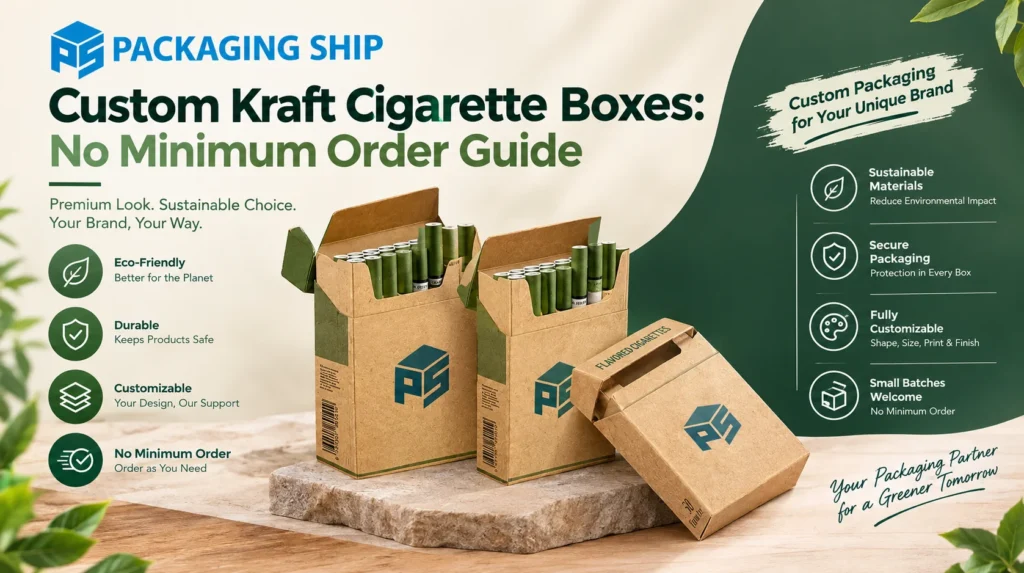
Custom Kraft Cigarette Boxes: Compliance, Print Clarity, and Small-Run Ordering TLDR: Kraft prints warmer than coated board, so your art file needs small changes before it goes to press. Your box also needs real space for the FDA warning statement and, in some states, a tax stamp. Packaging Ship offers custom kraft cigarette boxes wholesale USA no minimum, starting at just 50 units, with a free proof that catches these issues before printing. Table of Contents What Are Custom Kraft Cigarette Boxes in 2026? Custom kraft cigarette boxes are cigarette packs made from natural, unbleached paperboard instead of coated white stock. They sit inside the wider custom cigarette boxes category, but the material changes how ink and print behave. In 2026, this style is popular with small tobacco brands, herbal cigarette makers, and hemp and CBD cigarette producers who want a natural, honest look. Popular Kraft Cigarette Box Styles Not every kraft cigarette box is built the same way. The style you pick affects paper weight, cost, and how the box holds up in daily handling. Here’s a quick look at the most common options. Box Style Paper Weight Best For Minimum Order Flip top kraft box 250 to 300 GSM Everyday packs 50 units Slide and shell kraft box 300 to 350 GSM Premium feel 50 units Hinged lid kraft box 350 GSM and up Sturdier, reusable 100 units Kraft mylar pouch Laminated film Herbal and CBD lines 50 units Why Kraft Paper Prints Differently The paperboard you choose is more than a cigarette box material decision. Kraft fiber is uncoated, so it soaks up ink instead of holding it on top. That is why a logo that looks sharp on screen can bleed slightly at the edges once it hits kraft stock. Dark colors like navy or deep green also read warmer on kraft than on white board. That’s just how the material behaves. Choosing Paper Weight for Custom Kraft Cigarette Boxes Paper weight matters just as much as ink. Offset printing, used for orders over 500 units, needs heavier stock so ink does not smear before it dries. Digital printing, common for orders between 50 and 500 units, usually works better on a lighter, smoother sheet. Picking the wrong weight for your print method is a common reason a first run disappoints a new brand. Kraft vs Standard Paper Cigarette Boxes Kraft and standard paper cigarette boxes share a lot, but they are not the same product. Standard paper cigarette boxes run on coated stock, so colors print bright and close to what you see on screen. Kraft trades some brightness for a natural, recycled look buyers connect with quality over mass production. Premium brands often fit better on standard paper cigarette boxes, while natural or eco conscious brands tend to pick custom kraft cigarette boxes. The Compliance Space Your Box Needs Every cigarette pack sold in the US needs a nicotine warning statement under federal law. This is a fixed design element on any kraft tobacco packaging, not an afterthought. According to the FDA, anyone who manufactures, packages, or imports cigarettes for sale in the US must comply with cigarette health warning requirements. A separate rule requiring larger graphic warnings has faced court challenges and was not in force as of late 2025. Many states add another layer. Oregon, for example, requires cigarettes to be sold in sealed packs of at least 20 sticks, each carrying a state tax stamp, according to the Oregon Department of Revenue. Rules vary by state, so confirm current requirements with compliance counsel before art goes to print. This is why custom kraft cigarette boxes need a supplier who checks compliance space during the proof. Custom Kraft Cigarette Boxes Wholesale USA No Minimum Most large manufacturers ask for 1,000 to 5,000 units before they will quote your design. That shuts out small brands who just want to test the market. Packaging Ship offers custom kraft cigarette boxes wholesale USA no minimum, starting at 50 units, so you can launch small and reorder once the design works. Every order includes a free design proof, so logo bleed, paper weight mismatches, and missing compliance space get caught before your boxes go to press. If you want to test the market first, get a free estimate and see real pricing for your exact size and quantity before you commit to a full run. E-Cigarette and Blank Box Options Kraft is not right for every product. If you sell vape pods rather than traditional cigarettes, custom e-cigarette boxes usually need different features, like slimmer trays or battery compartments. If you are still finalizing artwork, ordering blank cigarette boxes first lets you test size and fit by hand before a full printed run. FAQs Question Answer What is the minimum order for kraft cigarette boxes? Packaging Ship accepts custom kraft cigarette boxes orders starting at 50 units, with no minimum requirement. Do cigarette boxes need an FDA warning label? Yes. Federal law requires a nicotine warning statement on cigarette packaging, and your layout should reserve space for it from the start. What paper weight works best for kraft cigarette boxes? It depends on your print method. Offset runs usually need heavier stock, while digital runs print cleaner on lighter kraft. Is kraft packaging actually eco-friendly? An eco cigarette box claim only means something when the paper carries real certification, like FSC, and not just a brown color. Ready to Order Your Kraft Cigarette Boxes? If your next run needs to be compliant, print ready, and small enough to test the market, this is the moment to get a real quote instead of guessing. Get Your Free Estimate Now → Conclusion Kraft suits brands that want a natural look, but it comes with print and compliance details most suppliers never explain. From ink absorption to warning label space to tax stamp rules, small details decide if your first run looks right. Packaging Ship, our factory in New York, has built custom kraft cigarette boxes for tobacco,
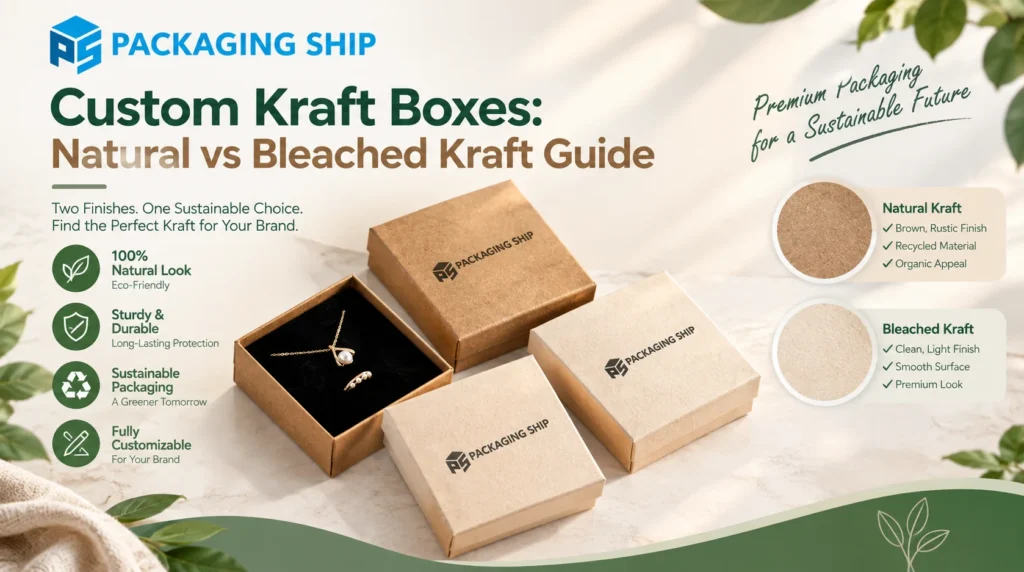
Custom Kraft Boxes: Natural vs Bleached Kraft, Which Is Right for Your Brand? What Are Custom Kraft Boxes in 2026? Custom kraft boxes are just packaging made from kraft paperboard, printed and cut to whatever size and shape your product needs. Natural kraft keeps its brown color because it skips the bleaching step entirely. Bleached kraft doesn’t skip it, and that extra chemical process is what turns the surface white. Print quality, strength, how eco-conscious you want to look, brands weigh all of that. But if we’re being honest, most of the time the real decision comes down to your artwork, not your budget. Table of Contents The Mistake Most Brands Make First One of our customers, a skincare founder, sent us a bold gold logo for her serum boxes. She’d seen a kraft box online that looked rustic and gorgeous in the photo, so she assumed natural kraft would do the same for her design. It didn’t. When the proof came back, the gold looked muddy and flat, and the fine print was almost unreadable. Our printing wasn’t the problem. She’d picked the wrong base material, full stop. Honestly, this happens all the time. People order custom kraft boxes thinking kraft is kraft, then get surprised when the proof looks nothing like what they pictured. It’s a small mistake on paper, but it can mean lost weeks and, sometimes, a reprint you weren’t budgeting for. This guide is here so you don’t end up in that spot. Natural Kraft vs White Kraft, the Real Difference Natural kraft is unbleached. That’s really the whole story. It still carries a bit of the natural lignin from the wood pulp, which is exactly what gives it that light brown color and slightly rough feel. Bleached kraft goes further. An extra chemical stage strips that lignin out completely, and what’s left is a smoother, whiter surface that’s basically built for printing. Neither one beats the other across the board, they just handle different jobs. Picking the right one really starts with looking at your kraft box options next to what your artwork needs. And for what it’s worth, this isn’t a dying market. The kraft paper boxes industry was worth around $17.6 billion in 2025 and it’s expected to keep growing into the early 2030s. Brands aren’t ditching kraft. They’re just getting choosier about which kraft they pick. Which One Prints Your Logo Better If your logo leans on bright colors, pastels, or really fine detail, bleached kraft is going to do it more justice. The white base just doesn’t fight your ink the way brown fiber does. Now if your brand is more earthy tones, black, or simple line art, natural kraft can pull that off just fine, and it won’t cost you any clarity. We tell every customer at Packaging Ship pretty much the same thing: pick bleached if your design depends on bright, accurate color, and pick natural if your brand leans rustic or minimal. Whichever way you go, get a physical proof first. Screens lie. They just don’t show you how ink actually sits on brown fiber until you’re holding it in your hand. Custom Kraft Box Specifications and Pricing Most buyers don’t think about specs until they’re already knee-deep in an order, and by then it’s a little late. So here’s what you should actually check before you sign off on anything. Product Specification Natural Kraft Box Bleached (White) Kraft Box Material Unbleached virgin or recycled kraft pulp Bleached kraft pulp, chemically processed Thickness 14pt to 24pt cardboard, or 2mm rigid kraft 14pt to 24pt cardboard, or 2mm rigid kraft Color Natural light brown White to off white Print Method CMYK offset or digital, up to 8 colors CMYK offset or digital, up to 8 colors Common Types Mailer boxes, tuck top boxes, pillow boxes, gable boxes Rigid boxes, display boxes, retail cartons Coating Options Matte, soft touch, water based inks Gloss UV, soft touch, gold foil, spot UV Starting Price From $0.20 per unit From $0.25 per unit Minimum Order 50 units, no minimum required 50 units, no minimum required Prices will shift depending on size, quantity, and finishing, that’s just how it works, but this gives you a solid starting point for budgeting. Strength and Durability Compared Most people think bleaching only changes color. It doesn’t. It changes strength too. The bleaching process shortens the wood fibers, and independent testing puts bleached paperboard at roughly 15 to 25 percent lower in tensile strength than unbleached kraft of the same weight. That’s not a small gap, especially for shipping boxes, heavier products, or anything going through a fulfillment center before it reaches someone’s doorstep. If your box needs to take a beating, a natural kraft, or a corrugated boxes structure, will give you a lot more room for error. Is Natural Kraft Actually More Eco Friendly Yes. Skipping the bleaching step means less water, less chemical processing, and less energy burned during production. It also takes recycled fiber more easily than bleached stock does. But “eco friendly” on its own doesn’t mean much unless there’s a certification behind it. Look for FSC kraft packaging specifically. FSC is short for the Forest Stewardship Council, and right now more than 150 million hectares of forest worldwide are certified under that standard, which traces the fiber back to forests that are actually managed responsibly. That’s something you can go check. It’s not just marketing language. And kraft fits into a much bigger pattern here. Brands aren’t treating eco friendly packaging boxes as a nice extra anymore, they’re building it into how they buy. Recycled corrugated stock, soy-based inks, biodegradable liners, you’ll see them everywhere now, because people notice, and they buy from brands that bother. Which Kraft Fits Your Industry Food and bakery brands usually go natural kraft, it reads as fresh and handmade, and it holds up fine once you add food contact coatings. Cosmetics is more of a coin flip: natural for clean beauty lines, bleached when
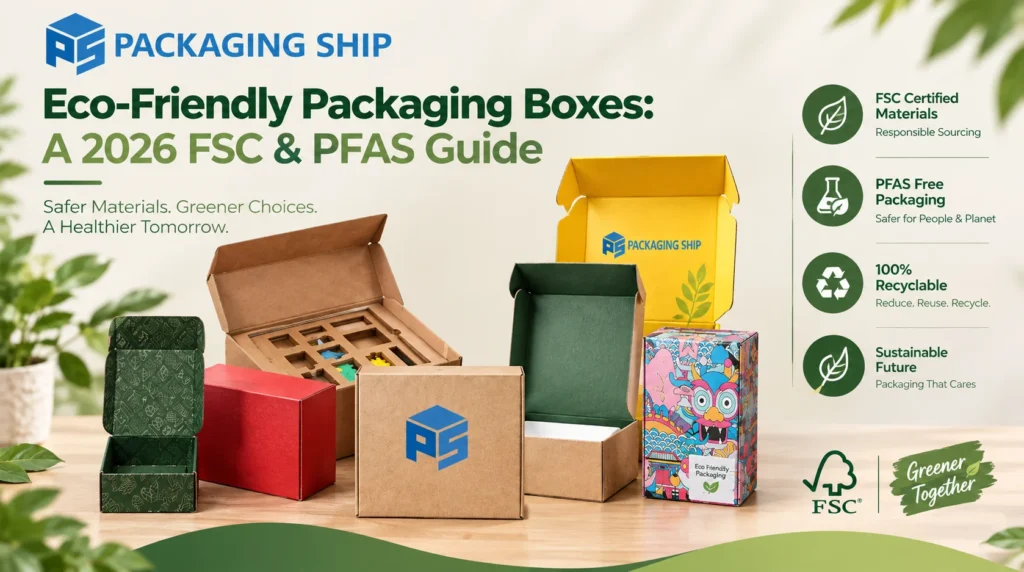
Eco-Friendly Packaging Boxes in 2026: What FSC, Recyclable, and Compostable Actually Mean for US Brands TLDR FSC, recyclable, and compostable aren’t interchangeable, and treating them like they are can land your brand in real legal trouble. Below: what each label actually proves, why unverified claims keep landing brands in court, and how to find a supplier who can back up whatever goes on the box. Table of Contents What Is Eco-Friendly Packaging in 2026? Eco-friendly packaging boxes are boxes made from certified, recyclable, or compostable material and that material has to meet a real, provable standard, not just look green. The word alone proves nothing. In 2026, US regulators and buyers care about what backs the claim, not the claim itself. A box is only as green as its paperwork. Why the Word Alone Isn’t Enough Anymore A small skincare brand I knew of in New York once printed “eco-friendly” on ten thousand boxes before it occurred to anyone to ask the supplier for the license number behind that FSC logo. Nobody checked. The claim wasn’t backed by anything. That gap between what’s printed and what’s provable is exactly where brands get hurt in 2026. The FTC has said as much for over a decade now. Its Green Guides are blunt about it, broad terms like “green” or “eco-friendly” are nearly impossible to prove, so marketers should stick to specific, provable claims instead of hiding behind the word itself. This isn’t a friendly suggestion; it’s the exact yardstick regulators reach for once they open a file on you. Which means the question worth asking isn’t whether your packaging is “eco-friendly.” It’s what your supplier can actually prove, on paper, if someone asks. Businesses researching this shift can start with Packaging Ship, where every certified material is documented before it ships. What FSC Certified Packaging Actually Verifies FSC is short for the Forest Stewardship Council, an independent nonprofit that certifies forests and the products that come out of them. When packaging is FSC certified, it means the paperboard has a documented paper trail back to a forest managed under set environmental and social rules. It doesn’t automatically mean the box is better for the planet in some broader, sweeping sense. Here’s the part most brands skip. FSC certification is issued to a supplier, with a license number attached to it. If a packaging partner throws around “FSC certified” and can’t hand over that number when asked, that’s your cue to walk. Browsing the full range of eco-friendly packaging options first lets you see exactly which materials carry the paperwork before you commit to a print run. Recyclable Packaging Boxes: The Fine Print A box only counts as recyclable if curbside programs where your customers actually live will take the material. Plain kraft and cardboard usually qualify. Foil laminated stock, glossy coatings, and mixed materials often don’t, no matter what the box says. Why it matters: slapping “100% recyclable” on something most facilities won’t take is exactly the kind of claim the FTC calls out as deceptive. Swap it for “recyclable where facilities exist” instead. It’s a small wording change with a real legal difference. Compostable Packaging in the USA: Two Very Different Things Compostable packaging USA claims split into two categories, and they are not interchangeable. Industrial compostable material, certified under the ASTM D6400 standard, breaks down in a commercial composting facility with controlled heat and moisture. Home compostable material breaks down in a backyard bin, a much higher bar. Most of the compostable packaging sold in the US falls into the industrial category, and most American households have no access to an industrial composting facility. That’s not really a reason to skip the material. It’s a reason to say so clearly on the pack. If you want a real example of this done right, look at custom compostable mailers, which are labeled for exactly the composting environment they’re built for. PFAS Free Packaging and the New State Laws PFAS free packaging has gone from a nice to have to a legal requirement in a growing number of states. As of 2026, roughly a dozen states, including California, Colorado, Connecticut, Maine, Maryland, Minnesota, New York, Oregon, Rhode Island, and Washington, restrict intentionally added PFAS in food packaging, with Maine’s rule for plant fiber food packaging taking effect May 25, 2026. If you sell food or cosmetics packaging into more than one state, this isn’t optional homework anymore. The Real Cost, and Real Upside, of Getting This Right The cost side is straightforward. Brands have faced class action lawsuits and FTC settlements running from tens of thousands to millions of dollars over compostable, recyclable, and carbon neutral claims they couldn’t back up. The fix is simple and cheap compared to the risk. Ask your supplier for the certificate, the license number, or the lab report before the word goes on your box, not after. Here’s the part most brands overlook: the upside. A 2026 consumer packaging survey of 1,000 Americans found 77% trust a brand more when the packaging looks eco-friendly, and nearly a third said they’d pay six to ten percent more for it. But that trust evaporates fast the moment a customer, or a regulator, actually checks the claim and it doesn’t hold up. Kraft Boxes, Soy Ink, and Vape Packaging, By Product Custom kraft boxes do most of the heavy lifting in sustainable packaging. They’re typically unbleached or lightly bleached paperboard in the 300 to 400 GSM range, work fine for retail, shipping, or food use, and can carry FSC eligibility when sourced the right way. Custom kraft cigarette boxes have to survive daily handling without losing shape, all while leaving room for the mandatory warning panels, and kraft stock still prints clean, sharp branding without the extra coatings that make a box harder to recycle. Custom kraft pillow boxes fold into shape without tools or glue and work well for samples, small gifts, and subscription add ons, since the format keeps shipping weight low while still looking
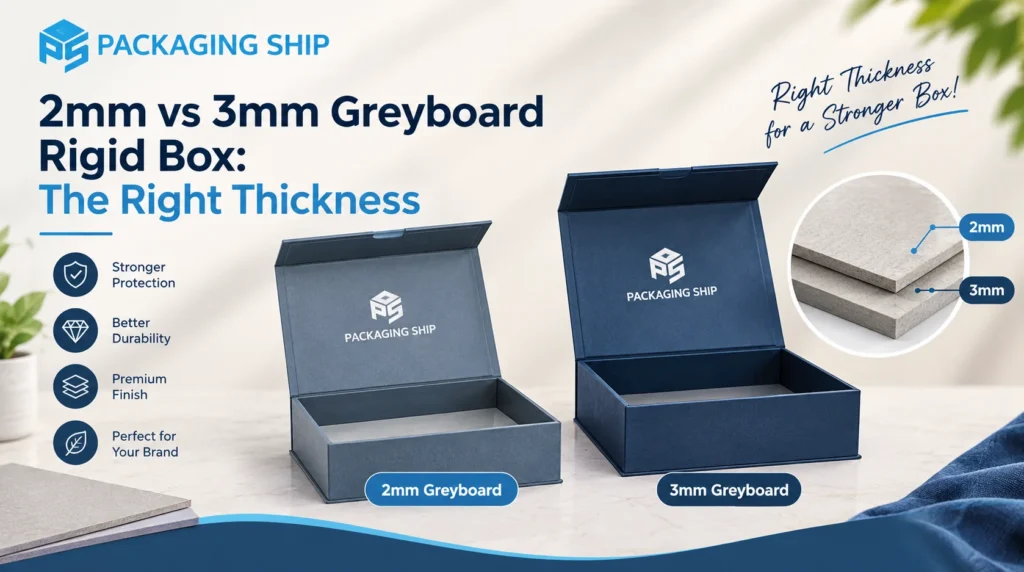
2mm vs 3mm Greyboard Rigid Boxes: Which Thickness Is Right for Your Product? What Is the Difference Between 2mm and 3mm Greyboard in 2026? Weight is really what decides this, not looks. A 2mm greyboard rigid box handles lighter products fine, think jewelry, cards, small cosmetics, anything under roughly eight ounces. Once you’re dealing with glass, electronics, or anything that can crack under pressure, 3mm holds up a lot better in a truck full of other boxes. TL;DR: Most brands default to 2mm because it’s cheaper and it’s plenty strong for light items. Go with 3mm if your product is heavy, breakable, or both. Don’t pick based on which one sounds more premium. Pick based on what’s actually going inside the box. Table of Contents We get asked this almost every week at Packaging Ship, usually right after someone asks how fast we can turn an order around. A customer will send us dimensions and a product weight, then pause and ask, honestly, do I need 2mm or 3mm here? It’s a fair question, and most of the answers online don’t really settle it. What Is Greyboard, and Why Does Thickness Matter for Rigid Boxes? Greyboard is the dense paperboard core that gives a rigid box its shape. It’s not corrugated cardboard, and people mix those up a lot. Corrugated has that fluted layer in the middle for cushioning. Greyboard doesn’t. It’s solid straight through, so it holds its form instead of bending under a hand or a stack of other boxes. You’ll see thickness listed in millimeters, sometimes in points, and sometimes in GSM (grams per square meter). Rough numbers, 2mm greyboard sits around 1250 GSM, and 3mm is closer to 1900 GSM. If you want the technical side, ISO 534 is the international standard that covers how paper and board thickness and density actually get measured. That same standard is part of why thickness by itself can be misleading. A dense 2mm board sometimes holds up better than a cheap, low-density 3mm one. It happens more than people expect. If you want to see what we actually build with this stuff, our custom rigid boxes page has the full lineup. What Is 2mm Greyboard Best Used For? Honestly, 2mm is what we ship the most of, and it’s not close. It gives a box that solid, satisfying weight in your hand without tacking on cost for products that don’t need the extra protection. Small, light items are the sweet spot. Credit card boxes are a good example, and so are wedding invitation boxes, we run a lot of both. Neither one carries much weight, so the box isn’t fighting gravity or getting crushed under other packages in a shipping bin. That’s really where 2mm greyboard rigid packaging earns its keep. Good rigid box durability, without paying for strength you’re not going to use. When Should You Choose 3mm Greyboard Over 2mm? Once a product gets heavy or fragile, or both, 2mm starts to feel thin. Glass jars are the classic case. So are ceramics, electronics, and those multi-piece gift sets where everything’s packed in tight. A thinner board flexes under that kind of pressure, and once one corner gives even a little, the rest of the box follows. We see this a lot with rigid tube packaging, since bottles and cylindrical products tend to put all their weight in one narrow spot instead of spreading it out. That extra millimeter of greyboard weight rigid packaging isn’t just for show. It’s the difference between a box that survives a warehouse stack and one that doesn’t. 2mm vs 3mm Greyboard Rigid Box: Which One Wins at a Glance? Neither wins outright, and I’ll be straight with you, anyone who tells you one is just better hasn’t thought about what’s going inside it. Here’s the quick version so you can match it up yourself. Feature 2mm Greyboard 3mm Greyboard Approx. GSM 1250 GSM 1900 GSM Best for Under 8 oz, light items Heavier, fragile items Typical use Cards, jewelry, cosmetics Glass, electronics, gift sets Feel Solid, standard premium Heavy, ultra premium Cost per unit Lower Higher How Do You Choose the Right Greyboard Thickness for Your Product? Start with the product, not the aesthetic. A heavier box doesn’t automatically protect better, it just costs more to ship, and a lot of brands learn that the hard way after their first big order. If your product is under 8 ounces and nothing inside it is fragile, 2mm will do the job. Anything heavier, anything glass, anything with moving parts, bump it up to 3mm. And if you’re pairing a magnetic lid with a heavier item, take a look at our magnetic closure rigid boxes too, because the closure style changes how much stress hits the corners every time someone opens and shuts the lid. Here’s something people forget more often than you’d think. Board thickness stops a box from crushing. It does nothing about a product sliding around loose inside that box. A 3mm rigid box with a glass jar bouncing around inside it can still crack on a rough delivery route, thickness or no thickness. That’s what a foam insert is actually for, a die cut tray that holds the product still and takes the shock instead of letting it transfer straight to the glass. You really need both pieces working together on anything fragile, not one instead of the other. The International Safe Transit Association runs standardized drop, vibration, and compression testing for exactly this reason, board choice and internal protection both get tested because both actually matter. Still stuck between the two for your specific product? Get a free quote and we’ll walk through your dimensions and weight with you directly. Does Greyboard Thickness Affect Cost or Print Quality? Print quality, barely at all. The printed layer sits on top of the greyboard core as its own separate piece, so your artwork and finish look identical whether the core underneath is 2mm or 3mm. Cost is where the
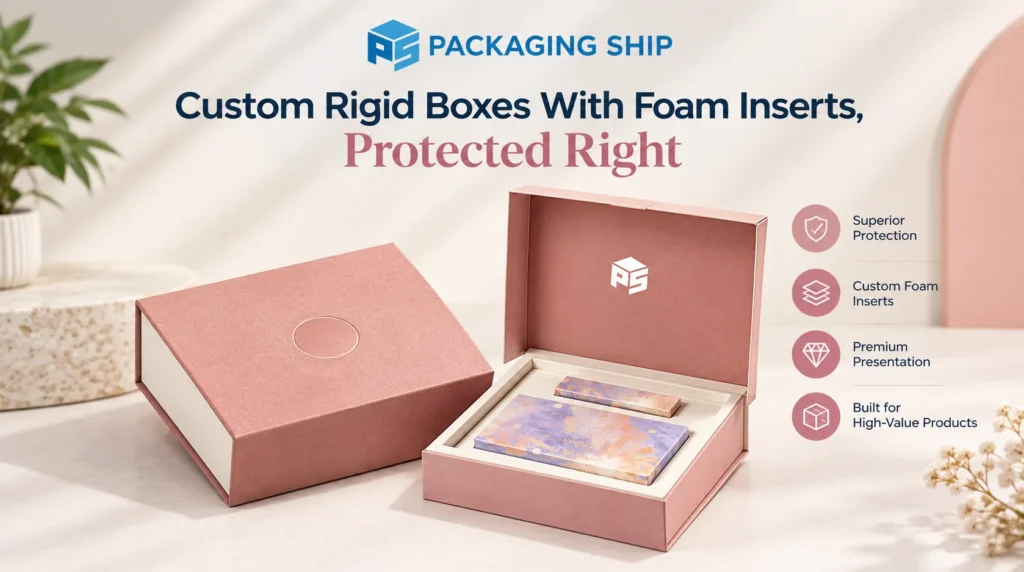
Custom Rigid Boxes With Foam Inserts: How to Protect Fragile Products Without Overspending TL;DR: Custom rigid boxes with foam inserts only work when the foam matches the product’s real shape, not the spec sheet. Pick the right foam type, the right density, and the right cut, then test it before a full run. That is protection without wasted spend. In this article: Picture this. Your product ships out looking perfect. It arrives with a crushed corner or a scratch that was not there before. Ask around and you will hear the same story from a lot of small brands: about two boxes out of every ten come back damaged, and foam gets blamed first. Custom rigid boxes with foam inserts are built to stop exactly this problem, but only when the foam fits the actual product. At Packaging Ship, we treat this as a specification problem first and a packaging problem second. The box is strong. The foam looks fine. The fit is off by a few millimeters, and that small gap is where the damage starts. What Are Rigid Boxes With Foam Inserts in 2026? A rigid box with a foam insert is a sturdy box made from thick paperboard, fitted with a foam piece cut to hold the product in place. The foam cradles the item so it cannot shift, slide, or knock against the box wall. Brands use this setup for glass, electronics, cosmetics, and anything that cannot survive a rough ride through a delivery truck. Why Foam Inserts Fail Even When the Box Looks Fine Most foam failures are not about bad foam. They are about a bad fit. A cavity gets cut to match a spec sheet, not the finished product coming off the line. Real products vary by a millimeter or two, and foam does not forgive that gap. Die cut tolerance is the part nobody talks about. Most foam cutting runs within one to two millimeters of the target size. For a glass bottle or a ceramic piece, that is enough space for the product to knock against the cavity on every turn of a truck. That single gap is why so many custom rigid boxes with foam inserts get blamed for damage that was never really about the foam. The fix starts before you pick a material. It starts with cutting the insert from the actual product, not the drawing. Brands that order custom rigid boxes from a factory that checks fit at this stage report far fewer damage claims. How to Spec Foam Inserts for Oddly Shaped Products Not every product is a simple rectangle, and that is where foam earns its keep. For flat, compact items, a shallow foam layer with a tight edge works best. You see this in compact rigid packaging like credit card boxes, where even a small shift can scuff the surface before it reaches a customer. For round or tall items, the foam needs a curved cavity that hugs the shape on every side. This shows up in cylindrical packaging such as custom tube packaging, where bottles and jars need support all the way around, not just top and bottom. Three foam types cover most cases. EVA foam holds its shape under repeated pressure, so it fits heavier items or reused packaging. PE foam is lighter and cheaper, a solid choice for one time shipping. PU foam is soft and springy, better for delicate curves. Product Specifications at a Glance Use this as a starting point when you request a quote. Exact specs are always matched to your product during the design proof stage. Spec Typical Range Box material Rigid chipboard or greyboard, 36pt to 48pt Foam material options EVA foam, PE foam, PU foam Foam density Roughly 18 to 35 kg per cubic meter, based on material Foam thickness 0.5 inch to 2 inches, custom cut on request Cavity style Single cavity, multi cavity, cradle cut, finger pull cutout Finish options Matte, gloss, soft touch lamination, foil stamping Minimum order Starts at 50 units Standard turnaround 7 to 10 business days Shipping Free FedEx or UPS shipping within the continental US Sampling Free digital proof, physical sample available on request Rigid Boxes With Foam Inserts Cost Less Than Damage Claims Foam adds a small cost per unit. Damage adds a lot more. Amcor reports that damaged ecommerce shipments push return rates well above normal in store returns, and replacing a damaged item can cost several times more than the original shipping label. A cracked bottle does not just cost one refund. It often costs a repeat customer. This is why testing beats guessing. ISTA, the International Safe Transit Association, publishes packaging test standards built around real shipping stress, drops, vibration, and rough handling included. Running a design through a real test before a full production run catches a bad foam fit before it ever reaches a customer. If you are comparing rigid boxes foam inserts custom wholesale USA options, resist the urge to pick the thickest foam out of fear. A well built foam insert rigid box does not need to be oversized to work. Pick the foam and the cut that match your product’s weight and shape. That is protection without overspending. FAQS: Question Quick Answer What foam works best for fragile items? EVA foam suits heavy or reused items. PU foam suits delicate, curved products needing a soft cradle. How thick should a foam insert be? Most run between half an inch and two inches, based on product weight and drop risk. Can foam inserts be recycled? Standard foam is hard to recycle at home. Molded pulp and rigid card inserts are common alternatives. Do foam inserts raise packaging cost much? Foam adds a small per unit cost, usually far less than a damaged product plus a return. Is there a minimum order for custom foam? Some manufacturers cut custom foam starting at fifty units, with no large minimum required. Get a Free Quote for Custom Rigid Box and Foam Insert
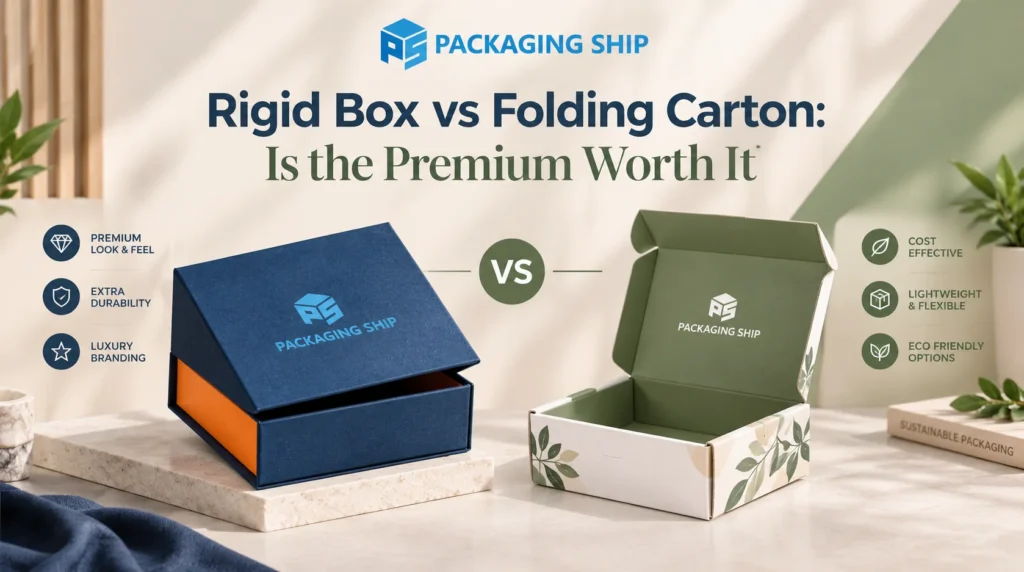
Rigid Box vs Folding Carton: When Does the Cost Premium Actually Pay Off? TL;DR A rigid box usually runs two to four times what you’d pay for a folding carton at the same order size. Is that worth it? Usually, yes, once your product sells above roughly 50 dollars, or when the unboxing moment is part of what you’re selling, or the product just needs more crush protection. Under that price point, a folding carton is almost always the better call for your margin. At Packaging Ship, we help brands run this math before they commit to either format. Table of Contents You are staring at two quotes for the same product. One says 45 cents a unit. The other says 2 dollars and 10 cents, for what’s basically the same box, same artwork, just a very different price tag. If you sell a 20 dollar candle, that gap feels impossible to justify. If you sell a 90 dollar skincare set, it might be the smartest money you spend all year. The rigid box vs folding carton decision isn’t really about which box looks nicer. It’s about whether your price point can carry the extra cost. At Packaging Ship, we quote both formats every week for small and mid size brands, so we see exactly where that line sits. What Is the Real Cost Difference Between a Rigid Box and a Folding Carton in 2026 Think of a rigid box as furniture and a folding carton as a paper airplane. A rigid box is built from thick chipboard, usually 1.5 to 3 millimeters, wrapped by hand in printed paper and glued into a shape that never changes again. A folding carton is a thinner paperboard that ships flat and gets folded into shape right when it’s packed. Because of that extra material and hand assembly, a rigid box typically runs 2 dollars to 8 dollars per unit, while a folding carton runs 20 cents to 2 dollars at comparable order sizes. Rigid Boxes vs Cardboard Packaging Comparison in the USA Here is the breakdown that actually drives the price gap between a rigid box and a folding carton, and it is not just the board itself. Factor Rigid Box Folding Carton Material Chipboard, 1.5mm to 3mm, hand wrapped Paperboard, 250 to 400 GSM Assembly Manual or semi automated High speed automated folding Cost per unit 2 dollars to 8 dollars 20 cents to 2 dollars MOQ Often flexible, low volume friendly Usually higher volume runs Shipping Pre assembled, heavier Ships flat, lighter Best for Retail price above 50 dollars Retail price under 30 dollars Cardboard packaging, meaning folding cartons, wins on cost every single time because it is produced on automated lines and ships flat. That’s not some small niche corner of the industry, either. According to Mordor Intelligence’s folding carton packaging market analysis, the global folding carton market was worth 70.39 billion dollars in 2026 and is expected to hit 99.51 billion dollars by 2031, so plenty of brands still lean on this format even with all the premium packaging buzz right now. Rigid packaging is growing too, just from a smaller base. If you want to see the material range for yourself, our custom rigid boxes come in every board weight and finish mentioned above, with a full price breakdown before you commit to a quantity. When to Use Rigid Packaging and When a Folding Carton Wins There is a simple rule that most packaging guides skip. Look at your retail price, not your production budget. Under 25 to 30 dollars retail, a folding carton almost always protects your margin. Nobody’s expecting a luxury unboxing moment at that price, and honestly, a 2 dollar box on an 18 dollar product just eats too much of your profit. Between 50 and 100 dollars, it really depends on your category. Skincare, jewelry, gift sets, these tend to do better in rigid packaging because the weight and solidity of the box tells the customer it’s worth something before the lid even opens. Above 100 dollars, a rigid box usually earns its keep. Customers at that price point already expect a heavier, more deliberate unboxing experience, and a flimsy folding carton can actually work against you there, it can quietly undercut trust in the product. Premium Box ROI: Does the Extra Cost Pay for Itself Premium box ROI really comes down to one question, does the packaging change how often the customer comes back to buy again? A lot of founders already sense this intuitively, and the industry numbers back it up. Market Intelo’s research found that cosmetics and personal care already make up 21.4 percent of rigid box demand, and brands in that category are willing to pay more for packaging precisely because unboxing has become part of the product itself. If a heavier, rigid format nudges even a small percentage of buyers toward repeat orders, that 2 dollar premium can pay for itself pretty fast, especially on a product with decent margin. Run the numbers before you decide. Take your rigid box cost, subtract your folding carton cost, and divide that gap by your product margin. That tells you how many extra repeat purchases you need per hundred customers to break even. For most brands selling above 50 dollars, that number is smaller than they expect. The Hybrid Middle Ground: Collapsible Rigid Boxes If you like the weight and feel of rigid packaging but the shipping cost is scaring you off, there is a middle option. Collapsible rigid boxes fold flat for shipping and storage, then pop into a solid, permanent shape at the point of packing. You get most of the premium feel without paying full freight on pre assembled volume. This format works especially well for brands testing a new product line before committing to a full rigid box production run. Magnetic Closure Rigid Boxes and PR Boxes for Gifting For gifting, influencer mailers, and anything built around the unboxing moment, magnetic closure rigid boxes are usually
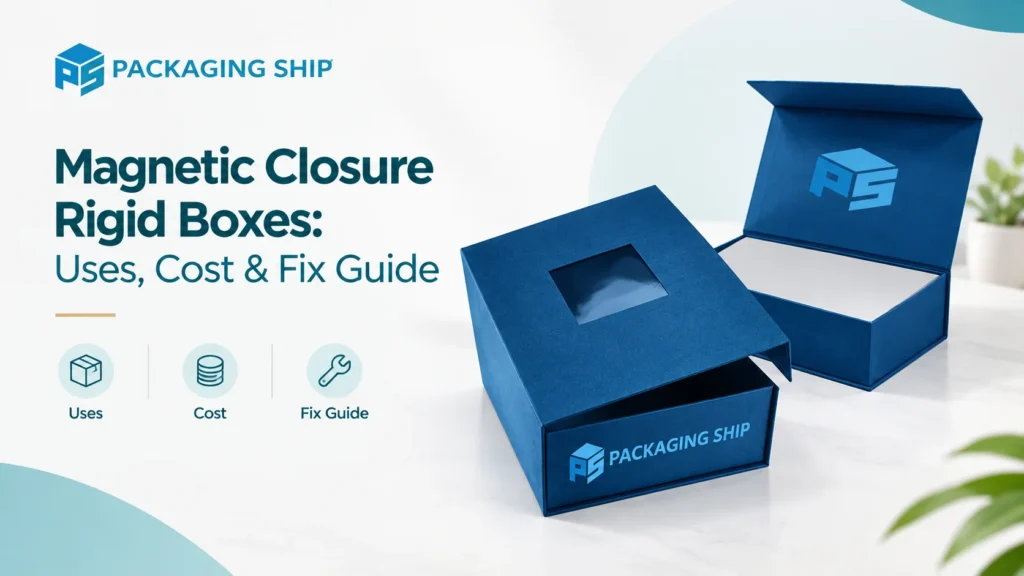
Magnetic Closure Rigid Boxes: Uses, Cost, and Getting Magnet Placement Right TL;DR: Magnetic closure rigid boxes are flip top boxes built from rigid boards with neodymium magnets set into the lid and base. They cost more than standard folding cartons because of the extra material and hand assembly. Most placement failures come from misaligned magnets, boards that are too thin or too thick, or weak pull strength for the product weight. Getting these right keeps lids shut through shipping and gives your brand a premium unboxing moment. Table of Contents What Are Magnetic Closure Rigid Boxes in 2026? Magnetic closure rigid boxes are flip top packaging boxes made from thick, sturdy board with small magnets built into the lid and base. When the lid closes, the magnets pull together and hold the box shut without tape, ribbon, or a separate clasp. Brands use them for cosmetics, jewelry, electronics, and gifting because the closure feels solid the moment a customer touches it. At Packaging Ship, we manufacture these boxes in house, which means every claim in this guide comes from what actually happens on a production floor, not from a spec sheet written by a sales team. Unlike a folded carton that ships flat and gets taped shut, this box is a small piece of engineering. Two magnets have to line up, every single time, across hundreds or thousands of units. That single detail is where most of the buying questions, and most of the complaints, actually start. Where Magnetic Closure Rigid Boxes Are Used These boxes show up most often in categories where the first touch matters as much as the product inside. Cosmetic and skincare brands use them for gift sets and limited releases. Jewelry and watch brands use them because the weight of a rigid lid signals value before the box even opens. Electronics brands use them for accessories and premium bundles. Corporate gifting and subscription boxes use them because a magnetic snap photographs well for social unboxing content, which is exactly the kind of organic marketing small brands can’t buy. You can browse the full range of magnetic closure boxes to see sizing and finish options before you spec your own. Collapsible vs Non-Collapsible Magnetic Rigid Boxes You have two structural choices here, and they solve different problems. Non-collapsible boxes arrive pre-assembled. They’re sturdier out of the box and give a slightly heavier, more premium feel, which suits high-end retail and gifting. Collapsible magnetic rigid boxes ship flat and fold into shape at the point of use, which lowers your freight cost per unit and saves storage space if you’re a smaller brand working out of a garage or a shared warehouse. If you’re testing a new product line and don’t want a pallet of pre-built boxes taking up floor space, collapsible rigid boxes are usually the smarter first order. How Much Do Magnetic Closure Rigid Boxes Cost in 2026? Pricing for magnetic closure rigid boxes typically starts around fifty cents per unit at wholesale volume, before you add finishes like foil stamping or soft touch lamination. The final number moves based on four things: board thickness, magnet grade, order quantity, and finish. Thicker board and stronger magnets cost more per unit but reduce the chance of a weak or misaligned closure later. If you want an exact number for your box size and quantity, it’s faster to get a free quote than to guess from a price range online, since ranges you’ll see across suppliers vary wildly depending on what’s actually included. Product Specifications at a Glance Here’s what a properly specified magnetic closure rigid box actually looks like on paper, so you know what to ask for when you request a quote. Specification Detail Box style Flip top rigid box with magnetic lid, available collapsible or non-collapsible Board material Rigid board 800 GSM to 2000 GSM, grey board 1.2mm to 3mm, chipboard 1.5mm to 3mm Recommended board thickness 1.5mm to 2mm for most magnet grades Magnet type Neodymium (NdFeB) magnets, commonly specified in N35 to N52 grade Printing CMYK full color, CMYK plus PMS spot color, inside and outside printing available Finishing options Matte or gloss lamination, soft touch lamination, spot UV, foil stamping, embossing, debossing Interior lining Velvet, satin, foam inserts, cardboard risers, ribbon pulls Starting price Around $0.50 to $0.55 per unit at wholesale volume Minimum order No minimum order required on most product lines Standard production time 8 to 10 business days from proof approval Total delivery time (US) 10 to 15 business days including free shipping Fixing Magnet Placement in Magnetic Closure Rigid Boxes This is the part almost nobody explains clearly, and it’s the reason a lot of first orders go wrong. Package damage and returns are already an expensive problem across e-commerce, and a weak magnet is just one more way a box fails in transit. Research summarized by Pregis found that a large share of shoppers say they’re unlikely to buy from a brand again after receiving a damaged item, which makes closure reliability a real business cost, not a cosmetic detail. Choosing the Right Magnetic Closure Rigid Boxes for Your Product Match the magnet grade and board thickness to what’s actually going inside the box, then confirm your supplier checks alignment during production, not just on the sample. Custom Rigid Boxes as the Foundation Magnetic closure is one style within a much wider category. Custom rigid boxes cover everything from two piece lift off lids to drawer style boxes, and magnetic closure sits at the premium end of that lineup because of the added engineering. The global rigid box market itself is growing steadily, valued at roughly 83.9 billion dollars in 2025 and projected to reach around 100.7 billion dollars by 2034 according to Towards Packaging, as more brands shift toward protective, brand forward packaging instead of plain cartons. If you’re weighing multiple rigid box styles for a launch, it helps to look at the full rigid box category before locking in on one closure type.