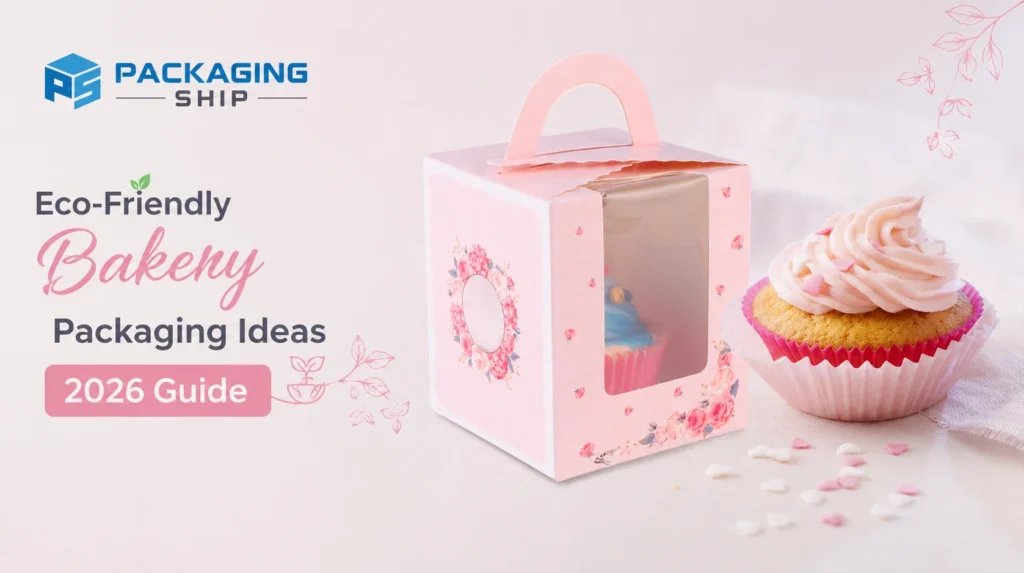
Eco-Friendly Bakery Packaging Ideas for Sustainable Food Brands (2026) What is eco-friendly bakery packaging? It’s food-safe packaging, kraft paperboard, FSC-certified board, recycled fiber, compostable material, that replaces plastic laminates without compromising food safety or shelf presentation. Last year, a small Brooklyn cookie brand switched their retail boxes from PET clamshells to uncoated kraft with water-based ink printing. Their sales rep told them it’d hurt shelf appeal. It didn’t. Customers kept stopping to pick the box up, feel it, photograph it. That tactile, earthy quality communicated something no glossy plastic lid ever could, that somebody cared about what was inside. That’s what eco-friendly bakery packaging actually does when it’s done right. It’s not a PR gesture. It pulls the selling weight. The broader market backs this up too. McKinsey and NielsenIQ tracked product performance across categories and found that items with genuine environmental claims grew 28% over five years, while products without those claims grew 20%. According to Meyers and Golden Arrow, data puts the sustainable packaging industry at roughly USD 292 billion in 2024, heading toward USD 423 billion by 2029. Bakery brands sitting on the fence about switching aren’t playing it safe. They’re just falling behind. What Is Eco-Friendly Bakery Packaging: And Why It Matters Right Now in 2026 Here’s something worth being direct about: generic green claims are hurting brands now, not helping them. Puratos retail research tracked US consumer attitudes and found over 60% of buyers want actual proof, a certification mark, a standard name, something verifiable, before they believe a sustainability claim. Sticking a leaf graphic on a plastic-laminated box isn’t just ineffective anymore. Buyers call it out online. So what does genuinely sustainable bakery packaging look like when it’s sitting in front of you on a production spec sheet? It is where most bakery brands start, and honestly it makes sense. The material runs naturally brown, takes FSC chain-of-custody certification without complication, and works with water-based inks that keep PFAS out of the picture entirely. Board weights between 280 and 350 gsm cover the full product range, delicate macarons on the light end, stacked wedding cake tiers on the heavy end, without structural issues. And something nobody talks about enough: uncoated kraft photographs dramatically better than glossy plastic on social media. That’s a real marketing advantage, not a talking point. It goes a step further. The certification that actually means something here is BPI, Biodegradable Products Institute. A BPI mark on a box tells you it breaks down in a commercial composting facility within 180 days. That’s a testable, documented claim. Without it, “compostable” is just a word printed on the side. B2B buyers at grocery chains and food co-ops have started asking for the BPI certification number by name during procurement conversations. That shift happened fast. It is built from post-consumer recycled (PCR) fiber, carries the How2Recycle label, which is the mark that actually shows up in retailer sustainability reports and corporate ESG filings. If wholesale distribution is in your growth plan, this label goes from optional to a procurement condition pretty quickly. Eco-Friendly Bakery Packaging Materials: What Actually Works for Each Product Type Most supplier websites hand you a material list and leave you to figure out the rest. What bakery operators actually need is a spec-level comparison against real product categories. Regardless of which material you choose, food contact compliance isn’t optional. FDA 21 CFR Part 176 governs paper and paperboard in direct food contact. Ask your vendor for written confirmation, an actual document, not a verbal assurance on a sales call. The Cost Myth That Keeps Bakeries on Plastic Longer Than They Should Be Of all the objections that stall packaging transitions, the cost one is the most persistent and, frankly, the most overstated. Let’s look at real numbers. At 5,000 units, kraft board boxes typically come in within 8 to 12 percent of equivalent PET plastic clamshells on a per-unit basis. Close the volume to 10,000 units and that gap shrinks further. Do the math on 10,000 units with a $0.10 per-unit cost difference: you’re spending $1,000 more on packaging. At a conservative 5% price premium on an $8 transaction, you recover $0.40 per sale. That $1,000 is recovered after 2,500 sales, roughly one decent weekend at a farmers market booth, let alone a retail placement. Plastic-free bakery packaging is not the expensive choice. It’s the choice bakery founders keep getting talked out of by suppliers who profit from the status quo. Switching Sustainably: A 3-Step Process That Doesn’t Derail Your Operations Most bakery owners who’ve made the switch say the same thing afterward — it was simpler than they expected. The sequence matters though. Pull every SKU. List which products currently live in plastic clamshells or laminated film. Your replacement priority list should lead with the highest-volume items and anything that faces retail customers directly. Those packaging changes hit brand perception fastest. FSC chain-of-custody certificates. BPI certification numbers on any compostable item. Written FDA 21 CFR Part 176 compliance confirmation via email, not a phone conversation. Any supplier who can’t send those documents within 48 hours shouldn’t be supplying your food-contact packaging. Full stop. A compostable board takes ink differently than coated white stock. Your designer needs the substrate spec before the art file is built, not after the proof comes back wrong. Water-based inks, soy-based varnishes, UV spot coating, all of these are available on sustainable substrates. The branding quality loss that people worry about is mostly a myth built on working with the wrong supplier. Custom Bakery Packaging That Carries Your Brand Forward Sustainability and premium branding stopped being competing priorities a while ago. The bakery brands pulling ahead in 2026 are running both out of the same box. For truffles, macarons, hand-decorated brownies, and artisan confections, Custom Sweet Boxes in FSC-certified kraft with full-color printing give retail shelf presence that PET windows genuinely can’t match. There’s a tactile weight to uncoated kraft that communicates quality before anyone opens the lid. For hand pies, artisan quiche,
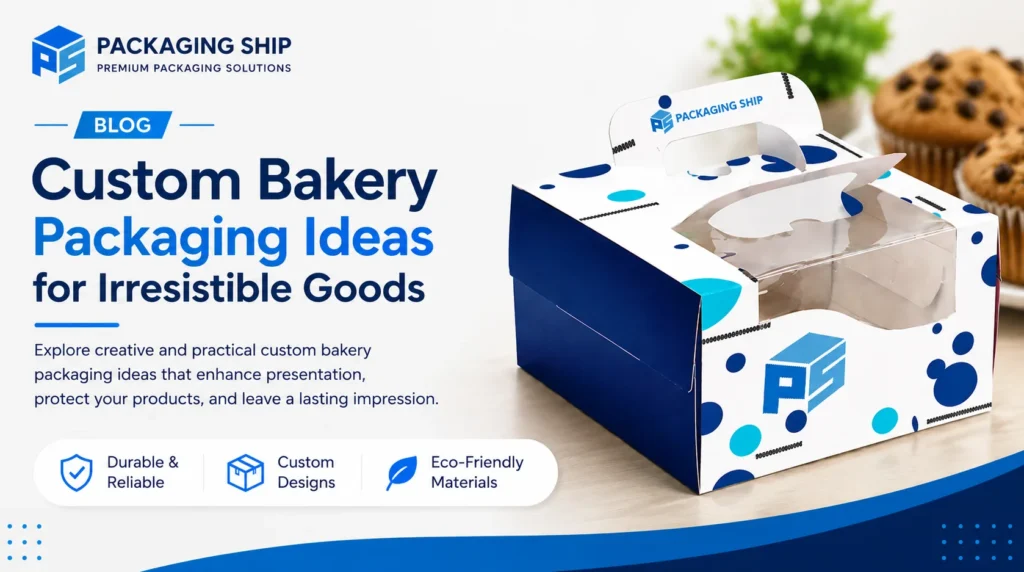
What Is Custom Bakery Packaging? Think of custom bakery packaging as your silent sales rep, the branded boxes, bags, and wraps printed with your logo and colors that protect your product and pitch your brand before a word is spoken. Walk through any busy farmers market on a Saturday morning and something becomes obvious pretty fast. The stalls doing the most volume are not always selling the best product. They are selling the best box. One vendor has cupcakes in a plain white container with a label printed at home. The stall next to them has the exact same cupcake in a kraft window box, logo embossed, ribbon handle, a clear panel showing the ganache. Customers gravitate toward the second one without thinking twice. Not because anything inside is different. The box just told a better story first. The global bakery packaging market hit USD 3.65 billion in 2025, per Research and Markets. It is headed toward USD 4.71 billion by 2030, a 5.24% annual growth rate. The businesses taking share in that window are not simply baking better. They figured out that the box is part of the product. This guide covers the practical decisions that get you there. 7 Custom Bakery Packaging Ideas That Sell Baked Goods Before the First Bite 1. Window Kraft Boxes: Let the Product Sell Itself Nothing in marketing does what a window panel does. No headline, no price tag, no description on the side of a box. Just the actual product, visible, real, right there. For cupcakes, layered pastries, and macarons, one glance through a clean PET window removes all the hesitation that makes a customer walk past. Go with 350 GSM kraft boards if your brand reads as artisan or handcrafted. The texture does its own work before anyone touches the product. Pair it with a window insert and your logo, and you have a box that justifies a price point a plain container never could. Our Custom Cupcake Boxes are made for exactly this kind of setup, food-safe inserts, window panel options, clean logo print on every face of the box. 2. Personalized Bakery Packaging With Foil or Embossed Finishing There is a specific moment that happens when someone picks up a foil-stamped box. They feel the logo before they read it. That sensation, a thumb running over raised gold letters on matte black stock, does something that flat printing cannot. It registers as quality in a way the brain does not question. Gold foil on matte black works well for wedding favors and corporate gifting programs. Silver foil on kraft reads are more casual but still premium. Embossing without foil is a subtler move great for brands that want texture without shine. Any of these finishes shift the product from something you bought to something you received. 3. Eco-Friendly Bakery Boxes That Match Your Brand Values Younger buyers are paying close attention to what your packaging is actually made from. Innova MarketInsights confirmed that Gen Z and Millennials now represent the dominant share of bakery purchasing, and both groups weigh sustainability against brand loyalty, often sustainability wins. Trivium Packaging’s 2023 Buying Green Report found that 71% of consumers are actively choosing products due to the sustainability factor of the product packaging. That is a big number and it has real commercial implications. Switching from generic stock to recyclable SBS board or compostable kraft is not an added cost you manage. It is a signal you send to customers who spend more, stay longer, and tell other people about brands they feel good about. Worth noting too, “sustainable bakery packaging” is one of the faster-growing search phrases in food packaging right now. The decision pays off in organic traffic as much as brand positioning. 4. Printed Bakery Boxes With Full-Bleed CMYK Design Most small bakery businesses are still running generic white boxes with a round logo sticker on the front. Walk into any wholesale bakery supply store and that is what you will see. When your printed bakery boxes run edge to edge, full bleed, no white borders, no bare panels, they do not look like those boxes at all. That gap in shelf presence is real and it is yours to own. File setup matters here. Work in CMYK, not RGB. Leave 3mm of bleed on all four edges or the finished box will show white lines at the trim. For finish, matte lamination gives you that soft, no-fingerprint surface that photographs beautifully and feels expensive. Glossy suits patisserie lines where color contrast and sharp reflection are part of the visual language. 5. Custom Cookie Boxes Built for Gifting Cookies are impulse purchases by nature. A customer plans to grab two and walks out with a box of a dozen because the packaging made it feel like a gift. That mental shift, “treat for me” becoming “gift for someone else”, is worth a lot of margin. A two-piece rigid box with a ribbon pull and tissue paper insert is what creates that shift. The customer stops doing quick mental math and starts picturing who they could give it to. Suddenly the price point that felt high for cookies feels reasonable for a gift. Our Custom Cookie Boxes include design support, food-safe liners, and no minimum order requirement, so testing a gifting format on a small seasonal run is genuinely low-risk. 6. Cake Boxes With Structural Integrity for Delivery Delivery opened enormous revenue for bakeries, wholesale accounts, corporate catering, event venues. It also exposed something nobody wanted to admit: most standard cake boxes were not engineered for a van ride. They flex. Corners fold under load. A cake that took four hours to build arrives looking like it survived something. A double-wall corrugated insert inside your printed outer box solves this. The outer shell carries your brand. The corrugated layer carries the structural job. Your client opens a clean, intact product, and the branded outer box is the first thing they see. 7. Multi-Unit Pastry Display Packaging for Retail and
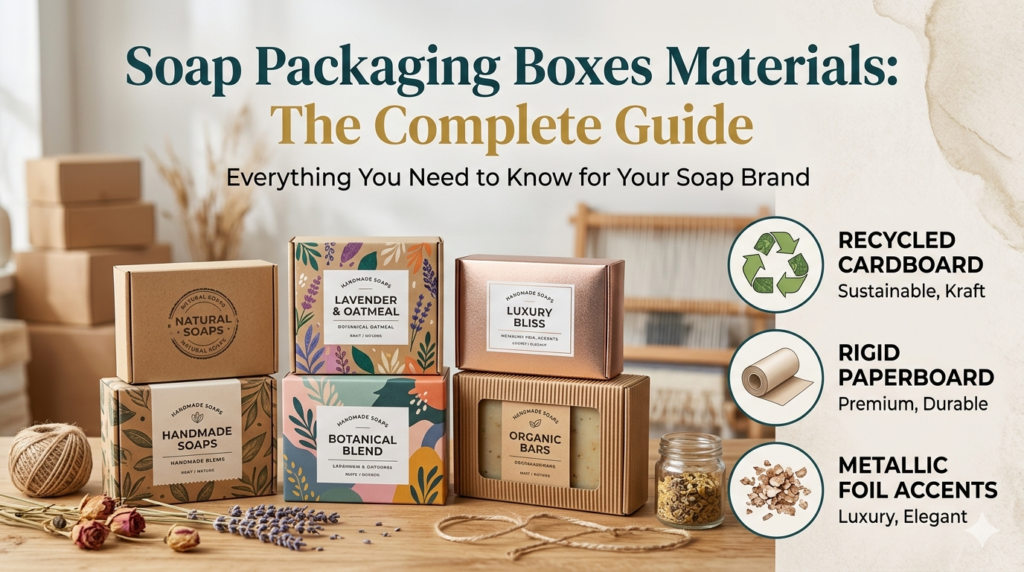
What Are the Best Soap Packaging Box Materials? Choosing the right soap packaging boxes materials is one decision that directly shapes your sales, shipping costs, and brand perception all at once. In plain terms: the wrong board thickness collapses on retail shelves, the wrong coating warps in transit, and the wrong style costs you wholesale accounts before you even land them. This guide gives you a practical, decision-ready breakdown. No padding. No guesswork. Why Soap Packaging Boxes Materials Decide More Than You Think The global soap box market was valued at $5.2 billion in 2024 and is projected to reach $7.8 billion by 2033, growing at a CAGR of 5.1%, according to Verified Market Reports. That growth signals one thing for B2B buyers: competition on shelves is intensifying, and packaging is your first salesperson. Here is what most brands get wrong. They choose a material based on price per unit without factoring in print compatibility, moisture resistance, or structural performance under retail stacking. One artisan soap brand we spoke with switched from 250gsm SBS board to 350gsm kraft after two wholesale clients returned orders with crushed corners. That single material upgrade reduced returns by over 30% and justified a 12% price increase at retail. The numbers backed the change. Your packaging material is a business decision not a design afterthought. The 4 Core Soap Packaging Box Materials Compared Kraft is the most versatile material for soap boxes packaging today. It runs between 300gsm and 400gsm for bar soap applications. It absorbs moisture better than coated boards, resists minor humidity, and communicates an organic, natural brand identity without a single word of copy. Eco-conscious buyers respond to it immediately. Kraft also costs less per unit than rigid stock, making it ideal for wholesale soap boxes ordered at volume. The limitation: full-color printing on uncoated kraft requires higher ink coverage, which increases print cost. If your soap box design relies on vivid photography or gradient artwork, coated kraft or SBS board is a smarter call. Cardboard soap boxes specifically SBS (Solid Bleached Sulfate) give you the sharpest print surface available at a commercial price point. CMYK printing on 350gsm SBS produces retail-grade color accuracy. This is the go-to material for retail soap packaging that needs to compete visually in high-traffic environments like Target, Whole Foods, or specialty wellness boutiques. SBS also pairs cleanly with UV spot coating, soft-touch lamination, and embossing the finishes that separate a $4 bar from a $14 bar in the shopper’s hand. Rigid boxes run at 1.5mm to 2mm board thickness. They do not fold flat, which increases shipping costs for empty boxes. However, for luxury soap packaging gift sets, hotel amenity lines, spa collections, rigid chipboard delivers an unboxing experience that cardboard cannot replicate. A 2mm rigid box with magnetic closure communicates premium value before the lid opens. Brands in the $18–$35 per bar range typically use rigid for their soap gift boxes and seasonal editions. For shipping outer cases and wholesale mailer-ready packaging, E-flute corrugated board at 3mm offers superior crush resistance without adding significant weight. If your wholesale soap boxes travel through third-party logistics or Amazon fulfillment, E-flute reduces damage rates compared to standard cardboard on multi-unit packs. Soap Box Styles: Tuck End, Window, Sleeve, and Rigid Your material choice intersects directly with your box style. Here is how to match them. What GSM Actually Means for Your Soap Box Design GSM (grams per square meter) is the single most underspecified number in custom soap box design. Here is a working reference: If you are ordering custom soap packaging without specifying GSM, you are letting the supplier make that decision for you. Always specify it. Eco-Friendly Soap Packaging Ideas: What B2B Buyers Need to Know in 2026 More than 54% of new soap launches in 2025 were organic or botanical, according to Market Reports World. That shift in formulation is driving an equal shift in packaging expectations. Wholesale buyers at wellness retailers increasingly require FSC-certified board, soy-based inks, and compostable or recyclable construction as vendor prerequisites not differentiators. Kraft board, recycled SBS, and molded pulp all qualify. Avoid laminated foil liners if recyclability is part of your brand claim they contaminate the paper stream. For brands building a full sustainable product suite, pairing eco-certified soap boxes with Custom Soap Wrapping Paper gives you a zero-plastic, shelf-ready presentation across your entire line. You can click here to explore wrapping paper options that align with your sustainability positioning. Retail vs. Wholesale Soap Boxes: Where the Specs Actually Differ Retail soap packaging prioritizes visual impact and structural integrity under shelf stacking. Wholesale soap boxes prioritize flat-pack efficiency, pallet density, and durability through logistics chains. The material choice may be the same 350gsm kraft is excellent for both — but the finish differs. Retail gets spot UV or soft-touch lamination. Wholesale runs matte or uncoated to reduce cost per unit at volume. One important note: if you are expanding your product range, Custom Bath Bomb Boxes built on the same board spec as your soap line give you visual brand consistency across every SKU without managing multiple material standards. Common Soap Packaging Mistakes That Cost B2B Brands How to Order Custom Soap Packaging: Your Pre-Order Checklist Before you request a quote, have these seven specs ready: bar weight in grams, bar dimensions (L x W x H in mm), intended distribution channel (retail, wholesale, or DTC), required GSM, preferred finish (matte, gloss, soft-touch, spot UV), print method (digital for short runs, offset for 1,000+ units), and whether FSC certification is required by your buyer. If you are launching a full handmade bar line, Custom Handmade Soap Boxes built to your bar’s exact dimensions eliminate the shifting and interior damage that standard-size boxes cause on artisan products. Conclusion Soap packaging boxes materials are not a background variable. They determine shelf performance, transit survival, print quality, and brand positioning — simultaneously. Start with your bar weight and distribution channel. Choose GSM before choosing finish. Match your style to your buyer’s
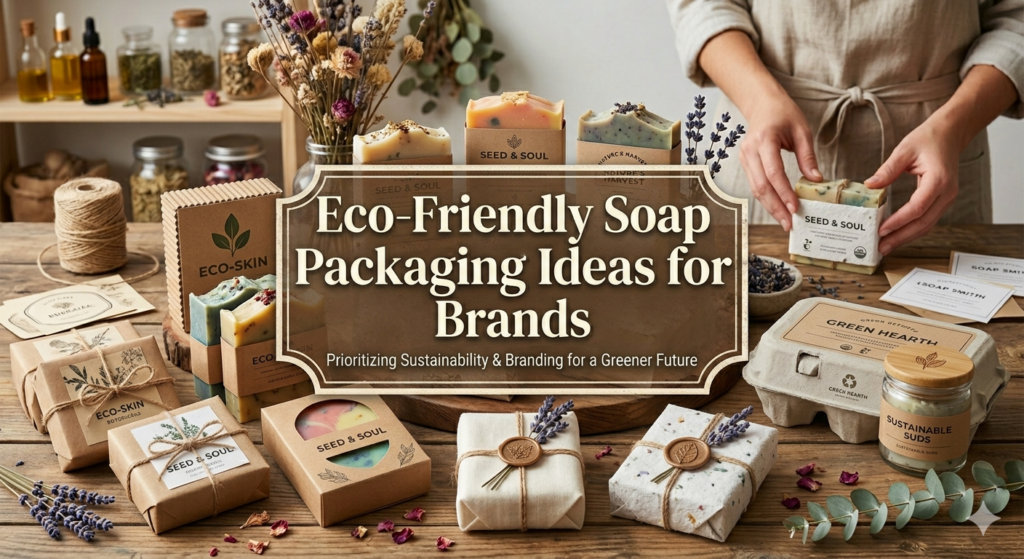
Last spring, a soap brand founder called us frustrated. She had spent eight months perfecting a cold-process lavender bar. The scent was right. The lather was right. A regional Whole Foods buyer wanted it on the shelf. Then their packaging review came back negative. Her soap was certified organic. Her box was generic white cardboard with no material certification, no recyclability disclosure, nothing. That one oversight cost her a $40,000 first purchase order. She is not alone. We talk to natural soap founders every week who get this backwards. Months on the formula, 48 hours on the box. The good news is that fixing it is not complicated or expensive. But you do need to know what actually works in 2026, because the retail environment has changed faster than most small brands realize. According to research published by Towards Packaging, the global eco-friendly packaging market is on track to more than double from $257.73 billion in 2025 to $536.16 billion by 2035. That growth is not coming from idealistic startups. It is coming from mainstream retailers setting hard sustainability requirements at the vendor level. What Are Eco-Friendly Soap Packaging Ideas in 2026? Switching from plastic to kraft paper, recycled cardboard, or compostable wraps counts as eco-friendly soap packaging. These choices cut waste, meet retailer requirements, and tell your brand story before a customer even opens the box. Sustainable Soap Packaging Is Now a Retail Qualification, Not a Bonus Three years ago, green packaging was a nice-to-have. Today it sits on the same evaluation sheet as minimum order compliance and lead times. Natural grocery buyers, wellness boutique owners, and even mid-market pharmacy chains have all tightened their vendor sustainability criteria since 2023. Some of it is regulatory pressure. Some of it is consumer expectations trickling upward through feedback and sales data. Either way, the criteria are real, and they are being enforced. Beyond retail, your end customers are watching too. People who buy natural and organic soap are not passive. They photograph packaging, and they post it. They write reviews that mention whether the box felt sustainable or wasteful. Your green packaging does real marketing work every single time someone unwraps your product. 7 Eco-Friendly Soap Packaging Ideas That Work in Practice 1. Kraft Paper Boxes Kraft is where most natural soap brands land first, and there are good reasons it has been the go-to for artisan and organic brands for decades. The material comes from unbleached wood pulp. No chlorine processing. No petroleum-based coating. Curbside recyclable in virtually every major US city and biodegradable on its own timeline without any special composting facility. From a shelf presence standpoint, kraft reads as genuinely natural rather than packaged-to-look-natural, which is a distinction your customers pick up on faster than you might expect. Pair it with soy-based ink printing and a clean die-cut window box and you have something that works in a Whole Foods planogram and an Etsy shop photo at the same time. Our custom kraft boxes are available with no minimum order, free design support, and free US shipping. That matters a lot when you are launching a new scent or testing a seasonal product without committing to a full production run. 2. Recyclable Soap Boxes with PCW Board The post-consumer waste board uses paper products that have already completed a full use cycle. The fiber comes back in, gets reprocessed, and goes into a new box. That closed loop is verifiable in a way that matters to retail buyers. These boxes qualify for How 2 Recycle labeling. If you have not come across that program yet, it is the label standard that natural retail buyers have started treating almost like a requirement. It removes ambiguity from the sustainability claim. Instead of “eco-friendly” printed on your box with no backup, you get a verified label that your buyer recognizes at a glance. 3. Biodegradable Soap Packaging Sugarcane pulp boxes, seed paper sleeves, plant-based wraps. These are the higher-commitment options, and they come with a premium, typically 20 to 30% above standard kraft on a per-unit basis. Here is the math that usually surprises founders. On a bar priced between $14 and $22, that cost difference works out to somewhere between $0.18 and $0.30 per unit. At that price point, you are not choosing between sustainability and margin. You are choosing between sustainability and the cost of a single shipping label. The brand story a genuinely biodegradable package creates is worth considerably more in customer lifetime value than what the material upgrade costs. 4. Kraft Belly Bands and Compostable Soap Wraps A naked bar wrapped in a simple kraft belly band is probably the most underused format in the natural soap category. Minimal material. Clean branding surface. Zero plastic anywhere in the supply chain. Certified compostable versions carry BPI or TÜV certification. That stamp turns a marketing claim into something verifiable, which matters both to retail buyers running sustainability audits and to end consumers who have learned to spot greenwashing. One thing worth trying: put a QR code on the band that links to your sourcing story or your farm partnerships. We have seen brands turn that three-centimeter strip of paper into a genuine customer retention tool just by connecting it to something real. 5. Kraft Paper Boxes for Wholesale Accounts Wholesale is a different challenge than direct-to-consumer. Your packaging goes through multiple handling points before it reaches a shelf. Fulfillment center, distributor warehouse, retail receiving dock, then the floor set. A 14pt uncoated kraft stock consistently holds up through that chain without requiring any plastic outer wrap or protective insert. More importantly, standardized box dimensions simplify pallet builds, reduce transit damage claims, and make planogram compliance conversations easier with your retail buyers. Those are not glamorous details. But they are exactly what separates a brand that keeps wholesale accounts from one that loses them after the first reorder cycle. 6. Die-Cut Window Boxes Without Any Plastic Film Most soap window boxes use a plastic film insert to let customers
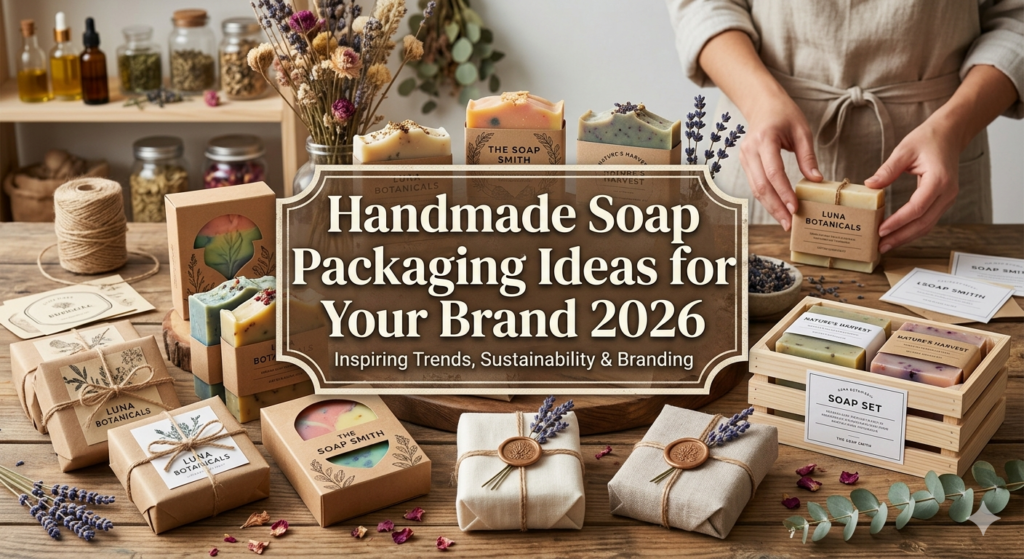
Picture this. You are at a farmers market. Your soap smells amazing. The woman two stalls down is sold out by noon, and honestly, her soap is nothing special. But her packaging looks like it belongs in a boutique. That is the uncomfortable truth about the handmade soap packaging business. The product gets you in the room. The packaging closes the sale. The global handmade soap market sits at USD 168.2 million in 2024 and is on track to hit USD 304.1 million by 2034. North America holds 40% of that share. More brands are entering this space every single month. So if your packaging still looks like an afterthought, 2026 is the year to fix that. What are the best handmade soap packaging ideas in 2026? Kraft boxes are still leading because they look right for artisan products. Custom sleeves work well when the budget is tight. Window tuck boxes let the soap do the talking at retail. Rigid boxes make sense once you push past the $12 price point. And printed wrapping paper is quietly one of the smartest moves for DTC brands right now because customers share the unboxing and you get free reach. None of these are one-size-fits-all. Your sales channel decides which one fits you. . Why Packaging Is the First Sale Your Soap Makes A buyer spots your soap from across a table. They have not touched it yet. They have not smelled it. In roughly three seconds, they have already decided if it is worth walking over to. That is the reality of selling at retail or at any market. For artisan soap, packaging takes on even more pressure because the bar is wrapped; there is nothing to test until someone is already holding it. So the box, the sleeve, the label whatever you are using it has to do all the convincing before any human interaction happens. Your packaging is quietly doing a lot of work. It needs to keep the bar in good condition through storage, transit, and sitting on a shelf for weeks. It needs to say something honest about who made it and why it costs what it costs. And it needs to answer the practical questions a retail buyer or an online shopper is running through in their head before they commit. Get all three right, and the packaging sells for you. Miss one and you often never find out why the sale did not happen. 10 Handmade Soap Packaging Ideas That Actually Sell 1. Kraft Soap Boxes for an Earthy, Artisan Identity Kraft soap boxes suit cold-process and small-batch brands better than almost anything else. The uncoated surface, typically 300 to 350 GSM board, reads as honest and handmade in a way that glossy white never quite does. It pairs well with simple one-colour printing, a letterpress effect, or even a rubber stamp if you are still testing your branding. When a buyer picks up a kraft box, it already says “someone made this carefully.” For eco-conscious shoppers, the material itself is part of the story you are telling. 2. Custom Soap Sleeves for Budget-Friendly Retail Appeal A soap sleeve wraps around the bar and leaves the top and bottom open. It costs less than a full box, ships flat, and still gives you a full branded panel front and centre. For small business soap packaging, this is usually where it makes sense to start. Sleeves work well on display tables, boutique shelves, and in DTC shipments. They also let the soap’s natural colour and texture show, which matters to buyers who want to see exactly what they are getting before they commit. 3. Window Tuck Boxes That Let the Product Speak A tuck-end box with a die-cut window solves something sleeves cannot: it protects the bar fully while still letting buyers see it. That combination works particularly well in gift shops, spas, and independent retailers where your box needs to sell itself without anyone nearby to explain it. Keep the design clean on these. Your scent name, a simple ingredient callout, and your logo. The window is doing the heavy lifting. 4. Rigid Boxes for Premium Soap Lines and Gift Sets If your soap retails above $12 a bar, the packaging needs to match that price point, or buyers will feel the disconnect immediately. Rigid boxes, usually 1,200 to 2,000 GSM grey board wrapped in printed paper, communicate premium before the box is even opened. They also remove the “is this gift-ready?” hesitation entirely. A well-constructed rigid box with a ribbon pull or magnetic closure is its own wrapping. That convenience has real value to the gift buyer. 5. Custom Soap Wrapping Paper for a Boutique Unboxing Experience For soap brands selling online, custom soap wrapping paper does something a plain mailer never can. A sheet of printed tissue around the bar, a branded sticker to seal it, and a short handwritten-style insert that combination turns a shipment into something people photograph. And they do photograph it. That organic social content costs you nothing beyond the paper itself. At current per-unit costs, it is one of the highest-return investments in your entire packaging budget. 6. Eco-Friendly and Biodegradable Options for Conscious Brands Over 36% of new soap launches in 2025 adopted biodegradable packaging as a deliberate differentiator (Business Research Insights, 2024). If your brand leads with natural ingredients, essential oils, or cold-process methods, your packaging needs to carry the same values or the story falls apart. Compostable kraft wrap, recycled SBS board, and seed-embedded paper sleeves are all genuinely accessible now at small batch quantities. This is no longer a premium option. For your most loyal buyers, it is what they expect. 7. Soap Labels and Inserts That Handle Your Compliance Here is something most competitors skip entirely. The FDA treats “true soap” where all cleaning action comes from saponified oils, differently from cosmetic bars that make additional skin claims. If your soap moisturises, soothes, or does anything beyond clean, FDA 21 CFR Part 701
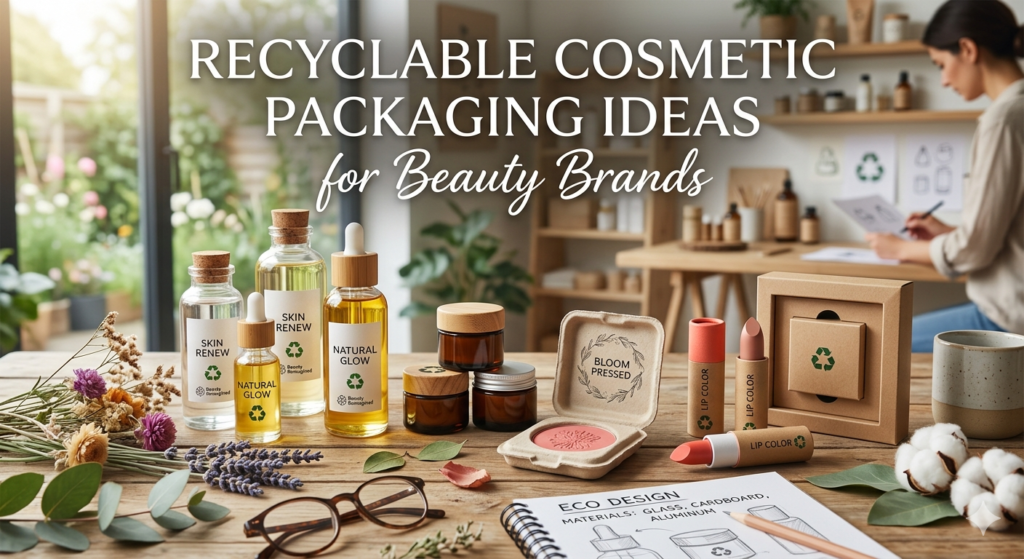
Three days before her product launch, a skincare founder rang us in a panic. Her supplier had delivered 4,000 laminated tubes. Right there on the side, in clean serif font: “sustainable packaging.” Except laminated multi-layer tubes fail every recyclability test curbside, drop-off, specialist stream, all of it. Her retail buyer flagged it before a single unit hit the sales floor. Re-packaging, reprinting, lost shelf slot. Six weeks and $38,000 gone. We tell that story a lot. Not to scare people, but because it is genuinely the most common expensive mistake in this industry, and it almost always happens to founders who thought they had done their due diligence. They had researched materials. They had asked the right questions. Their supplier had just not answered them honestly. So before you print anything with “eco,” “green,” or “sustainable” on it, here is what you actually need to know about materials, about sourcing, about what retail buyers check for, and about what the FTC will hold you to. What Is Recyclable Cosmetic Packaging? Recyclable cosmetic packaging means containers, cartons, and labels that US municipal recycling systems can genuinely process, not just materials that sound sustainable on a product page. PCR plastic, glass cosmetic jars, aluminum tins, FSC-certified paperboard, refillable bottles these qualify. A lot of what gets marketed as eco-friendly packaging cosmetics does not, and that distinction is costing brands money. Why Eco-Friendly Packaging for Cosmetics Is No Longer a Marketing Choice Take this number seriously: the Recycling Partnership’s 2024 State of Recycling Report found that only 21% of recyclable material gets captured across the US. Read that again. Twenty-one percent. So even brands using fully recyclable substrates are still losing the end-of-life battle, because the packaging never communicates clearly enough for the consumer to act. Brands that go through verification earn the right to print standardized disposal instructions on their packaging. One brand we supply passed a Sephora vendor audit on their second attempt, after their first failed despite correct substrates because nobody had assessed their label system separately. Labels. That is what sank them. Meanwhile the EPA has confirmed recycling aluminum saves roughly 95% of the energy required to produce it from raw ore. Glass sits around 30% energy savings. PCR plastic cuts virgin resin extraction out of the picture entirely. These figures matter because retail sustainability buyers request them by name in vendor questionnaires. 6 Recyclable Materials That Actually Perform for Beauty Brands PCR Plastic: Best for High-Volume, Liquid Skincare Formats Post-consumer recycled plastic starts as something someone already used a bottle, a container that got collected, cleaned, reprocessed into new packaging-grade resin. PET #1 and HDPE #2, the two grades most relevant for beauty, are accepted in curbside programs across the vast majority of US markets. For serums, toners, lotions, and pump formats, PCR is usually the most straightforward sustainable choice because it behaves almost identically to virgin resin through filling equipment. One thing suppliers tend not to volunteer: PCR resin shows color variation between batches. It is inherent to working with post-consumer streams you cannot fully control what comes back through the recycling system. For packaging with clear or light-toned designs, set your color tolerances before sampling. Discovering that problem during production is an entirely different financial conversation than discovering it at sample stage. Our Custom Mascara Boxes use PCR-compatible paperboard with soy-ink printing and How2Recycle compliant label stock, built for brands that need documentation ready for retail buyers. Glass Cosmetic Jars: Genuinely Infinitely Recyclable, Genuinely Heavy Glass does not degrade through recycling. It melts, reforms, and performs identically on its fiftieth cycle as its first. That is a material property no plastic substrate can match. US glass recycling rates hover around 31% per EPA data lower than they should be, mostly a collection infrastructure problem rather than a material problem but glass is curbside accepted across virtually every major US metro market. Face creams, body butters, premium serums: glass cosmetic jars are almost always the right call here. The weight tells a story the moment a customer picks it up. That tactile quality is a genuine brand asset. The tradeoff is real though. Glass is heavy. For DTC brands eating their own shipping costs, that weight compounds fast at scale. For retail distribution, where the retailer manages final-mile logistics, the calculus flips and glass often wins on economics too. Aluminum Tins: Nothing Else in Beauty Packaging Recycles Better Nothing in beauty packaging recycles better than aluminum. The Aluminum Association confirms it holds the highest consumer recycling rate of any packaging material in the category, and recycled aluminum uses 95% less energy than producing it from raw ore. For a brand building a zero-waste story, that is not a talking point. That is a verifiable fact you can put in front of a retail buyer. Beyond the numbers, aluminum is infinitely recyclable with zero material degradation, lighter than glass, and has real premium tactile quality. Clean beauty buyers have developed a strong category association with aluminum over the past several years. It photographs well, it fixtures cleanly in retail, and for brands building a zero-waste narrative, aluminum tins give you a specific, verifiable data point to anchor the story. Best fits: solid balms, pressed powders, travel formats, compact refills. FSC-Certified Paperboard: What Retail Buyers Expect on Every Outer Carton Any outer carton in your packaging lineup needs FSC certification. FSC means Forest Stewardship Council certification confirms the wood fiber in your paperboard came from a responsibly managed forest with an audited, documented chain of custody from harvest through manufacturing. FSC paperboard is curbside recyclable, accepts soy-based inks cleanly across a full range of decorative finishes, and is available in calipers covering lightweight folding cartons through rigid retail-grade boxes. The practical reality: major retail accounts include FSC documentation requests in standard vendor onboarding packages. Having it ready removes friction from the approval process. Not having it creates delays that are entirely preventable. Our Custom Beard Oil Boxes are FSC-certified with reinforced base seals engineered for oil-based formats, including
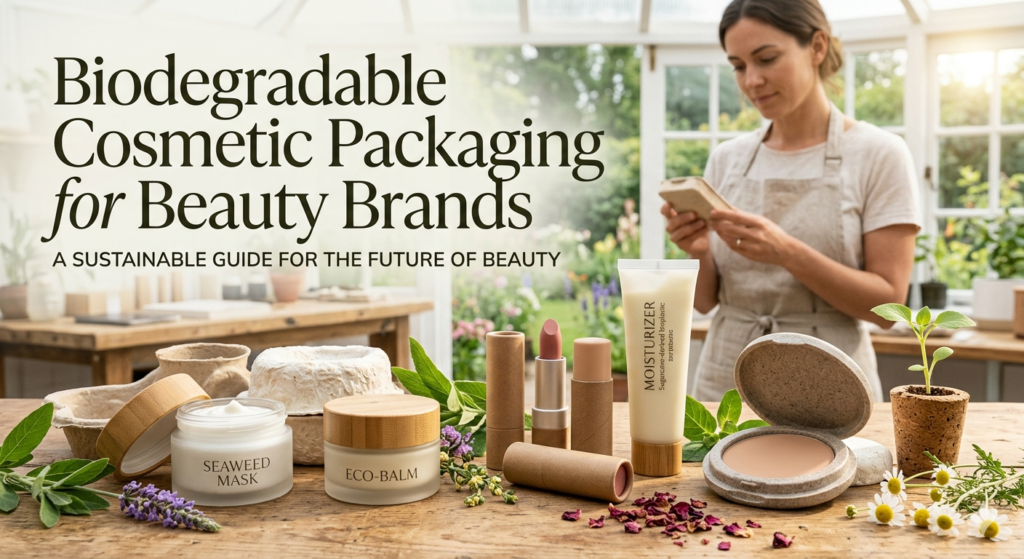
Here’s a scenario that plays out more often than most beauty founders want to admit. A brand spends eight months sourcing clean ingredients, passes every safety benchmark, builds a loyal community around natural living then wraps the whole thing in a virgin plastic box with a UV gloss coating that will outlast the founder’s grandchildren. That’s not a niche problem. The beauty industry generates roughly 120 billion packaging units every year, and the overwhelming majority are not recyclable, not compostable, and not going anywhere fast once they hit a landfill. Biodegradable cosmetic packaging solves the last mile of the sustainability problem. It covers boxes, cartons, sleeves, and secondary packaging made from materials kraft paper, bamboo board, PLA bioplastic, post-consumer recycled content that actually break down after use without poisoning the soil in the process. In 2026, getting this right isn’t optional anymore. Retailers screen for it. Clean beauty platforms gate access on it. The FTC is enforcing it. Why So Many Brands Are Scrambling to Switch Something shifted hard between 2023 and 2025. Before that, a vague “eco-friendly” claim on a box was basically a free pass. Consumers wanted to believe it. Retailers didn’t dig deeper. Nobody was really checking. That’s changed. The FTC Green Guides govern every environmental marketing claim made in the US market. Under those rules, calling your packaging “biodegradable” without a qualified timeframe and specific conditions statement isn’t just misleading — it’s a compliance exposure. The Biodegradable Products Institute uses ASTM D6400 as the de facto certification standard for compostable claims. Without third-party verification behind your copy, you’re one complaint away from a regulatory headache you didn’t budget for. The commercial case is just as clear. A joint study by McKinsey & Company and NielsenIQ covering 600,000 product SKUs and $400 billion in US retail revenue, found that products with verified sustainability claims grew 28% cumulatively over five years, against 20% for products without them. In personal care specifically, products with “sustainable packaging” claims showed a 4.7% growth differential over direct competitors making no such claims. That’s not a feel-good stat. That’s a revenue gap, and it widens every year. The brands making the switch aren’t doing it purely out of conviction. They’re doing it because the retail landscape rewards it and the regulatory environment increasingly punishes the alternative. Which Materials Actually Hold Up for Cosmetics Not every eco-friendly material works the same way in a cosmetics context. There are real trade-offs, and ignoring them leads to expensive restarts. It is the most field-tested option in this category. FSC-certified kraft at 350gsm to 450gsm handles the structural demands of cosmetic secondary packaging — drop testing, shelf stacking, transit vibration without issue. It takes soy-based inks cleanly, holds emboss and deboss detail well, and degrades in two to six weeks under industrial composting conditions. The one thing kraft won’t do is fake a premium feel on its own. You need good print work. With it, kraft competes with anything. It has become the go-to for premium skincare and fragrance lines that can’t afford to look like they compromised on luxury. Bamboo regenerates in three to five years without replanting, compared to decades for hardwood. The cost premium over kraft is real at lower volumes, but the tactile quality justifies it at the right price point. It trips up a lot of brands. It looks and feels like conventional plastic, which is exactly why it’s tempting for primary packaging. The catch: PLA only breaks down at temperatures above 58°C inside industrial composting facilities. Toss it in a home bin and nothing meaningful happens. If your packaging uses PLA, your labels must say “industrially compostable” specifically or you’re misrepresenting the product under FTC standards. It is (post-consumer recycled) is often the fastest route to a defensible eco claim. It uses materials already through one product lifecycle, qualifies for FSC chain-of-custody certification, and works across every standard cosmetic box format without reformulating your packaging structure from scratch. For brands with a hard launch date, PCR buys compliance time while longer material transitions happen in the background. Pairing the Right Material With Your Product Material choice isn’t universal; it follows the product. Eyeshadow packaging takes more mechanical abuse than most people realize. Palettes get opened and closed dozens of times, tossed in bags, pressed up against other products in transit. FSC-certified kraft with water-based coatings handles repeated use without delaminating. Conventional eyeshadow cartons rely on laminate layers that kill compostability — kraft avoids that entirely. Our Custom Eyeshadow Boxes are spec’d this way by default, no upcharge for the eco material choice. Nail polish boxes carry their own constraint: you need structural protection for glass bottles plus minor chemical resistance at seams in case of leakage. A corrugated kraft inner with a smooth kraft outer sleeve solves both without adding non-compostable components. Our Custom Nail Polish Boxes come in this configuration at any order size, including small sampling runs. Fragrance is the hardest category to dress in eco packaging because luxury perception is doing real commercial work before the customer even opens the box. Bamboo composite with a PCR inner liner is the combination premium fragrance brands keep coming back to. FSC-certified board with soft-touch water coating gets close at a lower cost. Both options are available across our Custom Perfume Boxes range, with free design support included and zero minimum order quantity on any configuration. What Switching Actually Costs The cost objection stops more brands than it should, and usually because the comparison isn’t being run correctly. The gap between FSC-certified kraft and conventional plastic alternatives has narrowed to roughly 8 to 12 percent at mid-volume for most cosmetic box formats. At higher volumes that gap closes further, because kraft and recycled board commodity prices don’t swing with oil markets the way petroleum-derived plastics do. What rarely gets counted on the plastic side: die charges, plate fees, minimum order quantities that lock up working capital in six months of inventory you may not need. Custom eco friendly cosmetic packaging
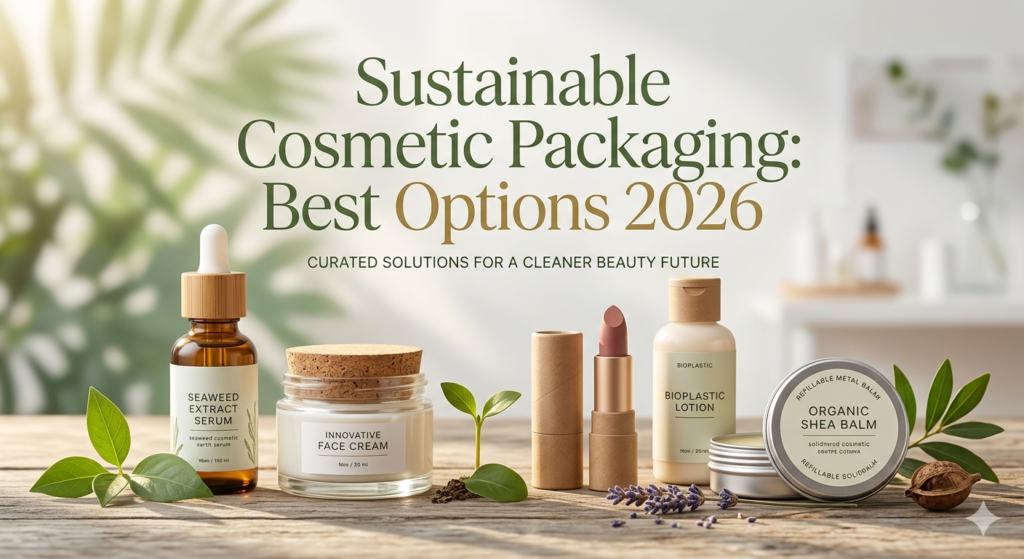
Last spring, a skincare founder walked into a Sephora vendor review with a product she’d spent nearly a year developing. The buyer opened the box, tested the formula, and nodded. Good stuff. Then she flipped the carton over. “We updated our sustainability criteria in January. This material won’t pass our scorecard.” Eight months of work. Rejected over packaging. I keep hearing versions of this story. Beauty founders are losing retail opportunities not because their product failed, but because the box around it did. In 2026, sustainable cosmetic packaging has become the default expectation from retail buyers, not a bonus they reward you for. The brands still treating this as a future consideration are finding out the hard way it already happened. What Does Sustainable Cosmetic Packaging Actually Mean? Most definitions make this sound more complicated than it is. Sustainable cosmetic packaging means choosing materials that cause less harm during production, during shipping, and after the customer throws the box away. That covers a wide range of options. Recyclable jars made from glass or aluminum. Biodegradable packaging built from plant-derived inputs. Cosmetic containers using post-consumer recycled content. Refillable packaging systems customers top up instead of replacing. Plastic-free packaging options built from paper, glass, or metal. The practical question isn’t which definition you prefer. It’s which option works for your product and your price point right now. The Pressure Beauty Brands Are Facing in 2026 Here’s where things stand. The global cosmetics industry generates over 120 billion units of packaging waste every year. Most of it ends up in landfills, largely because cosmetic packaging typically combines materials laminated paper layered onto plastic, attached to metal closures in ways that make sorting for recycling nearly impossible. BeautyMatter’s 2026 packaging trends report covers this in detail, including how brands are now being pushed toward mono-material formats specifically to address this. Retail buyers know this problem well. And they’re acting on it. Target, Sephora, and Ulta have all introduced formal packaging sustainability reviews as part of new product onboarding. Fail the scoring and the conversation ends before it starts. On the regulatory side, California’s SB 54 requires consumer product packaging to hit 100% recyclability by 2032, with a verified 65% recycling rate built in. The EU’s PPWR regulation moved into full enforcement in August 2026. I want to be direct about something. Brands in the US sometimes treat European regulation as irrelevant to them. But if you sell internationally, or if you work with any retailer running ESG commitments, these regulations set the standard your buyers are already benchmarking against. Your outer box speaks before your customer reads a single word of your product copy. The 5 Best Sustainable Cosmetic Packaging Materials Right Now Every material has tradeoffs. Here’s the honest version. 1. FSC-Certified Paperboard Paperboard is where most brands should start. It’s curbside recyclable in the majority of US cities, straightforward to customize, and accepted without question by major retailers. Paper-based cosmetic packaging grew 40% between 2020 and 2023 as brands rushed to meet new retail requirements. Water-based coatings have improved enough that moisture resistance is no longer the barrier it used to be for secondary cosmetic containers. If your brand sells through retail channels and you haven’t switched your outer boxes yet, paperboard is the obvious first move. 2. Post-Consumer Recycled (PCR) Plastics The shift toward recycled materials in cosmetic packaging isn’t just a trend it’s becoming measurable. Estée Lauder is one of the clearest examples: the company started with just 8.7% PCR content across its packaging in fiscal year 2019, pushed that to 15% by FY2021, and reached 19% by 2023 steady, consistent progress that signals where the premium segment is heading. Looking ahead, the brand has set a target of 25% PCR by 2025 and pledged to bring virgin petroleum plastic down to 50% or less of its total packaging by 2030. What’s driving this momentum isn’t just pressure from regulators or consumers, it’s the fact that PCR plastic actually works. It holds up structurally, protects against moisture, and performs on the shelf the same way virgin plastic does. That makes it especially well-suited to formats like pump bottles, tubes, and dispensers, where switching to glass or paperboard simply isn’t a practical option. For these product types, PCR isn’t a compromise, it’s the logical next step. 3. Glass Genuinely infinitely recyclable, and it signals quality in a way other materials simply don’t match. The downside is weight. Heavier shipping means higher freight costs and more breakage risk in transit. For prestige skincare, facial oils, or serums where the weight and feel of the container are actually part of the product experience, glass makes sense. For high-volume mass-market products, the logistics math often doesn’t work in its favor. 4. Aluminum Aluminum’s environmental credentials are strong. Recycling requires only 5% of the energy needed to produce virgin aluminum, and European recycling rates for aluminum packaging sit around 75%. In the beauty industry, aluminum is growing fastest in lip balm, deodorant, and waterless concentrate formats. Brands pivoting toward solid or waterless beauty formulations are finding aluminum the most natural packaging fit for the category. 5. Bioplastics (PLA) PLA deserves a longer explanation than it usually gets. It’s derived from plant starch — often corn or sugarcane and it does break down under the right conditions. The critical detail is that those conditions require industrial composting facilities. Put PLA packaging in a standard landfill and it behaves almost identically to conventional petroleum plastic. So if you’re considering PLA for your eco-friendly packaging story, you need to honestly assess whether your customers have realistic access to industrial composting. In most US cities, they don’t. If your market lacks that infrastructure, recyclable paperboard communicates your sustainability commitment more credibly. Choosing Packaging by Product Type Material options are one thing. Applying them to specific products is different. Here’s what actually works per category. Eco-Friendly Packaging for Lip Balms Lip balm has constraints most other cosmetic categories don’t. Units are small, SKU counts run high, and direct skin
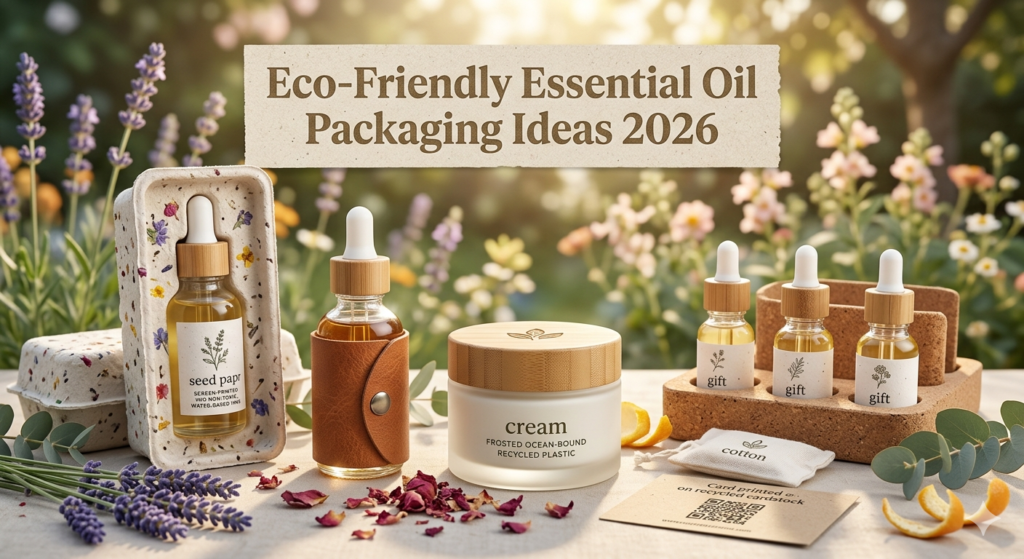
Picture this. A small-batch lavender oil brand in Portland spent two years building a “pure, natural” identity, then shipped their oils in glossy plastic-laminated boxes. Customers noticed. Reviews started mentioning the disconnect. The brand relaunched with unbleached kraft tuck boxes and water-based inks. Repeat purchase rates climbed. Their packaging finally matched their promise. Most wellness buyers notice when something feels off. They pick up a bottle of pure lavender oil, read the “all natural, chemical free” copy, and then turn the box over to find a glossy plastic-laminated finish and a synthetic coating that squeaks under their thumbnail. It creates doubt before the product is even opened. In 2026, that kind of disconnect costs brands real money. The good news is it costs almost nothing to fix. The essential oils market is on track to hit $19.79 billion by the end of 2025, growing at 13.3% annually, according to Free Yourself market analysis. Inside that growth, one shift stands out above the rest. More than 39% of brands are actively moving toward zero waste packaging and cleaner sourcing because their customers are demanding it, according to Global Growth Insights. Your packaging stopped being just a container a long time ago. Today it functions as a compliance document, a brand statement, and a conversion tool, all in the same moment a buyer picks it up off the shelf. What is a Eco-Friendly Essential Oil Packaging When wellness brands ask what eco-friendly essential oil packaging actually means in practice, the answer comes down to three things. Material choice, label integrity, and print process. Unbleached kraft paperboard, amber glass bottles, FSC-certified board, and paper-based biodegradable labels form the foundation. Together, they reduce plastic dependency, hold up under FTC Green Guides scrutiny, and send the right signal to buyers who read every line on the box. Why Eco-Friendly Essential Oil Packaging Is a Business Decision, Not Just an Ethical One Wellness buyers are not sentimental about packaging. They are practical. They read ingredient labels, they check certifications, and most of them evaluate at least three or four vendors before they commit to a wholesale order. Sustainability is not what convinces them to buy. It is what keeps them from ruling you out. The sustainable packaging market is moving from USD 292.71 billion in 2024 toward USD 423.56 billion by 2029, at a 7.67% CAGR, driven by consumer demand, circular economy policies, and tightening single-use plastic regulations, according to Meyers. That kind of growth does not happen because brands suddenly grew a conscience. It happens because the market made sustainability a commercial requirement. There is also the compliance dimension. Getting your environmental claims wrong is not just a branding problem. Under FTC Green Guides (16 CFR Part 260), vague or unsubstantiated recyclability and biodegradability claims on packaging carry real legal exposure. Sourcing FSC-certified, verified materials from the start means you never have to walk a claim back. You print it on the box with confidence because the paper trail behind it is clean. Best Materials for Sustainable Essential Oil Packaging This is the section where most small wellness brands get tripped up. They hear “eco-friendly” and assume it means paying more for materials that look worse and hold up less. That is rarely true. In most cases, the right sustainable material for essential oil packaging costs the same or less than its conventional counterpart, and it performs better on shelf because it reads as authentic to the buyer holding it. It is the most practical starting point. It is curbside recyclable across 48 US states, accepts soy-based inks cleanly, and communicates authenticity without a single word of copy. For tuck box formats, 300 to 350 GSM kraft board holds structure without excess material. It costs less than UV-laminated coated board and ships flat, reducing transit waste at every step. It remains the gold standard for the oil itself, and for good reason. Glass does not interact chemically with the formulation inside. It does not leach anything into the product over time the way certain plastics do. Amber and cobalt glass specifically block UV wavelengths that degrade oil potency, which means fewer returns and longer shelf life. It is also infinitely recyclable without any loss of quality, making it one of the cleanest material choices available across the entire natural product packaging chain. They are the part most brands forget to audit. A fully recyclable kraft box paired with a non-recyclable synthetic label is no longer recyclable as a unit. The label compromises the whole thing. FSC-certified paper labels with water-based adhesives keep every part of the packaging in the same recyclable stream. The How2Recycle program offers standardized on-pack labeling guidance, and putting that symbol on your product is a recognition signal most US buyers already understand and trust. They have improved significantly over the past two years. Kraft-lined foil-free pouches, compostable PLA-blend barrier bags, and moisture-resistant coated paper wraps now cover most use cases that foil mylar was previously the only answer for. These work particularly well for brands shipping to humid markets or building gift set collections where secondary packaging adds a layer of protection around the primary bottle. Sustainable Packaging Structures That Work for Essential Oil Brands Choosing a material is only half the decision. The structure determines how your product ships, shelves, and presents at the point of unboxing. Our tuck boxes in unbleached kraft are the go-to format for single-oil retail packaging. They are shelf-ready, customizable to any SKU dimension, and printable with soy-based inks in full CMYK. No UV laminate required. And there are no die or plate charges. No minimum order quantity. For a wellness brand launching three to five SKUs, this is the lowest-risk entry point into recyclable essential oil packaging. For premium single-origin oils and curated gift sets, rigid boxes are worth the investment. A 2mm greyboard rigid box communicates quality without saying a word. The physical weight of it in a buyer’s hands does real work before they even see the product inside. Wrap it
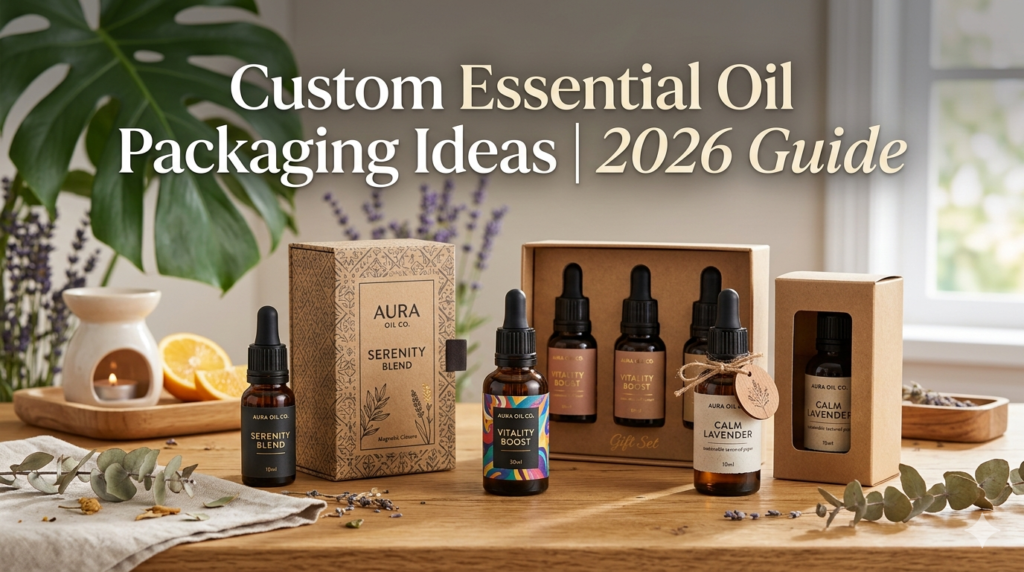
What Is Custom Essential Oil Packaging and Why Does It Matter in 2026? Custom essential oil packaging is purpose-built box and label design that protects your product, communicates your brand identity, and drives purchase decisions at the shelf level all in one touch. Here is the reality. The U.S. essential oil market reached $10.63 billion in 2025 and is projected to hit $11.65 billion by the end of 2026, according to Market Data Forecast. That growth means more competition, more noise, and more brands fighting for the same shelf space and the same buyer attention. Your packaging is the first sales rep your brand has. In most retail and wholesale environments, it is also the only one. At PackagingShip, we have produced custom boxes for wellness and CBD brands across the US. One pattern holds true across every product category: brands that invest in branded essential oil packaging grow faster than those that treat boxes as an afterthought. This is not my opinion. It is what the order history shows. What Makes Essential Oil Packaging Look Truly Premium? Most brands get this wrong. They assume premium means expensive. It does not. Premium means intentional. Here are the four factors that actually separate luxury oil packaging from a forgettable white box. Custom Essential Oil Box Ideas for Every Brand Positioning There is no single right answer for custom essential oil boxes. The right structure depends on your distribution channel, your price point, and your customer archetype. It needs rigid boxes with magnetic closures, interior foam or pulp inserts, and foil-stamped custom labels on textured stock. This is a premium positioning play. The packaging cost per unit is higher, but it supports a price point of $40 to $90 per product without buyer resistance. It performs better with kraft tuck boxes printed with soy-based inks on recycled paperboard. Minimalist design with earthy tones and clean sans-serif typography. This audience responds to visual restraint. Overdesigned packaging signals inauthenticity to this buyer. They need personalized essential oil packaging built for the unboxing moment. Custom mailer boxes with interior print, tissue paper layers, and branded inserts. This is your viral moment. One unboxing post on social generates your paid ads budget cannot buy. It needs clean white or cream packaging with precise, information-dense labels. Trust comes from clarity here, not decoration. Essential Oil Label Design: Compliance First, Aesthetics Second This is where most early-stage essential oil brands make an expensive mistake. They design the label around the logo and add compliance information as an afterthought. FDA regulations for cosmetic-use essential oils require specific elements: the product name, net quantity of contents, distributor name and address, and ingredient list in descending order of predominance. If your label misses any of these, your product cannot legally sit on retail shelves. Worse, some wholesale buyers will reject your shipment outright before it reaches their distribution center. The essential oil label design that works best in 2026 follows a clear hierarchy. Your brand mark anchors the front panel. With your product name and key benefit claim sit directly below it. Your compliance information occupies the back panel in a legible minimum 6pt font. Then, your ingredient list runs in INCI nomenclature. Barcode and lot number complete the back panel. For more on essential oil packaging standards and how they apply to your product line, click here. For authoritative FDA cosmetic labelling requirements, bookmark the FDA’s official Summary of Cosmetics Labeling Requirements; it covers everything governed by the FD&C Act and the Fair Packaging and Labeling Act in plain language. The International Fragrance Association also maintains the publicly accessible IFRA Transparency List, a 3,691-ingredient reference updated in 2025 that many premium essential oil brands now voluntarily align with to signal formulation integrity to wholesale buyers. Private Label Essential Oil Packaging: What Wholesale Buyers Actually Look For Private label essential oil packaging is a different brief entirely. You are not designing for a single consumer. You are designing for a wholesale buyer who will resell your product under their own brand, or for a retailer evaluating your product for planogram placement. What wholesale buyers look for first is consistency. Can you produce 500 units with identical color matching, identical label registration, and identical structural quality? This is a quality control question, not a design question. Your packaging vendor needs to answer it before your graphic designer touches a brief. Second, they look at shelf presence. Your packaging needs to perform in a planogram environment where it sits between competing products at the same price point. Does your packaging draw the eye? Is this the logo read from 18 inches? Does the color palette differentiate you from the three products next to yours? Third, wholesale buyers look at label compliance. They have compliance teams. If your label fails their review, your relationship ends before it begins. At PackagingShip, our rigid boxes are built to meet wholesale retailer standards across natural product channels including specialty health retailers and boutique wellness stores. How to Order Custom Essential Oil Packaging with No Minimum Order Quantity One of the most common questions we receive is about minimums. Small and mid-size essential oil brands frequently get turned away by packaging vendors requiring 1,000 or 5,000 unit minimums. That is a cash flow problem disguised as a supplier relationship. PackagingShip operates with no MOQ. You can order the quantity your launch requires, not the quantity your vendor’s production floor requires. Free design support is included. Free US shipping is included. There are no die or plate charges. Here is what to prepare before you request a quote. Know your box dimensions including the bottle size, cap height, and whether you need an insert. Have a concept for your color palette and finish preference. Know your quantity and your target delivery date. Typical production turnaround for custom essential oil boxes runs 8 to 12 business days after artwork approval. Rush production is available for launch-critical timelines. Conclusion: In a market growing toward $11.65 billion in 2026, no essential