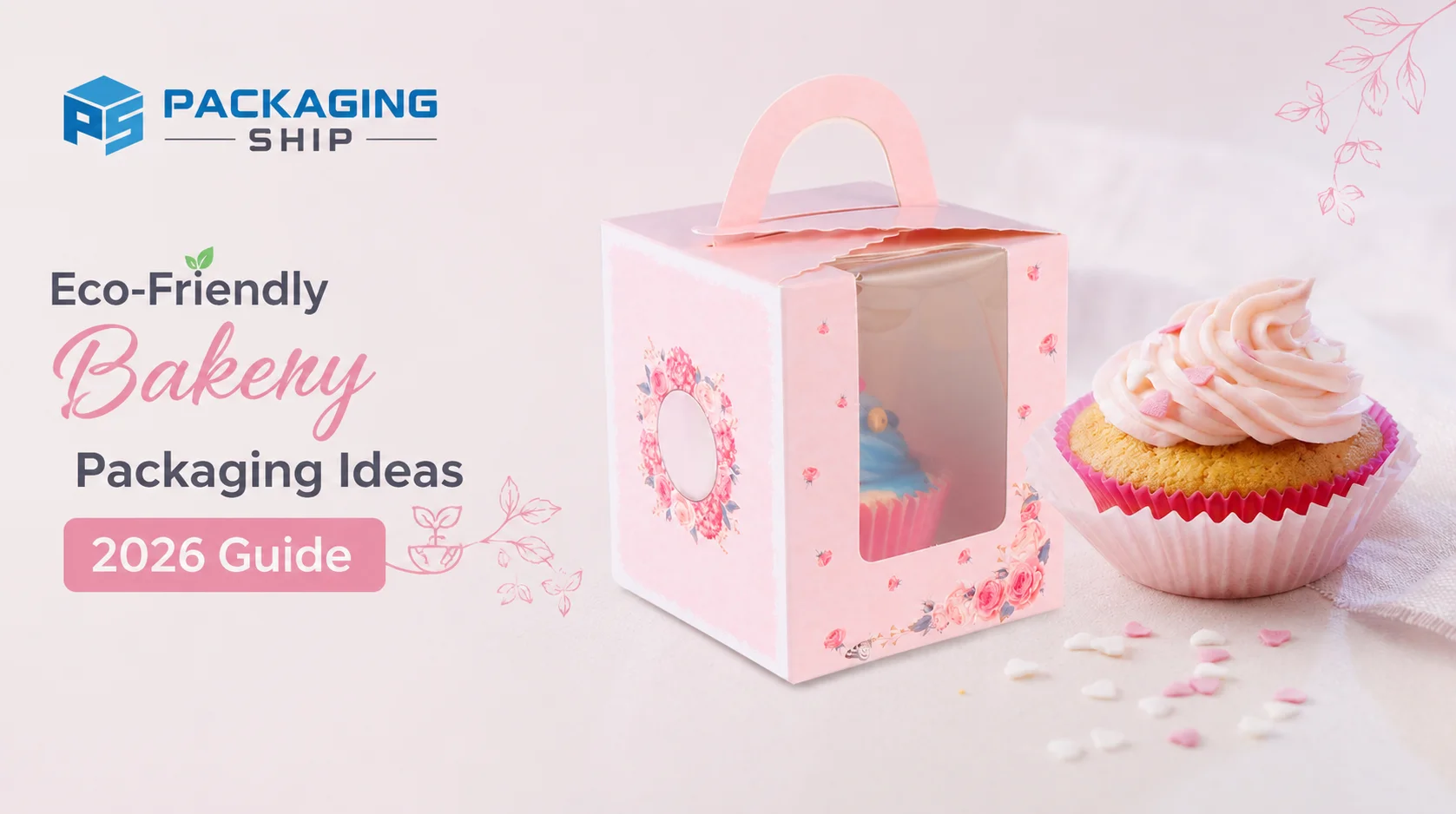
What is eco-friendly bakery packaging? It’s food-safe packaging, kraft paperboard, FSC-certified board, recycled fiber, compostable material, that replaces plastic laminates without compromising food safety or shelf presentation.
Last year, a small Brooklyn cookie brand switched their retail boxes from PET clamshells to uncoated kraft with water-based ink printing. Their sales rep told them it’d hurt shelf appeal. It didn’t. Customers kept stopping to pick the box up, feel it, photograph it. That tactile, earthy quality communicated something no glossy plastic lid ever could, that somebody cared about what was inside.
That’s what eco-friendly bakery packaging actually does when it’s done right. It’s not a PR gesture. It pulls the selling weight.
The broader market backs this up too. McKinsey and NielsenIQ tracked product performance across categories and found that items with genuine environmental claims grew 28% over five years, while products without those claims grew 20%. According to Meyers and Golden Arrow, data puts the sustainable packaging industry at roughly USD 292 billion in 2024, heading toward USD 423 billion by 2029. Bakery brands sitting on the fence about switching aren’t playing it safe. They’re just falling behind.
Here’s something worth being direct about: generic green claims are hurting brands now, not helping them. Puratos retail research tracked US consumer attitudes and found over 60% of buyers want actual proof, a certification mark, a standard name, something verifiable, before they believe a sustainability claim. Sticking a leaf graphic on a plastic-laminated box isn’t just ineffective anymore. Buyers call it out online.
So what does genuinely sustainable bakery packaging look like when it’s sitting in front of you on a production spec sheet?
It is where most bakery brands start, and honestly it makes sense. The material runs naturally brown, takes FSC chain-of-custody certification without complication, and works with water-based inks that keep PFAS out of the picture entirely. Board weights between 280 and 350 gsm cover the full product range, delicate macarons on the light end, stacked wedding cake tiers on the heavy end, without structural issues. And something nobody talks about enough: uncoated kraft photographs dramatically better than glossy plastic on social media. That’s a real marketing advantage, not a talking point.
It goes a step further. The certification that actually means something here is BPI, Biodegradable Products Institute. A BPI mark on a box tells you it breaks down in a commercial composting facility within 180 days. That’s a testable, documented claim. Without it, “compostable” is just a word printed on the side. B2B buyers at grocery chains and food co-ops have started asking for the BPI certification number by name during procurement conversations. That shift happened fast.
It is built from post-consumer recycled (PCR) fiber, carries the How2Recycle label, which is the mark that actually shows up in retailer sustainability reports and corporate ESG filings. If wholesale distribution is in your growth plan, this label goes from optional to a procurement condition pretty quickly.
Most supplier websites hand you a material list and leave you to figure out the rest. What bakery operators actually need is a spec-level comparison against real product categories.
Regardless of which material you choose, food contact compliance isn’t optional. FDA 21 CFR Part 176 governs paper and paperboard in direct food contact. Ask your vendor for written confirmation, an actual document, not a verbal assurance on a sales call.
Of all the objections that stall packaging transitions, the cost one is the most persistent and, frankly, the most overstated. Let’s look at real numbers.
At 5,000 units, kraft board boxes typically come in within 8 to 12 percent of equivalent PET plastic clamshells on a per-unit basis. Close the volume to 10,000 units and that gap shrinks further.
Do the math on 10,000 units with a $0.10 per-unit cost difference: you’re spending $1,000 more on packaging. At a conservative 5% price premium on an $8 transaction, you recover $0.40 per sale. That $1,000 is recovered after 2,500 sales, roughly one decent weekend at a farmers market booth, let alone a retail placement.
Plastic-free bakery packaging is not the expensive choice. It’s the choice bakery founders keep getting talked out of by suppliers who profit from the status quo.
Most bakery owners who’ve made the switch say the same thing afterward — it was simpler than they expected. The sequence matters though.
Pull every SKU. List which products currently live in plastic clamshells or laminated film. Your replacement priority list should lead with the highest-volume items and anything that faces retail customers directly. Those packaging changes hit brand perception fastest.
FSC chain-of-custody certificates. BPI certification numbers on any compostable item. Written FDA 21 CFR Part 176 compliance confirmation via email, not a phone conversation. Any supplier who can’t send those documents within 48 hours shouldn’t be supplying your food-contact packaging. Full stop.
A compostable board takes ink differently than coated white stock. Your designer needs the substrate spec before the art file is built, not after the proof comes back wrong. Water-based inks, soy-based varnishes, UV spot coating, all of these are available on sustainable substrates. The branding quality loss that people worry about is mostly a myth built on working with the wrong supplier.
Sustainability and premium branding stopped being competing priorities a while ago. The bakery brands pulling ahead in 2026 are running both out of the same box.
For truffles, macarons, hand-decorated brownies, and artisan confections, Custom Sweet Boxes in FSC-certified kraft with full-color printing give retail shelf presence that PET windows genuinely can’t match. There’s a tactile weight to uncoated kraft that communicates quality before anyone opens the lid.
For hand pies, artisan quiche, seasonal tarts, and savory pastry, Custom Pie Boxes in food-safe recyclable boards ship free anywhere in the US through Packaging Ship, free design support, no die charges, no plate fees, zero minimum order quantity.
Want to see the full range broken down by product type and board material? Browse the complete Bakery Boxes collection for sizes, specs, and a free custom quote.
No minimum order. Free design. Free US shipping. Custom eco-friendly boxes built to FDA food-safe and FSC-certified standards.
Somewhere around 2024, green food packaging stopped being a differentiator and became a baseline expectation. By mid-2026, retail buyers, wholesale distributors, and end consumers are all asking the same question, not “do you use sustainable packaging?” but “which certifications can you show me?”
Eco friendly bakery packaging done properly cuts your environmental footprint, sharpens brand perception, opens wholesale channels that plastic packaging closes, and generates a margin buffer that justifies the switch on numbers alone. The operational complexity is smaller than most bakery founders expect. The cost difference is smaller than most suppliers will tell you.
Packaging Ship carries the full range, no MOQ, free design support, free US shipping, food-safe and FSC-certified throughout.
At volume, the per-unit cost gap between kraft board and PET plastic sits around 8 to 12 percent. McKinsey’s consumer data shows buyers paying 5 to 9 percent more for products in sustainable packaging. That premium typically covers the cost difference well inside your first few thousand sales.
Three: FSC for paper sourcing accountability, BPI for certified compostability, and How2Recycle for recyclability. These are what retail partners and B2B procurement teams reference in sustainability reporting, everything else is essentially marketing copy.
Yes, when sourced correctly. Kraft paperboard with water-based inks and clay coatings is compliant with FDA 21 CFR Part 176. Get written confirmation from your vendor and verify the inks are PFAS-free before ordering.
Yes. Packaging Ship offers custom eco-friendly bakery boxes with full-color printing, free design support, no die or plate charges, no MOQ, and free US shipping on all orders.
FSC-certified kraft with water-based inks covers most bakery applications well. For cream-filled or refrigerated items, BPI-certified compostable sugarcane board handles moisture better. Both are plastic-free, food-safe, and verifiably sustainable with documentation.