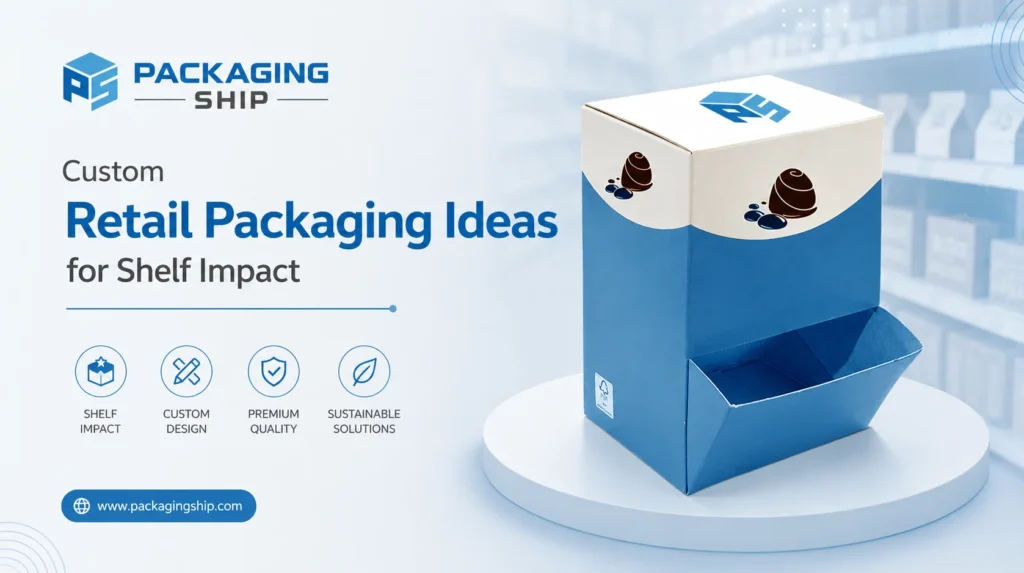
Custom Retail Packaging Ideas to Make Your Products Stand Out on Shelves Here’s something nobody tells new brand owners: your product could be genuinely excellent and still not sell because the box around it failed. It sounds harsh. But anyone who has spent time walking retail floors knows it’s true. A buyer has maybe three seconds at shelf level before their eye jumps to the next product. Three seconds is not enough time to read your features list. It’s barely enough time to register that your product exists. That’s the real job of retail packaging. Not protection. Not legal compliance. The real job is stopping someone mid-stride and making them reach for it. Business Dasher’s research found that 81% of consumers have bought a new product directly because the packaging grabbed them, and 72% say packaging design shapes their purchase decision before anything else does. These aren’t numbers from a packaging company’s marketing deck. They come from consumer behavior studies tracking what buyers actually do, not what they say they’ll do. ClearBags So when your branded retail packaging blends into the shelf, you’re not just losing a visual contest. You’re losing the sale before the buyer even consciously registers your brand. This guide lays out the custom retail packaging ideas that B2B brands are genuinely using right now to pull ahead of category competitors and build real shelf velocity. What Is Custom Retail Packaging and Why Does It Decide Your 2026 Sales? Custom retail packaging is packaging built around your product specifically, its dimensions, its audience, its retail environment, and your brand language. The word “custom” matters more than people give it credit for. A generic white box with a sticker label tells the buyer something. It tells them you didn’t think about them. Shelf-ready packaging goes one step further. It means your product moves from the shipping carton directly onto the display floor, organized and brand-consistent, without the retailer doing extra work. Retailers notice that. It’s one of the quieter ways that packaging decisions either strengthen or damage wholesale relationships. PMMI data shows three-quarters of manufacturers are already pursuing shelf-ready strategies because retail buyers increasingly favour suppliers who make their job easier. Refine Packaging The gap between a product that sells through in three weeks and one that sits for three months is rarely the product itself. More often it comes down to whether the packaging did its job at the shelf. 6 Custom Retail Packaging Ideas That Actually Move Product 1. Printed Tuck-End Boxes: High Volume, Brand Consistent Tuck-end boxes are the workhorses of retail packaging design. They’re cost-efficient, easy to assemble at scale, and give you a full 360-degree canvas for CMYK print, spot UV, or matte lamination. Brands launching new SKUs use tuck-end structures because they compress lead time without sacrificing shelf presence. The key is full-bleed print coverage and one strong design element on the front panel that reads from 18 inches away. 2. Rigid Setup Boxes: When the Box Is the Product Some products need packaging that signals premium before the buyer touches them. Rigid setup boxes are exactly that. They don’t collapse. They feel substantial. And they photograph well, which matters enormously in 2026 when unboxing content drives discovery across social channels. In-store packaging must protect the item during transit and communicate important information to the user, while also making the product appealing from the shelf and encouraging customers to pick it up. Packaging Digest If you’re selling watches, fragrance, or high-end accessories, rigid is the structural choice. Custom Watch Boxes from PackagingShip are a direct example. The box signals quality before the product is seen. That first physical impression converts browsers to buyers. 3. Display Packaging: Turn the Counter Into a Billboard Display packaging is one of the most underused custom retail packaging ideas for brands trying to expand retail placement. A well-designed counter display doubles as a silent salesperson. It positions multiple SKUs together, creates visual weight in the retail environment, and typically boosts trial rates because it’s physically accessible without asking for help. Custom Dispenser Boxes built for high-frequency retail environments keep product moving at checkout counters with zero restocking friction for the retailer. 4. Custom Cube Boxes: Compact, Stackable, Shelf-Dominating Cube boxes maximize shelf real estate through uniform geometry. They stack cleanly, they’re easy to planogram, and because every face is equal, your printed retail packaging gets six surfaces of brand exposure instead of one. For brands selling in competitive beauty, wellness, or gift categories, Custom Cube Boxes deliver both structural efficiency and visual impact. 5. Custom Tumbler Boxes: Where Protection Meets Presentation Tumbler packaging is a specific structural challenge. The product is heavy, often oddly shaped, and the packaging needs to protect it without looking utilitarian. Custom Tumbler Boxes solve this with a form-fit structure that protects in transit and looks polished at retail. The result is a branded box that earns space on gift shop shelves, boutique retailers, and specialty stores without any apology. 6. Kraft and Eco-Finish Boxes: The B2B Buyer’s Sustainability Signal According to Shorr Packaging’s 2025 survey of over 2,000 American consumers, 90% said they are more likely to purchase from a brand if its packaging is eco-friendly, and 54% deliberately chose products with sustainable packaging in the past six months. Shorr Packaging Eco-finish branded boxes, whether kraft board, recycled content, or FSC-certified material, communicate brand values before the buyer reads a word of copy. This matters especially in wellness and specialty retail categories where the buyer audience is actively screening for sustainability credentials. Retail Packaging Design Principles That Separate Shelf Winners From Shelf Wallflowers Good packaging design follows a discipline, not just an aesthetic preference. These three principles govern what actually works on a retail shelf. Visual hierarchy starts at the structural level. Your box structure determines how the printed design behaves in a shelf set. A tuck box with a wide front panel reads differently than a cube. Make structural decisions before design decisions. Color contrast beats color preference. Your packaging
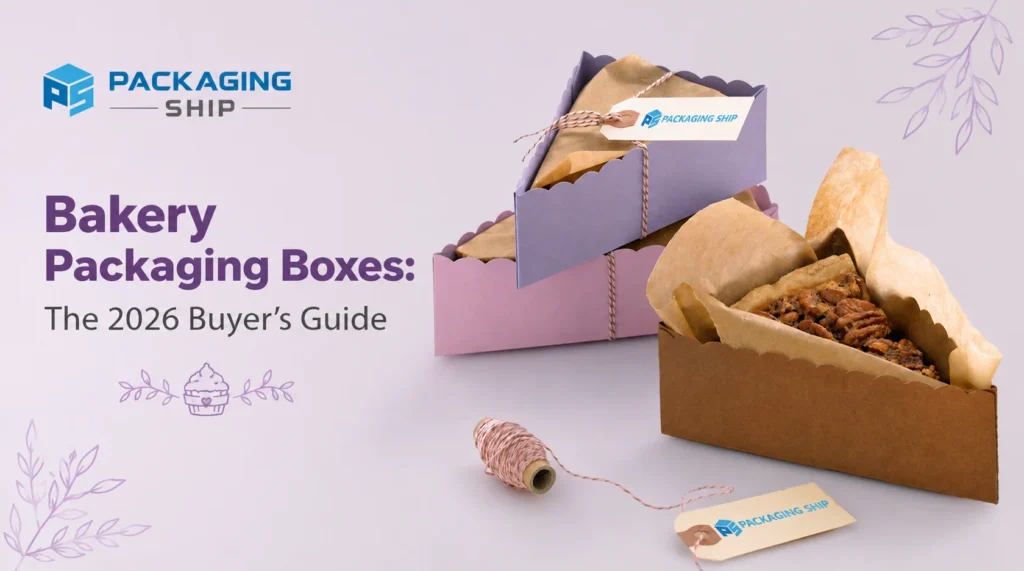
Bakery Packaging Boxes: The 2026 Buyer’s Guide What are bakery packaging boxes? They are food-safe containers, made from SBS board, kraft paper, or corrugated fiberboard, used to carry, protect, and present baked goods from your kitchen to your customer. A bakery owner in Denver once told me her packaging nearly cost her a wholesale account before she even knew there was a problem. She had landed a regional café chain. Forty-eight units a week. She was ecstatic. By the third delivery, boxes were arriving with grease bleed-through on the base and dented corners from stacking. The café manager called once. Then they just stopped ordering. Her product was genuinely excellent. Her packaging spec was wrong in three specific ways, all of which were fixable. She just did not know to ask the right questions before placing her first order. That story is not unusual. Most bakery founders and procurement managers encounter it at some point. And the frustrating part is that the fix is never complicated, it just requires knowing what to look for before you commit to a run. The bakery packaging market reached USD 3.65 billion in 2025 and is expected to climb to USD 4.71 billion by 2030, growing at a 5.24% CAGR, according to Research and Markets. That growth signals something real: more bakery brands are competing for the same retail shelf space, the same café accounts, the same direct-to-consumer customers. The ones winning those accounts share one common thread. Their packaging does its job. This guide is for bakery owners and procurement teams who want to get that right the first time. What Type of Bakery Packaging Boxes Do You Actually Need in 2026? There is no single correct answer here, and anyone who tells you otherwise is selling one product. The right box depends on three things: what you are packaging, where you are selling it, and what your customer does the moment they pick it up. 1- Tuck-top cardboard bakery boxes: These are the most versatile option in the market. They assemble quickly, hold their structure at wholesale volumes, and take print well on all four sides. For cookies, brownies, single-layer pastries, or anything that does not require height support, they are the reliable choice. If you are moving products through retail counters or café partnerships, a gloss-laminate finish on the exterior changes the perception of the box entirely without adding meaningful cost. 2- Window bakery boxes: It deserve a dedicated mention. The die-cut acetate or PLA panel lets the product sell itself. For cookie boxes, pastry packaging, and dessert boxes sold at specialty grocers, farmers markets, or through e-commerce fulfillment, that visibility matters more than most bakery owners realize. Customers pick up windowed boxes and put them back down based entirely on what they see inside. If your product looks as good as it tastes, the window earns its cost back quickly. 3- CupCakes Boxes: For cupcakes, the box is only half the conversation. Our Custom Cupcake Boxes are built with internal insert options at 275gsm and above because cupcakes without inserts shift in transit. Frosting hits the lid. The customer’s first impression is a ruined presentation before they have even tasted anything. We absorb the die and plate charges so you get full custom print without the setup cost that most suppliers quietly pass on. 4- Cake Boxes: The Cake boxes are a different spec conversation entirely. A 10-inch single-tier cake needs a minimum 11×11×5-inch interior and a base board heavy enough to carry the load without flexing mid-stack. Our cake boxes are engineered to that standard, structurally rigid, clean enough to hand directly to a customer at a wedding pickup, and available in custom print at any quantity. For bakeries shipping at wholesale volume, a corrugated outer carton around your presentation box adds a second layer of protection for the courier journey. The inner box handles presentations. The outer handles the logistics. 5 Decisions That Determine Whether Your Bakery Box Works or Fails Most bakery packaging failures trace back to one of these five points. None of them are complicated. All of them matter. 1. Board weight and what it actually means for your product SBS board solid bleached sulfate, is the standard material for food packaging boxes that require direct food contact. Under FDA 21 CFR 176.180, paper and paperboard components intended for contact with dry food must meet specific compositional requirements and extractive limitations. SBS meets that standard for dry bakery applications and gives you the bright white surface that CMYK printing requires. Packaginglaw The limitation people miss: SBS alone is not right for every product. Anything with significant butter content, cream filling, or grease above roughly 15% will bleed through unlined board during storage or transit. For those products, you need a PE-lined interior or a grease-barrier kraft insert specified to the application. Ask your supplier directly which liner is in the board they are quoting. If they cannot answer that question, treat it as a signal. 2. Window material is a compliance and positioning choice PLA windows are compostable and increasingly expected by specialty retail buyers who ask about sustainable sourcing. Acetate is more rigid and marginally cheaper per unit. Cellophane is biodegradable but less structurally reliable over longer shelf periods. For brands selling into premium grocery channels, the PLA cost difference per unit is small. The commercial conversation it enables is not. 3. Bakery box design is a commercial asset, not a decoration decision Matte finishes reading as artisan and handcrafted. Gloss reads as fresh and mass-market. A clean serif typeface on a natural kraft board communicates something entirely different from bold sans-serif on white SBS, and retail buyers read those signals before they read your ingredients label. Bakery box design is not a cosmetic choice. It is a positioning decision with direct revenue implications. At PackagingShip, free design support means you bring the brand elements and we handle the technical execution. No external agency required. 4. Printing method and where the real cost
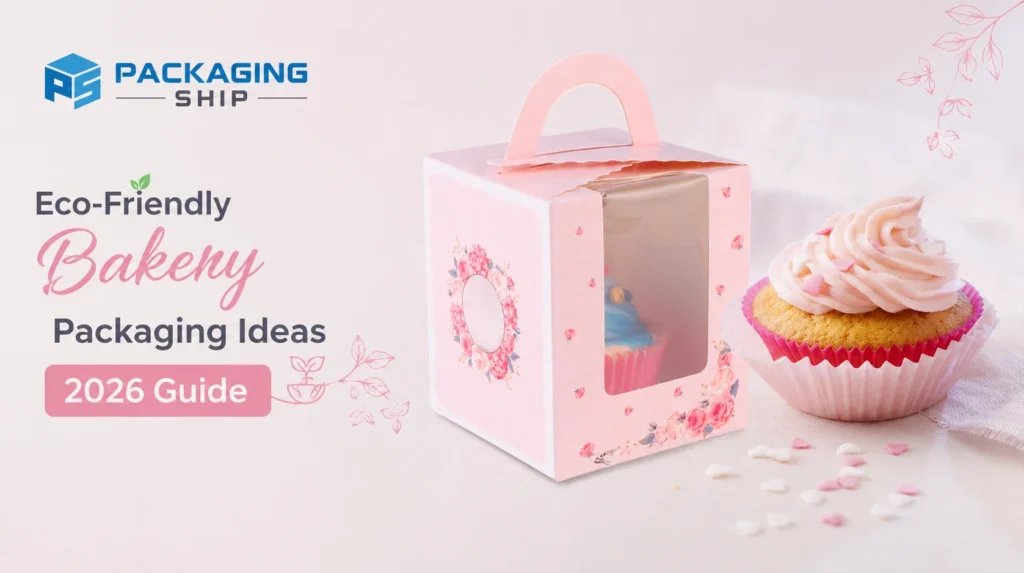
Eco-Friendly Bakery Packaging Ideas for Sustainable Food Brands (2026) What is eco-friendly bakery packaging? It’s food-safe packaging, kraft paperboard, FSC-certified board, recycled fiber, compostable material, that replaces plastic laminates without compromising food safety or shelf presentation. Last year, a small Brooklyn cookie brand switched their retail boxes from PET clamshells to uncoated kraft with water-based ink printing. Their sales rep told them it’d hurt shelf appeal. It didn’t. Customers kept stopping to pick the box up, feel it, photograph it. That tactile, earthy quality communicated something no glossy plastic lid ever could, that somebody cared about what was inside. That’s what eco-friendly bakery packaging actually does when it’s done right. It’s not a PR gesture. It pulls the selling weight. The broader market backs this up too. McKinsey and NielsenIQ tracked product performance across categories and found that items with genuine environmental claims grew 28% over five years, while products without those claims grew 20%. According to Meyers and Golden Arrow, data puts the sustainable packaging industry at roughly USD 292 billion in 2024, heading toward USD 423 billion by 2029. Bakery brands sitting on the fence about switching aren’t playing it safe. They’re just falling behind. What Is Eco-Friendly Bakery Packaging: And Why It Matters Right Now in 2026 Here’s something worth being direct about: generic green claims are hurting brands now, not helping them. Puratos retail research tracked US consumer attitudes and found over 60% of buyers want actual proof, a certification mark, a standard name, something verifiable, before they believe a sustainability claim. Sticking a leaf graphic on a plastic-laminated box isn’t just ineffective anymore. Buyers call it out online. So what does genuinely sustainable bakery packaging look like when it’s sitting in front of you on a production spec sheet? It is where most bakery brands start, and honestly it makes sense. The material runs naturally brown, takes FSC chain-of-custody certification without complication, and works with water-based inks that keep PFAS out of the picture entirely. Board weights between 280 and 350 gsm cover the full product range, delicate macarons on the light end, stacked wedding cake tiers on the heavy end, without structural issues. And something nobody talks about enough: uncoated kraft photographs dramatically better than glossy plastic on social media. That’s a real marketing advantage, not a talking point. It goes a step further. The certification that actually means something here is BPI, Biodegradable Products Institute. A BPI mark on a box tells you it breaks down in a commercial composting facility within 180 days. That’s a testable, documented claim. Without it, “compostable” is just a word printed on the side. B2B buyers at grocery chains and food co-ops have started asking for the BPI certification number by name during procurement conversations. That shift happened fast. It is built from post-consumer recycled (PCR) fiber, carries the How2Recycle label, which is the mark that actually shows up in retailer sustainability reports and corporate ESG filings. If wholesale distribution is in your growth plan, this label goes from optional to a procurement condition pretty quickly. Eco-Friendly Bakery Packaging Materials: What Actually Works for Each Product Type Most supplier websites hand you a material list and leave you to figure out the rest. What bakery operators actually need is a spec-level comparison against real product categories. Regardless of which material you choose, food contact compliance isn’t optional. FDA 21 CFR Part 176 governs paper and paperboard in direct food contact. Ask your vendor for written confirmation, an actual document, not a verbal assurance on a sales call. The Cost Myth That Keeps Bakeries on Plastic Longer Than They Should Be Of all the objections that stall packaging transitions, the cost one is the most persistent and, frankly, the most overstated. Let’s look at real numbers. At 5,000 units, kraft board boxes typically come in within 8 to 12 percent of equivalent PET plastic clamshells on a per-unit basis. Close the volume to 10,000 units and that gap shrinks further. Do the math on 10,000 units with a $0.10 per-unit cost difference: you’re spending $1,000 more on packaging. At a conservative 5% price premium on an $8 transaction, you recover $0.40 per sale. That $1,000 is recovered after 2,500 sales, roughly one decent weekend at a farmers market booth, let alone a retail placement. Plastic-free bakery packaging is not the expensive choice. It’s the choice bakery founders keep getting talked out of by suppliers who profit from the status quo. Switching Sustainably: A 3-Step Process That Doesn’t Derail Your Operations Most bakery owners who’ve made the switch say the same thing afterward — it was simpler than they expected. The sequence matters though. Pull every SKU. List which products currently live in plastic clamshells or laminated film. Your replacement priority list should lead with the highest-volume items and anything that faces retail customers directly. Those packaging changes hit brand perception fastest. FSC chain-of-custody certificates. BPI certification numbers on any compostable item. Written FDA 21 CFR Part 176 compliance confirmation via email, not a phone conversation. Any supplier who can’t send those documents within 48 hours shouldn’t be supplying your food-contact packaging. Full stop. A compostable board takes ink differently than coated white stock. Your designer needs the substrate spec before the art file is built, not after the proof comes back wrong. Water-based inks, soy-based varnishes, UV spot coating, all of these are available on sustainable substrates. The branding quality loss that people worry about is mostly a myth built on working with the wrong supplier. Custom Bakery Packaging That Carries Your Brand Forward Sustainability and premium branding stopped being competing priorities a while ago. The bakery brands pulling ahead in 2026 are running both out of the same box. For truffles, macarons, hand-decorated brownies, and artisan confections, Custom Sweet Boxes in FSC-certified kraft with full-color printing give retail shelf presence that PET windows genuinely can’t match. There’s a tactile weight to uncoated kraft that communicates quality before anyone opens the lid. For hand pies, artisan quiche,
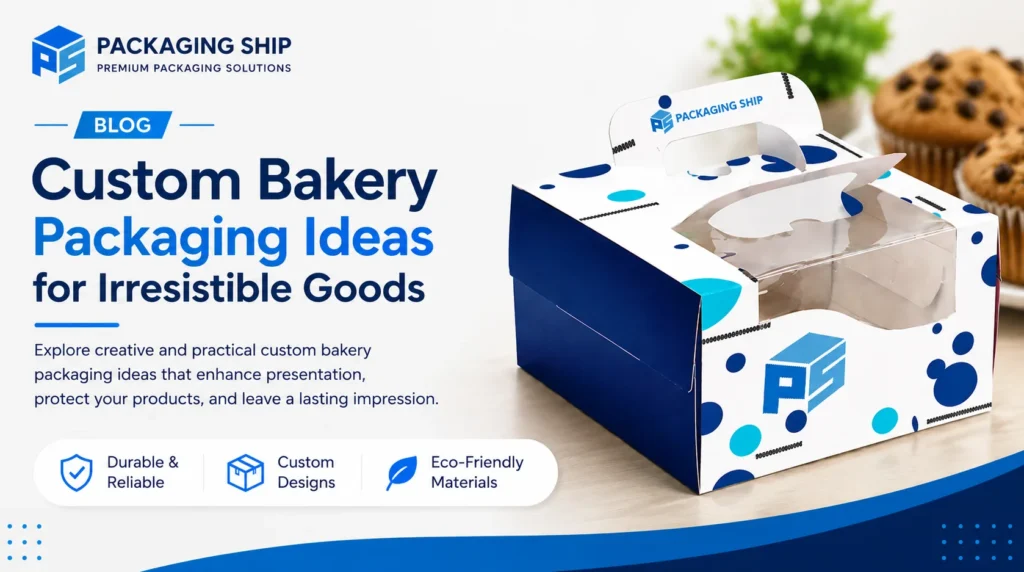
What Is Custom Bakery Packaging? Think of custom bakery packaging as your silent sales rep, the branded boxes, bags, and wraps printed with your logo and colors that protect your product and pitch your brand before a word is spoken. Walk through any busy farmers market on a Saturday morning and something becomes obvious pretty fast. The stalls doing the most volume are not always selling the best product. They are selling the best box. One vendor has cupcakes in a plain white container with a label printed at home. The stall next to them has the exact same cupcake in a kraft window box, logo embossed, ribbon handle, a clear panel showing the ganache. Customers gravitate toward the second one without thinking twice. Not because anything inside is different. The box just told a better story first. The global bakery packaging market hit USD 3.65 billion in 2025, per Research and Markets. It is headed toward USD 4.71 billion by 2030, a 5.24% annual growth rate. The businesses taking share in that window are not simply baking better. They figured out that the box is part of the product. This guide covers the practical decisions that get you there. 7 Custom Bakery Packaging Ideas That Sell Baked Goods Before the First Bite 1. Window Kraft Boxes: Let the Product Sell Itself Nothing in marketing does what a window panel does. No headline, no price tag, no description on the side of a box. Just the actual product, visible, real, right there. For cupcakes, layered pastries, and macarons, one glance through a clean PET window removes all the hesitation that makes a customer walk past. Go with 350 GSM kraft boards if your brand reads as artisan or handcrafted. The texture does its own work before anyone touches the product. Pair it with a window insert and your logo, and you have a box that justifies a price point a plain container never could. Our Custom Cupcake Boxes are made for exactly this kind of setup, food-safe inserts, window panel options, clean logo print on every face of the box. 2. Personalized Bakery Packaging With Foil or Embossed Finishing There is a specific moment that happens when someone picks up a foil-stamped box. They feel the logo before they read it. That sensation, a thumb running over raised gold letters on matte black stock, does something that flat printing cannot. It registers as quality in a way the brain does not question. Gold foil on matte black works well for wedding favors and corporate gifting programs. Silver foil on kraft reads are more casual but still premium. Embossing without foil is a subtler move great for brands that want texture without shine. Any of these finishes shift the product from something you bought to something you received. 3. Eco-Friendly Bakery Boxes That Match Your Brand Values Younger buyers are paying close attention to what your packaging is actually made from. Innova MarketInsights confirmed that Gen Z and Millennials now represent the dominant share of bakery purchasing, and both groups weigh sustainability against brand loyalty, often sustainability wins. Trivium Packaging’s 2023 Buying Green Report found that 71% of consumers are actively choosing products due to the sustainability factor of the product packaging. That is a big number and it has real commercial implications. Switching from generic stock to recyclable SBS board or compostable kraft is not an added cost you manage. It is a signal you send to customers who spend more, stay longer, and tell other people about brands they feel good about. Worth noting too, “sustainable bakery packaging” is one of the faster-growing search phrases in food packaging right now. The decision pays off in organic traffic as much as brand positioning. 4. Printed Bakery Boxes With Full-Bleed CMYK Design Most small bakery businesses are still running generic white boxes with a round logo sticker on the front. Walk into any wholesale bakery supply store and that is what you will see. When your printed bakery boxes run edge to edge, full bleed, no white borders, no bare panels, they do not look like those boxes at all. That gap in shelf presence is real and it is yours to own. File setup matters here. Work in CMYK, not RGB. Leave 3mm of bleed on all four edges or the finished box will show white lines at the trim. For finish, matte lamination gives you that soft, no-fingerprint surface that photographs beautifully and feels expensive. Glossy suits patisserie lines where color contrast and sharp reflection are part of the visual language. 5. Custom Cookie Boxes Built for Gifting Cookies are impulse purchases by nature. A customer plans to grab two and walks out with a box of a dozen because the packaging made it feel like a gift. That mental shift, “treat for me” becoming “gift for someone else”, is worth a lot of margin. A two-piece rigid box with a ribbon pull and tissue paper insert is what creates that shift. The customer stops doing quick mental math and starts picturing who they could give it to. Suddenly the price point that felt high for cookies feels reasonable for a gift. Our Custom Cookie Boxes include design support, food-safe liners, and no minimum order requirement, so testing a gifting format on a small seasonal run is genuinely low-risk. 6. Cake Boxes With Structural Integrity for Delivery Delivery opened enormous revenue for bakeries, wholesale accounts, corporate catering, event venues. It also exposed something nobody wanted to admit: most standard cake boxes were not engineered for a van ride. They flex. Corners fold under load. A cake that took four hours to build arrives looking like it survived something. A double-wall corrugated insert inside your printed outer box solves this. The outer shell carries your brand. The corrugated layer carries the structural job. Your client opens a clean, intact product, and the branded outer box is the first thing they see. 7. Multi-Unit Pastry Display Packaging for Retail and