
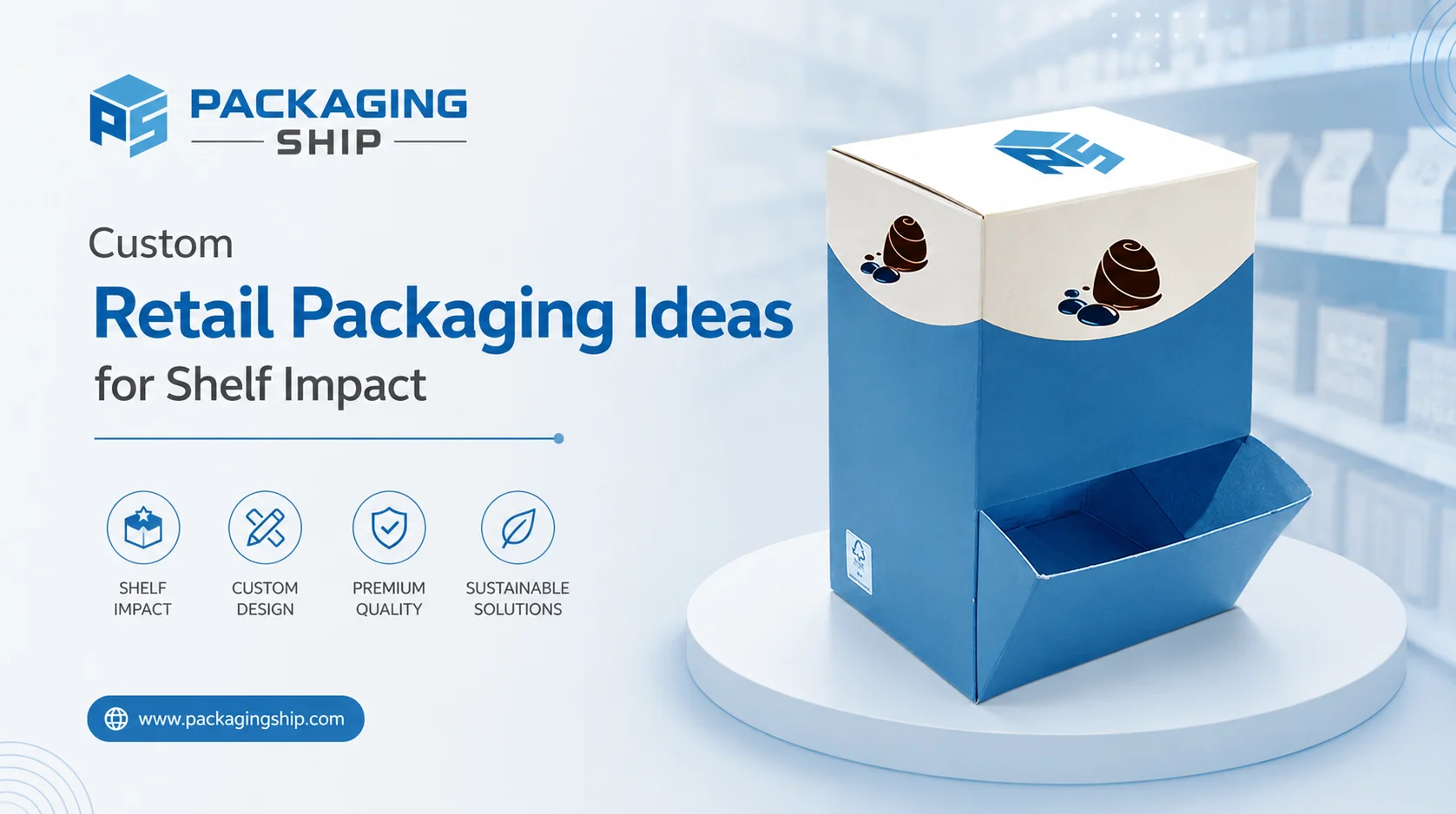
Here’s something nobody tells new brand owners: your product could be genuinely excellent and still not sell because the box around it failed.
It sounds harsh. But anyone who has spent time walking retail floors knows it’s true. A buyer has maybe three seconds at shelf level before their eye jumps to the next product. Three seconds is not enough time to read your features list. It’s barely enough time to register that your product exists.
That’s the real job of retail packaging. Not protection. Not legal compliance. The real job is stopping someone mid-stride and making them reach for it.
Business Dasher’s research found that 81% of consumers have bought a new product directly because the packaging grabbed them, and 72% say packaging design shapes their purchase decision before anything else does. These aren’t numbers from a packaging company’s marketing deck. They come from consumer behavior studies tracking what buyers actually do, not what they say they’ll do. ClearBags
So when your branded retail packaging blends into the shelf, you’re not just losing a visual contest. You’re losing the sale before the buyer even consciously registers your brand.
This guide lays out the custom retail packaging ideas that B2B brands are genuinely using right now to pull ahead of category competitors and build real shelf velocity.
Custom retail packaging is packaging built around your product specifically, its dimensions, its audience, its retail environment, and your brand language. The word “custom” matters more than people give it credit for. A generic white box with a sticker label tells the buyer something. It tells them you didn’t think about them.
Shelf-ready packaging goes one step further. It means your product moves from the shipping carton directly onto the display floor, organized and brand-consistent, without the retailer doing extra work. Retailers notice that. It’s one of the quieter ways that packaging decisions either strengthen or damage wholesale relationships.
PMMI data shows three-quarters of manufacturers are already pursuing shelf-ready strategies because retail buyers increasingly favour suppliers who make their job easier. Refine Packaging
The gap between a product that sells through in three weeks and one that sits for three months is rarely the product itself. More often it comes down to whether the packaging did its job at the shelf.
Tuck-end boxes are the workhorses of retail packaging design. They’re cost-efficient, easy to assemble at scale, and give you a full 360-degree canvas for CMYK print, spot UV, or matte lamination.
Brands launching new SKUs use tuck-end structures because they compress lead time without sacrificing shelf presence. The key is full-bleed print coverage and one strong design element on the front panel that reads from 18 inches away.
Some products need packaging that signals premium before the buyer touches them. Rigid setup boxes are exactly that. They don’t collapse. They feel substantial. And they photograph well, which matters enormously in 2026 when unboxing content drives discovery across social channels.
In-store packaging must protect the item during transit and communicate important information to the user, while also making the product appealing from the shelf and encouraging customers to pick it up. Packaging Digest
If you’re selling watches, fragrance, or high-end accessories, rigid is the structural choice. Custom Watch Boxes from PackagingShip are a direct example. The box signals quality before the product is seen. That first physical impression converts browsers to buyers.
Display packaging is one of the most underused custom retail packaging ideas for brands trying to expand retail placement. A well-designed counter display doubles as a silent salesperson.
It positions multiple SKUs together, creates visual weight in the retail environment, and typically boosts trial rates because it’s physically accessible without asking for help. Custom Dispenser Boxes built for high-frequency retail environments keep product moving at checkout counters with zero restocking friction for the retailer.
Cube boxes maximize shelf real estate through uniform geometry. They stack cleanly, they’re easy to planogram, and because every face is equal, your printed retail packaging gets six surfaces of brand exposure instead of one.
For brands selling in competitive beauty, wellness, or gift categories, Custom Cube Boxes deliver both structural efficiency and visual impact.
Tumbler packaging is a specific structural challenge. The product is heavy, often oddly shaped, and the packaging needs to protect it without looking utilitarian. Custom Tumbler Boxes solve this with a form-fit structure that protects in transit and looks polished at retail.
The result is a branded box that earns space on gift shop shelves, boutique retailers, and specialty stores without any apology.
According to Shorr Packaging’s 2025 survey of over 2,000 American consumers, 90% said they are more likely to purchase from a brand if its packaging is eco-friendly, and 54% deliberately chose products with sustainable packaging in the past six months. Shorr Packaging
Eco-finish branded boxes, whether kraft board, recycled content, or FSC-certified material, communicate brand values before the buyer reads a word of copy. This matters especially in wellness and specialty retail categories where the buyer audience is actively screening for sustainability credentials.
Good packaging design follows a discipline, not just an aesthetic preference. These three principles govern what actually works on a retail shelf.
Visual hierarchy starts at the structural level. Your box structure determines how the printed design behaves in a shelf set. A tuck box with a wide front panel reads differently than a cube. Make structural decisions before design decisions.
Color contrast beats color preference. Your packaging doesn’t compete in a vacuum. It competes against the three products beside it. Design for contrast against your category, not harmony with your brand moodboard.
Typography must read at 18 inches. Most product boxes are read from shelf distance, not hand distance. The primary font on your front panel should be legible at arm’s length, with a point size that survives reduction to a thumbnail image online.
Packaging Digest notes that packaging that looks beautiful in a creative deck may fall flat in real-world context, which is why designs should be tested in the context of a simulated shelf set, mobile screen, or retail environment before production. Packaging Digest
Your packaging is not a cost center. It’s a conversion tool.
The brands that dominate retail shelves in 2026 are not necessarily the ones with the best products. They’re the ones whose custom retail packaging ideas were executed with enough specificity, structure, and brand confidence that a buyer picks them up first.
Whether you’re launching a new product line, fixing an underperforming shelf position, or scaling into retail for the first time, the structural and design decisions you make now determine the velocity of what happens next.
PackagingShip offers free design support, free US shipping, no MOQ, and no die or plate charges. You get professional packaging without the minimum commitment risk.
Get Your Free Custom Packaging Quote Today
Tell us your product, your quantity, and your timeline. We’ll get back to you within 24 hours with a no-obligation quote and design recommendation.
Tuck-end printed boxes are the most flexible starting point. They produce efficiently at any run size, support full-colour branding, and work across dozens of retail categories. PackagingShip has no MOQ, brands order what they need, when they need it.
Cost per unit drops significantly with volume, but starting prices for custom printed boxes begin at $0.20 per unit with PackagingShip. There are no die charges, no plate charges, and no hidden setup fees.
Standard turnaround runs 8 to 12 business days depending on quantity, print complexity, and finish selection. Rush options are available for product launch deadlines.
The most common materials are SBS (solid bleached sulfate) board for premium print quality, kraft board for eco positioning, and corrugated board for heavier or fragile products. Material selection depends on product weight, shelf environment, and desired finish.
The data says yes consistently. 81% of consumers report purchasing a new product specifically because the packaging design attracted them. Packaging is the only marketing channel active at the exact moment of purchase. ClearBags