What Are Custom Packaging Boxes? A Beginner’s Guide for First-Time Brand Owners [2026] TL;DR: Custom packaging boxes are boxes made specifically for your brand, your product size, and your visual identity. They carry your logo, your colors, your chosen material, and your finish. Unlike generic stock boxes, custom printed boxes wrap your product in a brand experience from the very first glance. At Packaging Ship, you can start from 50 units at $0.20 per unit, with free design support, no die charges, and free US shipping included. Table of Contents What Are Custom Packaging Boxes? [2026] Last year, a candle brand owner in Ohio sent out her first 60 orders. She used plain white boxes she grabbed from a supply store. The candles were stunning. The scents were original. Three customers reached out to say they loved the product. Not one posted a photo. She told me later, “The box looked like something from a pharmacy. Nobody was going to share that.” She reordered 80 units in custom printed boxes with her logo, brand colors, and a soft-touch matte finish. Within two weeks, four customers tagged her on Instagram without any prompting. So, what are custom packaging boxes? In plain terms, they are boxes built around your product and your brand, not pulled off a shelf. Every measurement, every material choice, every color and finish is decided by you. The box arrives at your customer’s door as a physical piece of your brand story, not just a container. Custom packaging is not a new idea, but access to it has changed dramatically. The global custom packaging market sat at USD 43.88 billion in 2023 and keeps climbing at a 5.62% annual rate through 2032, according to Fortune Business Insights. The biggest shift? Small DTC brands, Shopify sellers, and Etsy makers now drive a growing share of that number because the MOQ barriers have dropped significantly. If your customer can hold your product, they can hold your brand. Custom packaging boxes make sure that moment works in your favor. Custom vs Stock Packaging: The Difference That Actually Costs You Most packaging guides explain what custom boxes look like. Few explain what choosing stock packaging over custom packaging boxes actually costs your business over time. Stock packaging is generic by design. It comes in fixed sizes. Plain kraft or white board. No logo, no color, no story. You get it fast, and it ships your product safely enough. But your customer gets a box that looks identical to everything else on their doorstep that day. Custom packaging boxes work differently. Your box is cut to your product’s exact measurements, so there is no wasted space rattling around inside. The outside carries your full brand identity. The whole thing arrives looking like someone thought about it. Here is a side-by-side look at the real difference between custom and stock packaging boxes: Feature Stock Packaging Custom Packaging Boxes Branding None Full logo, colors, finishes Product fit Fixed generic sizes Cut to your exact dimensions Material choices Very limited Cardboard, kraft, rigid, corrugated Minimum order As low as 1 unit From 50 units at Packaging Ship Per-unit cost $0.50 to $2.00 unbranded From $0.20 with custom printing Customer memory Forgettable Memorable, shareable Repeat purchase effect Minimal Documented and significant The pricing part catches most first-time buyers off guard. Custom printed boxes at Packaging Ship start at $0.20 per unit. That is often less per unit than premium unbranded stock packaging. The branded packaging basics most founders assume are out of reach are closer than they think. What “Custom” Really Covers (Six Things Most Guides Skip) When someone says “custom box,” a lot of founders picture a brown box with a logo stamp on it. That is not what custom packaging explained actually means. Here is what you are really specifying when you place a custom order. A custom box gets die-cut to your product’s internal dimensions. No excess space. No need to stuff it with extra void fill. A precise fit means less internal movement, less transit damage, and a lower per-order shipping weight. You pick from standard 14pt cardboard for lightweight retail boxes, corrugated fiberboard for durable shipping, FSC-certified kraft for eco-conscious brands, or 2mm rigid board for premium unboxing experiences. Each one has a different feel in the hand, a different cost per unit, and a different message to your customer. Custom printed packaging runs on CMYK four-color printing for most orders. Orders under 500 units typically use digital printing, which needs no setup plates and gets produced faster. Orders above 500 units move to offset printing, where per-unit cost drops and color consistency tightens. Pantone color matching is available on offset runs for exact brand color reproduction. After printing, your box gets protected. Gloss UV makes colors pop under retail lighting. Matte lamination gives a clean, understated look that photographs well. Soft-touch lamination, the velvet-like finish you feel on high-end cosmetic boxes, adds a tactile premium quality. Aqueous coating handles food-safe applications where needed. Foil stamping in gold, silver, or holographic adds shelf presence. Embossing raises your logo slightly off the surface. Debossing presses it in. Spot UV puts a high-gloss accent on one specific element of your design, like your logo or a pattern. These are not decorations for decoration’s sake. They signal quality before the box opens. Custom packaging for brands regularly includes inserts, cardboard dividers, or foam cradles inside the box. These hold your product steady during transit, eliminate movement, and add a layer of presentation when the box is opened. That interior moment is what most customers photograph. Put all six together and you understand what separates a custom box from a sticker on a stock box. The 5 Types of Custom Packaging Boxes Worth Knowing Not every product needs the same box. Choosing the right type matters more than most first-time brand owners expect. Pick the wrong one and you raise your damage rate, overpay on shipping, or send a brand message that does not match
TLDR Small businesses in the USA can now order custom packaging boxes from as few as 50 units, with free FedEx/UPS shipping, no die charges, and free design support. PackagingShip delivers in 7 to 10 business days across all 50 states, making professional branded packaging accessible at any scale. Table of Contents Where to Order Custom Packaging Boxes Online in the USA (With Free Shipping) You finally have a product worth selling. The formula is right, the photos look great, and your Shopify store is live. Then your first customer unboxes it in a plain brown mailer and posts nothing. No photo, with no story. No share. That moment costs more than most founders realize. According to Dotcom Distribution’s unboxing research, 40% of consumers would share a picture of a product on social media if it arrives in premium branded packaging. Separately, a Paper and Packaging Board consumer survey found that 72% of American consumers say packaging design directly influences their purchase decisions. Your box is not a container. It is your first sales conversation with every customer who touches it. The problem most small business owners hit is this: great packaging has traditionally required large minimum order quantities. Five hundred units. A thousand units. Die charges nobody mentioned until the invoice arrived. That is the MOQ trap, and it has stopped more brands than bad products ever have. In 2026, that trap no longer has to hold you back. 1. The MOQ Trap Most Small Businesses Fall Into Most packaging suppliers are built for enterprise accounts. Their business model depends on high-volume production runs. So when you ask about custom packaging for a small business with no minimum order, you get one of three responses: silence, a quote with a 500-unit minimum, or a setup fee that makes any small order financially pointless. This is not a problem. It is an industry structure problem. The good news is that digital printing technology has fundamentally changed what is possible at low volumes. Short-run digital printing now allows suppliers to produce 50 or 100 boxes with the same quality as a run of 10,000, which means small batch custom boxes are no longer a compromise. They are a real, practical option for any founder at any stage. Before you order anywhere, understand the true cost calculation: price per unit, plus shipping, plus die charges, plus design fees. Many suppliers advertise a low unit price and then add $150 to $300 in setup fees at checkout. That turns a seemingly affordable order into an expensive one very quickly. 2. What to Look for Before You Order Custom Packaging Online Not all custom box suppliers operate the same way. Here is what separates a reliable small business packaging solution from one that costs you money and time. Look for suppliers offering 50 units or fewer as their starting floor. Anything above 250 units is not built for startups or early-stage DTC brands. Die charges, plate fees, and artwork setup costs are the most common budget-killers. Always request a fully itemized quote before committing to anything. Confirm whether free shipping is genuinely included, which carrier is used, whether all 50 states are covered, and whether orders arrive fully tracked. Standard production for custom packaging runs 7 to 14 business days. Anything beyond 21 days without a rush option is a red flag, particularly if your business has seasonal peaks. You should receive a digital proof, reviewed and approved by you, before production begins. No proof means no quality guarantee. If you do not have an in-house graphic designer, confirm whether free design assistance is available. Many suppliers charge separately for this service. 3. Where to Order Custom Packaging Boxes Online in the USA With Free Shipping Direct Answer: The most complete option to order custom boxes with logo free shipping USA is PackagingShip, offering a 50-unit minimum, free FedEx/UPS delivery across all 50 states, no die charges, and free design support, with standard production completing in 7 to 10 business days. When searching for where to order custom boxes online with free shipping USA, you will find dozens of options. The real difference comes down to what is actually included versus what appears only at checkout. PackagingShip was designed specifically as a small business packaging solution. The company ships via FedEx and UPS at zero cost to the buyer, to every US state, on every order. There are no plate fees, no die charges, and no artwork setup costs. What the quote shows is what you pay. This matters because the total landed cost of a packaging order rarely matches the headline price elsewhere. When you account for production, setup fees, and shipping from most suppliers, a low-cost order of 100 mailer boxes can run 30 to 40% higher than the quoted price. PackagingShip’s all-in pricing removes that ambiguity entirely. You can get a free estimate here and receive a detailed quote within one business day. 4. How to Order Custom Packaging Boxes in 50 Units or Less Most founders assume ordering custom packaging boxes at 50 units is complicated. It really is not. The confusion usually comes from suppliers who make the process deliberately vague so they can add fees later. At PackagingShip, the whole thing works in five steps, and none of them involve surprises. You start by picking your box style. Mailer boxes work great for DTC brands and subscription businesses. Rigid boxes suit cosmetics and jewelry. Tuck boxes are popular for food and retail products. Once you pick what fits your product, you share your brand details, logo, and the quantity you need, starting from 50 units. Within 24 to 48 hours, a designer sends you a digital proof. This is your chance to review colors, logo placement, and dimensions before anything goes to print. Most customers approve on the first round. A few ask for minor tweaks, which the team handles fast. Production begins the moment you give the green light. Standard turnaround is 7 to 10 business
Custom Packaging for Small Businesses in 2026: The Complete No-Minimum Order Guide TL;DR You do not need to order 1,000 boxes to get custom packaging for your small business. Manufacturers like Packaging Ship now accept orders starting at 50 units, with pricing from $0.20 per unit and no die or plate setup fees. This guide walks through real costs, the actual ordering process, and how to avoid wasting money on bulk packaging before you are ready for it. Table of Contents A candle brand owner reached out to three packaging suppliers last month, just asking for a quote. All three came back with the same answer before she even got to talk numbers: 1,000 unit minimum, or no quote at all. She makes around 80 candles a month, out of her garage, on weekends. That mismatch, between what factories expect and what a small operation can actually use, is the reason this guide exists in the first place. If you typed something close to custom packaging for small business no minimum order into Google, you already know the problem. The packaging industry, for decades, was built around brands placing pallet sized orders. Not around someone testing whether their first product idea even sells. That part has changed though. A handful of manufacturers, including Packaging Ship, built their whole model around small, flexible orders instead of squeezing them in as a side offer nobody really wants to fulfill. Why Most Packaging Companies Reject Small Orders Minimum order quantities are not random. They come from how older printing equipment actually works. Offset printing, which most large factories still rely on, needs physical metal plates to transfer ink onto the box material. Making those plates runs $150 to $500. Add a cutting die for the box shape and you are looking at another $200 to $800 on top. A factory has to spread those costs across enough boxes to make the print run worth setting up the machines for. That is really the whole story. It is not that your order is too small to matter, or that your business does not deserve real packaging. It is a spreadsheet problem on their end, and most factories just pass that math straight onto you instead of solving it. What Is a Good Minimum Order Quantity in 2026? Honestly, somewhere between 50 and 100 units is the sweet spot for a first order. It is enough to put your packaging in front of real customers, see whether the sizing actually fits your product, catch a print or color issue before it becomes a 1,000 unit mistake, and still keep your cash free for everything else your business needs right now. A custom box minimum order of 50 units has become fairly normal among US manufacturers that actually build around small batch work instead of treating it as a favor. Packaging Ship sets that floor at exactly 50, so you can cover a single farmers market weekend, or your first 50 orders on Shopify, without signing up for anything bigger than what you need today. How Much Does Custom Packaging Cost for a Small Business? Here is the direct number people usually want. Custom packaging for small business with no minimum order USA starts around $0.20 per unit at Packaging Ship, and most basic kraft or cardboard boxes land somewhere between $0.20 and $0.85 per unit once you are ordering 50 to 100 units, depending on size, the material you pick, and how complex the printing is. That price already covers design support and a digital proof before anything gets printed. No separate die charge, with no plate charge. No design fee tacked on at the checkout that you did not see coming. Compare that to a standard factory order of 1,000 units, where setup fees alone can run $300 to $600, before you have paid a cent toward the actual boxes or sold a single product. Packaging is not just a line item either, even at small volumes. An Ipsos survey conducted on behalf of the Paper and Packaging Board found that 72% of consumers say a product’s packaging design influences their purchase decisions. For a small brand, that number carries more weight than it does for a big one, since almost every early sale is also doubling as your first word of mouth. How to Order Custom Boxes in Small Quantities The process is faster than most first time founders expect it to be, and it usually goes the same way no matter which industry you are in. You start by requesting a free quote with your product’s measurements and a rough idea of quantity. From there, a digital proof comes back, usually within 24 to 48 hours, and this is your chance to catch anything before it becomes a physical box. Once you approve that proof, production starts, and most standard orders ship out within 7 to 10 business days, plus whatever shipping adds on top. If you are selling through an online store and shipping orders out yourself, mailer boxes tend to be the first thing small brands order, since one box does double duty as both shipping protection and branding. If you are working with food, bakery, or skincare products and want something that feels natural right out of the gate, kraft boxes are usually the low MOQ packaging USA option that first time orderers reach for. Digital vs Offset Printing for Small Batches If your order is under 500 units, digital printing is almost always going to be the better call. There are no plates involved, so there is no setup fee sitting on top of your quote, and digital handles gradients and photo style artwork well. Offset printing only starts to make financial sense once you cross into 500 units or more, because that is roughly the point where spreading the plate cost across more boxes finally brings your per unit price down instead of up. So if a supplier quotes you offset printing for an order of
How Much Does Custom Packaging Cost in the USA? (2026 Pricing Guide) TLDR: Custom packaging in the USA runs from $0.20 to $12.00 per unit in 2026. Order 100 boxes and you will probably pay somewhere around $0.85 to $1.50 each for standard styles. Rigid luxury boxes cost more. This guide gives you the actual numbers by box type, shows you where the hidden fees live, and helps you figure out a packaging budget that makes sense for your margins. A soap brand owner called us last spring. Pretty frustrated. She had spent most of a year perfecting a cold-process lavender bar, and the product was good. But every packaging supplier she contacted told her the same thing. Fill out a form, we will get back to you. She waited four days and still did not have a number. We hear that story weekly. Real brands with real money to spend, treated like their question is somehow unreasonable. So here is the answer. Custom packaging in the US? Anywhere from $0.20 to $12.00 per unit, depending on what you are actually ordering. A kraft mailer and a rigid box with foil on it are not even in the same conversation, pricewise. But most brands ordering between 100 and 500 standard boxes with a logo end up paying somewhere in the $0.85 to $1.50 range per box. This guide narrows it down from there. What Actually Moves the Price? Five things, and knowing them ahead of time gives you real leverage before you ever request a quote. Most brands land on kraft or standard cardboard because they are affordable and look good. Corrugated costs a bit more but handles shipping better. Rigid chipboard is the expensive one, popular with cosmetics, candle brands, and jewelry. Feels heavy, feels premium. That comes at a price though, usually an extra $2 to $4 per box over standard cardboard. But oversizing by even a couple inches means you are burning money on extra cardboard, extra ink, and extra truck space. We have watched brands shave 15 to 20 percent off their total just by tightening the box around their product. Easiest cost cut most people never consider. Not a shock. But the scale of it surprises people. Same box, same design, but going from 100 units to 500 can drop what you pay per box by 35 to 45 percent. The production setup costs the same either way, it just divides across more units. It comes down to how many boxes you need. Under 500, go digital. No plates to pay for, quality is excellent. Around 1,000 units, offset starts winning because the plate cost dilutes enough to beat digital on per-unit price. The gap is roughly $0.15 to $0.40 per box. Matte lamination, gloss, foil, embossing, spot UV. They range from $0.10 to $0.50 extra per box. Matte has that soft feel customers associate with higher-end products. Foil grabs attention on a shelf. But a lot of founders pay for finishes their customer genuinely would not notice. Worth thinking about before adding them. Real Pricing Table for 2026 You will not find these numbers on most competitor sites. Here are actual US market rates as of 2026 for standard single-color printing, with design support and tracked shipping included. Box Type 50 Units 100 Units 500 Units 1,000+ Units Custom mailer box $1.40 $1.10 $0.75 $0.55 Tuck-end cardboard box $1.20 $0.90 $0.65 $0.48 Kraft box $1.10 $0.85 $0.60 $0.44 Rigid box $5.50 $4.80 $3.20 $2.40 Corrugated shipping box $1.60 $1.25 $0.85 $0.62 Display box $1.80 $1.35 $0.90 $0.68 Want full-color printing instead of single-color? That will add roughly $0.25 to $0.45 per box. Foil or embossing runs an extra $0.10 to $0.50 on top of that. And none of these prices include hidden setup costs, because there should not be any with digital printing. If those numbers are in your range, grab a free quote here and you will have an exact, itemized price within 24 hours. What Does a 100 Box Order Actually Cost? Most brands start here, and that makes sense. A hundred boxes is enough to ship real orders, get feedback on the packaging, and catch any problems with sizing or color before committing to a larger run. Pricing at that quantity depends on what you are ordering. Standard mailers and kraft boxes? Around $0.85 to $1.40 per box. Rigid styles for cosmetics or jewelry? Quite a bit more, $4.80 to $5.50 range. A branded mailer with full-color logo, with design and shipping already included, works out to about $1.10 each. Do the math on that. $1.10 times 100 is $110. That is less than what a lot of brands throw at a week of Instagram ads that disappear the moment you stop paying for them. The box, on the other hand, keeps working. Every single time someone opens an order, they see your brand. How Costs Change by Product Category What you sell affects what you pay, because different products demand different boxes. It is where compliance adds cost. FDA-safe materials, grease-resistant linings if you need them, maybe a window cutout so the customer can see what is inside. That adds $0.10 to $0.30 on top of a standard box price. It is a different story entirely. Your customer picks up the box and the first thing they notice is how it feels. Rigid construction, soft-touch lamination, maybe foil on the logo. That level of finish pushes the price to $3 to $6 per unit at 100 boxes. Magnetic closures add even more. Most brands go with mailer boxes. They handle shipping and branding in one package, and at 100 units they run about $1 to $1.40 each. Probably the cheapest path into branded packaging. They are a bit different because they need to survive being shipped over and over. Corrugated mailers with full-color printing, usually $1.25 to $1.60 per box at 100 units. Where the Hidden Fees Live This part saves brands real money, so pay attention. A supplier
Custom Printed Food Grade Bags: 2026 Benefits for Restaurants and Food Brands Custom printed food grade bags are FDA-compliant, branded packaging bags designed for direct food contact. They help restaurants and food brands boost recognition, protect food quality, and drive repeat purchases, starting from as little as $0.20 per unit with no minimum order. Picture this. A customer walks out of your restaurant holding a plain white bag. They place it on their table at work. Nobody notices. Nobody asks. Now picture the same meal packed inside a bold, printed bag with your logo and brand colors. Three coworkers ask where it’s from before lunch ends. That is the quiet power of branded food packaging, and most food businesses still underestimate it. According to a Shorr Food Packaging and Consumer Behavior Report, 47% of consumers tried a new food brand specifically because the product’s packaging caught their attention. That stat alone should shift how you think about every bag that leaves your kitchen. What Are Custom Printed Food Grade Bags and Why Do Restaurants Need Them in 2026? Custom printed food grade bags are packaging bags made from FDA-compliant materials including Kraft paper, polyethylene, Mylar, and compostable films, that are safe for direct food contact and printed with your brand’s logo, colors, and messaging. The FDA regulates food contact materials under 21 CFR Parts 175 through 177, which sets the standard for what materials can safely touch your food. Not all printed bags meet this standard. That is why choosing certified food grade packaging bags matters, not just for compliance, but for protecting your customers and your reputation. For restaurants, bakeries, cloud kitchens, and snack brands, these bags serve two jobs simultaneously. First, they protect the food inside. Second, they market the brand outside. No other packaging asset does both at that price point. 7 Proven Benefits of Custom Printed Food Grade Packaging for Food Brands 1. Brand recognition that travels beyond your four walls Every printed bag that leaves your restaurant becomes a mobile advertisement. A survey found that 72% of American consumers say product packaging design directly influences their buying decisions. When your packaging carries your identity, strangers become curious before a single word is spoken. Custom Boxes Market At Packaging Ship, we have worked with food brands across the US for over six years. Our team sees firsthand how consistent branded food packaging bags turn first-time buyers into regulars particularly for delivery and takeout operations where the bag is the only physical brand touchpoint a customer experiences. 2. Food safety compliance without the confusion FDA compliance is not optional, it is your legal baseline. All materials used in food grade bags for food packaging must meet FDA 21 CFR standards to prevent chemical migration into food. Mylar, food-safe poly, and certified Kraft are among the most reliable materials for this purpose. The good news: compliant does not mean boring. Custom printed food grade bags can carry your full brand design while meeting every safety requirement. You do not have to choose between branding and food safety. 3. Extended shelf life through moisture-barrier materials Moisture kills food quality faster than anything else. A Mylar bag with an oxygen and moisture barrier can extend dry food shelf life by up to three times compared to standard poly bags. For bakeries, snack brands, and specialty food producers, this is a direct reduction in waste, returns, and customer complaints. This is where material selection matters. Kraft works well for dry goods. Mylar suits products requiring an airtight barrier. Compostable films serve eco-focused brands. Choosing the right food grade packaging material for your product protects both the food and your brand’s reputation. 4. Packaging that becomes a marketing channel According to an Ipsos survey, 40% of consumers say they are likely to share images of unique or branded packaging on social media. For food brands, this means your printed food packaging bags are generating organic reach every time a customer photographs their meal. BR Printers This is food packaging marketing at its most efficient. You pay once for the print. The content lives online indefinitely. A restaurant investing $0.20 more per bag in branded printing recovers that cost on the first social share that converts a new customer. 5. Reduced returns and improved customer trust Tamper-evident designs, proper seals, and professional presentation all signal quality before the first bite. A Selazar study found that 52% of online shoppers are more likely to become repeat customers when they receive orders in quality, branded protective packaging. Antalis UK For food delivery brands, this matters more than ever. The packaging arrives before the experience does. 6. Wholesale cost efficiency that scales with your growth Wholesale food packaging bags from Packaging Ship start at $0.20 per unit. With no minimum order quantity, small food brands can access the same professional-quality custom food bags wholesale pricing that larger chains rely on. No locking up capital in bulk inventory. No risk on new designs. This model works whether you run a single bakery or manage procurement for a regional restaurant chain. 7. Eco-friendly options that strengthen brand loyalty The Shorr 2025 Sustainable Packaging Consumer Report found that 90% of US consumers say they are more likely to purchase from a brand that uses eco-friendly packaging, and 39% have switched to a competing brand specifically because it offered more sustainable options. EcoPackables Switching to Kraft or compostable food grade packaging is not just an environmental decision — it is a commercial one. Our Eco Friendly Packaging range covers food-safe sustainable options that print beautifully and hold up through delivery. Paper vs. Plastic Food Grade Bags: Which One Is Right for Your Brand? Paper bags, particularly Kraft are biodegradable, print-ready, and increasingly preferred by eco-conscious consumers. They work well for dry foods, bakery items, and restaurant takeout. Plastic food grade bags, specifically Mylar and poly variants, offer superior moisture and oxygen barriers, making them the better choice for snack packaging, frozen products, and anything requiring an airtight seal. The
Paper vs Plastic Food Grade Bags: Which Food Packaging Option Works Best? What are paper vs plastic food grade bags? Paper food grade bags suit dry, low-moisture products like bread and baked goods. Plastic food grade bags handle oily, high-moisture, and frozen foods better. Your product’s fat content, shelf life needs, and moisture level determine the right call, not brand preference alone. Why So Many Food Brands Get This Wrong From Day One Last spring, a granola founder sent us an angry email. Six months after launch, her kraft paper bags were arriving at retailers with visible oil stains bleeding through the liner. Nut oils and cocoa butter had saturated the packaging. She lost two retail accounts before catching the problem. She is not alone. Dozens of food startups make this exact mistake every year. They choose packaging based on aesthetics, then discover the hard way that their product had different needs entirely. Choosing between paper vs plastic food grade bags is a functional decision first. The branding question comes second. Get the sequence backwards and you end up reprinting, reformulating, or worst case, losing shelf space you worked hard to earn. The food packaging market tells the same story at scale. Grand View Research puts the global food packaging industry at over $400 billion in 2024, projected to hit $562 billion by 2030. Inside that growth, the shift toward performance-driven packaging is accelerating. Brands that make intentional material choices early build stronger supply chains and tighter margins. This guide gives you the practical framework to make that choice correctly, for your specific product, not a generic food category. Food Grade Bags: What the Label Actually Means Food grade is a legal classification, not a marketing phrase. Under FDA 21 CFR 177, packaging materials that touch food directly must come from substances cleared for food contact. This covers both food grade paper bags and food grade plastic bags. Here is what most buyers do not realize until it costs them: food grade and food safe are not the same thing. Food grade means the base material passed regulatory approval under normal conditions. Food safe means it has been tested and validated for your specific application — high heat, freezing temperatures, acidic products, high-fat content. A bag cleared for packaging dry crackers is not automatically cleared for oily granola or hot soup. Before ordering any food packaging bag wholesale, get written FDA compliance confirmation from your supplier and check whether that bag is rated for your product’s actual conditions. At Packaging Ship, every food packaging bag in our catalog ships with compliance documentation. Our clients never have to chase paperwork after the fact. Paper vs Plastic Food Grade Bags: Side-by-Side Comparison Before diving into product-specific guidance, here is how both materials stack up across the factors that actually drive wholesale purchasing decisions: Factor Food Grade Paper Bags Food Grade Plastic Bags Moisture resistance Low (needs PE lining for wet/oily products) High (native barrier, no coating needed) Grease resistance Low to moderate (depends on Kit test rating) High (LDPE, PP handle fats natively) Oxygen barrier Weak (breathable) Strong (extends shelf life significantly) Custom printing Excellent (matte, textured, premium look) Good (high-gloss, vivid color, flexo) Recyclability High (uncoated kraft) / Low (PE-lined) Moderate (mono-material LDPE recyclable) Cost per unit wholesale Moderate to high Lower (especially LDPE and PP formats) Best product fit Bread, pastries, dry snacks, coffee, tea Granola, jerky, frozen food, oily snacks Sustainability signal Strong (perceived as eco-friendly) Improving (recycled-content options exist) FDA 21 CFR compliance Yes (certified food grade paper) Yes (LDPE, HDPE, PP all approved) This table is a starting point. The right answer for your business depends on the specific product you are packaging, not just the category. Breaking Down Each Factor Honestly Standard kraft paper absorbs both. If your product has fat content above 15%, uncoated paper will fail you within weeks. PE-lined kraft paper bags solve the grease problem but introducing a recyclability tradeoff, the plastic layer makes curbside recycling nearly impossible. Plastic food grade bags handle moisture and grease natively, without any secondary coating or performance compromise. Plastic wins here, and it is not close. LDPE and PP films create a real oxygen barrier. For coffee, nuts, jerky, or any product where oxidation matters, plastic film pouches will outperform uncoated paper by a measurable margin. That said, fresh artisan bread actually needs breathability to release steam. Put sourdough in a sealed plastic bag and you get a soggy crust within hours. Paper breathes, for certain products, that is exactly what you want. Paper takes flexographic and digital printing beautifully. The texture itself becomes part of the brand. Plastic supports high-resolution flexo with vivid color reproduction and metallic finishes. Neither is objectively better, it depends on the visual identity you are building. This topic deserves honesty. Bio Based Press notes that many people default to assuming paper is greener, but that assumption breaks down quickly. Coated or laminated paper bags are generally non-recyclable due to mixed-material construction. Mono-material LDPE bags can enter existing plastic recycling streams in most US cities. Compostable PLA options exist but require industrial composting facilities, not household bins. Neither material offers a clean sustainability story. Both have a version that is better than uncoated single-use plastic with no end-of-life plan. Standard plastic bags run cheaper per unit than paper at equivalent quantities. PE-lined paper bags close much of that gap. At wholesale food packaging scale, the real cost driver is usually customization complexity and print run size, not the raw material. Packaging Ship charges no design fees and ships free on all orders, which changes the math considerably for small and mid-scale brands. Which Products Actually Need Plastic: and Which Are Fine with Paper Artisan bread, cookies, muffins, dry pastries, coffee beans with a degassing valve, loose-leaf tea, dry herbs, and snack mixes with fat content below 15%, these belong in food grade paper bags. Breathability is an advantage here, not a liability. Paper also signals an artisan or natural positioning
Eco-Friendly Packaging for Small Brands: FSC-Certified and Recycled Options TL;DR: Recycled kraft and FSC-certified boxes are available from $0.20 per unit, no minimum order. Trivium Packaging’s 2023 survey of over 9,000 consumers found 82% willing to pay more for sustainable packaging. Shorr’s 2025 US-only survey of 2,016 shoppers found 39% had already switched brands over packaging choices. Both reports are linked in the body. This blog is a practical guide, not a pitch. Table of Contents 1. What is eco-friendly packaging for small brands in 2026? Short version: packaging made from materials that don’t wreck things when they’re done being packaged. Longer version, because the short one doesn’t quite capture the nuance: it’s a category covering FSC-certified kraft paper, post-consumer recycled corrugated board, water-based inks, biodegradable void fill, and combinations of the above. The common thread is traceability. You should be able to tell someone where your packaging materials came from and what happens to them after the customer opens the box. What it isn’t: it’s not necessarily expensive. It’s not necessarily complicated. And it doesn’t require minimum orders of 500 units anymore, which was the thing that actually kept most small brands out of this for years. One thing worth getting out of the way early: the phrase “eco-friendly” has almost no legal meaning in the US. Brands can print it on anything. What has legal and commercial meaning is third-party certification, specifically FSC for fiber materials and recognized recycled content standards. More on that in section three. 2. Why this stopped being optional years ago I want to share two pieces of data here, and I’ll link both studies because I think you should read them yourself rather than just take my word for it. Trivium Packaging partnered with Euromonitor International to survey more than 9,000 consumers across North America, Europe, and South America. The 2023 Buying Green Report found 82% of respondents said they’d pay more for products in sustainable packaging. Consumers aged 18 to 24 came in at 90%. Then Shorr Packaging ran a US-specific consumer study in 2025. They surveyed 2,016 American shoppers. The number that jumped out to me: 39% of respondents had already switched to a competing brand because that brand offered more sustainable packaging. Not because the product was better. The product was probably identical.. That’s not a preference. That’s a purchasing decision already made, in the past, by over a third of your potential customers. And then there’s the cost side, which I’ll address properly in section seven. The short version is that recycled corrugated board often undercuts virgin material on price. The assumption that sustainable packaging costs more is mostly out of date. 3. FSC certification: what it is, what it isn’t FSC stands for Forest Stewardship Council. Founded in 1994, independent non-profit, sets internationally recognized standards for responsible forest management. When a packaging supplier holds FSC Chain of Custody certification, it means the fiber in their paper and board can be traced back through the supply chain to forests that meet those standards. Trees get replanted properly. Waterways don’t get poisoned. Workers get paid fairly. When you order FSC-certified kraft boxes from a legitimate supplier, you can pass that story on. Your customer sees the FSC logo on the box, and they’re not looking at a marketing claim. They’re looking at a verified third-party certification that has existed for over three decades. Ask any supplier you’re considering for their FSC Chain of Custody certificate number before you place an order. A real one takes about 10 seconds to provide. Now, what FSC certification isn’t: it isn’t a guarantee that everything else about the packaging is sustainable. The inks might still be petroleum-based. The coating might be non-recyclable. FSC covers the fiber source, not the full product. It’s an important piece. It isn’t the whole picture. Why does this matter specifically for packaging for small brands? A few reasons. If you ever want to sell through natural grocery chains or sustainable gift retailers, FSC documentation increasingly appears on their vendor qualification checklists. Getting there now costs nothing extra. Being caught without it when a buyer asks is a problem you don’t need. 4. Recycled, recyclable, biodegradable: three different things, often confused These three terms get used interchangeably in product descriptions. They mean genuinely different things. Recycled packaging contains material that has already gone through a full consumer use cycle, been collected, processed, and reincorporated into new material. Post-consumer recycled content, PCR for short, is the most meaningful version of this. It reduces virgin material demand and keeps waste out of landfill right now, not hypothetically. Recyclable packaging can theoretically be processed into new material after use. Whether it actually gets recycled depends entirely on what recycling infrastructure exists near your customer, and whether they use it. Thin-film poly mailers are technically recyclable. Their real-world recycling rate in the US is approximately 2%. Worth knowing before you put a “recyclable” claim on one. Biodegradable is the most misused of the three. It just means something breaks down biologically at some point. That point could be six weeks in an industrial compost facility. It could be 40 years in a sealed landfill. The term has almost no regulatory definition in the US. Products labeled biodegradable without specifying conditions are telling you almost nothing useful. For a small brand shipping orders through USPS or UPS in 2026, the most defensible combination is FSC-certified fiber with post-consumer recycled content, printed with water-based inks, in a mono-material structure so there’s no lamination layer preventing kerbside recycling. That’s it. It’s not complicated. Most of the industry jargon exists to make this feel more complicated than it is. 5. What actually works for small brand shipping in the US Kraft corrugated mailer boxes cover the majority of use cases. E-commerce, DTC, Etsy, Shopify, whatever platform you’re on. They’re protective, lightweight, FSC-certifiable, and they take digital print well. If you’re starting from scratch, this is where to start. For premium product categories, rigid kraft boxes change the
Retail Product Packaging: How to Choose the Right Boxes for Your Brand Retail product packaging is the outer structure that houses, presents, and protects your product on store shelves. Choosing the right box depends on your product type, retailer requirements, brand positioning, and budget. The wrong choice costs you shelf placement. The right one drives sales. Why Retail Product Packaging Decisions Break Brands Before Launch A wellness brand launched their flagship supplement line into three regional retailers last spring. The product was solid. The margins were good. The buyer was enthusiastic. Within 60 days, the buyer pulled the SKU. The boxes were delaminating under store lighting heat. The tuck-ends popped open during restocking. Barcodes were placed where a retail scanner couldn’t read them. None of these were product failures. Every single one was a packaging failure. Here is the reality that most packaging content skips: 72% of buyers say packaging design directly influences their purchase decision, according to industry research compiled by LBBonline, in 2025. But in B2B retail, bad packaging doesn’t just lose a sale, it loses a buyer relationship. This guide gives you the decision framework to get it right the first time. What Is Retail Product Packaging in 2026? Retail product packaging is the consumer-facing structure that holds your product during in-store display, transit to the retailer, and the point of customer interaction. It is distinct from shipping packaging, which prioritizes transit protection above all else. Think of retail packaging as your brand’s silent salesperson. It communicates price point, quality, and trust before the customer reads a single word. According to Printpack’s 2026 packaging trends report, packaging visuals strongly influence purchase decisions among 18 to 44-year-olds, particularly those who discover products through social media first and then encounter them on shelves. That means your packaging now has to perform in two environments simultaneously: the digital shelf and the physical one. 5 Factors That Should Drive Your Retail Packaging Decision Most brands choose boxes based on price alone. That is the fastest route to a retailer rejection. Instead, evaluate these five factors in order. 1. Product Protection Requirements Your packaging materials must survive the supply chain before they can sell anything. Corrugated cardboard handles crush pressure during palletized shipping. Chipboard works for lightweight retail display items with low handling risk. Rigid boxes offer maximum structure for premium or fragile products. Ask yourself: What does this box face between my warehouse and the retail shelf? 2. Retailer Compliance Standards This is the factor most first-time retail sellers underestimate. Major retailers have specific planogram dimensions, UPC barcode placement rules, and shelf-ready requirements. Packaging for retail products that does not meet these specs gets rejected at the receiving dock — not politely flagged. Request the retailer’s packaging compliance guide before you finalize your dieline. This document exists. Most suppliers do not tell you to ask for it. 3. Shelf Differentiation On a crowded retail shelf, your packaging competes for attention in under three seconds. Bold color contrast, clear hierarchy, and distinctive structure all drive pick-up rate. A study cited in Packaging Digest notes that products with strong shelf differentiation see up to 30% higher interaction rates compared to category-average packaging designs. This is where specialty formats earn their cost premium. Custom Action Figure Boxes are a strong example, their structured window fronts and full-panel print coverage create visual dominance in collectible and hobby retail that standard tuck-end boxes simply cannot replicate. 4. Brand Consistency Across SKUs Your retail boxes packaging must align with your existing brand system, color values, typography, finish preferences, and tone. Inconsistent packaging across a product line signals to buyers that you are not a mature brand. It also confuses customers at shelf. Establish a brand packaging standard document before your first custom run. Define your Pantone colors, approved finishes, and structural preferences. This saves money at scale. 5. Unit Economics at Your Target Order Volume Custom retail packaging boxes do not have to be expensive. At PackagingShip, custom retail boxes start at $0.20 per unit with no minimum order quantity, no die charges, and free US shipping. That changes the math dramatically for brands scaling from startup to mid-market. Run your cost-per-unit calculation at three volumes: your current order, double your current order, and 5x. The spread between these numbers tells you where your packaging strategy should be heading. Retail Packaging Boxes: Which Format Fits Your Product? Choosing the right box structure is not about preference. It is about matching form to function. Specialty Formats for Differentiation When your product needs to stop the scan on a crowded shelf, structure itself becomes the strategy. Custom Triangle Boxes interrupt the visual pattern of standard rectangular packaging — creating a stop-the-scan moment that flat formats cannot achieve. Artisan food brands, specialty wellness products, and premium gift items benefit most from this approach. For beverage and bottled product brands, Custom Bottle Neckers offer one of the highest ROI packaging investments available. They add promotional messaging, seasonal branding, or QR codes to existing bottle inventory without requiring a full packaging redesign. Packaging Materials for Retail: What the Spec Sheet Actually Means The right packaging materials depend on three variables: product weight, retail environment, and brand positioning. It is the standard for retail folding cartons. It prints cleanly, holds structure well for lightweight products, and works with CMYK or Pantone color systems. Most cosmetic, supplement, and small consumer goods packaging uses SBS board between 16pt and 24pt caliper thickness. It is ideal when your product requires both retail display presence and transit protection in the same box. Double-wall corrugated handles crush loads that chipboard cannot. It is heavier, but the structural trade-off is worth it for fragile or heavy items. It signals eco-consciousness and artisanal quality. This is increasingly requested by natural wellness, organic food, and sustainable lifestyle brands. Importantly, retailers like Whole Foods and specialty wellness chains often expect kraft-finished packaging from suppliers in natural product categories. For bundled or multi-unit retail offerings, Custom Perforated Packaging solves a genuine shelf
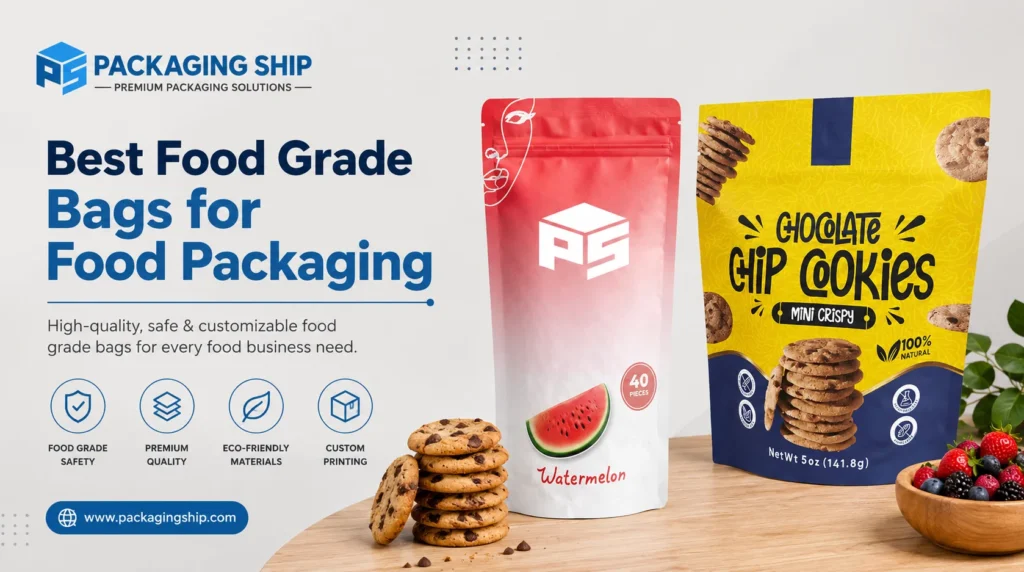
How to Choose the Best Food Grade Bags for Food Packaging (2026 Guide) Last spring, a Texas-based cookie brand finally landed the wholesale account they had been chasing for two years. A regional grocery chain. Orders jumped from 200 to 2,000 units almost overnight. Three days later, the buyer’s compliance team sent one email: “We need documentation that your packaging is food contact safe.” The founder stared at her screen. She had been packing cookies in bags from a local supplier. No certifications with no migration test reports. No 21 CFR reference anywhere on the product spec sheet. She lost the account. This guide exists so that does not happen to you. By the end of it, you will know exactly what the best food grade bags for food packaging actually are, how to verify FDA compliance before a buyer asks, and which bag type fits your specific product, cookies, baked goods, snacks, or perishables. What Are Food Grade Bags for Food Packaging? Food grade bags are packaging materials manufactured and tested specifically for direct contact with food. They do not leach harmful chemicals into your product. And they do not alter flavour. They do not introduce contaminants during storage or transport. Here is what most suppliers do not tell you: “food safe” printed on a bag means nothing without documentation behind it. It is a marketing phrase, not a regulatory status. Genuine food grade packaging has test reports, material specifications, and compliance with FDA standards under 21 CFR Parts 174 to 179. If your supplier cannot produce those documents, that bag is not verified food grade, regardless of what the label says. The FDA maintains a living database of every material legally permitted to touch your food. As of 2026, that database holds over 1,700 effective Food Contact Substance Notifications under 21 CFR, and your bags need to appear in that framework before a single cookie goes inside one. Why Your Bag Choice Directly Affects Your Food Business Most food businesses treat packaging as a cost, not a compliance asset. That mindset is expensive. Wrong bag choices lead to: The good news? The right food safe packaging bags protect your product, strengthen your brand, and scale with your business. They also open doors, retail buyers, eCommerce platforms, and distributors all check food packaging standards before onboarding a supplier. The 5 Best Food Grade Bag Types: And Exactly When to Use Each One 1. Kraft Paper Bags: Best for Bakeries and Dry Food Brands Walk into any independent bakery in the US and you will likely find kraft paper bags behind the counter. There is a reason for that. Kraft paper is strong, printable, and naturally positions your brand as eco-forward without trying too hard. A greaseproof-coated version handles cookies, pastries, and bread loaves without oil bleed-through on the surface. If you run a bakery and want packaging that works both in the display case and on a retail shelf, kraft bags paired with Custom Bakery Boxes give you that complete, shelf-ready presentation without needing two separate suppliers. Best for: Cookies, bread loaves, pastries, dry snacks, coffee 2. LDPE Poly Bags: Best for Frozen and Fresh Products Low-Density Polyethylene bags are the quiet workhorse of the food packaging world. They are FDA-compliant under 21 CFR Part 177, transparent enough to show the product, flexible enough to run through automated lines, and tough enough to handle freezer temperatures without cracking or becoming brittle. That combination is why LDPE is the single most widely used material in U.S. food processing facilities. It does not try to do everything, it does the fundamentals exceptionally well at a price point that scales. Best for: Fresh produce, frozen goods, baked goods in high-volume operations 3. Stand-Up Pouches: Best for Retail Shelf Presence Stand-up pouches use multi-layer laminate films, typically PET or nylon bonded with LDPE to build barrier properties that block oxygen, moisture, and light at the same time. That structure alone makes them one of the strongest food packaging bags available in flexible format. But the real reason they move product? Resealability. Consumers do not just grab a stand-up pouch because it looks good on the shelf. They come back for it because they can close it. Flexible Packaging Europe found that 65% of buyers specifically choose resealable pouches for that one reason. One feature. Drives the repeat purchase. And the sales data backs it up stand-up pouches held 38.67% of North America’s flexible packaging market in 2024, with food brands accounting for the largest share of that demand. Best for: Granola, trail mix, snacks, protein powders, specialty foods 4. Mylar Bags: Best for Maximum Shelf Life Mylar is metallized polyethylene terephthalate, and it is in a different performance category from most food packaging bags. It blocks over 99% of oxygen transmission. And it resists light degradation. It does not let moisture in or out. For any product where shelf life is the primary driver of the purchase decision, specialty foods, long-storage items, emergency food supplies Mylar is the right call. For CBD-infused food products, Mylar also solves a second problem. The opacity and tamper-evident structure it provides are exactly what most regulatory and retail compliance requirements ask for in that category. Best for: Long-shelf-life foods, specialty products, emergency food supplies 5. Compostable PLA Bags: Best for Eco-Conscious Brands PLA bags are made from plant starches, usually corn and carry ASTM D6400 certification for industrial composting. They meet food contact safe packaging standards and they connect emotionally with the growing segment of consumers who read ingredient labels and packaging claims with equal scrutiny. One thing worth saying clearly: PLA bags require industrial composting to break down properly. Before you position them as home compostable on your label or website, verify what your local waste infrastructure actually supports. Getting that wrong is the kind of greenwashing claim that attracts regulatory attention. For brands building a genuine sustainability story, our Eco Friendly Packaging range pairs PLA bags with certified materials across your full packaging line,
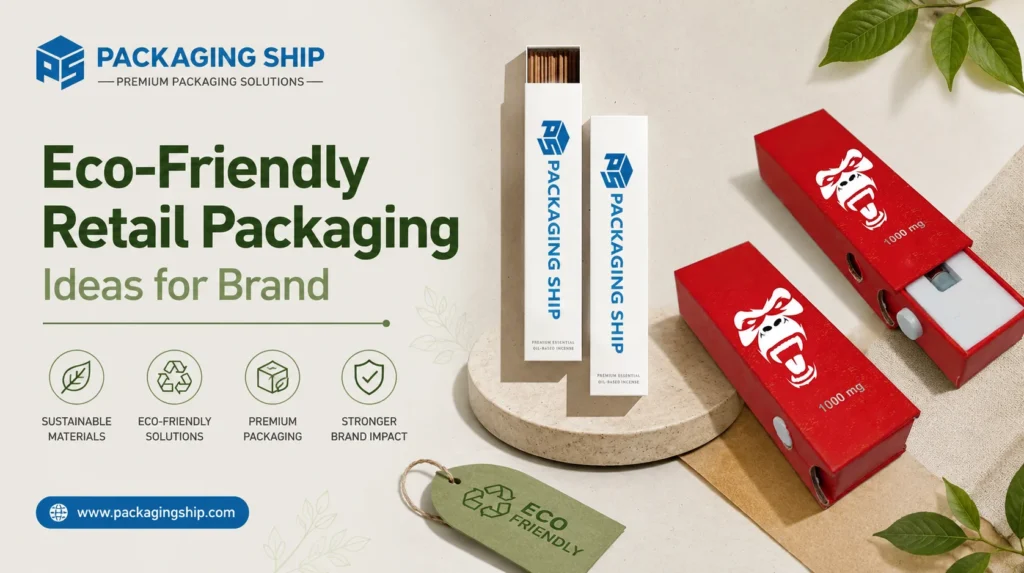
Eco-Friendly Retail Packaging Ideas for Sustainable Product Brands What Are the Best Eco-Friendly Retail Packaging Ideas Right Now? Last spring, a CBD skincare founder in Denver lost a $38,000 Whole Foods placement. Her formula was solid. Her price point was right. But when the category buyer flipped the box over and asked about the packaging’s sustainability credentials, she had nothing. That story repeats itself every week across the US natural products industry. Retail buyers in 2026 carry checklists. Eco packaging credentials sit near the top of those checklists. And yet most brand founders still treat sustainable retail packaging as something they’ll figure out “later”, usually right before a buyer meeting, when it’s already too late to change anything. This guide gives you the practical decisions, not the textbook definitions. EcoPackables’ 2026 market blog cited, 54% of US consumers chose products with sustainable packaging in the past six months, and 39% have already switched brands specifically over packaging sustainability. That is not a niche trend. That is mainstream consumer behavior your retail buyer sees reflected in sell-through data every quarter. So let’s talk about what actually works. Why Sustainable Retail Packaging Is Now a Retail Buyer’s Requirement Walk into a buyer meeting at any regional natural grocery chain today. Before you finish your pitch, someone in that room will ask whether your boxes are FSC-certified, whether your mylar bags are compostable, or whether your cartons contain recycled content. The US sustainable packaging market sits at $51.23 billion in 2025 and is projected to reach $76.92 billion by 2035, according to Towards Packaging’s 2026 industry report. That growth is not driven by brand altruism, it is driven by purchasing managers, retail shelf requirements, and state-level Extended Producer Responsibility laws that are tightening across California, Colorado, Oregon, and New York. For brands in CBD, wellness, and pharma, the stakes go one layer deeper. You need packaging that checks the eco box and the compliance box simultaneously. Most packaging vendors treat those two requirements as separate conversations. They are not. Your material choice, closure mechanism, and barrier spec are all the same decision. Get that decision right upfront, and you spend zero time backtracking before your next buyer meeting. The 6 Best Eco-Friendly Retail Packaging Ideas Your Brand Can Use Today 1. Kraft Retail Boxes: Still the Most Versatile Green Packaging Option Kraft paper has been around forever, but the reason it dominates sustainable retail packaging in 2026 is not nostalgia, it is performance. It is FSC-certifiable, it prints cleanly with soy-based inks, and it biodegrades without leaving microplastic residue. For botanical, wellness, and incense product lines, kraft retail boxes do something plastic-coated white boards never can: they tell the sustainability story before the customer reads a single word. The material itself communicates that your brand made a deliberate choice. Kraft tuck boxes are particularly strong for mid-range retail price points, the material feels intentional without reading as cheap. If your brand sits in the $18–$45 retail range, kraft with a matte spot UV finish hits a visual premium that converts at shelf. Our Custom Incense Packaging uses FSC-certified kraft with full custom print options and zero die-charge setup costs. Best fit: CBD tinctures, botanical supplements, herbal accessories, incense, loose-leaf tea. 2. Recycled Corrugated: Eco-Friendly Retail Packaging That Survives the Supply Chain There is a version of sustainable packaging that photographs beautifully and fails in a warehouse. Recycled corrugated is not that. Recycled corrugated board gives you the flute structure you need for transit protection alongside the eco-credentials your retail buyers want on paper. It accepts water-activated tape, which removes plastic tape entirely from your fulfillment process, a detail some buyers actually ask about during vendor audits. Paper and paperboard packaging held a 38.7% share of the global sustainable packaging market in 2025 (Data Bridge Market Research), the largest segment by material type. That share exists because the material works at scale, not just on brand mood boards. For e-commerce brands shipping direct-to-consumer alongside retail, our Custom E-Commerce Packaging uses recycled corrugated board with full print customization so your unboxing experience stays on-brand across every channel. Best fit: E-commerce fulfillment, multi-SKU product lines, subscription boxes, retail-ready shipper displays. 3. Biodegradable Packaging for CBD and Regulated Product Brands Most eco packaging guides stop before they get here. This is exactly where CBD and cannabis brands need the most specific information, and where most vendors leave you guessing. Biodegradable retail packaging means materials that break down naturally in soil or industrial compost within 90 to 180 days without leaving toxic compounds behind. What matters for regulated industries is that biodegradable options now exist in child-resistant formats. Biodegradable rigid boxes built with push-and-turn closures meet CPSC child-resistance standards. Resealable compostable mylar bags satisfy state cannabis packaging regulations in California, Colorado, Michigan, and Illinois. You genuinely do not have to choose between compliance and sustainability, but you do have to choose a packaging partner who has done this before. Our Custom Child Resistant Boxes are manufactured with eco-compatible board options that satisfy compliance requirements without defaulting to virgin plastic. That combination is not common in the market. Best fit: Cannabis concentrates, CBD edibles, pre-rolls, THC vape cartridges, pediatric supplements. 4. Rigid Boxes With Eco-Liners: Premium Sustainable Packaging Materials Without the Trade-Off A lot of brands assume going eco means giving up the premium unboxing experience. That assumption is wrong, and it costs those brands shelf space at higher-end retailers. Rigid boxes built with recycled grey board and wrapped in FSC-certified paper qualify as sustainable packaging materials. They also last longer, which reduces the per-use environmental footprint compared to lightweight single-use alternatives. Add water-based inks and plant-based adhesives, and the entire structure is clean from a material safety standpoint. For pharma and nutraceutical brands, this matters beyond aesthetics. Material safety documentation is increasingly required by retail buyers in the health category, and eco-liners help you check that compliance box faster. Our Custom Pharmaceutical Packaging is built to regulatory-grade specifications with eco-material upgrade options available at no additional tooling