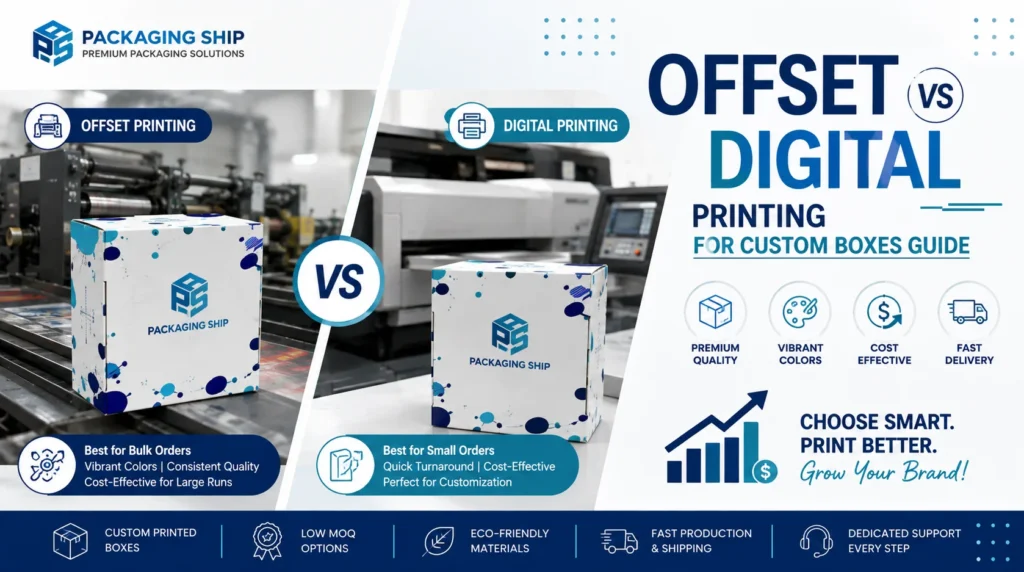
What Is Offset Printing vs Digital Printing for Custom Boxes in 2026? Which Should You Choose? TL;DR: Offset printing uses metal plates and works best for large orders, usually 500 units or more, where color needs to stay consistent across thousands of boxes. Digital printing skips the plates and prints straight from a file, which makes it the better choice for small runs, quick launches, and orders under 300 units. Your quantity decides your printer, not the other way around. Table of contents A quote that made no sense A soap brand owner in Ohio once sent us a screenshot of a quote from another supplier. It listed a plate charge, a die charge, a spot color fee, and a digital proof fee, all before a single box was printed. She had no idea what half of it meant. She just wanted 200 boxes for a farmers market launch in three weeks. This happens all the time. Small business owners search for offset printing vs digital printing custom boxes because they’re staring at a quote full of terms nobody explained, and they’re worried about spending money on the wrong process. This guide breaks it down in plain language, using real numbers from custom printed boxes USA production, so you can pick the right method the first time. What offset printing actually is Offset printing, also called offset lithography, uses metal plates to transfer ink onto paperboard. Each color in your design needs its own plate. A rubber roller picks up ink from the plate and rolls it onto your box material. It’s the same core process used to print magazines and newspapers for over a century. Because the plates are physical objects, someone has to make them before printing starts. That setup step is where the plate charge on your quote comes from. Once the plates are made, offset can run thousands of sheets quickly and hold color steady from the first box to the last. Offset tends to shine on rigid boxes and other premium packaging where a brand needs the same shade of blue on box one and box five thousand. If you look at our custom rigid boxes, most of the premium finishes on those products, like foil stamping and soft touch lamination, pair naturally with offset because the process holds fine detail so well. What digital printing actually is Digital printing skips the plates entirely. It prints directly from your artwork file onto the box material, somewhat like how an office printer works, just built for packaging stock at commercial scale. There’s no setup step waiting on plates, so digital printing can start production almost right after you approve your proof. That makes digital the natural fit for small batches, prototypes, and seasonal designs that might change next month. It’s also why Packaging Ship can accept orders starting at 50 units with no minimum order requirement. Without plate costs sitting on top of every order, small businesses get access to full color custom packaging printing options that used to require a 1,000 unit commitment at traditional manufacturers. CMYK vs spot color, and why your colors might look off This is where most of the fear around printing comes from. CMYK printing boxes wholesale uses four ink colors, cyan, magenta, yellow, and black, layered together to build every shade you see on screen. It works well for photos, gradients, and most everyday packaging. Spot color, often called Pantone or PMS matching, uses a premixed ink built to match one exact shade every time. If your brand color is a very specific navy or a precise shade of pink, spot color tends to hold that shade more reliably than CMYK, especially across large offset runs. Digital printing almost always uses CMYK. Offset can use either CMYK or spot color, which is one reason offset often wins when exact brand color matching matters most. Reputable print shops calibrate against ISO 12647, the international standard for offset color consistency, and follow G7 methodology to keep proof to print color variance tight. The PRINTING United Alliance explains that this kind of color management builds real consistency across print runs, which is exactly why your printed box should match your approved proof instead of surprising you. Offset printing minimum quantity, and when it actually pays off Here’s the honest answer. Offset printing minimum quantity custom boxes typically sits around 500 units at most manufacturers, and often higher. Below that number, the fixed plate charge gets spread across too few boxes, so your price per unit climbs instead of dropping. At Packaging Ship, we don’t charge plate or die fees, which shifts this math in your favor. Even so, digital printing usually still wins under 300 to 500 units simply because there’s no plate production time to wait through. Above that range, offset starts pulling ahead on both price per unit and color consistency, since the press is already running efficiently at higher volumes. Think of it like ordering coffee for an office. A single pot brews fast with no setup. A catering urn for three hundred people takes longer to prepare, but once it’s running, it serves everyone at a lower cost per cup. Offset is the urn. Digital is the pot. Which printing method for 100 custom boxes If you’re asking which printing method for 100 custom boxes, the answer is almost always digital. At that quantity, offset plate setup costs would dominate your total spend, and you’d still wait longer for production to start. Digital printing gets you full color CMYK printing at a fair per unit cost, with production starting right after your proof is approved. This applies whether you’re ordering mailer boxes for a product launch, sample packaging for a trade show, or a first test run before committing to a bigger inventory order. A small quantity doesn’t mean lower quality. It just means a different process gets you there. Best printing method by box material The material you choose also shapes which printing method makes sense.
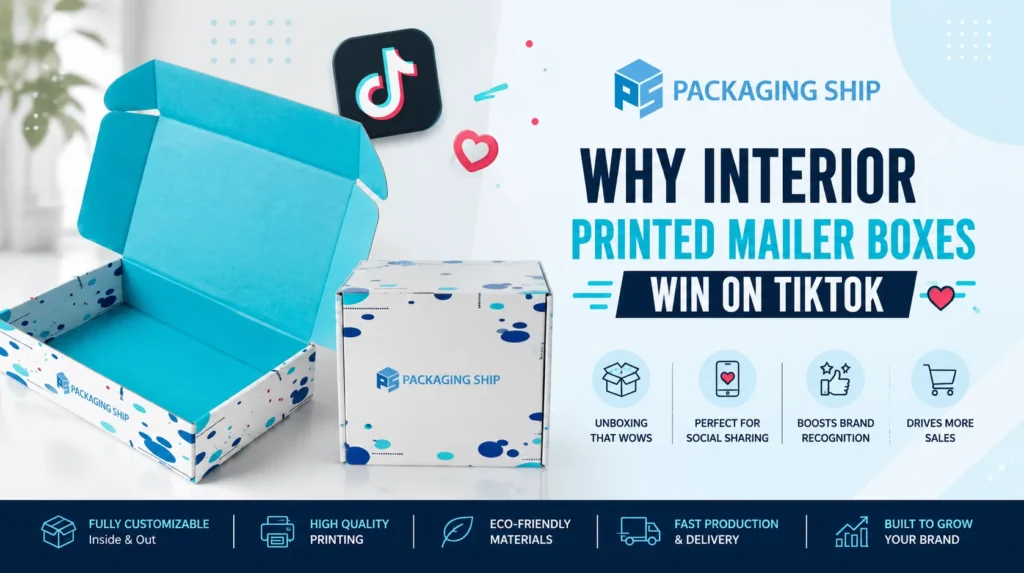
Inside Box Printing: The 2026 Packaging Trend That’s Winning Unboxing Videos on TikTok TLDR Inside box printing puts your design on the interior flaps of a mailer box instead of just the outside. It works because the moment a box opens is the exact moment a camera is pointed at it. Small brands can add it in batches as low as 50 units through digital printing, with no die charge and no plate fee. This guide covers the cost, the process, and how to get your first proof made this month. Table of Contents July 2026 update. Packaging suppliers across the US are reporting a real jump in requests for interior printed mailer boxes this year, and the reason is simple. Shoppers are not just opening packages anymore. They are filming the moment. Custom printed boxes USA sellers order used to mean a logo on the outside, maybe a brand color. That is changing fast. E-commerce packaging trends in 2026 point to one clear shift. The inside of the box now gets as much design attention as the outside, because the inside is what shows up on video. Packaging buyers and creators now have a name for this shift. They call it the inside box printing packaging trend, and it is reshaping how small brands think about their mailer boxes. This guide from Packaging Ship walks through what the trend actually is, why it works, what it costs, and how to get your first box made without a big minimum order. What Is the Inside Box Printing Packaging Trend in 2026? The inside box printing packaging trend means adding a full color design, a message, or a pattern to the interior flaps or walls of a box instead of only the exterior. Small and mid size brands use it on custom mailer boxes to create a surprise moment when the box opens, which drives more social shares and repeat orders than exterior branding alone. For years, printing stopped at the outside of the box. The inside stayed plain brown or white. That made sense when a box only had to survive a shelf or a delivery truck. It does not make sense anymore, because the box now has a second job. It has to perform on camera. An interior printed mailer box can carry a thank you note, a bold pattern, a brand story, or a small hidden design that only shows up once the flaps open. The exterior still matters for shipping and first impression. The interior is where the emotional reaction happens, and that reaction is what gets recorded and shared. Why Interior Printed Mailer Boxes Win on TikTok Interior printed mailer boxes win on TikTok because the moment a box opens gets far more camera time than the exterior ever does, and a hidden design creates a short burst of anticipation that makes the reveal feel more rewarding. Think about how a typical unboxing video plays out. A creator holds up the box, talks for a few seconds, then opens it. That opening moment is the part viewers actually watch closely. It is the payoff. An exterior design gets maybe half a second of real attention before the box starts opening. The interior gets several full seconds, often the longest single shot in the whole video. Most brands are still spending their entire design budget on the half second instead of the several seconds. A 2018 study by the Paper and Packaging Board, conducted with Ipsos, found that roughly seven in ten shoppers say packaging design shapes their purchase decisions, and a similar share say the packaging materials themselves influence how they feel about a brand. That data predates the TikTok unboxing trend fully maturing, which suggests the influence is likely even stronger now that packaging performs in front of an audience, not just the buyer. Packaging Dive, an industry trade publication, reported that digital printing has made interior printing far more accessible than it used to be, since digital presses can print inside surfaces without the plate costs older printing methods required. One packaging executive quoted in that report, Kerry Sanders, vice president of market development at digital printing company EFI, noted that packaging has become a genuine brand activation platform for retailers trying to stand out in a crowded market. The inside box printing packaging trend is not only a social media trend either. It plays into a psychological effect called delayed reveal. A hidden design creates a small sense of anticipation, and that brief anticipation makes the final reveal feel more rewarding, the same way a wrapped gift feels more exciting than an unwrapped one, even when the contents are identical. How to Add Inside Printing to Custom Mailer Boxes USA Adding inside printing to custom mailer boxes is the practical side of the inside box printing packaging trend, and it takes four steps. Pick a box style with flaps that face the camera, choose digital printing for small runs or offset for large ones, send your artwork, then approve a digital proof before production starts. Mailer boxes and tuck-top boxes both work well for interior printing, since their flaps naturally face the camera when opened. A tuck top box in particular tends to reveal the interior print all at once, which reads very well on video. The right method depends mostly on your order size and how detailed your design is. Factor Digital Printing Offset Printing Best order size 50 to 500 units 500+ units Plates needed No Yes Turnaround speed Faster, no plate setup Slower setup, faster once running Color matching Strong for gradients and photos Sharper Pantone (PMS) matching Cost per unit, low volume Lower Higher, due to plate cost Cost per unit, high volume Higher Lower, once volume covers the plate Best fit for this trend First time testers, small batch launches Established brands scaling a proven design You do not need a finished print file. Many suppliers, including Packaging Ship, offer free design support and build your artwork
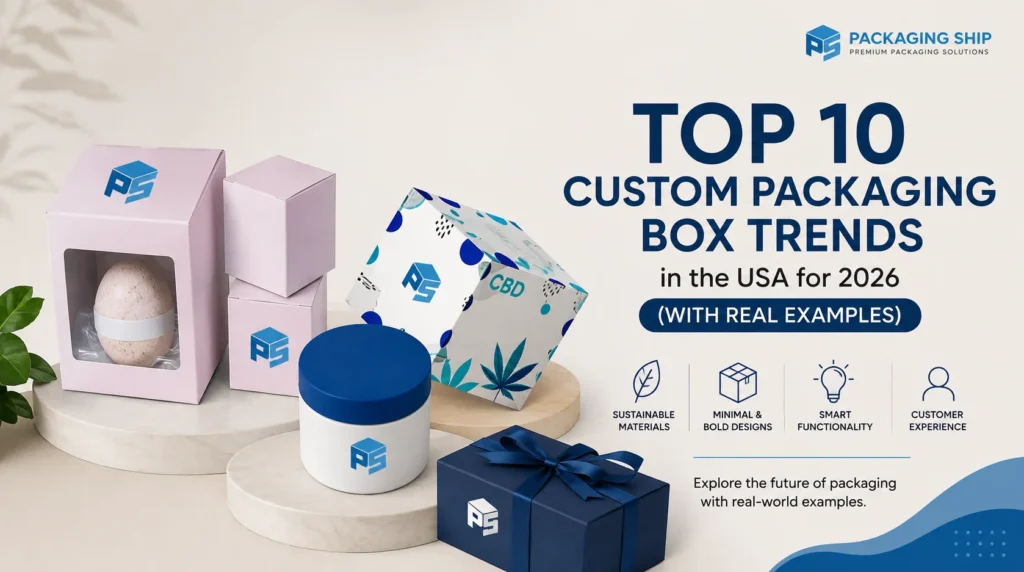
Top 10 Custom Packaging Box Trends in the USA for 2026 (With Real Examples) TLDR: Custom packaging trends USA 2026 include curbside recyclable materials, inside box printing for unboxing videos, minimalist design, QR codes, and sustainability claims that can actually be verified. This guide covers all ten, with real examples, and tells you honestly which ones are worth your money and which ones you can skip for now. Table of Contents Scroll TikTok for five minutes and you’ll probably land on an unboxing video without even trying to find one. Watch three of them back to back, which happens more often than people admit, and a small nagging thought shows up. Your own packaging looks a little tired next to what you just watched. If that sounds familiar, you’re not behind, you just haven’t had a straight answer about what’s actually worth changing. That’s what this guide is for. Custom packaging trends USA 2026 are moving in a few clear directions, but not every direction deserves your budget right now. Some of what gets called a “trend” online is just noise dressed up nicely. Below are the ten that are real, backed by what we’re actually seeing in production orders this year, plus which ones are safe to skip if your budget is tight. What Are the Biggest Custom Packaging Trends in USA 2026 Short answer first. The biggest custom packaging trends in USA 2026 are curbside recyclable materials, mono material construction that drops plastic liners, inside lid printing built for the unboxing moment, minimalist design, QR codes that actually do something useful, tactile finishes like soft touch coating, light personalization, retro inspired design making a comeback, smarter retail display structures, and sustainability claims that come with real proof behind them instead of just a nice sounding label. 1. Curbside recyclable materials, and this one isn’t optional anymore. People are done peeling plastic liners out of boxes before they can recycle them. Plain paperboard and kraft stock that goes straight into the bin are winning over plastic window boxes and mixed laminate mailers, and honestly, it’s about time. If you’re in food, pay extra attention here, since food packaging buyers now expect materials that are both food safe and easy to recycle without a second thought. 2. Mono material construction, the boring trend that matters most. A box built from one material recycles cleanly. A box glued together with plastic film, foam, or foil doesn’t, no matter what the label says. Brands are quietly swapping plastic inner liners for paper based ones that still do the protective job. 3. Inside box printing, built for the camera, not the shelf. This is the inside box printing trend for unboxing videos that people keep searching for, and it makes sense once you think about it. The camera points at the inside of the box the moment it opens, not the outside. A printed thank you note, a small design, or even just a bold color choice on the interior costs very little to add and gives that moment something worth filming. 4. Minimalist packaging design, and it keeps winning. Loud boxes trying to shout every feature at once are fading fast. Clean type, a color or two, room to breathe, that combination reads as confident rather than desperate. It’s also one of the cheaper trends here, since fewer print colors usually means a lower cost, not a higher one. 5. QR code packaging, finally used the right way. QR codes on boxes used to feel like a gimmick nobody scanned. Now they lead to care instructions, a brand story, a loyalty perk, or a fast reorder link, things people actually want. The trend only works when the code leads somewhere worth the tap. A code that just dumps you on the homepage isn’t a trend, it’s a missed opportunity. None of this happens in a vacuum, by the way. A 2018 study run by Ipsos on behalf of the Paper and Packaging Board found that most consumers say packaging design shapes what they buy, and a similar number say the materials matter just as much. That’s a big part of why 2026’s shift leans so heavily on materials and finish, not just logo placement. 6. Tactile finishes, because texture sells before the words do. Soft touch coating, embossing, a little debossing here and there, these give a box something you notice with your hands before you even read the front. Years of shiny, plastic feeling laminate started to look cheap instead of premium, and people noticed. 7. Personalization, without the enterprise price tag. Bigger brands print slightly different names or codes on individual boxes without paying for a whole separate print run, thanks to variable data printing. Smaller brands don’t need the full setup. A personalized insert or a handwritten style note inside the box gets you most of the same warmth for a fraction of the cost. 8. Retro and heritage design, pushing back against the minimalism wave. Bold vintage type, warmer color palettes, playful little illustrations, these are creeping back in, partly because everyone leaning minimal for the last few years made minimalism start to feel a bit crowded itself. Funny how that works. 9. Smarter structural design built for the shelf, not just the shipping truck. Brands selling in physical stores are designing boxes that double as their own display, which means less spent on separate store fixtures. Custom display boxes built around this idea help a smaller brand hold its own next to competitors with three times the marketing budget. 10. Sustainability claims with actual proof, not just a nice word. This is the eco friendly packaging trend 2026 small business owners should watch closely. Shoppers have gotten sharper about spotting green claims with nothing behind them. The Forest Stewardship Council explains that chain of custody certification tracks forest based materials at every stage, from the source all the way to the finished product, which is the kind of proof that actually holds up. Want to build
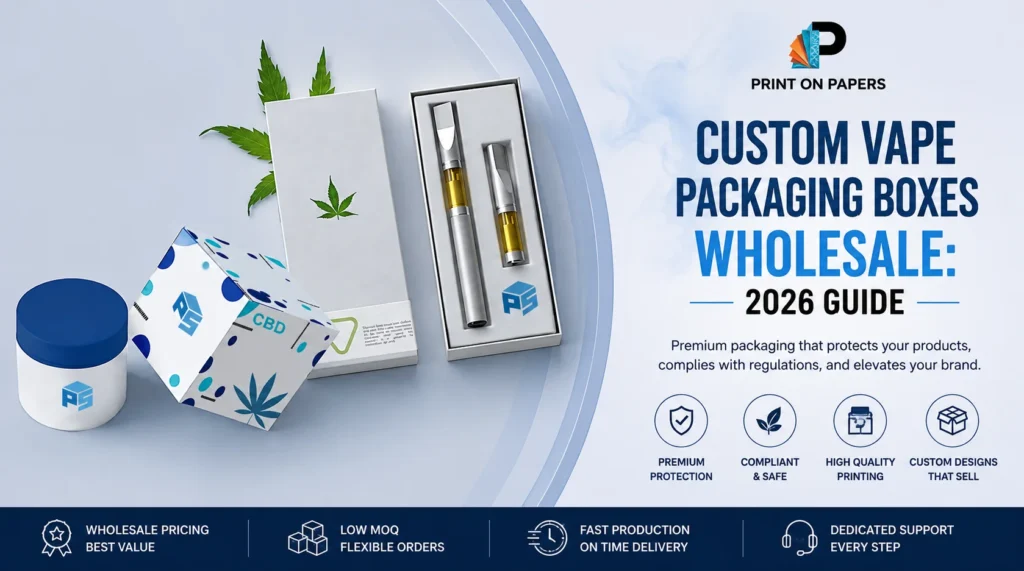
Custom Vape Packaging Boxes Wholesale: Child-Resistant, Compliant, Branded TLDR Vape packaging in the United States falls under federal safety law, so this is not a purely creative decision. Brands that skip child resistant closures on liquid nicotine containers risk having products seized or losing a retail account entirely. This guide walks through what compliance actually requires, how smaller vape brands can source child resistant packaging without committing to a huge order, and how to keep branding sharp even when the box itself is small. You will also get a short list of questions worth asking any supplier before you sign off on a run. Table of Contents What Is Custom Vape Packaging Boxes Wholesale in 2026? Custom vape packaging boxes wholesale refers to branded, compliant packaging ordered in bulk straight from a manufacturer, with the per unit cost dropping as quantity goes up. Right now, in 2026, that usually means child resistant closures where the law requires them, full custom printing, and order sizes that can start as low as 100 units. There is a legal layer sitting underneath the branding layer, and that layer decides whether you can actually sell the product. Why Vape Packaging Carries Real Legal Risk in the US Packaging most products is a creative call. Vape packaging carries something heavier. The product inside, liquid nicotine, can hurt a small child in a dose far smaller than most people assume, and poison control centers have logged thousands of exposure cases involving kids under six over the years. That history is why Congress got involved in the first place. Vape box compliance USA is not a phrase you can gloss over in a product listing. If your packaging has not actually been tested to the required standard, you are not just gambling on a bad review. You could be looking at a compliance action, a delisting from a marketplace, or a retailer flat out refusing your shipment. Learning what the rule says is step one. Finding a supplier who can prove their packaging meets it is step two, and it matters more. Custom Vape Packaging Boxes Wholesale and the Child Resistant Rule The Child Nicotine Poisoning Prevention Act passed in 2016 and handed the Consumer Product Safety Commission direct authority over liquid nicotine container packaging. Since then, these containers have had to meet the testing standard laid out in 16 CFR Section 1700.20, the same regulation that already governs child resistant packaging for prescription drugs. Here is what that testing standard actually looks like in practice. At least 80 percent of children under five who are tested have to fail to open the package within ten minutes. At least 90 percent of adults tested have to be able to open it and close it correctly. The container also has to restrict flow, meaning a dropped or spilled bottle cannot release more than a small, capped amount at one time. So when a supplier says a box is child resistant, that claim either passed a specific test or it did not. There is no middle ground on this one. Manufacturers and importers are required to issue a General Certificate of Compliance, usually shortened to GCC, once their packaging clears testing. Honestly, this is the one piece of advice worth remembering above everything else in this guide. Anyone can tell you a box is child resistant. Fewer suppliers can actually hand you the paperwork behind that claim. Cartridge formats need this most, and Packaging Ship’s child resistant vape cartridge boxes are built and tested against this same standard. Ask for the certificate before the order ships, not after something goes wrong. One thing worth flagging here. This rule applies specifically to liquid nicotine containers. Disposable vape devices and sealed prefilled cartridges that a child cannot easily access are handled differently under CPSC guidance, and FDA regulates e-cigarettes separately as tobacco products under its own authority. Knowing where those two lines fall keeps you from overbuilding packaging you do not need, or underbuilding packaging you legally do. The CPSC’s own page on liquid nicotine packaging covers the current requirements in full, and if you want the original legislative language, Congress.gov’s record of the Child Nicotine Poisoning Prevention Act has it. How Small Vape Brands Source Compliant Packaging Without Big Minimums Large packaging manufacturers tend to require somewhere between 1,000 and 5,000 units before they will even put together a quote. If you are a founder testing a new flavor, or running your very first production batch, that number does not work. It locks up cash in boxes sitting in a warehouse before you know whether the product will actually sell. That gap is exactly why branded vape packaging small batch no minimum has become a real sourcing strategy instead of just a nice perk to advertise. Smaller minimums give you room to test the packaging itself, test your messaging, and see real demand before you commit to a bigger run. Some suppliers will now produce a child resistant custom vape box 100 units at a time, which is enough to launch small and grow once the sales numbers back it up. Packaging Ship built its Vape Boxes category around that model, using digital printing on smaller runs so you are not paying for offset plates you have no use for yet. Custom Vape Packaging Boxes Wholesale Checklist Before You Order A few things are worth confirming before you request a quote. Ask whether the child resistant packaging has actually been tested to 16 CFR 1700.20, and whether the supplier can hand over a GCC. Confirm the real minimum order too, since some suppliers advertise a low number and then bury hidden setup fees that make a small order pointless anyway. And ask for a digital proof before anything goes to print. Catching a label error on a mockup costs nothing. Catching it after a thousand boxes are printed costs a lot more. Branding a Small Vape Box Without Losing Compliance Space Vape boxes are small, and compliance panels for
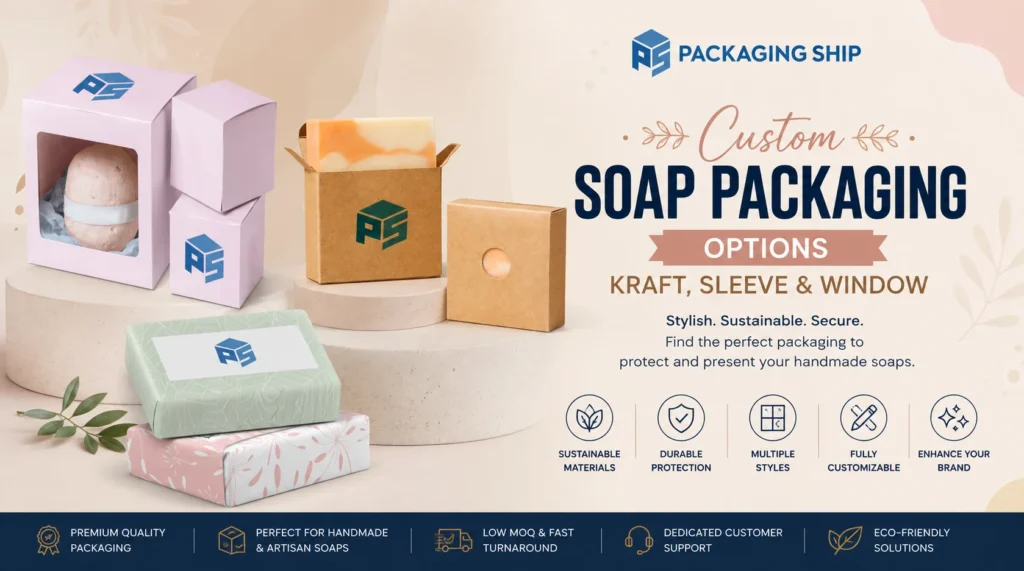
Custom Soap Packaging Boxes: Kraft, Sleeve, or Window Box What Do Soap Customers Prefer? (July 2026) TLDR: Kraft boxes work best for eco-first and farmers market soap brands. Window boxes move products faster in retail and Etsy. Sleeve boxes elevate premium positioning. Your channel decides your box, not your personal preference. Order from 50 units, no minimum, no die charges. Table of Contents What Are Custom Soap Packaging Options? (2026 Guide) Custom soap boxes packaging options are the three primary formats soap brands use to package and sell bar soap: kraft boxes, sleeve boxes, and window boxes. Each format serves a different sales channel, customer psychology, and brand identity. Choosing the wrong one costs you sales before a single customer reads your label. A 2024 report by Business Dasher confirmed that 81% of consumers purchased a new product because its packaging caught their eye. That stat matters even more for soap, because soap is a sensory product that buyers judge entirely by sight before they touch it. The Packaging Problem Nobody Talks About Picture this. You spent three weeks perfecting your lavender oat milk soap recipe. The scent is extraordinary. The bar has beautiful swirled botanicals. You wrap it in plain brown paper with a rubber stamp and bring 30 bars to the Saturday farmers market. The seller two tables down has identical ingredients. But their soap sits in a custom kraft box with a clean matte black logo and a die-cut window showing the bar inside. By noon, they have sold out. You still have 22 bars. The soap was never the problem. This happens because generic soap boxes signal generic quality to buyers, even when the product inside is exceptional. According to research published in Humanities and Social Sciences Communications (Nature, 2025), the global consumer packaging market is growing from $655 billion in 2024 to $950 billion by 2034, driven largely by consumers demanding packaging that reflects product values. Your box is doing a job whether you designed it to or not. The question is whether it is working for you or against you. Kraft Soap Boxes: The Artisan Default Kraft soap boxes are made from FSC-certified recycled paperboard. The natural brown surface reads as honest, earth-first, and handcrafted. That perception is not accidental. It is a design outcome. Kraft packaging works because it matches what eco-conscious buyers already believe about organic, natural, and handmade soap. A 2025 report from ClearBags found that 71% of consumers actively choose products based on the sustainability factor of their packaging. When your box looks like the planet matters to you, buyers assume your ingredients do too. Where kraft shines: Kraft is the strongest performer at farmers markets, craft fairs, co-ops, and natural food stores. It is also the most cost-effective format for small batch production. At Packaging Ship, custom kraft soap boxes start from $0.20 per unit with no die charges, no plate fees, and free US shipping. Where kraft falls short: A raw kraft box without premium printing looks unfinished on a retail shelf next to SBS-board boxes with full-color CMYK graphics. The fix is simple: add a matte-laminated black ink logo, a one-color offset print, or a spot UV logo stamp to the kraft surface. That single upgrade changes the read from “home batch” to “premium artisan.” Soap Sleeve Boxes: The Minimalist Power Move Soap sleeves are flat bands that wrap around a naked bar or a tray insert. They expose the top and bottom of the soap bar while covering the middle section with your branding. This format is popular with hotel amenity brands, spa lines, and minimalist DTC soap companies. The sleeve box is the most material-efficient option in custom soap boxes packaging options. You use less stock, less ink, and less waste per unit. That cost saving shows up directly in your per-unit price. Where sleeves win: Subscription boxes, hotel-grade amenity packaging, and gift sets where the soap bar itself is the visual centerpiece. Sleeves also photograph beautifully for Shopify and Etsy product listings because the bar is partially exposed in every image. Where sleeves lose: Retail shelves with heavy foot traffic. A soap sleeve gets dislodged, pulled off by curious shoppers, and offers no structural protection during transit. If your soaps ship individually through USPS or UPS, sleeves require additional outer packaging. For brands exploring soap wrapping alternatives, Packaging Ship’s custom soap wrapping paper pairs well with sleeve-style presentation without the structural limitations of the sleeve format alone. Window Soap Boxes: Let the Bar Sell Itself A window soap box is a standard tuck-end box with a die-cut opening covered by clear acetate film. The window exposes the soap bar’s color, texture, botanical inclusions, and shape directly to the buyer, without them opening anything. This format is the single highest-converting soap packaging for retail shelf environments. The reason is straightforward. Soap buying is sensory. Buyers want to see what they are getting. A window removes the uncertainty. Research from the Social Science Journal (2025) confirmed that packaging design and material quality directly influence consumers’ perception of product reliability and premium value. Showing the product through a clear window signals confidence in the product. That confidence transfers to the buyer. Where window boxes dominate: Brick-and-mortar retail, boutique stores, gift shops, and online listings where product photography drives click-through rates. If your soap has visible swirls, layered colors, embedded herbs, or unusual shapes, a window box is your most powerful selling tool. Where window boxes underperform: Farmers markets, where rustic and eco-first aesthetics outperform product-display formats. Buyers at farm stands respond more strongly to the kraft brown surface than to an acetate window. Kraft vs. Window Box: Which Sells Better? This is the most searched question in the custom soap boxes wholesale research category. The honest answer is: it depends on your channel, not your box. Factor Kraft Box Window Box Best channel Farmers market, Etsy, co-op Retail shelf, gift shop, boutique Consumer trigger Eco trust, brand values Product curiosity, visual appeal Cost per unit Lower
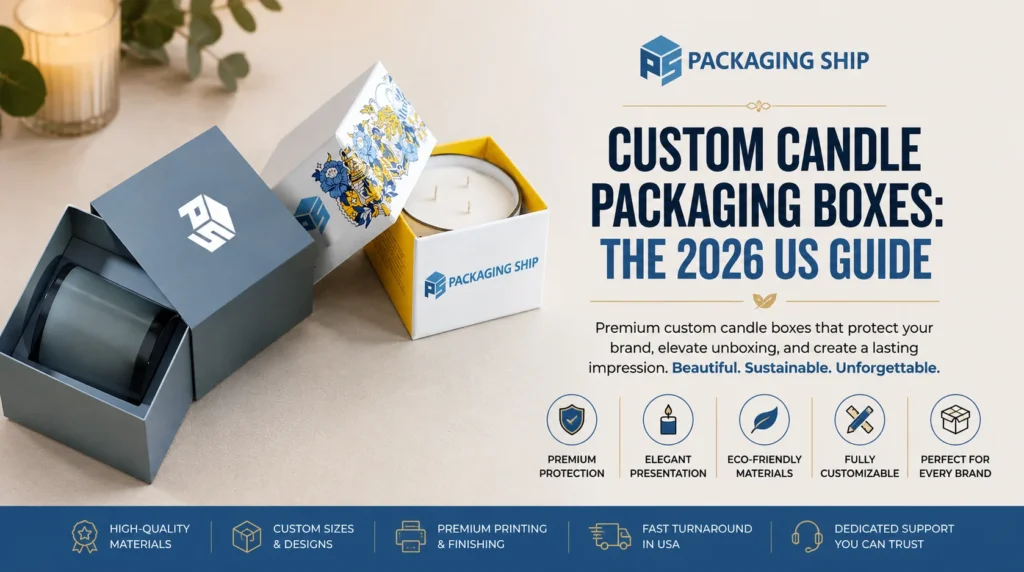
Custom Candle Packaging Boxes: How to Choose the Right Box for Glass Jars, Tins, and Pillar Candles (2026) TLDRCustom candle packaging boxes protect fragile glass jars, match your price point, and drive repeat purchases. Glass jar candles need a two-layer system with die-cut or molded pulp inserts. Tins work in folding cartons. Pillar candles need height-specific rigid boxes. Orders start from 50 units with free design support and free US shipping. Table of Contents 1. Why Candle Packaging Directly Affects Your Revenue Here is a scenario most candle brand owners recognize. You spend months getting the fragrance right. You pick a beautiful glass jar. You design a label. Then your first e-commerce order goes out in a plain brown box, the jar breaks in transit, and a customer posts the damage on Instagram before your thank-you email even reaches their inbox. That is not a shipping problem. That is a packaging decision made too early or too cheaply. According to Statista’s US candle market data, the US candle market was valued at $4.5 billion and is forecast to reach $6 billion by 2030. At that scale, candle packaging is no longer a fulfillment detail. It is a brand asset. The box your customer receives determines whether they photograph it, review it positively, and order again. The three most expensive packaging mistakes candle brands make are ordering the wrong box structure for their candle format, ignoring inserts until the breakage refund costs force a change, and choosing a packaging supplier whose MOQ locks them into a quantity they cannot move before their next product update. This guide solves all three. 2. What Kind of Box Does Each Candle Format Actually Need? Not every candle ships or sells the same way. The box that works beautifully for a 4oz tin will fail a 12oz glass jar. Here is the breakdown by format. Glass Jar Candles Glass jar candles are the highest-selling format in the US candle market, and they carry the highest packaging risk. Glass is rigid and brittle. A filled 8oz jar adds weight that amplifies impact force during a drop. Any gap between the jar and the box wall becomes movement, and movement is how glass breaks. For retail display, a printed folding carton in SBS board (at minimum 350gsm) provides clean shelf presentation and enough structural support. For e-commerce, that retail box is not enough on its own. You need a custom candle box for glass jar candles built with a die-cut or molded pulp insert that holds the jar centered with at least one inch of crush zone on all sides. The right candle box for glass jar orders also needs to account for lid security. A loose metal or wood lid that separates in transit can scratch the jar interior and ruin the wax surface. Your insert should contact both the jar body and stabilize the lid simultaneously. Tin Candle Packaging Tins are forgiving. They distribute impact better than glass and resist cracking under compression. A standard kraft tuck-end box in 300gsm board handles tins well at the retail level. For e-commerce multi-packs, cardboard dividers between tins prevent lid-to-base contact that causes denting. Tins also present a smart wholesale opportunity. Because the packaging structure is simpler, custom candle boxes wholesale orders for tin-format candles carry a lower per-unit cost, allowing smaller brands to invest the savings in better finishing, like matte lamination or a full-color outer print. Pillar Candle Boxes Pillar candles have a shape problem that most packaging suppliers overlook: height. Standard folding cartons are engineered for products under 5 inches tall. A 6×3 pillar candle needs a pillar candle box with custom height clearance, tight width tolerance to prevent lateral movement, and a clean base closure that does not compromise the candle surface on the way in or out. Kraft sleeves work for retail display. But for e-commerce, a rigid pillar candle box with a two-piece lid-and-base structure provides far better protection and a significantly better unboxing impression. Tealight and Votive Packaging Tealight packaging is a multi-unit presentation opportunity. A single tealight in its own box is a commodity. Six tealights in a branded window box with a custom insert that holds each cup at the same angle is a gift. Tealight and votive sets consistently outperform single-unit SKUs in gifting seasons because the packaging turns a low-cost product into a premium purchase. 3. The Best Packaging for Shipping Candles Without Breaking This is the section most candle brand owners need before they find out the hard way. A medium-sized 8oz glass candle in a single-wall mailer without inserts has a 20 to 25% risk of breakage. With double-wall cartons and molded pulp inserts, that risk drops to under 2%. Packsar On a 200-unit order at a 20% breakage rate, that is 40 broken candles. At $30 retail value per candle, you are looking at $1,200 in replacements before you factor in customer service time and the shipping cost on the replacement order. The right candle packaging for shipping costs a fraction of that. The solution is a two-layer system. Layer one is your retail box. This is the branded box your customer sees. It should be a minimum of double-wall paperboard or E-flute corrugated for glass jars. It should include a die-cut insert or molded pulp cradle that holds the jar with no movement. The insert should contact the jar at the widest point and at the base, not just at the top. Layer two is your shipping outer. For orders going through FedEx or UPS ground, a corrugated outer rated at a minimum of 32 ECT (Edge Crush Test) handles the stacking weight of standard parcel networks. This outer box should be sized so your retail box sits snugly inside with less than half an inch of gap on any side. The Candle Packaging blog states that correct use of inserts leads to a 60 to 75% decrease in delivery damage rates according to business reports. That reduction directly translates to lower
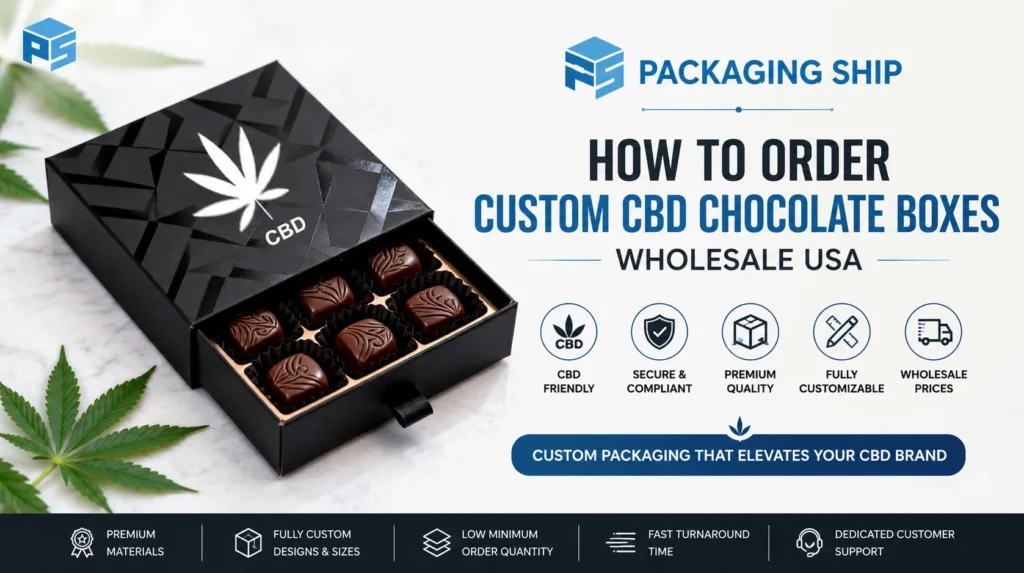
Custom CBD Chocolate Boxes Wholesale: How to Order Compliant, Branded Packaging TLDR: Most chocolate box suppliers will take your money, ship you something that looks good, and leave you holding non-compliant inventory your retailers cannot touch. This guide covers exactly what a CBD chocolate box must legally include in 2026, which materials hold up in the real world, what wholesale pricing without hidden fees actually looks like, and how to place a first order without needing a designer or a big budget. Table of Contents What Is Custom CBD Chocolate Packaging and Why Does It Matter in 2026? Four months. That is how long a chocolatier I know spent dialing in his 25mg hemp-derived dark chocolate bar. Single-origin cacao. Clean extract. Precise dosing. The product was genuinely good. He found a packaging supplier through a Google search. The price was low. The turn around looked fast. He placed the order. When the boxes arrived, there was no warning panel. The CBD milligram count was not on there. No batch code. No child-resistant features anywhere. His retail buyer looked at it for about thirty seconds and said no. Two months of work and a shelf placement walked out the door together. That situation happens far more than CBD founders realize, and it keeps happening because most packaging suppliers do not know or care that CBD chocolate packaging carries a completely different set of requirements than a Valentine’s Day gift box. They are in the business of printing boxes. Not protecting your product launch. The U.S. CBD edibles market was tracking toward $4.1 billion by 2027 according to Brightfield Group research. That kind of growth rate brings enforcement energy along with it. In the last two years, state attorneys general in California, Colorado, and New York have all issued specific CBD edible labeling guidance. The brands that win shelf placements in that environment are the ones whose packaging was built correctly from unit one. Packaging Ship runs custom CBD chocolate boxes wholesale for brands across all 50 states. Orders start from 50 units. Every box is built around what your product actually needs to be legal, not around what is cheapest to produce. What Makes CBD Edible Packaging Different from Regular Chocolate Boxes? CBD chocolate is food and a hemp-derived cannabinoid product at the same time. That combination means two separate regulatory frameworks show up on your packaging. A standard chocolate box needs allergen declarations, net weight, and a manufacturer address. Short list. A CBD chocolate box needs all of that, plus a hemp-derived product disclosure, milligrams of CBD per serving, a warning panel carrying specific required language, a batch number tied to a third-party Certificate of Analysis, and child-resistant packaging features in an increasing number of states. Here is where the regulatory picture gets complicated. The 2018 Farm Bill opened the federal door for hemp-derived CBD. But the FDA still has not approved CBD as a food ingredient under the FD&C Act, and that gap is where the trouble lives. Each state fills the gap with its own rules. California has built an entire CBD edible framework. Colorado mandates specific panel language that differs from federal guidance. New York’s Department of Health issued separate guidance on serving size declarations for hemp edibles that went further than anything at the federal level. The supplier who just prints your logo and picks a standard box size has no idea any of that exists. You get a box that looks professional, costs you money, and gets rejected at the loading dock. The supplier who knows what branded CBD edible packaging actually requires is a completely different type of partner. 7 Compliance Elements Every CBD Chocolate Box Must Include Run through this before you approve any dieline. These are the elements that need to be on your box under current U.S. federal and state requirements as of July 2026. Miss any of them and you are not retail-ready. 1. Hemp-derived product disclosure Your box needs to say the product contains hemp-derived CBD. The phrase “Contains hemp-derived cannabidiol” works in most states. Softer language like “botanical extract” or “plant-based wellness” does not satisfy this requirement anywhere I have seen it tested at retail. 2. CBD milligrams per serving Write the number out. Not “infused.” Not “hemp extract.” The actual milligrams per serving and per total package. Retail buyers ask for this. Regulators require it. Customers have started expecting it. 3. Warning panel with state-required language A chocolate box with warning panel text is not an optional feature you add at the end. Required statements include “Keep out of reach of children,” “Do not use if pregnant or nursing,” “For adult use only,” and “This product has not been evaluated by the FDA and is not intended to diagnose, treat, cure, or prevent any disease.” The exact phrasing shifts by state, which is why having a packaging partner who builds compliance into the design file matters. 4. Batch number and lot code Every production run needs a batch or lot code printed somewhere on the box. It ties your product to a Certificate of Analysis and makes traceability possible if a recall situation ever comes up. Retailers with compliance programs will check for this. 5. COA QR code More states are pushing this requirement through. A scannable QR code links customers and regulators directly to a third-party lab report that confirms your cannabinoid content and shows clean results for pesticides, heavy metals, and residual solvents. If the QR code is too small to scan after printing or placed in a spot that gets obscured by a sticker, it does not count. 6. Net weight and serving size FDA food labeling rules apply here the same way they do on any food package. Net weight in grams or ounces goes on the front principal display panel. Serving size and number of servings per container go in the nutrition facts section. 7. Manufacturer or distributor contact information The name, city, state, and contact information for whoever is responsible
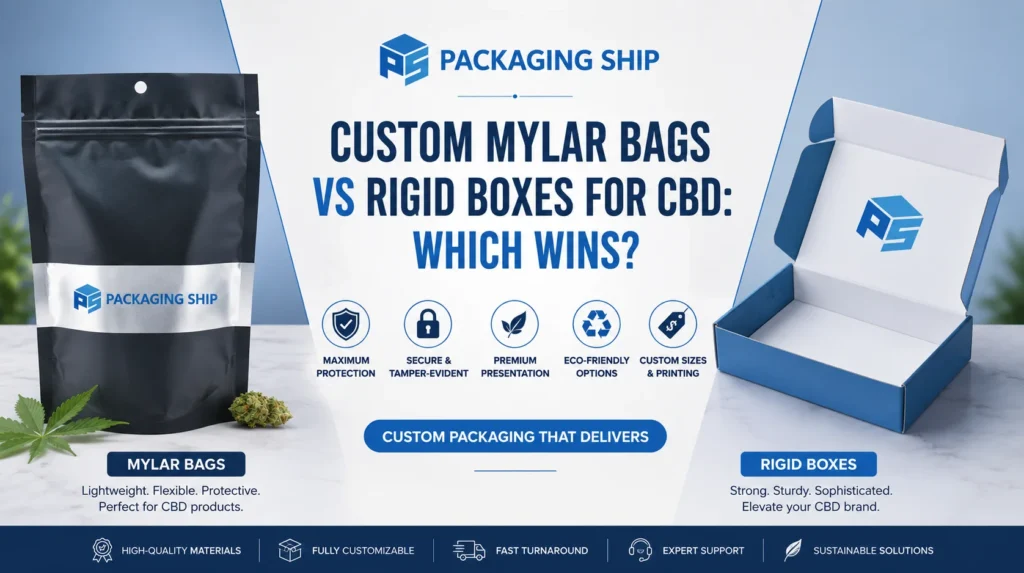
Custom Mylar Bags vs Rigid Boxes for CBD Products: Which Packaging Sells More? TLDR Mylar bags cost less, keep things fresher, and move more volume for gummies and edibles. Rigid boxes justify a higher price tag and suit premium tinctures and gift sets better. Honestly, there’s no clear winner. It depends on your product, your shelf, and who’s actually buying. Table of Contents 1. Why This Decision Actually Affects Your Revenue Picture two CBD gummy brands sitting side by side on a dispensary shelf in Denver. Same price. Same milligram count. And yet by Thursday, one has sold out completely while the other sits there, gets restocked twice, and just doesn’t move. Nobody’s picking the winner because a budtender likes it more, or because the gummies taste noticeably better. People are grabbing whichever one looks like it’s worth grabbing. That’s really it. This isn’t just a hunch, either. A study out of the American Journal of Preventive Medicine found that cannabis buyers size up product quality within seconds of seeing it, and that packaging does most of that convincing before anyone even glances at a label. Grand View Research backed this up in 2023, noting that most cannabis brands worldwide (over 66% of them) were shifting toward rigid packaging for their flagship products, while mylar kept its hold on high-turnover categories because it’s cheaper and protects freshness better. So this isn’t really a packaging decision at all. It’s a revenue decision to wear a packaging costume. And this guide should help you work out the right answer for your own product. 2. What Are Custom Mylar Bags for CBD Products? “Mylar” is technically a brand name, referring to biaxially oriented polyethylene terephthalate film that’s usually laminated with a thin layer of aluminum foil. Put those two together and you get a barrier against oxygen, moisture, UV light, and odor that cardboard just can’t touch. That barrier isn’t some bonus feature for CBD products. That’s the entire point. Gummies turn gummy (or worse) the moment moisture sneaks in. The hemp flower loses potency as oxygen slowly breaks down the cannabinoids. A properly sealed mylar bag stops both of those problems before your customer ever gets the package open. There’s also the print space to consider. Every panel on a custom mylar bag can carry full-color artwork. You can go matte or gloss, add holographic effects, throw on a resealable zipper or a tear notch, whatever actually matches how your customer uses the product day to day. Bags ship flat, barely take up warehouse space, and cost a fraction of what rigid packaging runs per unit. Say you’re a DTC brand about to run your first batch of 100 units. You don’t need to drop $2.50 a box just to look like a real brand. Mylar gets you there from day one. Where mylar shines: CBD gummies, infused edibles, hemp flowers, CBD powder supplements, oil sample sachets, basically any high-velocity dispensary item where the per-unit cost feeds straight into your shelf price. 3. What Are Rigid Boxes for Cannabis Brands? A rigid box (sometimes called a set-up box) starts as a thick chipboard, usually somewhere between 2mm and 4mm, then gets wrapped in printed specialty paper or a fabric-textured material. It doesn’t fold flat like a carton does. Whatever shape it leaves the production floor in is the shape it stays. That’s really the whole appeal. Permanence. A well-built rigid box tells a customer something about your brand before they’ve even opened it. Soft-touch lamination gives the surface that expensive feel under the thumb. Foil stamping catches the light on a dispensary counter. A magnetic closure turns the act of opening the box into something people actually remember, and mention to a friend later. Dotcom Distribution’s research backs this up too. Survey after survey shows a solid majority of consumers say they’d buy a premium product again specifically because of how it arrived. That repeat-purchase pull is exactly what rigid boxes are engineered to create. Where rigid works best: premium CBD tincture sets, skincare bundles, multi-product gift collections, high-margin concentrates, basically anything priced above $50 where the buyer already expects the box to match what they paid. 4. Head-to-Head: Custom Mylar Bags vs Rigid Boxes CBD Comparison Factor Custom Mylar Bags Rigid Boxes Starting cost per unit From $0.20 From $0.50 Barrier protection Excellent, blocks oxygen, moisture, UV, odor Moderate without an inner liner Shelf presence Strong, full-surface premium print Dominant for luxury shelf positioning Child-resistant options CPSC-certified CR zipper available Certified closure or CR insert available Weight and shipping cost Very light, keeps shipping costs down Heavier, adds to per-shipment cost Best sales channel Dispensary floor, DTC, e-commerce Retail counter, gifting, premium DTC Minimum order at Packaging Ship 50 units 50 units Eco-friendly options Kraft mylar, mono-material recyclable variants FSC-certified board, fully recyclable Unboxing experience Functional, branded, resealable Premium, tactile, memorable Best CBD product fit Gummies, edibles, hemp flower Tinctures, gift sets, luxury skincare There’s one thing that table doesn’t capture well, and it deserves its own section because it’s where a lot of US CBD brands get tripped up. 5. Child-Resistant Compliance: What US Brands Must Know in 2026 Most guides skim past this in a sentence or two. We won’t, because messing it up can get your product pulled off dispensary shelves, or worse, put your license at risk. So, are mylar bags child-resistant for CBD products? Not automatically, no. A regular resealable zipper doesn’t count on its own. The Consumer Product Safety Commission enforces child-resistant packaging under the Poison Prevention Packaging Act, 16 CFR Part 1700. To actually pass, your mylar bag needs a CPSC-certified CR zipper that’s been through formal testing with kids aged 42 to 51 months and adults aged 50 to 70, each group with its own pass and fail thresholds. Here’s what’s changed lately: Minnesota, New York, New Jersey, and Missouri have all moved to the newer ASTM D3475 standard across 2025 and 2026, and it’s a tougher bar than the older 16
Custom CBD Packaging Boxes in 2026: Compliance, Child-Resistance, and Branding Rules TL;DR CBD packaging in 2026 is a legal document first and a marketing tool second. You need certified child-resistant closures, nine mandatory label elements, state-specific warnings, and a DSHEA disclaimer on every ingestible product. One missing item costs you your shelf placement, your inventory, or both. Table of Contents 1. The Packaging Mistake That Cost One Brand $14,000 A Colorado CBD brand spent four months building their tincture line. Good formula, clean branding, a retail buyer already interested. Their boxes arrived from the printer three weeks before launch. Everything looked right, until a compliance consultant reviewed the panels two days later. The DSHEA disclaimer was missing. Not wrong, not small, just completely absent. Eight thousand boxes, printed and paid for, could not go to retail. They reprinted. The launch moved back six weeks. The retail buyer found another brand to fill the slot. That story is not unusual. It plays out constantly in this industry, and almost always over something that could have been caught in the design phase if the brand had worked with a supplier who understood CBD packaging regulations in the USA from the start. That is what this guide is for. 2. What Are CBD Packaging Compliance Requirements USA 2026? Custom CBD packaging boxes compliance USA sits under three different federal agencies, and most brands only think about one of them. The FDA governs what you can say on the label and what claims you can make. The CPSC enforces child-resistant packaging requirements under the Poison Prevention Packaging Act, specifically 16 CFR Part 1700. The FTC oversees advertising claims, and in 2026 that jurisdiction now extends to any digital content linked from your packaging through a QR code. Your COA landing page, your brand website, your Instagram link in a QR code, all of it falls under FTC review if it contains claim language tied to the product. According to the FDA’s official CBD enforcement page, the agency sent over 50 warning letters to CBD companies between 2020 and 2024. Most of those letters targeted label claims and missing disclosures, not product quality. The packaging was the problem, not the CBD inside. So what actually needs to be on the box? Here is what every custom CBD packaging boxes compliance USA order must include: Product identity and intended use. Net CBD quantity in milligrams per serving and per container. Full ingredient list in descending order by weight. Manufacturer name and physical address. Batch or lot number that matches your third-party lab results. Expiration or best-by date. A DSHEA disclaimer if any structure/function claim appears anywhere on the box. A “keep out of reach of children” warning. State-specific warnings wherever your product is sold. Nine elements. Every single one is a hard requirement. Not a recommendation, not a best practice, a legal requirement with real consequences when missing. 3. Do CBD Boxes Need to Be Child-Resistant? Short answer: yes, for most oral CBD products. Longer answer: the way most brands handle this is wrong, and it leaves them legally exposed even when they think they are covered. Child resistant CBD packaging under federal law means packaging that passes a certified laboratory test, not packaging that simply looks hard to open. The CPSC enforces this under 16 CFR §1700.15, and according to the CPSC’s own PPPA compliance guidance, the certification attaches to the complete finished package, not to the closure or the film in isolation. The substrate, the ink, the lamination, the closure, all of it gets tested together as one unit. The test itself is specific. Two hundred children aged 42 to 51 months attempt to open the package within five minutes. At least 85% of them must fail. Then 100 adults aged 50 to 70 attempt to open and properly reclose the same package. At least 90% of them must succeed. That is the 16 CFR §1700.20 protocol, and it applies to the box you actually ship, not to a prototype or a similar configuration. Here is the part that trips up brands most often. Printing the words “child-resistant” on a box without a certified test report from Intertek, SGS, or another ISO 17025 accredited lab does not create compliance. It creates liability. A regulator who audits your packaging and finds that claim without supporting documentation has grounds for action under the PPPA. In 2026, the standard got tighter in several markets. Minnesota, New York, New Jersey, and Missouri now require ASTM D3475-2024 compliance, which adds requirements beyond the federal baseline. California mandates resealable child-resistance on any multi-serving product, meaning initial-use protection alone does not satisfy state law there. Ohio banned slide-lock tubes for pre-roll products entirely after March 1, 2026. Child resistant packaging CBD is three things at once: product-type specific, state-specific, and test-report dependent. A packaging supplier who cannot speak to all three of those layers is not the right partner for a CBD brand. 4. Warning Panels on Custom CBD Packaging Boxes USA Custom CBD packaging boxes with warning panels USA have sizing and placement rules that most design teams learn about too late, meaning after the boxes are already printed. Warning text must be a minimum of 1/16 inch in height for the smallest letter. No required text can appear smaller than 6pt on any primary display panel. Warnings cannot go on interior flaps, inside tuck tabs, or anywhere a consumer would not see them before purchase. They also cannot be buried inside a decorative script font that makes them technically present but practically unreadable. Regulators look for all of that. The DSHEA disclaimer is the single most missed element in compliant cannabis boxes. If your box says anything like “supports calm,” “promotes sleep,” or “helps with focus,” the following statement must appear on the same panel as that claim, or on the principal display panel: “This statement has not been evaluated by the Food and Drug Administration. This product is not intended to diagnose, treat, cure, or prevent any
Custom Kraft Boxes Wholesale USA: Pricing Guide and How to Order Small Quantities TLDR: Expect to pay $0.20–$0.55 per box, depending on size, ink coverage, and quantity. You don’t need a 1,000-unit commitment; several U.S. manufacturers, Packaging Ship included, will run as few as 50–100 units, turn a digital proof around in under two days, and ship finished boxes in 7–10 business days. Table of Contents What “Wholesale” Actually Means for Kraft Boxes in 2026 We got an email at 11:40 p.m. last spring from a founder launching a skincare line. Her exact words: “Every supplier I’ve called wants 2,000 units minimum. I need 150 for my first drop.” That’s not an unusual message, it’s the single most common one we get from first-time brands. The good news: that 2,000-unit wall isn’t a law of physics, it’s a leftover from how offset printing works. A wholesale kraft box, in plain terms, is a natural unbleached kraft paper box printed and cut to your size and logo, priced per unit, where cost drops as volume climbs. What changed in the last few years is that digital printing lets manufacturers run small batches without eating a loss, which means the minimum-order wall doesn’t have to apply to everyone anymore. What You’ll Actually Pay Per Unit Most packaging sites make you fill out a form just to see a number. That’s backwards, so here’s what actual quotes look like. At Packaging Ship, pricing runs $0.20 to $0.55 per box. A plain mailer box in a single ink color at 500 units sits near the bottom of that range. A small tuck box with a full-color coated finish at 100 units sits closer to the middle, smaller runs simply cost more per piece because there’s less volume to spread setup costs across. If your product needs more structural protection in transit, it’s worth comparing kraft against our corrugated shipping boxes line, which sit in a similar price range. Three things move that number the most: One line item to watch for: many suppliers tack on die charges ($200–$800) and plate fees ($150–$500) after the quote. Packaging Ship folds both into the unit price, so what you’re quoted is what you pay, no add-ons at checkout. You can see this reflected directly on our free quote form, where the number you get back is the number you’re billed. Estimate Pricing by order size Quantity Print Method Typical Price/Unit Turnaround 50–100 units Digital, 1–2 colors $0.45–$0.55 7–10 business days 100–300 units Digital, full color $0.35–$0.45 7–10 business days 300–500 units Digital, full color $0.28–$0.35 7–10 business days 500–1,000 units Offset, full color $0.22–$0.30 10–14 business days 1,000+ units Offset, full color $0.20–$0.25 10–14 business days How Low Can You Really Go on Quantity? Yes, 50 units is a real minimum order, not a marketing line. You don’t need to commit to 1,000 or 5,000 boxes just to get your logo printed. The reason most manufacturers still enforce big minimums comes down to plates. Offset printing needs them, plates cost real money to produce, and suppliers recoup that cost by spreading it across thousands of boxes. Order 100 units through that process and you’re effectively paying for capacity you’ll never touch. Digital printing sidesteps the plate step. A manufacturer can print your exact design on 50 boxes as easily as 5,000, no setup cost to amortize. Packaging Ship runs digital for anything under 500 units and switches to offset above that line, where plates finally start paying for themselves. If you’re still validating a product before committing warehouse space, this is the part that actually matters: you can launch on a small run, see how customers respond, and reorder based on real numbers instead of a guess sitting in a storage unit. Will Your Logo Actually Look Good on Kraft? Nobody selling kraft boxes wants to bring this up, but it’s a fair question: kraft is uncoated. Ink sits differently on it than it does on smooth white board. Because the surface is porous, ink soaks into the fiber a little instead of sitting on top of it. Pastels and pale colors, think blush pink or soft yellow, can come out a shade more muted than they would on white stock. That’s not the same as looking washed out or cheap. It just means the design has to be built for the material, not fought against it. Black, dark tones, and simple one- or two-color logos print cleanly on raw kraft at standard 300 DPI CMYK, whether the run is digital or offset. If your brand leans on brighter, more saturated colors, ask about a white ink undercoat, it goes down before the main design and restores full color punch while keeping the natural brown edge visible around it. Digital printing tends to be the better call for small-batch orders specifically because it handles fine text and gradients more cleanly on raw stock than older offset setups did at low volume. If your logo has a small type or a photo-based element, it’s worth asking your supplier directly whether they’d recommend digital for that specific file before you sign off on a proof, or send it to our design and proofing team directly and they’ll flag it for you. Is Kraft Packaging Actually Eco-Friendly, or Just Marketed That Way? “Eco-friendly” gets slapped on packaging copies constantly with nothing behind it. Worth separating the marketing from what’s actually verifiable. Kraft paper is genuinely recyclable and breaks down naturally, that part’s true regardless of branding. But the word “eco-friendly” only carries weight when there’s a certification attached. FSC certification specifically means the Forest Stewardship Council has verified the wood pulp came from a responsibly managed forest. That’s the line to look for on a spec sheet, not just the word “eco” on a landing page. Our own eco-friendly packaging line is built around this distinction, certified stock first, marketing language second. Recycled kraft, made from post-consumer fiber, is the other verifiable route, and it’s gaining ground fast. Virgin