
Recyclable Cosmetic Packaging Ideas for Skincare, Makeup, and Beauty Brands
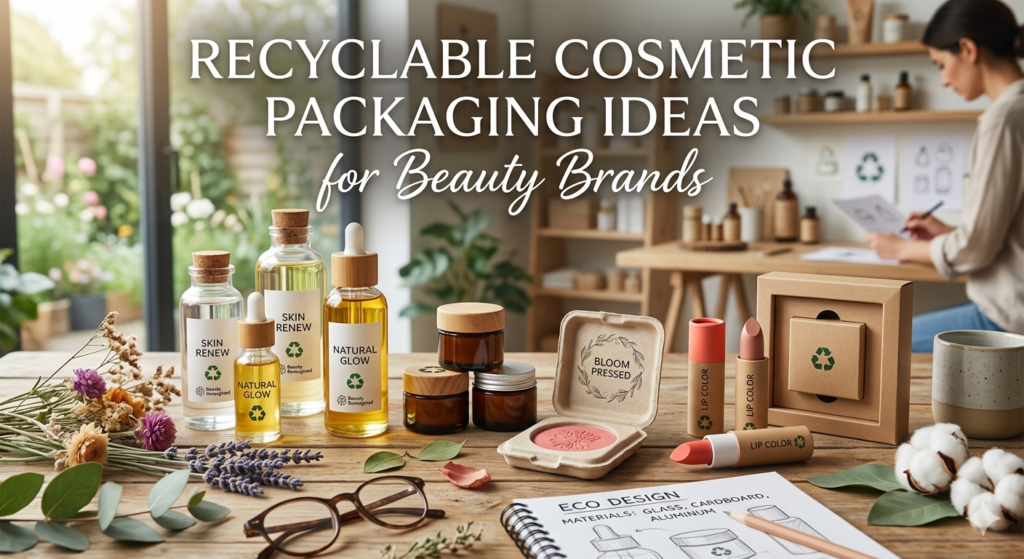
Three days before her product launch, a skincare founder rang us in a panic. Her supplier had delivered 4,000 laminated tubes. Right there on the side, in clean serif font: “sustainable packaging.” Except laminated multi-layer tubes fail every recyclability test curbside, drop-off, specialist stream, all of it. Her retail buyer flagged it before a single unit hit the sales floor. Re-packaging, reprinting, lost shelf slot. Six weeks and $38,000 gone. We tell that story a lot. Not to scare people, but because it is genuinely the most common expensive mistake in this industry, and it almost always happens to founders who thought they had done their due diligence. They had researched materials. They had asked the right questions. Their supplier had just not answered them honestly. So before you print anything with “eco,” “green,” or “sustainable” on it, here is what you actually need to know about materials, about sourcing, about what retail buyers check for, and about what the FTC will hold you to. What Is Recyclable Cosmetic Packaging? Recyclable cosmetic packaging means containers, cartons, and labels that US municipal recycling systems can genuinely process, not just materials that sound sustainable on a product page. PCR plastic, glass cosmetic jars, aluminum tins, FSC-certified paperboard, refillable bottles these qualify. A lot of what gets marketed as eco-friendly packaging cosmetics does not, and that distinction is costing brands money. Why Eco-Friendly Packaging for Cosmetics Is No Longer a Marketing Choice Take this number seriously: the Recycling Partnership’s 2024 State of Recycling Report found that only 21% of recyclable material gets captured across the US. Read that again. Twenty-one percent. So even brands using fully recyclable substrates are still losing the end-of-life battle, because the packaging never communicates clearly enough for the consumer to act. Brands that go through verification earn the right to print standardized disposal instructions on their packaging. One brand we supply passed a Sephora vendor audit on their second attempt, after their first failed despite correct substrates because nobody had assessed their label system separately. Labels. That is what sank them. Meanwhile the EPA has confirmed recycling aluminum saves roughly 95% of the energy required to produce it from raw ore. Glass sits around 30% energy savings. PCR plastic cuts virgin resin extraction out of the picture entirely. These figures matter because retail sustainability buyers request them by name in vendor questionnaires. 6 Recyclable Materials That Actually Perform for Beauty Brands PCR Plastic: Best for High-Volume, Liquid Skincare Formats Post-consumer recycled plastic starts as something someone already used a bottle, a container that got collected, cleaned, reprocessed into new packaging-grade resin. PET #1 and HDPE #2, the two grades most relevant for beauty, are accepted in curbside programs across the vast majority of US markets. For serums, toners, lotions, and pump formats, PCR is usually the most straightforward sustainable choice because it behaves almost identically to virgin resin through filling equipment. One thing suppliers tend not to volunteer: PCR resin shows color variation between batches. It is inherent to working with post-consumer streams you cannot fully control what comes back through the recycling system. For packaging with clear or light-toned designs, set your color tolerances before sampling. Discovering that problem during production is an entirely different financial conversation than discovering it at sample stage. Our Custom Mascara Boxes use PCR-compatible paperboard with soy-ink printing and How2Recycle compliant label stock, built for brands that need documentation ready for retail buyers. Glass Cosmetic Jars: Genuinely Infinitely Recyclable, Genuinely Heavy Glass does not degrade through recycling. It melts, reforms, and performs identically on its fiftieth cycle as its first. That is a material property no plastic substrate can match. US glass recycling rates hover around 31% per EPA data lower than they should be, mostly a collection infrastructure problem rather than a material problem but glass is curbside accepted across virtually every major US metro market. Face creams, body butters, premium serums: glass cosmetic jars are almost always the right call here. The weight tells a story the moment a customer picks it up. That tactile quality is a genuine brand asset. The tradeoff is real though. Glass is heavy. For DTC brands eating their own shipping costs, that weight compounds fast at scale. For retail distribution, where the retailer manages final-mile logistics, the calculus flips and glass often wins on economics too. Aluminum Tins: Nothing Else in Beauty Packaging Recycles Better Nothing in beauty packaging recycles better than aluminum. The Aluminum Association confirms it holds the highest consumer recycling rate of any packaging material in the category, and recycled aluminum uses 95% less energy than producing it from raw ore. For a brand building a zero-waste story, that is not a talking point. That is a verifiable fact you can put in front of a retail buyer. Beyond the numbers, aluminum is infinitely recyclable with zero material degradation, lighter than glass, and has real premium tactile quality. Clean beauty buyers have developed a strong category association with aluminum over the past several years. It photographs well, it fixtures cleanly in retail, and for brands building a zero-waste narrative, aluminum tins give you a specific, verifiable data point to anchor the story. Best fits: solid balms, pressed powders, travel formats, compact refills. FSC-Certified Paperboard: What Retail Buyers Expect on Every Outer Carton Any outer carton in your packaging lineup needs FSC certification. FSC means Forest Stewardship Council certification confirms the wood fiber in your paperboard came from a responsibly managed forest with an audited, documented chain of custody from harvest through manufacturing. FSC paperboard is curbside recyclable, accepts soy-based inks cleanly across a full range of decorative finishes, and is available in calipers covering lightweight folding cartons through rigid retail-grade boxes. The practical reality: major retail accounts include FSC documentation requests in standard vendor onboarding packages. Having it ready removes friction from the approval process. Not having it creates delays that are entirely preventable. Our Custom Beard Oil Boxes are FSC-certified with reinforced base seals engineered for oil-based formats, including
What Is Biodegradable Cosmetic Packaging in 2026?
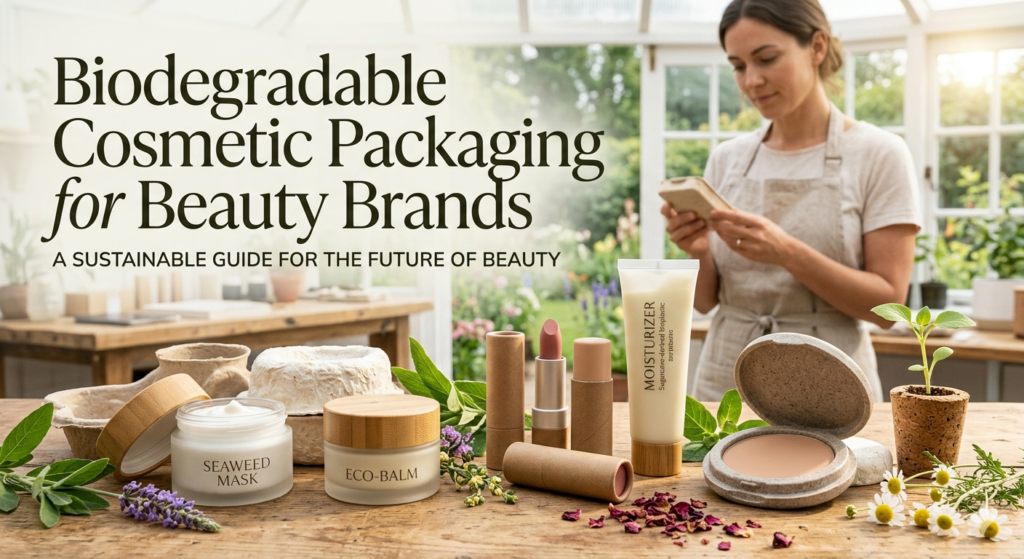
Here’s a scenario that plays out more often than most beauty founders want to admit. A brand spends eight months sourcing clean ingredients, passes every safety benchmark, builds a loyal community around natural living then wraps the whole thing in a virgin plastic box with a UV gloss coating that will outlast the founder’s grandchildren. That’s not a niche problem. The beauty industry generates roughly 120 billion packaging units every year, and the overwhelming majority are not recyclable, not compostable, and not going anywhere fast once they hit a landfill. Biodegradable cosmetic packaging solves the last mile of the sustainability problem. It covers boxes, cartons, sleeves, and secondary packaging made from materials kraft paper, bamboo board, PLA bioplastic, post-consumer recycled content that actually break down after use without poisoning the soil in the process. In 2026, getting this right isn’t optional anymore. Retailers screen for it. Clean beauty platforms gate access on it. The FTC is enforcing it. Why So Many Brands Are Scrambling to Switch Something shifted hard between 2023 and 2025. Before that, a vague “eco-friendly” claim on a box was basically a free pass. Consumers wanted to believe it. Retailers didn’t dig deeper. Nobody was really checking. That’s changed. The FTC Green Guides govern every environmental marketing claim made in the US market. Under those rules, calling your packaging “biodegradable” without a qualified timeframe and specific conditions statement isn’t just misleading — it’s a compliance exposure. The Biodegradable Products Institute uses ASTM D6400 as the de facto certification standard for compostable claims. Without third-party verification behind your copy, you’re one complaint away from a regulatory headache you didn’t budget for. The commercial case is just as clear. A joint study by McKinsey & Company and NielsenIQ covering 600,000 product SKUs and $400 billion in US retail revenue, found that products with verified sustainability claims grew 28% cumulatively over five years, against 20% for products without them. In personal care specifically, products with “sustainable packaging” claims showed a 4.7% growth differential over direct competitors making no such claims. That’s not a feel-good stat. That’s a revenue gap, and it widens every year. The brands making the switch aren’t doing it purely out of conviction. They’re doing it because the retail landscape rewards it and the regulatory environment increasingly punishes the alternative. Which Materials Actually Hold Up for Cosmetics Not every eco-friendly material works the same way in a cosmetics context. There are real trade-offs, and ignoring them leads to expensive restarts. It is the most field-tested option in this category. FSC-certified kraft at 350gsm to 450gsm handles the structural demands of cosmetic secondary packaging — drop testing, shelf stacking, transit vibration without issue. It takes soy-based inks cleanly, holds emboss and deboss detail well, and degrades in two to six weeks under industrial composting conditions. The one thing kraft won’t do is fake a premium feel on its own. You need good print work. With it, kraft competes with anything. It has become the go-to for premium skincare and fragrance lines that can’t afford to look like they compromised on luxury. Bamboo regenerates in three to five years without replanting, compared to decades for hardwood. The cost premium over kraft is real at lower volumes, but the tactile quality justifies it at the right price point. It trips up a lot of brands. It looks and feels like conventional plastic, which is exactly why it’s tempting for primary packaging. The catch: PLA only breaks down at temperatures above 58°C inside industrial composting facilities. Toss it in a home bin and nothing meaningful happens. If your packaging uses PLA, your labels must say “industrially compostable” specifically or you’re misrepresenting the product under FTC standards. It is (post-consumer recycled) is often the fastest route to a defensible eco claim. It uses materials already through one product lifecycle, qualifies for FSC chain-of-custody certification, and works across every standard cosmetic box format without reformulating your packaging structure from scratch. For brands with a hard launch date, PCR buys compliance time while longer material transitions happen in the background. Pairing the Right Material With Your Product Material choice isn’t universal; it follows the product. Eyeshadow packaging takes more mechanical abuse than most people realize. Palettes get opened and closed dozens of times, tossed in bags, pressed up against other products in transit. FSC-certified kraft with water-based coatings handles repeated use without delaminating. Conventional eyeshadow cartons rely on laminate layers that kill compostability — kraft avoids that entirely. Our Custom Eyeshadow Boxes are spec’d this way by default, no upcharge for the eco material choice. Nail polish boxes carry their own constraint: you need structural protection for glass bottles plus minor chemical resistance at seams in case of leakage. A corrugated kraft inner with a smooth kraft outer sleeve solves both without adding non-compostable components. Our Custom Nail Polish Boxes come in this configuration at any order size, including small sampling runs. Fragrance is the hardest category to dress in eco packaging because luxury perception is doing real commercial work before the customer even opens the box. Bamboo composite with a PCR inner liner is the combination premium fragrance brands keep coming back to. FSC-certified board with soft-touch water coating gets close at a lower cost. Both options are available across our Custom Perfume Boxes range, with free design support included and zero minimum order quantity on any configuration. What Switching Actually Costs The cost objection stops more brands than it should, and usually because the comparison isn’t being run correctly. The gap between FSC-certified kraft and conventional plastic alternatives has narrowed to roughly 8 to 12 percent at mid-volume for most cosmetic box formats. At higher volumes that gap closes further, because kraft and recycled board commodity prices don’t swing with oil markets the way petroleum-derived plastics do. What rarely gets counted on the plastic side: die charges, plate fees, minimum order quantities that lock up working capital in six months of inventory you may not need. Custom eco friendly cosmetic packaging
Sustainable Cosmetic Packaging: Best Options for Modern Beauty Brands in 2026
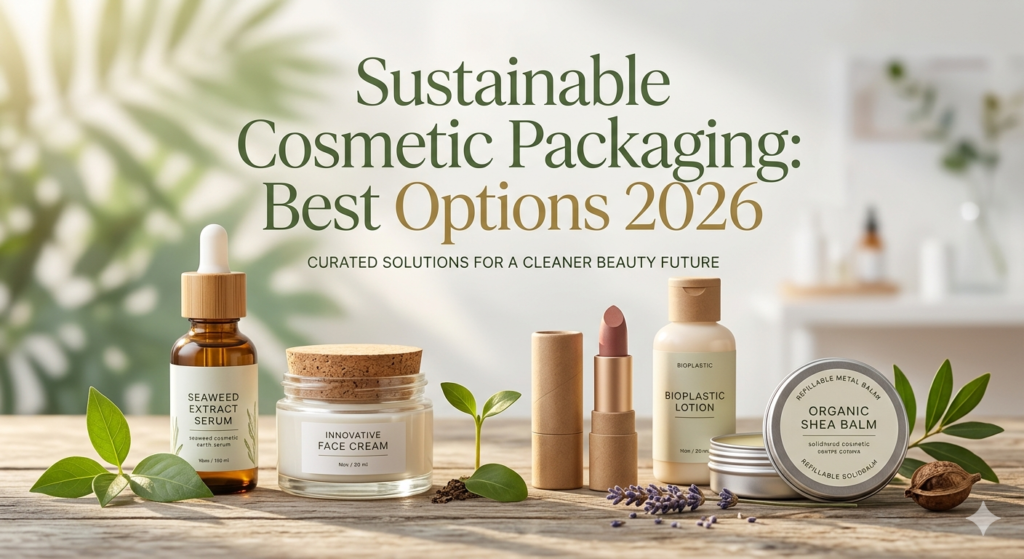
Last spring, a skincare founder walked into a Sephora vendor review with a product she’d spent nearly a year developing. The buyer opened the box, tested the formula, and nodded. Good stuff. Then she flipped the carton over. “We updated our sustainability criteria in January. This material won’t pass our scorecard.” Eight months of work. Rejected over packaging. I keep hearing versions of this story. Beauty founders are losing retail opportunities not because their product failed, but because the box around it did. In 2026, sustainable cosmetic packaging has become the default expectation from retail buyers, not a bonus they reward you for. The brands still treating this as a future consideration are finding out the hard way it already happened. What Does Sustainable Cosmetic Packaging Actually Mean? Most definitions make this sound more complicated than it is. Sustainable cosmetic packaging means choosing materials that cause less harm during production, during shipping, and after the customer throws the box away. That covers a wide range of options. Recyclable jars made from glass or aluminum. Biodegradable packaging built from plant-derived inputs. Cosmetic containers using post-consumer recycled content. Refillable packaging systems customers top up instead of replacing. Plastic-free packaging options built from paper, glass, or metal. The practical question isn’t which definition you prefer. It’s which option works for your product and your price point right now. The Pressure Beauty Brands Are Facing in 2026 Here’s where things stand. The global cosmetics industry generates over 120 billion units of packaging waste every year. Most of it ends up in landfills, largely because cosmetic packaging typically combines materials laminated paper layered onto plastic, attached to metal closures in ways that make sorting for recycling nearly impossible. BeautyMatter’s 2026 packaging trends report covers this in detail, including how brands are now being pushed toward mono-material formats specifically to address this. Retail buyers know this problem well. And they’re acting on it. Target, Sephora, and Ulta have all introduced formal packaging sustainability reviews as part of new product onboarding. Fail the scoring and the conversation ends before it starts. On the regulatory side, California’s SB 54 requires consumer product packaging to hit 100% recyclability by 2032, with a verified 65% recycling rate built in. The EU’s PPWR regulation moved into full enforcement in August 2026. I want to be direct about something. Brands in the US sometimes treat European regulation as irrelevant to them. But if you sell internationally, or if you work with any retailer running ESG commitments, these regulations set the standard your buyers are already benchmarking against. Your outer box speaks before your customer reads a single word of your product copy. The 5 Best Sustainable Cosmetic Packaging Materials Right Now Every material has tradeoffs. Here’s the honest version. 1. FSC-Certified Paperboard Paperboard is where most brands should start. It’s curbside recyclable in the majority of US cities, straightforward to customize, and accepted without question by major retailers. Paper-based cosmetic packaging grew 40% between 2020 and 2023 as brands rushed to meet new retail requirements. Water-based coatings have improved enough that moisture resistance is no longer the barrier it used to be for secondary cosmetic containers. If your brand sells through retail channels and you haven’t switched your outer boxes yet, paperboard is the obvious first move. 2. Post-Consumer Recycled (PCR) Plastics The shift toward recycled materials in cosmetic packaging isn’t just a trend it’s becoming measurable. Estée Lauder is one of the clearest examples: the company started with just 8.7% PCR content across its packaging in fiscal year 2019, pushed that to 15% by FY2021, and reached 19% by 2023 steady, consistent progress that signals where the premium segment is heading. Looking ahead, the brand has set a target of 25% PCR by 2025 and pledged to bring virgin petroleum plastic down to 50% or less of its total packaging by 2030. What’s driving this momentum isn’t just pressure from regulators or consumers, it’s the fact that PCR plastic actually works. It holds up structurally, protects against moisture, and performs on the shelf the same way virgin plastic does. That makes it especially well-suited to formats like pump bottles, tubes, and dispensers, where switching to glass or paperboard simply isn’t a practical option. For these product types, PCR isn’t a compromise, it’s the logical next step. 3. Glass Genuinely infinitely recyclable, and it signals quality in a way other materials simply don’t match. The downside is weight. Heavier shipping means higher freight costs and more breakage risk in transit. For prestige skincare, facial oils, or serums where the weight and feel of the container are actually part of the product experience, glass makes sense. For high-volume mass-market products, the logistics math often doesn’t work in its favor. 4. Aluminum Aluminum’s environmental credentials are strong. Recycling requires only 5% of the energy needed to produce virgin aluminum, and European recycling rates for aluminum packaging sit around 75%. In the beauty industry, aluminum is growing fastest in lip balm, deodorant, and waterless concentrate formats. Brands pivoting toward solid or waterless beauty formulations are finding aluminum the most natural packaging fit for the category. 5. Bioplastics (PLA) PLA deserves a longer explanation than it usually gets. It’s derived from plant starch — often corn or sugarcane and it does break down under the right conditions. The critical detail is that those conditions require industrial composting facilities. Put PLA packaging in a standard landfill and it behaves almost identically to conventional petroleum plastic. So if you’re considering PLA for your eco-friendly packaging story, you need to honestly assess whether your customers have realistic access to industrial composting. In most US cities, they don’t. If your market lacks that infrastructure, recyclable paperboard communicates your sustainability commitment more credibly. Choosing Packaging by Product Type Material options are one thing. Applying them to specific products is different. Here’s what actually works per category. Eco-Friendly Packaging for Lip Balms Lip balm has constraints most other cosmetic categories don’t. Units are small, SKU counts run high, and direct skin
Eco-Friendly Essential Oil Packaging: Sustainable Ideas for Natural Wellness Brands
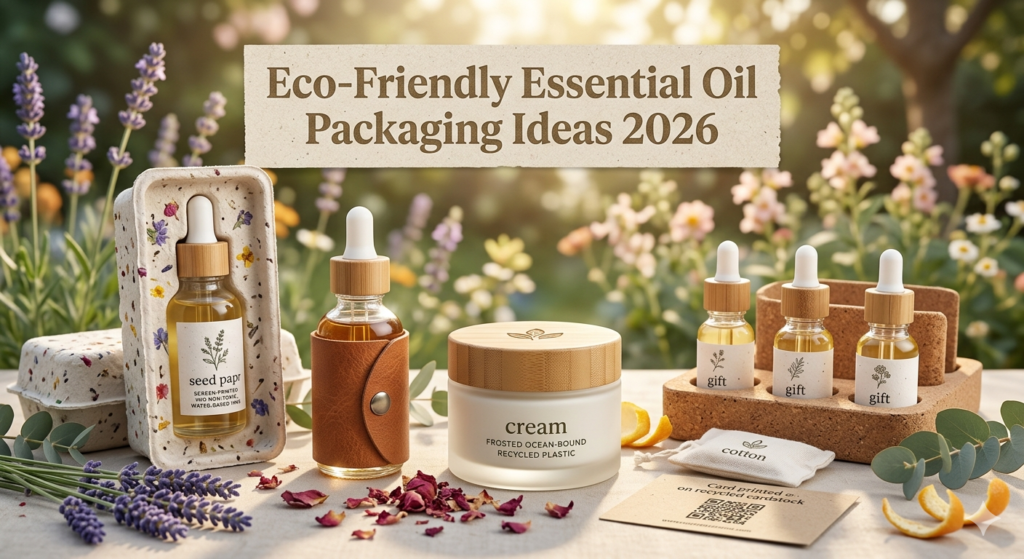
Picture this. A small-batch lavender oil brand in Portland spent two years building a “pure, natural” identity, then shipped their oils in glossy plastic-laminated boxes. Customers noticed. Reviews started mentioning the disconnect. The brand relaunched with unbleached kraft tuck boxes and water-based inks. Repeat purchase rates climbed. Their packaging finally matched their promise. Most wellness buyers notice when something feels off. They pick up a bottle of pure lavender oil, read the “all natural, chemical free” copy, and then turn the box over to find a glossy plastic-laminated finish and a synthetic coating that squeaks under their thumbnail. It creates doubt before the product is even opened. In 2026, that kind of disconnect costs brands real money. The good news is it costs almost nothing to fix. The essential oils market is on track to hit $19.79 billion by the end of 2025, growing at 13.3% annually, according to Free Yourself market analysis. Inside that growth, one shift stands out above the rest. More than 39% of brands are actively moving toward zero waste packaging and cleaner sourcing because their customers are demanding it, according to Global Growth Insights. Your packaging stopped being just a container a long time ago. Today it functions as a compliance document, a brand statement, and a conversion tool, all in the same moment a buyer picks it up off the shelf. What is a Eco-Friendly Essential Oil Packaging When wellness brands ask what eco-friendly essential oil packaging actually means in practice, the answer comes down to three things. Material choice, label integrity, and print process. Unbleached kraft paperboard, amber glass bottles, FSC-certified board, and paper-based biodegradable labels form the foundation. Together, they reduce plastic dependency, hold up under FTC Green Guides scrutiny, and send the right signal to buyers who read every line on the box. Why Eco-Friendly Essential Oil Packaging Is a Business Decision, Not Just an Ethical One Wellness buyers are not sentimental about packaging. They are practical. They read ingredient labels, they check certifications, and most of them evaluate at least three or four vendors before they commit to a wholesale order. Sustainability is not what convinces them to buy. It is what keeps them from ruling you out. The sustainable packaging market is moving from USD 292.71 billion in 2024 toward USD 423.56 billion by 2029, at a 7.67% CAGR, driven by consumer demand, circular economy policies, and tightening single-use plastic regulations, according to Meyers. That kind of growth does not happen because brands suddenly grew a conscience. It happens because the market made sustainability a commercial requirement. There is also the compliance dimension. Getting your environmental claims wrong is not just a branding problem. Under FTC Green Guides (16 CFR Part 260), vague or unsubstantiated recyclability and biodegradability claims on packaging carry real legal exposure. Sourcing FSC-certified, verified materials from the start means you never have to walk a claim back. You print it on the box with confidence because the paper trail behind it is clean. Best Materials for Sustainable Essential Oil Packaging This is the section where most small wellness brands get tripped up. They hear “eco-friendly” and assume it means paying more for materials that look worse and hold up less. That is rarely true. In most cases, the right sustainable material for essential oil packaging costs the same or less than its conventional counterpart, and it performs better on shelf because it reads as authentic to the buyer holding it. It is the most practical starting point. It is curbside recyclable across 48 US states, accepts soy-based inks cleanly, and communicates authenticity without a single word of copy. For tuck box formats, 300 to 350 GSM kraft board holds structure without excess material. It costs less than UV-laminated coated board and ships flat, reducing transit waste at every step. It remains the gold standard for the oil itself, and for good reason. Glass does not interact chemically with the formulation inside. It does not leach anything into the product over time the way certain plastics do. Amber and cobalt glass specifically block UV wavelengths that degrade oil potency, which means fewer returns and longer shelf life. It is also infinitely recyclable without any loss of quality, making it one of the cleanest material choices available across the entire natural product packaging chain. They are the part most brands forget to audit. A fully recyclable kraft box paired with a non-recyclable synthetic label is no longer recyclable as a unit. The label compromises the whole thing. FSC-certified paper labels with water-based adhesives keep every part of the packaging in the same recyclable stream. The How2Recycle program offers standardized on-pack labeling guidance, and putting that symbol on your product is a recognition signal most US buyers already understand and trust. They have improved significantly over the past two years. Kraft-lined foil-free pouches, compostable PLA-blend barrier bags, and moisture-resistant coated paper wraps now cover most use cases that foil mylar was previously the only answer for. These work particularly well for brands shipping to humid markets or building gift set collections where secondary packaging adds a layer of protection around the primary bottle. Sustainable Packaging Structures That Work for Essential Oil Brands Choosing a material is only half the decision. The structure determines how your product ships, shelves, and presents at the point of unboxing. Our tuck boxes in unbleached kraft are the go-to format for single-oil retail packaging. They are shelf-ready, customizable to any SKU dimension, and printable with soy-based inks in full CMYK. No UV laminate required. And there are no die or plate charges. No minimum order quantity. For a wellness brand launching three to five SKUs, this is the lowest-risk entry point into recyclable essential oil packaging. For premium single-origin oils and curated gift sets, rigid boxes are worth the investment. A 2mm greyboard rigid box communicates quality without saying a word. The physical weight of it in a buyer’s hands does real work before they even see the product inside. Wrap it
Custom Essential Oil Packaging Ideas to Make Your Brand Look Premium (2026)
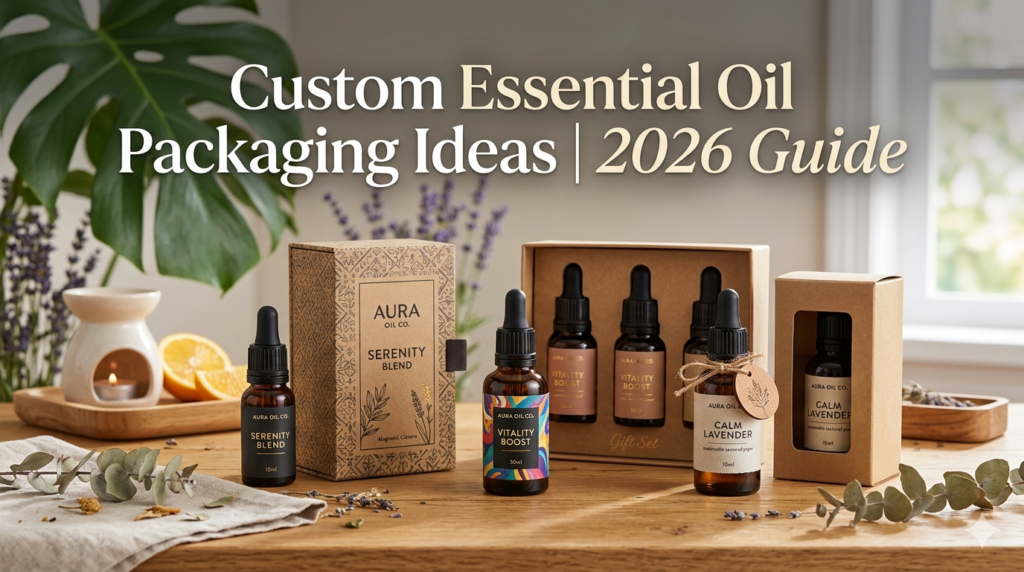
What Is Custom Essential Oil Packaging and Why Does It Matter in 2026? Custom essential oil packaging is purpose-built box and label design that protects your product, communicates your brand identity, and drives purchase decisions at the shelf level all in one touch. Here is the reality. The U.S. essential oil market reached $10.63 billion in 2025 and is projected to hit $11.65 billion by the end of 2026, according to Market Data Forecast. That growth means more competition, more noise, and more brands fighting for the same shelf space and the same buyer attention. Your packaging is the first sales rep your brand has. In most retail and wholesale environments, it is also the only one. At PackagingShip, we have produced custom boxes for wellness and CBD brands across the US. One pattern holds true across every product category: brands that invest in branded essential oil packaging grow faster than those that treat boxes as an afterthought. This is not my opinion. It is what the order history shows. What Makes Essential Oil Packaging Look Truly Premium? Most brands get this wrong. They assume premium means expensive. It does not. Premium means intentional. Here are the four factors that actually separate luxury oil packaging from a forgettable white box. Custom Essential Oil Box Ideas for Every Brand Positioning There is no single right answer for custom essential oil boxes. The right structure depends on your distribution channel, your price point, and your customer archetype. It needs rigid boxes with magnetic closures, interior foam or pulp inserts, and foil-stamped custom labels on textured stock. This is a premium positioning play. The packaging cost per unit is higher, but it supports a price point of $40 to $90 per product without buyer resistance. It performs better with kraft tuck boxes printed with soy-based inks on recycled paperboard. Minimalist design with earthy tones and clean sans-serif typography. This audience responds to visual restraint. Overdesigned packaging signals inauthenticity to this buyer. They need personalized essential oil packaging built for the unboxing moment. Custom mailer boxes with interior print, tissue paper layers, and branded inserts. This is your viral moment. One unboxing post on social generates your paid ads budget cannot buy. It needs clean white or cream packaging with precise, information-dense labels. Trust comes from clarity here, not decoration. Essential Oil Label Design: Compliance First, Aesthetics Second This is where most early-stage essential oil brands make an expensive mistake. They design the label around the logo and add compliance information as an afterthought. FDA regulations for cosmetic-use essential oils require specific elements: the product name, net quantity of contents, distributor name and address, and ingredient list in descending order of predominance. If your label misses any of these, your product cannot legally sit on retail shelves. Worse, some wholesale buyers will reject your shipment outright before it reaches their distribution center. The essential oil label design that works best in 2026 follows a clear hierarchy. Your brand mark anchors the front panel. With your product name and key benefit claim sit directly below it. Your compliance information occupies the back panel in a legible minimum 6pt font. Then, your ingredient list runs in INCI nomenclature. Barcode and lot number complete the back panel. For more on essential oil packaging standards and how they apply to your product line, click here. For authoritative FDA cosmetic labelling requirements, bookmark the FDA’s official Summary of Cosmetics Labeling Requirements; it covers everything governed by the FD&C Act and the Fair Packaging and Labeling Act in plain language. The International Fragrance Association also maintains the publicly accessible IFRA Transparency List, a 3,691-ingredient reference updated in 2025 that many premium essential oil brands now voluntarily align with to signal formulation integrity to wholesale buyers. Private Label Essential Oil Packaging: What Wholesale Buyers Actually Look For Private label essential oil packaging is a different brief entirely. You are not designing for a single consumer. You are designing for a wholesale buyer who will resell your product under their own brand, or for a retailer evaluating your product for planogram placement. What wholesale buyers look for first is consistency. Can you produce 500 units with identical color matching, identical label registration, and identical structural quality? This is a quality control question, not a design question. Your packaging vendor needs to answer it before your graphic designer touches a brief. Second, they look at shelf presence. Your packaging needs to perform in a planogram environment where it sits between competing products at the same price point. Does your packaging draw the eye? Is this the logo read from 18 inches? Does the color palette differentiate you from the three products next to yours? Third, wholesale buyers look at label compliance. They have compliance teams. If your label fails their review, your relationship ends before it begins. At PackagingShip, our rigid boxes are built to meet wholesale retailer standards across natural product channels including specialty health retailers and boutique wellness stores. How to Order Custom Essential Oil Packaging with No Minimum Order Quantity One of the most common questions we receive is about minimums. Small and mid-size essential oil brands frequently get turned away by packaging vendors requiring 1,000 or 5,000 unit minimums. That is a cash flow problem disguised as a supplier relationship. PackagingShip operates with no MOQ. You can order the quantity your launch requires, not the quantity your vendor’s production floor requires. Free design support is included. Free US shipping is included. There are no die or plate charges. Here is what to prepare before you request a quote. Know your box dimensions including the bottle size, cap height, and whether you need an insert. Have a concept for your color palette and finish preference. Know your quantity and your target delivery date. Typical production turnaround for custom essential oil boxes runs 8 to 12 business days after artwork approval. Rush production is available for launch-critical timelines. Conclusion: In a market growing toward $11.65 billion in 2026, no essential