Custom Subscription Boxes: What Mailer Box Specs Do the Top DTC Brands Use?
TL;DR
Custom subscription boxes work best when the flute type, size, and finish match the product inside, not just the brand’s color palette. Top DTC brands lean on E-flute for lightweight items and B-flute for anything fragile or heavier. This guide breaks down the exact specs, costs, and formats that make subscribers stop scrolling and start photographing.
Table of Contents
- What Are Custom Subscription Boxes in 2026?
- Why Your Subscribers Are Screenshotting Someone Else’s Box
- The Mailer Box Specs Top DTC Brands Actually Order
- Mylar Bags and Paper Bags: When a Box Isn’t the Right Call
- How Much Do Custom Subscription Boxes Cost in 2026?
- FAQs
- Get Your Free Quote
Your product is good. Your marketing works. Subscribers still sign up every month. But when you scroll through Instagram or TikTok, it’s not your unboxing video getting shared. It’s a competitor’s. That gap usually has nothing to do with what’s inside the box. It comes down to the box itself, and more specifically, the exact specs your printer used to build it.
What Are Custom Subscription Boxes in 2026?
Custom subscription boxes are branded mailer boxes built to hold a curated product set and survive shipping while still looking good on camera. The global subscription box market is valued at $49.7 billion in 2026, projected to reach $101.81 billion by 2030 (The Business Research Company) In 2026, most top DTC brands specify the flute type, board weight, and interior finish before they touch the design, because those three choices decide whether the box protects the product and photographs well once opened.
Why Your Subscribers Are Screenshotting Someone Else’s Box
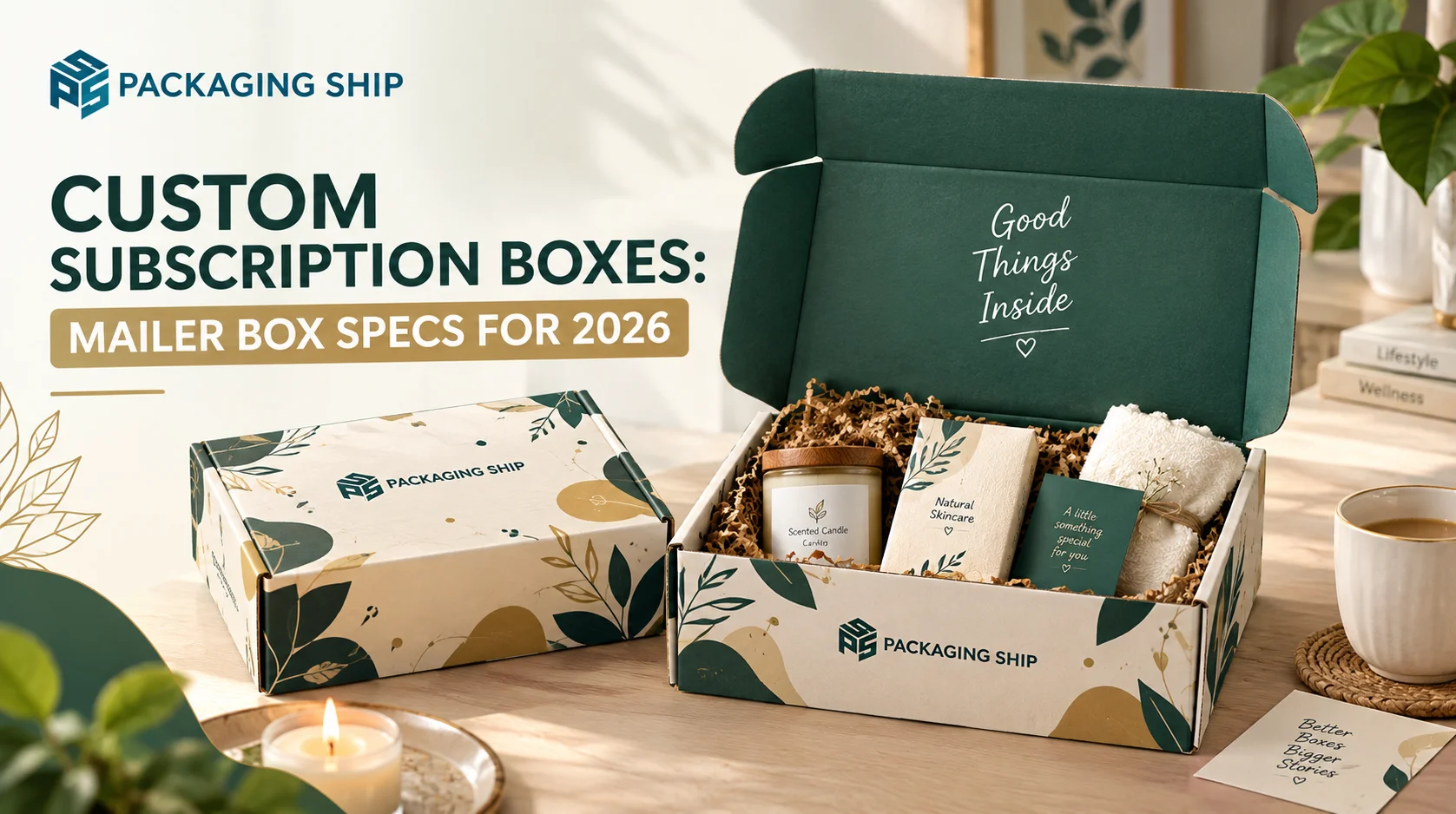
Here’s the pattern. A subscriber opens a plain brown box, pulls out the product, and moves on. No photo, no story post, no tag. Then they open a competitor’s box with a color printed interior, a branded insert card, and a layer of crinkle paper sitting on top like a small reveal moment. That box gets photographed.
This isn’t about spending more money. It’s about specifying three things correctly: a printed interior instead of plain kraft, a simple insert card with your logo, and some kind of texture or fill that creates a visual reveal when the lid opens. None of these require a premium budget. They require you to actually ask for them when you place your order.
This first impression carries more weight than most founders assume.Nearly half of all subscription cancellations, 44%, happen within the first 90 days, according to consumer subscription data reported by DontPayFull and compiled in Ringly.io’s 2026 subscription box statistics report. That window covers roughly the first one to three boxes a subscriber receives, which means the unboxing moment isn’t a nice extra. It’s directly tied to whether that subscriber sticks around.
Packaging Ship, a US based custom packaging manufacturer, builds exactly this kind of subscription box daily for beauty, food, and lifestyle brands, and the pattern holds across categories. Brands that specify these three details see their boxes shared. Brands that don’t, don’t.
The Mailer Box Specs Top DTC Brands Actually Order
This is where most founders get stuck. They know they want custom subscription mailer boxes wholesale, no minimum, USA made, but they don’t know which flute, size, or finish to request. Here’s the breakdown.
- Flute Type: E-Flute, B-Flute, or EB-Flute
Flute type is the wavy inner layer of corrugated cardboard, and it decides both thickness and protection level.
E-flute measures roughly 1.5 to 2 millimeters thick. It’s thin, prints sharp, and works well for lightweight items under two pounds, like cosmetics, candles, or small apparel bundles. Most beauty subscription boxes use E-flute because the thin wall keeps shipping costs down without sacrificing print quality.
B-flute measures roughly 2.6 to 3 millimeters thick. It absorbs more impact and handles heavier or bundled items better, which is why food and snack subscription boxes often use it. If your box holds glass jars, multiple SKUs, or anything fragile, B-flute earns its slightly higher cost.
EB-flute combines both layers for double wall strength, used mostly by premium subscription tiers that want both crush resistance and a high end print finish.
A simple rule: if your product is light and ships in a compact box, go E-flute. If it’s fragile, heavy, or bundled, go B-flute. You can view real examples and request either option through Packaging Ship’s custom mailer boxes page.
Here’s how the three main flute options compare side by side:
| Flute Type | Thickness | Best For | Common Subscription Category |
| E-flute | 1.5 to 2 mm | Lightweight items under 2 lbs, sharp print detail | Beauty, cosmetics, small apparel |
| B-flute | 2.6 to 3 mm | Fragile or bundled items, higher impact resistance | Food, snacks, glass or ceramic products |
| EB-flute | 3.8 to 4.3 mm | Premium tiers needing both strength and finish | Luxury skincare, multi-SKU curated boxes |
- Board Weight, Coating, and Insert Design
Board weight affects how rigid the box feels in hand, which matters more than most brands realize since it’s the first physical touchpoint a subscriber has with your brand. Matte lamination and soft touch coating both photograph better than gloss under phone camera flash, which is worth knowing if unboxing content matters to your growth strategy.
Inserts matter just as much as the box itself. A printed insert card, even a simple one with a thank you note and your logo, gives subscribers something to photograph beyond the product. Molded pulp dividers work for fragile items, while crinkle paper or tissue creates that reveal moment subscribers screenshot.
Mylar Bags and Paper Bags: When a Box Isn’t the Right Call
A box isn’t always the right format. If your subscription includes items sensitive to moisture or light, like coffee, tea, or certain skincare products, custom mylar bags protect better than cardboard and cost less per unit at low volumes. They’re also standard for CBD and food brands that need child resistant or resealable closures.
For lighter, lower cost subscription add ons like samples or single item bundles, custom paper bags offer a simpler, more sustainable option than a full box build. Many subscription brands actually combine formats: a mailer box as the outer shipper, with a paper bag or mylar pouch inside for a specific product. Mixing formats this way often solves protection and budget problems at the same time.
How Much Do Custom Subscription Boxes Cost in 2026?
Pricing depends on box size, board weight, print complexity, and order quantity more than anything else, so a single flat number won’t tell you much. Rather than guessing, it helps to see real numbers side by side. Packaging Ship’s custom mailer box cost by order quantity guide for 2026 breaks down per unit pricing at 50, 250, 500, and 1,000 plus units, so you can see where your first subscription run lands before requesting a formal quote.
As a general range, expect custom subscription boxes to start around $0.20 per unit at low volumes, with price dropping as quantity increases. Digital printing typically covers orders of 50 to 500 units, while offset printing becomes more cost effective past 500 units due to lower per unit setup costs at scale.
This pricing model matters more than it might seem. Research from Ipsos, conducted on behalf of the Paper and Packaging Board, found that 72% of consumers say packaging design influences their purchase decisions, and that number climbs even higher for gift style purchases, which is exactly what a subscription box functions as each month.
Get Your Free Quote
Your subscribers already have a reason to open your box every month. Give them a reason to show someone else too. Once you know your flute type, size, and finish, the next step is getting real pricing against your exact specs.
Request Your Free Quote From Packaging Ship →
FAQs
| Question | Direct Answer |
| What size box works best for a subscription box business? | Match the box to your smallest necessary footprint. Most beauty and snack subscriptions use boxes between 8x8x4 inches and 10x10x4 inches, since oversized boxes raise shipping costs without improving the unboxing experience. |
| What is the best flute for subscription mailer boxes? | E-flute suits lightweight items under two pounds and prints sharply. B-flute suits heavier or fragile bundles that need more crush resistance during transit. |
| How much do custom subscription boxes cost? | Pricing starts around $0.20 per unit and depends on size, board weight, print complexity, and quantity ordered. Larger orders lower the per unit price. |
| Can I order custom subscription mailer boxes with no minimum? | Yes. Some US manufacturers, including Packaging Ship, accept orders starting from 50 units with no minimum order requirement, which suits brands testing a new subscription tier. |
| How do I design a subscription box insert? | Keep it simple: one printed card with your logo, a short thank you message, and a QR code or social handle. This gives subscribers a specific item to photograph beyond the product itself. |
Conclusion
Custom subscription boxes succeed or fail on details most founders never think to specify: flute type, board weight, insert design, and finish. The brands winning the unboxing moment aren’t spending more. They’re specifying more precisely. Start with the product you’re shipping, match the flute and format to its weight and fragility, add one simple insert card, and request a quote built around those exact numbers rather than guesswork.