
Custom Hair Extension Boxes: 3 Ordering Mistakes to Skip
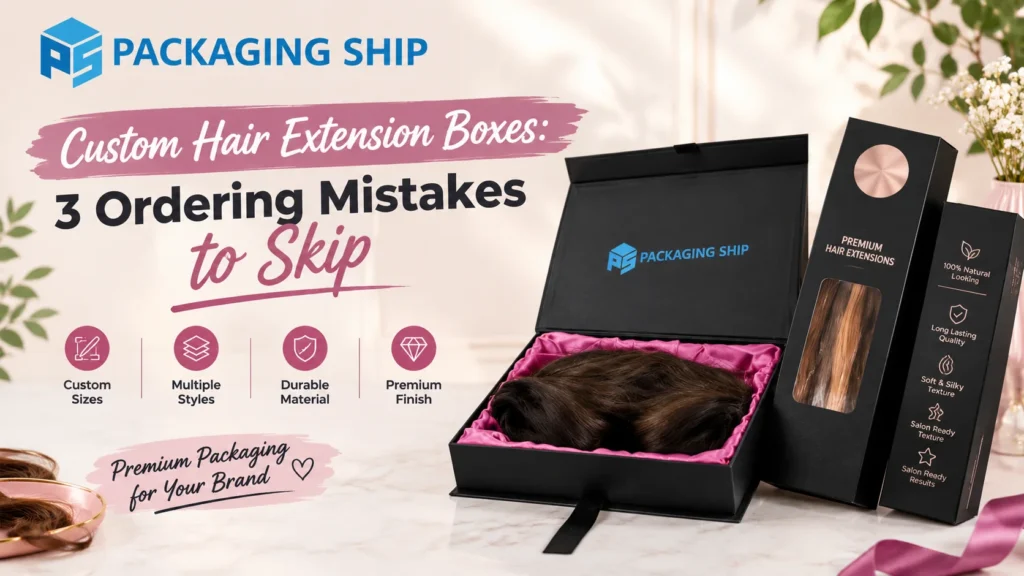
Custom Hair Extension Boxes: How Brands Avoid the Three Most Common Ordering Mistakes Custom Hair Extension Boxes in 2026: Why Do So Many First Orders Still Go Wrong? When we say custom hair extension boxes, we mean the printed box your bundles, wefts, clip-ins, tape-ins or wigs actually go out in, with your name on it and sized for your hair. Over the years we’ve noticed that a bad first order nearly always traces back to the same short list. Either the box was cut for hair lying flat when it actually ships coiled, or the customer can’t see a single strand through it, or somebody signed off on 200 units without realizing 400 would’ve been cheaper per box. Table of Contents Talk to a few extension sellers and most will admit the hair was the easy bit, and the box gave them more grief than they expected. You can have a bundle that looks perfect on your table. Put it in a box that’s a little too tight or a little too loose, and suddenly it looks squashed, or cheap, or both. We’ve seen plenty of first orders go sideways, and the reasons repeat. A lid that won’t close over a satin scarf. A reprint bill nobody budgeted for. Boxes sitting on a salon shelf where no one can tell what’s inside. Below are the three mistakes we see most with custom hair extension boxes, and what to do about each one before you sign off on a print run. Why Hair Extension Packaging Breaks More Often Than Other Beauty Packaging Nobody worries whether a candle is “real.” With hair, buyers do. From a photo, it’s hard to tell virgin hair apart from a cheaper blend, so people look at everything else for clues. The box is one of the first. If it’s thick, the corners are sharp and the lid closes with that little bit of resistance, people assume the hair got the same care, and honestly, when a box feels thin and floppy, they start wondering about the hair too. That pressure grows as prices go up. Good human hair sets often sell for $150 to $500. Someone spending that much expects the box to feel like it. A national study by Ipsos and the Paper and Packaging Board found 72% of consumers agree packaging design can influence what they buy, and another shopper survey reported by Retail Dive found most people expect better packaging when they order expensive products online. You see the same thing across cosmetic packaging in general, and it’s why fragrance brands put so much into custom perfume boxes. With hair, it matters even more, because the buyer can’t really judge the product until it’s in their hands. Mistake One: Dimensions That Do Not Match Your Fold Method Most reprint requests we get come down to the same problem. Someone measured the hair lying flat on a desk, not the way it actually goes into the box. Picture a 22-inch body wave bundle. You coil it, wrap it in a satin scarf, maybe add tissue on top. That scarf alone adds real height and width. Your spec sheet didn’t account for it. So either the lid won’t sit flat, the scarf bunches up in a corner, or you overcorrect, and the hair slides around in transit because there’s too much empty space. Getting the fit right matters for shipping too. In Ryder’s 2026 e-commerce packaging survey, protection during transit was the top reason shoppers gave for preferring boxes over mailer bags. A box that lets the hair rattle around undoes that. Box Sizes for Bundles, Wefts, Clip-Ins and Everything Else One box size won’t cover your whole range, and here’s roughly why. Bundles and wefts tend to get coiled or doubled over, so whatever height you measured flat is wrong once they’re folded. Clip-in sets sit flatter, but that row of clips running down one side eats more width than people think. With tape-ins you want a shallow tray, otherwise the strips start curling up toward the lid. Halos need a well in the middle so the wire isn’t digging into the cardboard. Wigs and full cap pieces need the most depth, often with an insert to keep their shape. A quick reference by format: Format Typical Fold Inside the Box Best Box Style Window Recommended Bundles Coiled or folded in half Rigid or heavy cardboard with extra depth Yes Wefts Folded flat or loosely rolled Shallow rigid tray Yes Clip-in sets Laid flat with a raised clip row Wide, flat cardboard box Yes Tape-in sets Flat, stacked strips Shallow flat tray Optional Halo and wire Coiled around a center well Box with an internal well Optional Wigs and full cap Shaped around an internal form Deep rigid box No, closed luxury box preferred Our advice is simple. Grab one of your actual bundles, fold or coil it the way your packer does on a normal day (scarf, tissue, all of it), then put a ruler on that. Sounds obvious, but it’s the step most people skip, and it’s behind most of the sizing complaints that land in our inbox. Mistake Two: Closed Boxes That Hide the Hair From Buyers A solid, sealed box looks great on a shelf. Then a customer picks it up, turns it over, and still has no idea what the hair looks like. That’s a lost sale. People buying extensions want to see the texture, the color, the length. With virgin or Remy hair, where quality swings a lot from brand to brand, they really want to see it. A hair box with a window fixes this. A clear die-cut window shows the hair while the box stays sealed and protected. If you sell bundle packaging hair or virgin hair boxes custom made for retail, you’ll feel the difference fast. Store buyers don’t like stocking things they can’t check at a glance. Shoppers don’t spend long deciding either. If they can’t tell what’s inside in a few
Blank Cigarette Boxes: Wholesale Guide for 2026 USA
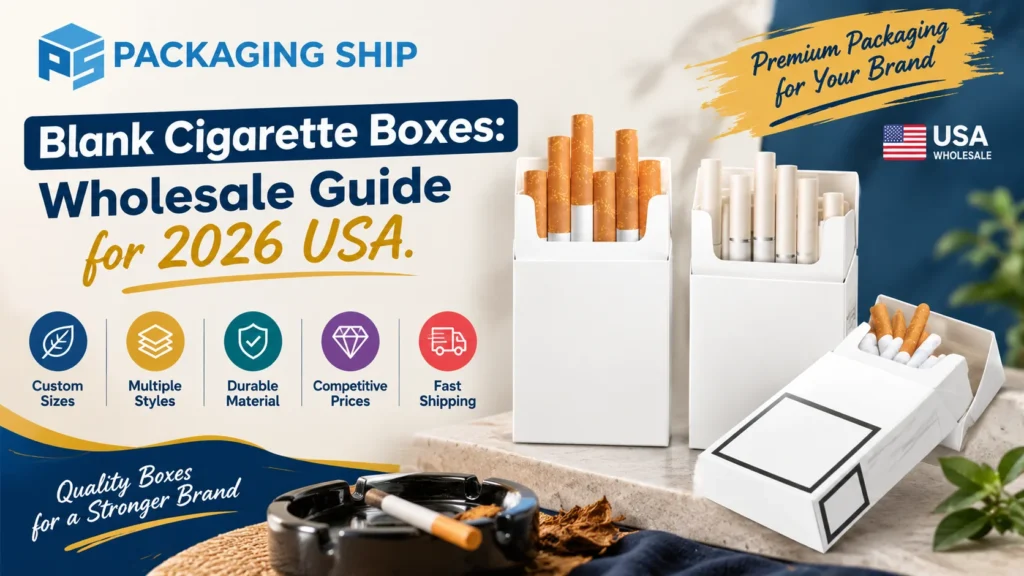
Blank Cigarette Boxes: The Complete Wholesale Buying Guide for 2026 Quick answer: blank cigarette boxes are plain, unprinted boxes. A business buys them, then brands them later. As of July 2026, most demand comes from brands’ private labeling, running a small test batch, or waiting on FDA warning copy before a full print run. Table of Contents What Are Blank Cigarette Boxes in 2026? Ask ten people in this trade what a blank cigarette box is. You’ll get the same answer, more or less. A plain, unprinted box. Kraft paper, cardboard, or corrugated stock. No logo. No warning copy. Nothing yet. The point is flexibility, not the box itself. A brand can slap a private label on it, run a test batch, or sit on inventory until a print run makes sense. Why Businesses Order Blank Cigarette Boxes Before Printing Most first time buyers assume everyone prints their boxes upfront. They don’t. Small brands buy blank cigarette boxes first, sort out the artwork later. Mostly to avoid eating the cost of thousands of boxes with outdated branding on them. Usually it’s one of three things. Private labeling, one base box carrying different labels per client. Market testing, launch small, see what sticks, then commit. Or compliance. Warning rules shift, plain stock buys time to get the copy right. Packaging Ship, a direct US manufacturer, builds custom blank cigarette boxes for exactly this kind of situation. Choosing the Right Material and Size Material affects more than looks. It decides whether the box survives shipping. It decides what you pay per unit too. Kraft paper is the lightest of the bunch. Resists tearing better than thin cardboard. Has that raw, natural finish retailers lean into now. Cardboard, paperboard if you want the technical name, is what most standard pack sizes use. Good fold, clean print. Corrugated is the odd one out, thicker stock mostly reserved for shipping cartons, not the retail pack. Blank Cigarette Boxes Size Chart Most retail packs come in king size or 100 millimeter dimensions, with a tuck top or slide and shell closure. Tuck tops are cheaper to tool. Slide and shell costs more but opens like a small drawer, which reads as more premium. One thing trips people up. FDA rules require warnings to cover at least 50 percent of the front and back panel on cigarette packaging, straight from current FDA warning label rules. If you’re printing later, build that space in now. Not after the artwork is done. Bulk Orders vs Wholesale Pricing People use these two words like they mean the same thing. They don’t. Bulk is one big order. Wholesale is a lower per unit price tied to volume over time. Not the same as committing to a mountain of boxes in one go. You can buy blank cigarette boxes wholesale and still place smaller, repeated runs as you need stock. Packaging Ship starts at $0.20 per unit, 50 box minimum. No die or plate charges hiding in the fine print. Moving From Plain Stock to Custom Printed Boxes Once the branding, warning copy, and artwork are locked, the jump to a full print run is fairly painless. Smaller runs go digital, no plates needed, suits short batches fine. Cross 500 units and offset printing usually takes over. Better color, tighter Pantone matching, cheaper per unit. Where to Buy This Packaging Not every seller online actually owns a factory. Plenty are brokers, quietly passing your order to a third party plant. That’s where your timeline and your quality control start to slip. Find out if they actually run their own production, not just resell someone else’s. Look for real reviews, not staged photos. Check for an actual US address. Packaging Ship runs its own facility out of Valley Stream, New York. More than 5,000 orders shipped over 15 years, worth checking before you buy blank cigarette boxes from whoever shows up first on Google. Pricing, Minimum Order, and Turnaround Time Standard production runs 7 to 10 business days after you sign off on a free design proof. Rush gets you there in 4 to 5 days on most styles. Shipping’s free too, FedEx or UPS, anywhere in the continental US. For context, a 2025 packaging industry market report put the global packaging market at 1.10 trillion dollars. Frequently Asked Questions Question Answer What are blank cigarette boxes used for? They hold cigarettes before a business adds its own logo or required warning text. Can I order this packaging in bulk? Yes. Most US manufacturers accept bulk orders starting around 50 units. No large minimum. Where can I buy wholesale cigarette boxes? Go with a US manufacturer that owns its own factory. Not a broker. Keep quality in your control. Which material works best, kraft or cardboard? Kraft for a natural look and tear resistance. Cardboard for most standard retail packs. How long does production take after approval? Standard production runs 7 to 10 business days. Rush options in 4 to 5 days. Get Your Free Quote Need plain stock now, or a full custom run later? You don’t have to choose one. Request a free quote and get real pricing on your size, material, and quantity, usually within a business day. → Get a Free Quote Conclusion Blank cigarette boxes buy business time. Room to private label, test a market, and lock down compliant artwork before a full print run. Whatever size or material you need, buy from someone who actually owns the factory. Someone with a record you can go verify.
Custom Scarf Boxes: Flat Rigid vs Drawer vs Window
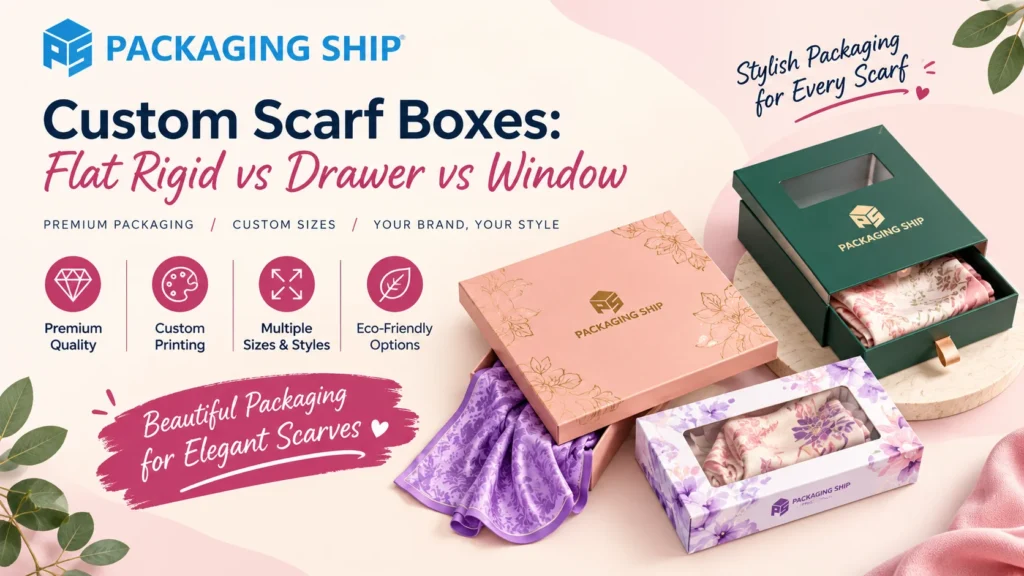
Custom Scarf Boxes: Flat Rigid, Drawer, or Window, What US Fashion Brands Actually Order Quick answer, if you’re skimming: there are really three scarf box styles worth considering, flat rigid, drawer, or window, and the fold matters more than the size when you’re picking one. I’ll get into when each one makes sense below, plus sizing, pricing, and how to order without getting stuck behind a 1,000-unit minimum. In this guide: What Are Custom Scarf Boxes in 2026? Technically, a custom scarf box is just packaging built around one product, in this case your scarf, rather than something generic pulled off a warehouse shelf. But in practice it comes down to three builds most brands end up choosing from in 2026: flat rigid if you want a folded presentation, a drawer style for gifting, or a window box if it’s heading to a retail shelf. Honestly, the fold matters more here than the price point does. Here’s a real one. A brand owner reached out last spring because her square silk scarves kept arriving with a crease running straight through the print. Nothing wrong with the box itself, it just wasn’t built for how the scarf was folded. That’s a five-minute fix once you know to look for it, and it’s the reason this post exists. We build custom scarf boxes at Packaging Ship around the fold first. Branding comes second. Where Scarf Packaging Actually Falls Apart If I had to boil it down, most of these problems trace back to one habit: sizing the box for the product itself, not for how that product actually gets folded, shipped, or set out on a shelf. Ship a quarter-folded scarf in a box that was really sized for a flat lay, and it comes out creased. Every single time, in my experience. Thin folding cartons crush somewhere between the warehouse and the doorstep because there’s no real structure holding the shape. Window boxes look great on a shelf until UV light starts fading silk or dyed fabric, sometimes within a few months. Then there’s the money side. A scarf selling for $80 or more looks cheap in plain packaging, no matter how good the product is. And plenty of small brands want to test one new print run and run straight into a 1,000-unit minimum before they’ve sold their first hundred units. There’s actual data behind this too, not just opinion. Adobe Express ran a survey of consumers and small business owners and found that 73% of shoppers said premium packaging changed how they saw a brand, and 57% of the ones who’d had a genuinely memorable unboxing experience went on to buy from that brand again. So no, packaging doesn’t stop mattering the second someone hits checkout. Flat Rigid, Drawer, and Window Boxes Compared Flat rigid tends to be the go-to for a scarf folded in quarters or in half, and that covers most silk scarves out there. The board’s thick enough to hold its shape under pressure, which keeps the fold crisp rather than crushed somewhere in a delivery van. Drawer boxes make more sense once you’re building a gift set, a scarf paired with a candle or some small accessory, that sort of thing. The sliding tray also just photographs better, which matters more now that half your customers are unboxing on camera anyway. Window boxes are kind of the odd one out here. They do great on a retail shelf, but silk and UV light don’t mix, the dye fades over time under direct light. If you’re set on a window, stick to cotton or a synthetic blend and leave silk out of it. Our custom scarf boxes page breaks sizes and finishes out by style if you want to compare before requesting a quote. Match Your Box to the Fold This is the part most packaging guides skip entirely, and it’s probably the single biggest fix available here. Say you’ve got a square silk scarf folded into quarters, the box should land somewhere close to a quarter of the scarf’s finished size, with maybe half an inch extra on each side for tissue. French fold is a different animal, since the scarf runs lengthwise into a long strip, so you actually want something narrow and deep instead of square. And if the scarf gets rolled instead of folded, forget the flat box entirely, you need a tube or a deep drawer box, or it’ll crease right at the roll no matter how much tissue you stuff in there. Check the apparel packaging lineup for dimensions sorted by fold type. How to Order Custom Scarf Boxes Wholesale Most manufacturers won’t even send a quote under 1,000 to 5,000 units. Packaging Ship starts at 50, no die charges, no setup fee buried in the invoice later. Custom scarf box pricing by material: price tracks material and finish more than it tracks quantity. Kraft and standard cardboard sit at the lower end. Rigid board costs more but holds up to repeat gifting and handling. Foil stamping or a ribbon closure adds a little to the unit cost, but it’s usually the difference between packaging that matches an $80 scarf and packaging that undersells it. We also carry FSC-certified kraft. The Forest Stewardship Council has certified more than 165 million hectares of forest worldwide, so that’s not a label we’re slapping on for effect, it’s backed by an actual certification body. You’ll get a free design proof back within 24 to 48 hours on every order, and nothing goes to print until you’ve actually signed off on it. Once you know your scarf’s dimensions and fold type, get a free estimate and we’ll take it from there. Beyond Scarves: The Same Rule Applies None of this logic is scarf-specific, really. Hair extension boxes run into the same issue, a bundle of 18 or 22-inch extensions needs a box sized to how it’s coiled or laid flat, not a generic rectangle grabbed off a size chart, or the hair shifts
Custom Eyelash Boxes: Styles, Prices & Buyer’s Guide
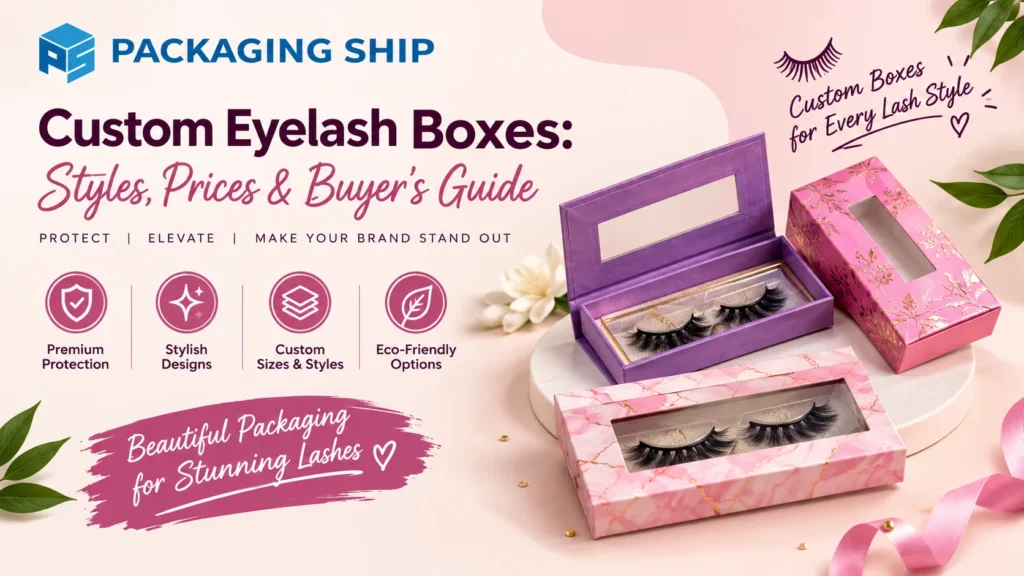
Custom Eyelash Boxes: A 2026 Buying Guide for Lash Brands TL;DR Custom eyelash boxes are printed cardstock or kraft boxes that protect your lashes and make your brand look real. Packaging matters, since 72% of Americans say design affects what they buy. Pick the thickness, use Pantone for exact colors, and match the box style to your price point. Orders start at 50 boxes, around $0.52 each, ready in two weeks. Table of Contents So, What Is a Custom Eyelash Box? It’s the box your lashes ship and sell in, printed with your logo and colors. Most are made from cardstock or kraft paper. A good one stops the lash tray from getting crushed and looks decent on a shelf. It also gives the customer a reason to remember your name once they open it. Lash boxes are one part of the wider cosmetic boxes family, so a lot of the same choices apply to your other beauty products too. Does Packaging Really Affect Sales? I worked with a small lash vendor a few years back who almost lost a retail placement, and it had nothing to do with her lashes. Her product was genuinely good. But her boxes were plain. No labeling, nothing that said “this is a real brand.” The buyer hesitated. Not because of quality. Because the box told her nothing. Turns out it’s not just my gut. Ipsos ran a survey for the Paper and Packaging Board, and 72% of Americans said packaging design often affects what they buy. For gifts it went up to 81%. So if you sell on Shopify, Amazon or in a small boutique, the box is basically your first sales pitch. It talks before you do. The market’s crowded too. According to Global Market Insights, US lash extension sales came in around $361.1 million in 2025. That’s about 88% of the North American market. Lots of brands, same buyers. A plain box just doesn’t cut it anymore. Picking Your Material, Print and Finish Material comes first. White or brown cardstock takes bold colors really well. Kraft has that raw, papery look, which is good if you’re pushing an eco angle. Thickness matters too. Most lash boxes are 16pt, 18pt or 24pt. Hold a 16pt and a 24pt box side by side and you’ll feel it right away. The thicker one just feels pricier. Printing is the next decision. CMYK is fine for most designs, especially ones with photos or lots of color. But say your whole brand is built around one exact shade of pink. Then ask for Pantone (PMS) matching. Without it, colors can drift a bit between runs. You won’t notice on order one. By order five, you will. Then comes the finish. Foil stamping, embossing, debossing and Spot UV are the ones people actually touch and notice. A window cutout is cheap to add. Shoppers can see the lashes without opening anything, and they seem to like that. Last thing, logo placement. You can print outside, inside, or both. Inside printing is a nice little surprise when someone opens the box. Which Box Style Fits Your Lashes? Not every lash line needs the same box. Here’s how the common styles compare. Box Style Works Best For Usual Material How It Opens Price Level Tuck End Box Everyday strip lashes, bulk retail 16pt–18pt cardstock Flap tucks in Budget-friendly Window Box Boutique shelves, retail displays 16pt–18pt cardstock + clear PET window Tuck or top lid Mid-range Magnetic Closure Box Mink lashes, luxury lines, gift sets Rigid board wrapped in printed paper Magnetic flap Premium Sleeve and Tray Box Subscription boxes, PR kits 18pt–24pt cardstock or kraft Tray slides out Mid to premium Drawer Box Multi-pair sets, bundles 24pt cardstock or rigid board Pull-out drawer Mid to premium Kraft Tuck Box Eco-friendly and vegan brands Brown kraft Flap tucks in Budget-friendly If you’re just starting out, a tuck end or window box keeps costs low. Selling mink or doing gift sets? A magnetic box is worth the extra spend. You can see real examples of each style on our custom eyelash boxes page. How an Order Actually Works It’s simpler than most people expect. FAQS: Question Answer How much do custom eyelash boxes cost? Around $0.52 per box to start. The more you order, the cheaper each one gets. No die or plate charges. What’s the minimum order? 50 boxes. You don’t need to buy 1,000 just to test a new lash line. What to choose in between Cardstock or kraft? Cardstock if you want bright, bold printing. Kraft if you want a natural, eco look. How long does it take? 6 to 7 business days to make, then 4 to 5 days to ship. Can my logo go on the box? Yes, outside, inside, or both. Why Lash Brands Order From Us A lot of suppliers keep their prices vague and push big minimums before you even know if your lashes will sell. We don’t. There’s no forced minimum, you see the price upfront, and you get a free design proof before anything prints. Selling eyeliner too? Match your eyeliner boxes to your lash boxes so it all looks like one brand on the shelf. Get a Free Quote Tired of guessing? Get a free custom eyelash box quote and see a real proof before you pay for a single box. Final Thoughts Your box isn’t something to sort out after the lashes are done. It’s part of why someone buys from you, and part of why they come back. Get the material, print and timing right, and the packaging starts doing some of the selling for you.