
TLDR
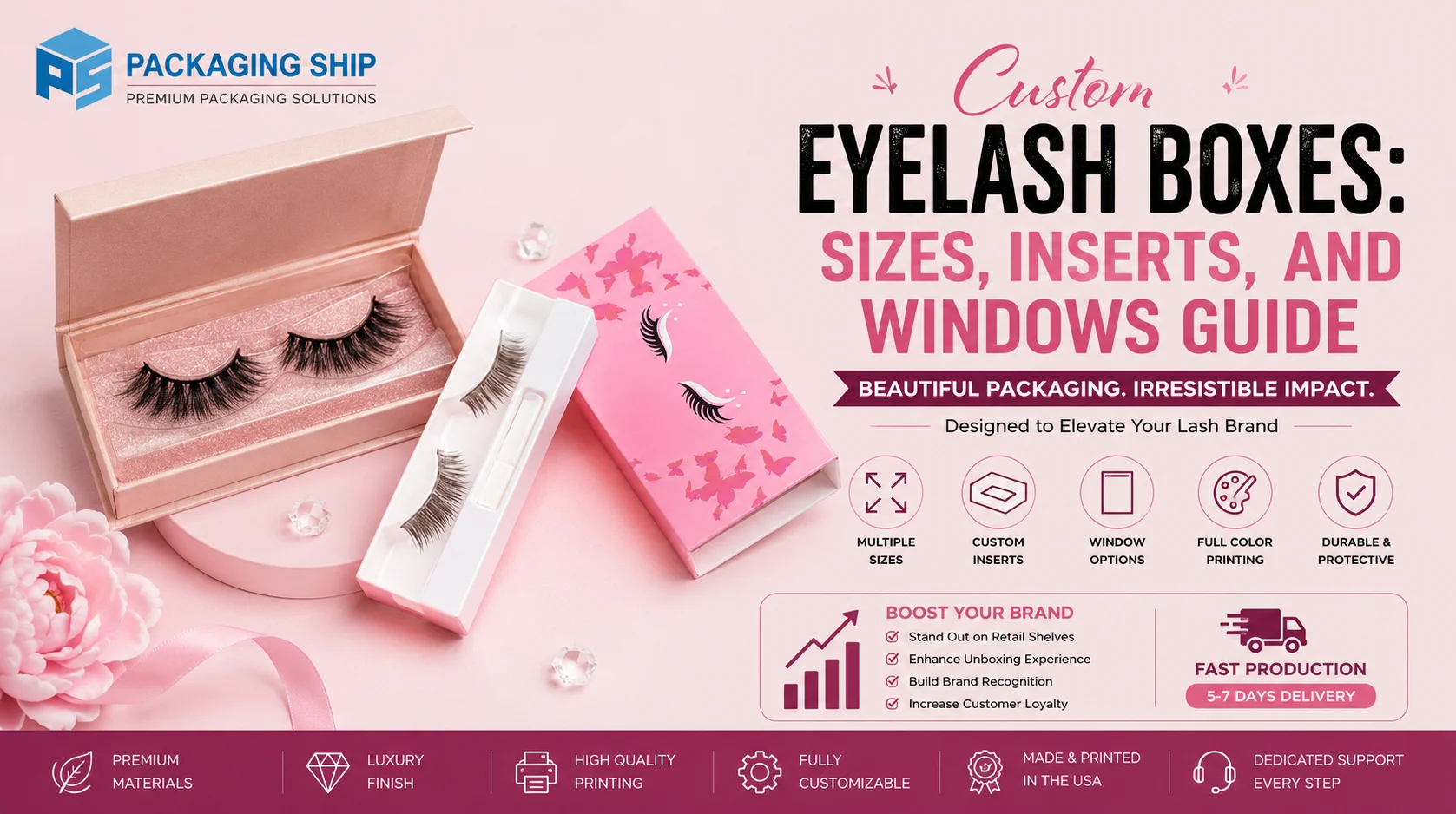
Custom eyelash boxes come down to three decisions. Size has to match your actual lash tray or multi pack, not a generic template. Insert material, PVC, foam, or cardstock, decides whether lashes stay put during shipping or shift and crush. Window style, clear lid, die cut, or magnetic lash box, controls shelf appeal and how exposed the product is to handling. Get all three right and a lash box protects the product and sells it at once. Custom eyelash boxes wholesale no die charge USA orders typically start small, priced by size, material, and finish.
A lash brand founder emailed the Packaging Ship team last spring with a photo of a crushed lash tray. The box looked fine outside. Inside, a flat insert had let the tray slide the whole way to Texas, and the curl on every strip in that shipment was flattened against the window. Nothing about the box itself was wrong, the insert just wasn’t specced for that tray. This guide walks through sizes, inserts, and window styles so that mistake doesn’t happen to your next order.
Here’s the short version. Custom eyelash boxes are built around three choices working together, not separately. Size has to match your lash tray exactly. Insert material decides whether lashes shift in transit. Window style decides how much of the product shows without exposing it to damage. Skip any one and the box looks fine in a photo but fails somewhere between your warehouse and the customer’s mailbox.
Strip away the branding and a lash box is really three parts working together, the outer box, the insert, and whatever window or closure sits on top. Most lash brands spend all their attention on the outside, color, logo, finish, and almost none on the insert underneath. That’s backwards, since the insert is what actually keeps the product intact.
A lash box that looks great in a mockup can still fail if the insert doesn’t match the tray dimensions. Lashes are light but fragile at the curl, and a flat or too shallow insert lets the tray slide during shipping. That slide crushes the curl against the window or the box wall, the single most common complaint we hear from lash brands who switched suppliers.
Curious what else falls under this category? Our cosmetic boxes page covers the full lineup, including boxes for mascara, eyeliner, and other eye makeup products that often ship alongside lashes.
Size sounds simple until you’re packaging three lash formats under one brand. A single strip box, a multi pair box, and a full lash kit all need different dimensions, and using one template across all three is where sizing mistakes start.
| Box Type | Typical Size Range | Best For |
| Single Strip Box | 3.5 x 1 x 1 inch | Individual lash pairs |
| Multi Pack Box | 4.5 x 3 x 1.25 inch | 3 to 5 pair sets |
| Lash Kit Box | 6 x 4 x 1.5 inch | Lashes plus applicator or glue |
| Subscription Box | 5 x 5 x 2 inch | Monthly lash bundles |
Measure your actual tray, not the lash strip, since the tray dictates the insert cavity and the box interior. A box too large lets the tray shift even with a good insert. Too small, and the lid won’t close cleanly over the curl.
The insert is doing more work than any other part of the box, and it’s also the part brands spec incorrectly most often. Three materials cover almost every lash box with inserts on the market.
PVC inserts are clear or tinted plastic trays, cut to the exact shape of the lash tray. They’re rigid, so once a tray is seated it doesn’t move, and they’re the standard choice for brands wanting a display quality presentation with real protection.
Foam inserts cushion the tray rather than locking it into a fixed shape. They work well for kits with multiple items, glue, applicator, lashes, since foam can be cut with cavities for each piece. Foam adds more shipping protection against drops and impact than PVC, at the cost of a slightly bulkier build.
Cardstock inserts are the budget option, folded rather than molded, holding a tray in place well enough for light, single strip products. They’re not the right call for anything heavier or for multi pair kits, since folded cardstock resists sliding far less than a molded insert under vibration during transit.
Whichever material you choose, the fix for the most common insert failure is simple: send exact tray dimensions in writing before the die line is cut, not after a damaged batch shows up.
A window does one job well and one job poorly at once. It shows the product, and it also exposes that product to more handling risk than a fully enclosed box.
A clear lid lash box uses a full transparent top, rigid plastic or PET film, so the entire lash tray is visible at once. This works best paired with a PVC insert, since the tray needs to stay perfectly still under a fully exposed lid.
A die cut eyelash packaging window box cuts a smaller shaped opening, a logo, an eye outline, a simple oval, into the box itself, usually backed with a thin film for protection. This gives partial visibility with more structural coverage than a full clear lid, which matters if your product ships loose in mailers rather than protected cartons.
A magnetic lash box replaces a tuck flap with a magnetic closure, a popular upgrade for brands positioned above entry level pricing. The false eyelash market keeps growing steadily through the early 2030s according to Grand View Research, and magnetic closures are one of the fastest growing segments within that trend, according to Mordor Intelligence, as adhesive free, reusable closures gain favor with repeat buyers.
If your product line also includes lip gloss alongside lashes, the sizing and insert logic carries over almost exactly, a snug insert and a right sized window matter just as much for a small glass tube as for a lash tray. If you want to read more, click here.
The mistake we see over and over is a brand ordering a standard box template without measuring their actual tray first. Templates look close enough in a size chart, and nobody catches the half inch difference until 2,000 units arrive with trays that don’t sit flush.
A second mistake is picking a window style based on looks alone. A full clear lid on a box shipping in a padded mailer with no outer carton invites scratches by the time it reaches a customer. Match window size and film thickness to how the product actually ships, not just how it photographs.
A third mistake is assuming inserts are one size fits all. A brand reorders the same cardstock insert for a new multi pack line when the original spec was built for a single strip. The lashes ship loose inside a box never sized for them, and the shift and crush problem starts over with a different product line.
A fourth mistake is not asking about die charges before approving a custom size. Custom eyelash boxes wholesale no die charge USA options exist, but not universally, so confirm this in writing first.
Wholesale pricing for custom eyelash boxes depends on three things together, size, material, and finish. A small single strip box in cardstock costs far less per unit than a multi pack magnetic lash box in rigid board with foil printing.
Minimum order quantities vary by supplier, but many packaging companies, Packaging Ship included, now offer low or no minimum runs so smaller lash brands aren’t stuck ordering thousands of units to test a new box style. Ask directly whether a custom size triggers a die charge, since that’s the fee most likely to surprise a brand late in the process.
Standard production and shipping timelines apply across most box styles, though rush options are usually available for an added cost if launching against a specific date. If sustainability is part of your brand story, our recyclable cosmetic packaging guide covers which lash box materials actually qualify as recyclable versus which only claim to.
Brands packaging a full eye makeup line often pair their custom eyelash boxes order with matching custom eyeliner boxes and custom mascara boxes, keeping the same insert logic and finish across every SKU so the line ships consistently.
| Question | Answer |
| What size box do I need for lash strips? | Measure your tray first, not the lash itself. A single strip box typically runs around 3.5 by 1 by 1 inch, while multi pair and kit boxes need more depth so the curl doesn’t press against the lid. |
| What insert works best for lashes? | PVC holds a tray rigidly in place and pairs well with window boxes. Foam suits multi item kits. Cardstock works for light, single strip products but isn’t built for heavier or multi pack use. |
| Is a clear lid lash box a good idea for shipping? | Depends on how the product ships. A clear lid works well inside a protected outer carton, but it’s a poor match for loose mailer shipping without added film protection. |
| What makes a magnetic lash box different? | It uses a magnetic closure instead of a tuck flap, giving a reusable, adhesive free open and close. It costs more per unit but fits brands positioned above entry level lash lines. |
| Do custom eyelash boxes wholesale no die charge USA options really exist? | Yes, but not with every supplier or every size. Confirm die charge policy in writing before approving a nonstandard dimension, since this is where unexpected costs usually appear. |
| How do I stop lashes from shifting in the box? | Match insert depth to tray height exactly, and confirm the insert material against product weight. A flat or undersized insert is the most common cause of shifting and a crushed curl. |
Ready to get your sizing and insert spec right the first time? Our team confirms tray dimensions, insert material, and window style in writing before production starts, so what arrives matches what you ordered.
A custom eyelash box isn’t just packaging, it’s the difference between a lash tray arriving exactly as photographed and one showing up with a crushed curl and an unhappy customer. Size has to match your actual tray, not a generic template. Insert material decides whether the product stays put during shipping, PVC for rigid hold, foam for multi item kits, cardstock for light single strip use only. Window style balances shelf appeal against handling risk, and a magnetic lash box earns its higher price on lines positioned above entry level. Confirm your specs in writing before a custom die is cut, ask about die charges upfront, and match every choice to how the product actually ships. Get those three decisions right once, and crushed lashes stop being a recurring problem.