
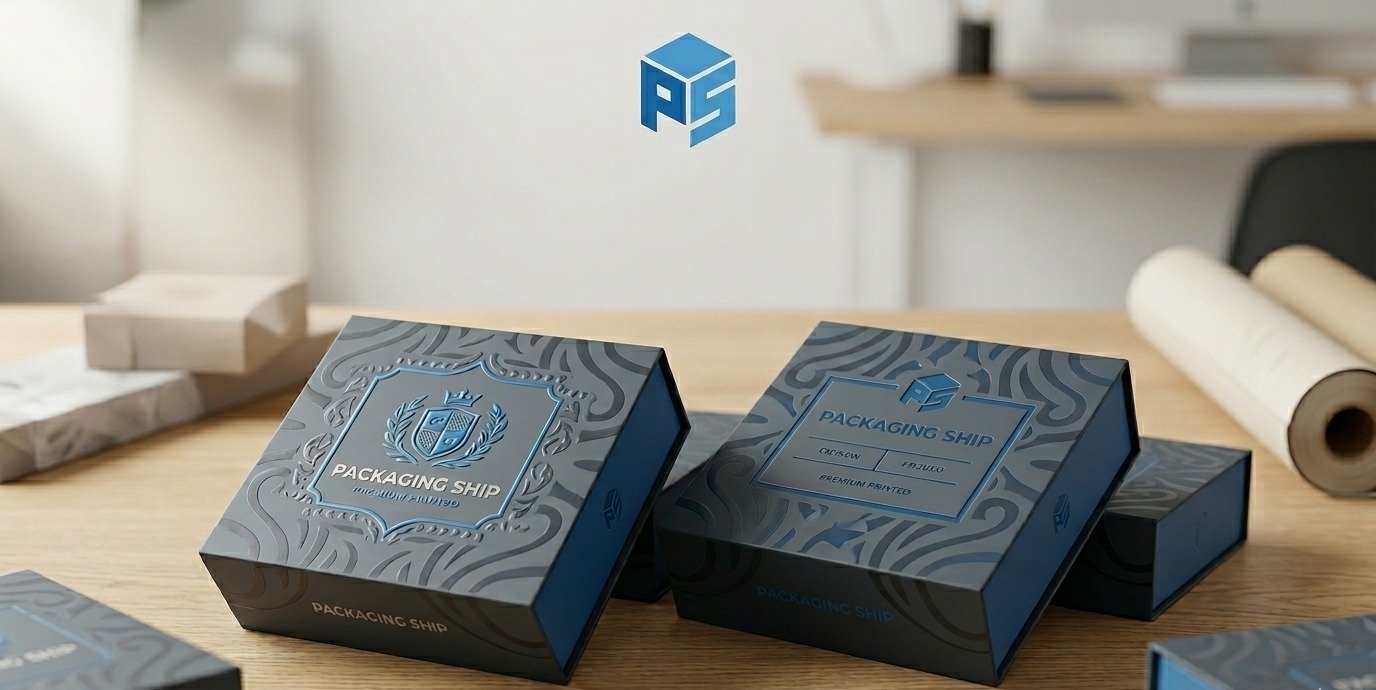
You’re at a trade show. Two products sit side by side. Same price. Same category. Same shelf.
But one box has a logo that catches the light slightly raised off the surface, with a texture your fingertip feels before your eye can fully read it. You pick that one up. So does everyone else.
That’s embossing. And alongside its counterpart, debossing is one of the most powerful finishing techniques available to any business that takes its packaging seriously.
Yet most business owners either overlook these techniques entirely or assume they’re reserved for luxury conglomerates with enormous budgets. Neither is true. Whether you’re running a growing DTC brand, a cosmetics line, or a B2B product operation, embossing and debossing are accessible, high-ROI finishing tools that can transform how your packaging is perceived and how your brand is remembered.
This guide covers everything: what these techniques are, how they work, their types, benefits, uses, and exactly how to decide which one is right for your brand.
What Is Embossing in Packaging?
Embossing raises part of your packaging design above the surface of the material. The logo, text, or pattern literally protrudes outward, creating a three-dimensional, touchable effect that no amount of ink or lamination can replicate.
Think of it this way. A Chanel perfume box doesn’t scream “luxury” because of the color. It’s the fact that the double-C logo sits slightly proud of the surface, catching light from every angle, demanding your fingertip before your eye even processes what you’re looking at.
That’s the psychology of embossing. It creates a tactile trigger that signals craftsmanship instantly, without words.
How Does Embossing Actually Work?
The process is more straightforward than most people assume:
- A custom metal plate called a die is made from your artwork
- Two dies are used: a male die (raised version) and a female die (recessed version)
- Your packaging material sits between both dies
- Heat and pressure are applied the material gets pushed upward into the raised shape
- The process runs multiple times to ensure clean, sharp definition
The result is permanent, durable, and structurally part of the material itself — not printed on top of it.
Types of Embossing in Packaging
- Blind Embossing: No ink. No foil. Just the material forming a raised shape. It’s the most understated version and, arguably, the most sophisticated. Used heavily in luxury rigid boxes, premium business cards, and high-end book covers. The effect is subtle, something customers notice on second look, not first glance.
- Foil Stamp Embossing: This is where embossing and foil stamping meet. The raised design also gets a layer of metallic foil gold, silver, copper, and holographic foil. The combination hits two senses at once: the tactile depth of embossing and the visual flash of foil. Extremely popular in cosmetics, gifting, and premium food packaging.
- Multi-Level Embossing: Different parts of the design sit at different heights. Some elements rose high, others barely off the surface. The result looks almost sculpted, like something carved rather than printed. It costs more, but for a brand where packaging is a major brand touchpoint, the investment makes sense.
- Sculptured Embossing: A hand-crafted custom die built specifically from your artwork. Used when fine detail and brand integrity matter more than production speed. Think intricate crests, detailed logos, or decorative patterns where precision is everything.
- Heat Embossing: Uses embossing powder and a heat gun rather than a press die. More common in specialty stationery and short-run projects. Accessible cost point, and produces a satisfying raised texture without committing to a full die production run.
What Materials Can Be Embossed?
- Paperboard and cardstock
- Kraft paper
- Corrugated board (outer liner surface)
- Leather and faux leather
- Rigid box materials
- Fabric-covered packaging
What Is Debossing in Packaging?
Debossing does the opposite. Instead of raising the design above the surface, it presses the design into the material, creating a recessed, indented impression.
If embossing shouts premium, debossing murmurs it. The effect is quieter. Cooler. More considered. Brands like Monday Haircare have built an entire visual identity around debossed packaging, a sunken logo on matte board that communicates confidence without needing to prove anything.
It’s the difference between a brand that wants to be noticed and a brand that knows it will be.
How Does Debossing Work?
Debossing typically needs only a single female die, pressed downward from the top of the material:
- A custom die is produced from your vector artwork
- Your packaging material is positioned flat on the press
- The die presses down with heat and pressure from above
- The design sinks into the material surface as a clean indentation
- Optional finishes foil, ink fills can be added inside the debossed area afterward
Because debossing uses one die instead of two, setup is generally simpler and slightly less expensive than embossing.
Types of Debossing in Packaging
- Blind Debossing: No ink, no foil, just the indented impression itself. When applied across a larger surface area, this is called plate sinking, which creates a full-texture effect across the material. Minimal, tactile, and genuinely premium-feeling in the hand.
- Deboss with Foil: The debossed indentation gets filled with metallic or pigmented foil. The recessed area frames the foil, creating a high-contrast finish that draws the eye directly to the design. Popular on wine labels, spirits packaging, and lifestyle brand boxes.
- Multi-Level Debossing: Varies the depth across different design elements some pressed deeper, some barely indented. Creates a dimensional quality within the recessed surface. Used when design complexity is part of the brand story.
What Materials Can Be Debossed?
- Paperboard and cardstock
- Leather and faux leather
- Kraft and cardboard packaging
- Rigid box board
- Soft goods and fabric packaging
Embossing vs Debossing: Side-by-Side Comparison
| Factor | Embossing | Debossing |
| Design Effect | Raised above the surface | Pressed into the surface |
| Visual Character | Bold, luxurious, eye-catching | Subtle, modern, minimal |
| Die Required | Male and female die (two die) | Female die only (one die) |
| Cost | Slightly higher (two dies) | Slightly lower (one die) |
| Process Complexity | Higher | Lower |
| Durability | Excellent | Excellent |
| Best Material | Thick paperboard, rigid board | Paper, leather, cardstock |
| Brand Positioning | Luxury, premium, bold | Sleek, refined, minimalist |
| Common Use | Cosmetics, gifting, luxury retail | Wine labels, lifestyle brands, stationery |
| Works with Foil? | Yes: registered emboss | Yes: deboss with foil |
What Are Embossing Dies? Material Guide
The die is the metal plate doing all the work. Not all dies are equal, and choosing the wrong one for your production volume is a mistake worth avoiding.
Magnesium is the entry-level option. Least expensive, works fine for single-level designs, and suits short production runs well. The downside is that magnesium degrades faster than the other two, especially under high-volume or repeated use. Good for sampling or limited-edition packaging programs.
Copper sits in the middle. Better suited for multi-level designs and detail-heavy artwork than magnesium. Lasts longer. Most brands doing moderate ongoing production volumes work with copper dies as their standard.
Brass is the professional’s choice. Hardest, most durable, most precise. Brass dies handle sculptured and complex multi-level designs without losing edge definition. They’re the most expensive upfront but last significantly longer, making them more cost-effective for brands running large volumes or maintaining a consistent long-term packaging program.
Benefits of Embossing and Debossing in Packaging
1. First Impressions Happen Before the Box is Opened
The moment a customer picks up embossed or debossed packaging, their brain starts registering quality. Not because they’re thinking about it consciously, but because they’re feeling it. That tactile signal happens before any visual assessment. It’s faster than reading a tagline. Faster than noticing a color. And it sticks.
2. Packaging That Gets Shared
Unboxing content on social media is a genuine marketing channel now, not an afterthought. Packaging with tactile dimension gets picked up, turned over, and filmed in a way that flat-printed boxes simply don’t invite. That organic reach driven by a customer’s genuine delight is packaging ROI that doesn’t appear on a traditional marketing spreadsheet but absolutely affects brand growth.
3. The Perceived Value Effect
Customers make rapid unconscious judgments about product quality based on packaging alone. A box that feels premium suggests a product that IS premium. That judgment happens in seconds and influences price sensitivity, purchase confidence, and repeat buying behavior. Embossing and debossing are among the most cost-efficient ways to shift that perception in your favor.
4. Durability That Outlasts Print
Printed finishes scratch, fade, and scuff. Embossed and debossed impressions are structurally pressed into the material rather than layered on top of it. They maintain definition through warehousing, shipping, retail shelving, and customer handling without degradation. The effect you approved in production is the effect your customer experiences.
5. A Sustainable Route to Premium
This one is worth paying attention to in 2026. Gloss plastic lamination, long used as the default “premium” packaging finish, creates recyclability problems. A debossed kraft board box with no plastic coating delivers an equally premium tactile feel while remaining fully recyclable. Leading packaging brands are actively making this switch, and it’s a genuine differentiator for businesses with sustainability commitments.
Where Are Embossing and Debossing Used?
Beauty and Cosmetics
Embossing dominates cosmetics packaging. Foundation boxes, serum cartons, perfume cases, and raised logos with gold foil are practically the category standard for anything positioned above the mid-market. If your beauty brand isn’t using embossing, your shelf presence is working harder than it needs to.
Food and Beverage
Debossing has a long, established history in wine and spirits labeling. The slightly sunken label text on a premium wine bottle is almost certainly debossed. Artisan chocolate, specialty condiments, and premium gift food products are increasingly using blind embossing on kraft board. The combination of natural material and tactile finish reads as handcrafted in a way that resonates with the current consumer appetite for authenticity.
Luxury Retail and Gift Packaging
Multi-level embossing and sculptured debossing are the standard in high-end gift boxes and rigid retail packaging. The tactile dimension doesn’t just make the packaging look expensive; it makes the experience of receiving it feel considered. That emotional quality transforms a transaction into a memory.
E-Commerce and Subscription Boxes
A corrugated mailer box with a clean debossed logo doesn’t just look professional; it tells your customer, the moment they pick it up from their doorstep, that the brand inside cares about the full experience. For subscription businesses where customer retention is everything, that moment matters more than most brands realize.
Corporate Stationery and B2B Materials
A blind-embossed business card gets held for longer, gets examined more carefully. Put down more reluctantly. That extra two seconds of attention is disproportionately valuable in any sales or relationship context. The same applies to premium folders, certificates, and branded stationery in B2B environments.
Embossing vs Debossing: Which Is Right for Your Brand?
Choose Embossing If:
- Your brand identity is bold, expressive, and visually driven
- You sell in a retail environment where shelf standout matters
- You’re in beauty, cosmetics, luxury gifts, or premium retail
- You want the option to combine with foil for maximum visual impact
Choose Debossing If:
- Your brand language is minimal, refined, and restrained
- You want texture and tactility without visual noise
- You’re in lifestyle, wellness, wine, craft food, or professional services
- Sustainability is a brand commitment, and you want coating-free premium finishing
Use Both Together If:
- Your packaging has multiple elements that benefit from different treatments
- You want to create a genuinely multi-sensory opening experience
- You’re ready to produce something competitors can’t easily replicate on a tight timeline or budget
How to Design for Embossing and Debossing: 4 Practical Tips
1. Vector artwork is non-negotiable. AI, EPS, or SVG only. Vector files are built from mathematical paths that scale without distortion, essential for accurate die production. Raster images don’t translate cleanly into embossing dies. This is the single most common mistake brands make when approaching their first embossed packaging project.
2. Simple designs perform better. The temptation to emboss an intricate, detailed illustration is understandable, but the results are almost always disappointing. Fine lines lose definition. Shadows disappear. Gradients become meaningless in three dimensions. Bold, clean shapes and strong typographic marks are what embossing and debossing were built for.
3. Material thickness matters more than people expect. Thin or low-grammage materials can tear, buckle, or produce shallow impressions under die pressure. Discuss material specification with your packaging supplier before finalizing artwork. This conversation is much cheaper before production than after.
4. Get your supplier involved at a brief stage, not the approval stage. The complexity, material compatibility, finish combinations, and lead times all interact with each other. A five-minute conversation with your packaging partner before artwork is finalized saves weeks of revision time and avoids the very expensive lesson of learning these constraints after a die has already been produced.
Frequently Asked Questions
Is embossing more expensive than debossing?
Yes, embossing requires two dies, making it slightly more expensive.
Can embossing and debossing be used together?
Yes, they can be combined for a multi-dimensional effect.
What is blind embossing?
Blind embossing creates a raised design without ink or foil, resulting in a subtle, monochromatic effect.
What is the difference between embossing and foil stamping?
Embossing raises the surface, while foil stamping applies metallic or pigmented foil.
Can cardboard or corrugated boxes be embossed?
Yes, embossing works best on the outer liner of cardboard or corrugated boxes.
What file format is needed for embossing or debossing?
Vector files like AI, EPS, or SVG are required.
How long does custom embossed packaging take to produce?
Lead times are typically 10–20 business days, depending on die complexity and order volume.
The Bottom Line
Packaging is doing a job every single second it exists on a shelf, in a shipping box, or on a customer’s desk. That job is to communicate something about the brand and product inside before a single word is read.
Embossing and debossing are two of the most powerful tools available to do that job well. One raises your brand above the surface. The other presses it into the material with quiet, confident permanence. Both create a physical experience that flat printing cannot replicate and that customers genuinely respond to in purchasing behavior, in brand recall, and increasingly, in the content they create and share.
The question isn’t really whether your brand should be using these techniques. It’s which one or which combination fits what your brand is actually saying.
Your Competitor’s Packaging Is Flat. Yours Doesn’t Have to Be.
At Packaging Ship, we produce custom embossed and debossed packaging for US businesses across beauty, food, retail, and e-commerce, eco-friendly materials, competitive B2B pricing, and packaging expertise from brief to delivery.
Get Your Free Custom Packaging Quote Today →