
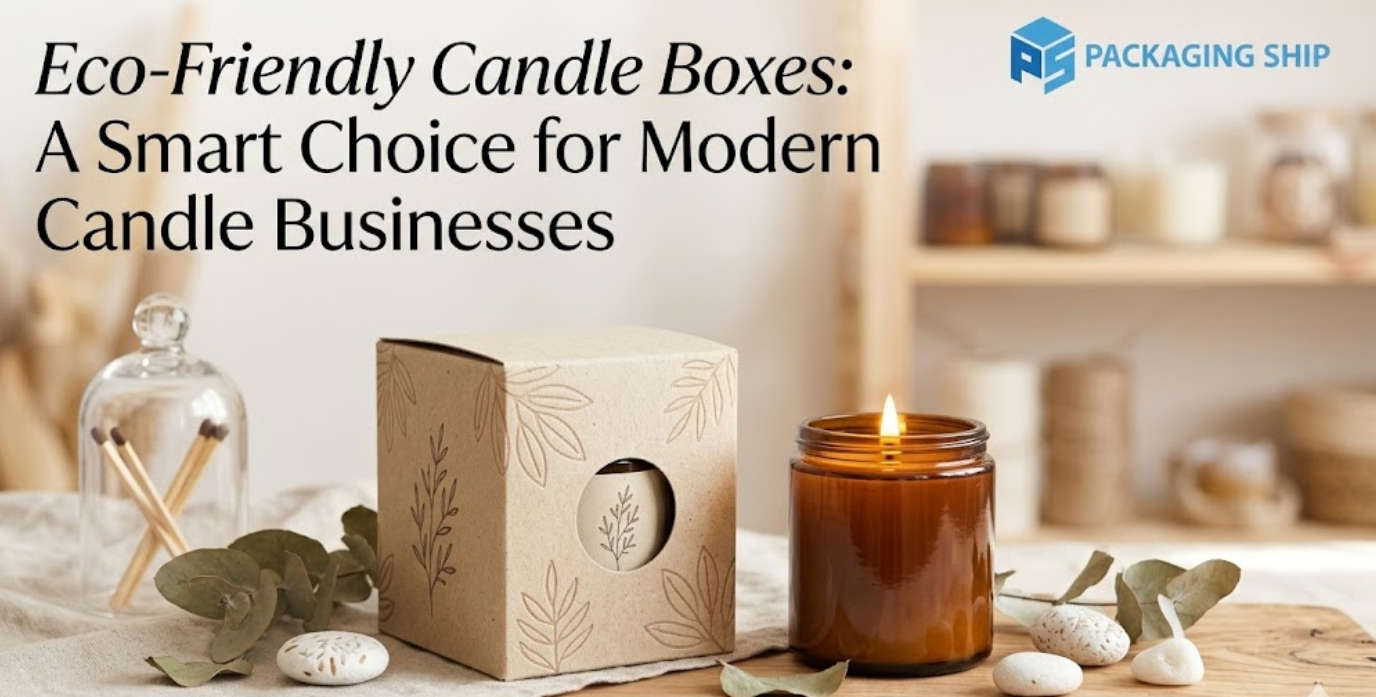
What Are Sustainable Candle Packaging Solutions in 2026? Sustainable candle packaging solutions are candle boxes made from recyclable, biodegradable, or post-consumer recycled materials verified through certifications like FSC that protect the product, satisfy retail supplier requirements, and reflect a brand’s environmental values across every sales channel.
The Contract That Disappeared Because of the Box
A Denver soy candle brand spent 14 months building something worth being proud of. Clean wax. Phthalate-free fragrance. A brand story that actually held up.
In Q1 2025, their largest wholesale account, a 60-location health and wellness retail chain declined the reorder.
Not the candles. The boxes.
The US candle market generates approximately $3.14 billion in annual retail sales, according to the National Candle Association. Roughly 35% of those sales happen during the Christmas and holiday season alone, a concentrated window where packaging decisions directly impact revenue.
Petroleum lamination. No recycled content. No FSC certification. The retailer’s supplier compliance form asked for documented eco-credentials, and the brand had nothing to hand over. That account was worth $84,000 a year. It walked out the door over a packaging upgrade that would have cost $0.14 more per unit.
This is not a rare story. It plays out every quarter across US candle brands at exactly the moment they think they’ve made it into retail. Sustainable candle packaging solutions aren’t a marketing choice anymore. They’re the entry ticket to serious retail relationships in 2026.
Why This Shift Is Permanent
The global sustainable packaging market sat at $303.80 billion in 2025. By 2031, it’s projected to reach $463.41 billion, growing at 7.29% annually, according to Mordor Intelligence’s 2026 Sustainable Packaging Market Report. North America is carrying a significant share of that growth, driven by state-level Extended Producer Responsibility legislation and brand-level commitments to minimum recycled content thresholds.
Paper recycling infrastructure in the US backs this up. In 2024, Americans recycled 46 million tons of paper, that’s 125,000 tons every single day turned into new packaging, boxes, and paper products. The recycling rate for paper hit 60 to 64 percent and cardboard reached 69 to 74 percent, according to AF&PA data published by American Recycler. Paper is one of the most successfully recycled materials in the country, which makes paper-based candle packaging the most credible and defensible sustainability claim a candle brand can make.
Retail buyers know these numbers. Their compliance teams are getting sharper. A vague “eco-friendly” sticker on a box with petroleum lamination doesn’t pass anymore.
“The right candle box isn’t just packaging, it’s the first physical signal your brand sends about what it actually stands for.” — Senior Packaging Consultant, Packaging Ship
Sustainable Candle Packaging Across Every Dimension of Your Business
Most candle brands think about sustainable packaging in one dimension, the material. The brands that get retail contracts think about it across four.
- By industry, wellness brands, home décor retailers, gift shops, and food-adjacent fragrance businesses each carry different eco-expectations from their buyers. A wellness chain’s supplier compliance form looks nothing like a boutique gift shop’s purchasing criteria. Your packaging needs to satisfy both channels, not just one.
- By style, tuck-end folding cartons in recycled SBS board suit high-volume retail runs. Rigid two-piece boxes in recycled greyboard work for premium gift collections where the unboxing moment carries revenue weight. Sleeve boxes minimize material usage for minimalist artisan lines. Corrugated mailers with kraft inserts protect glass jar candles in e-commerce without a single piece of plastic in the box.
- By material, FSC-certified kraft paper, post-consumer recycled paperboard, corrugated recycled cardboard, and SBS board with water-based coatings each balance protection, print quality, cost, and sustainability credentials differently. Kraft is natural and authentically rustic. Recycled SBS delivers full-color retail-ready printing. Corrugated handles fragile glass without foam. Water-based coatings keep the box genuinely recyclable, which petroleum lamination destroys.
- By accessories, what’s inside the box matters as much as the box itself. Kraft honeycomb paper inserts replace bubble wrap for glass jar protection. Recycled tissue paper liners replace petroleum-film wrapping. Soy-ink printed cards on recycled stock replace glossy branded inserts on coated boards. Every accessory choice either supports or undermines the eco-credentials of the box around it. A genuinely sustainable candle packaging solution addresses all four dimensions together, not just the outer shell.
4 Materials That Hold Up Under Scrutiny
- FSC-Certified Kraft Paper (120 to 157 GSM)
FSC-certified kraft paper is the foundation that US retail compliance programs actually accept. The Forest Stewardship Council certifies the full chain of custody from forest to finished box which is what retail auditors ask for, not just a logo on the side panel. At 120 to 157 GSM, kraft handles most candle weights without the box losing structural integrity. Uncoated kraft biodegrades in 2 to 5 months and clears virtually all US curbside recycling programs. For sustainable packaging for candles at the artisan, wellness, and natural brand level, this is where most businesses should start.
- Post-Consumer Recycled Paperboard (200 to 400 GSM)
Recycled paperboard built from post-consumer waste gives you the documented recycled content percentages that supplier qualification forms actually require. “Made with recycled materials” without a percentage means nothing to a retail compliance auditor. At 200 to 350 GSM for folding cartons, recycled paperboard delivers a smooth printing surface for full-color retail packaging while keeping the material genuinely circular. This suits candle brands moving into major US retail chains with formal sustainability programs.
- Corrugated Recycled Cardboard
For candle shipping, corrugated recycled cardboard at B-flute or C-flute structure gives glass jar candles real protection without petroleum foam. Pair it with kraft honeycomb paper inserts plastic-free, fully recyclable, and you have a direct-to-consumer shipping box that protects fragile glass and arrives at the customer’s door without a single piece of plastic inside it. Our green candle packaging range includes corrugated options designed specifically for candle e-commerce fulfillment at wholesale volumes.
- Water-Based Coatings and Soy Inks
This is where most brands, and most of their suppliers, quietly fail. A kraft box with petroleum-based gloss lamination is not recyclable at most US curbside facilities, regardless of what the substrate says. Water-based matte coatings preserve recyclability. Soy-based inks replace petroleum pigments with plant-based alternatives without losing print resolution or color accuracy. The coating and ink choice isn’t a finishing detail, it determines whether your sustainability claim is true or not.
Recyclable, Biodegradable, Compostable: They Are Not the Same Thing
Using these three terms interchangeably is greenwashing, even when unintentional, and sophisticated retail buyers are catching it.
Recyclable means the material processes through standard recycling infrastructure. Most FSC-certified paperboard without petroleum lamination qualifies. Biodegradable means natural biological breakdown over time. Uncoated kraft paper gets there in 2 to 5 months. Compostable means breakdown within a specific timeframe under composting conditions, typically 90 days in industrial composting environments, and requires BPI certification to claim it legitimately.
When you order biodegradable candle boxes from Packaging Ship, every order comes with material documentation specifying exactly which claim applies. Your marketing team writes accurately. Your procurement team hands over a compliance document, not a vague promise.
Four Questions to Ask Before Choosing a Supplier
Ask for FSC chain-of-custody documentation that covers the full supply chain from forest to finished box. A logo without the documentation doesn’t clear a retail compliance audit. Ask for the specific recycled content percentage, 30, 50, or 100 percent post-consumer recycled content, stated in writing. Ask whether all coatings and inks are water-based, confirmed in the product specification. And ask what the MOQ is for certified eco materials specifically, not the general minimum, but the minimum for the certified version of the product you actually need.
At Packaging Ship, FSC-certified and recycled material candle boxes are available from 100 units with no minimum order requirement.
What Eco Packaging Actually Costs at Wholesale Volume
At low volumes under 200 units eco-certified candle boxes run 12 to 18 percent higher per unit than standard non-certified alternatives. That gap closes fast at wholesale. At 500 units, FSC-certified kraft folding cartons typically land within 5 to 8 percent of standard paperboard pricing. At 2,000 units with offset printing, cost parity is often achievable because volume efficiency closes what material premium remains.
The business case is straightforward. Retail access, supplier qualification, and brand credibility with eco-conscious consumers are worth more than the per-unit cost difference. The Denver brand from the opening of this article learned that the hard way. Brands that get ahead of it learn it the better way.
Conclusion:
Ready to Order Sustainable Candle Packaging That Opens Retail Doors? Your candle formula is clean. And your brand story is genuine. Your packaging needs to match both, and prove it to the retail buyers who now require documentation to back up every sustainability claim on the label.
Packaging Ship works with B2B candle brands across the United States. Free design support on every order. No minimum order quantity. Free shipping nationwide. FSC chain-of-custody documentation on request for supplier compliance.
Get Your Free Eco-Friendly Candle Box Quote Today →
Free design support. No MOQ. FSC documentation included. Free US shipping on every order.
Frequently Asked Questions
What is the most eco-friendly candle box material in 2026?
FSC-certified kraft paper and post-consumer recycled paperboard are the most widely accepted options across US retail supplier compliance programs. Both carry verifiable chain-of-custody documentation. Packaging Ship provides FSC documentation with every eco order on request.
Do sustainable candle boxes cost more?
At low volumes, yes, approximately 12 to 18 percent more per unit. At 500 or more units, that narrows to 5 to 8 percent. The 2,000 units with offset printing, cost parity is often achievable. Retail access and supplier qualification consistently outweigh the remaining cost difference.
What certifications should I require from a candle packaging supplier?
FSC chain-of-custody certification, a documented recycled content percentage, written confirmation of water-based coatings and inks, and How2Recycle label eligibility from the Sustainable Packaging Coalition. These four cover the core requirements of most major US retail supplier sustainability programs in 2026.
Are kraft candle boxes genuinely recyclable?
Yes, FSC-certified, uncoated kraft candle boxes clear most US curbside recycling programs and biodegrade in 2 to 5 months. Petroleum lamination removes both claims. Water-based matte coatings preserve them and are standard across Packaging Ship’s full eco range.
Can I order sustainable candle boxes without a minimum order?
Yes. Packaging Ship has no minimum order requirement. Digital printing works for smaller eco runs from 100 units. Offset printing delivers the best per-unit cost and color accuracy at 2,000 units and above.
How do I print on eco candle boxes without compromising the sustainability claim?
Use soy-based or water-based inks. Both deliver sharp, accurate color on kraft and recycled paperboard without the petroleum-based chemistry that compromises recyclability. At Packaging Ship, soy-ink printing is standard across the eco product range.