
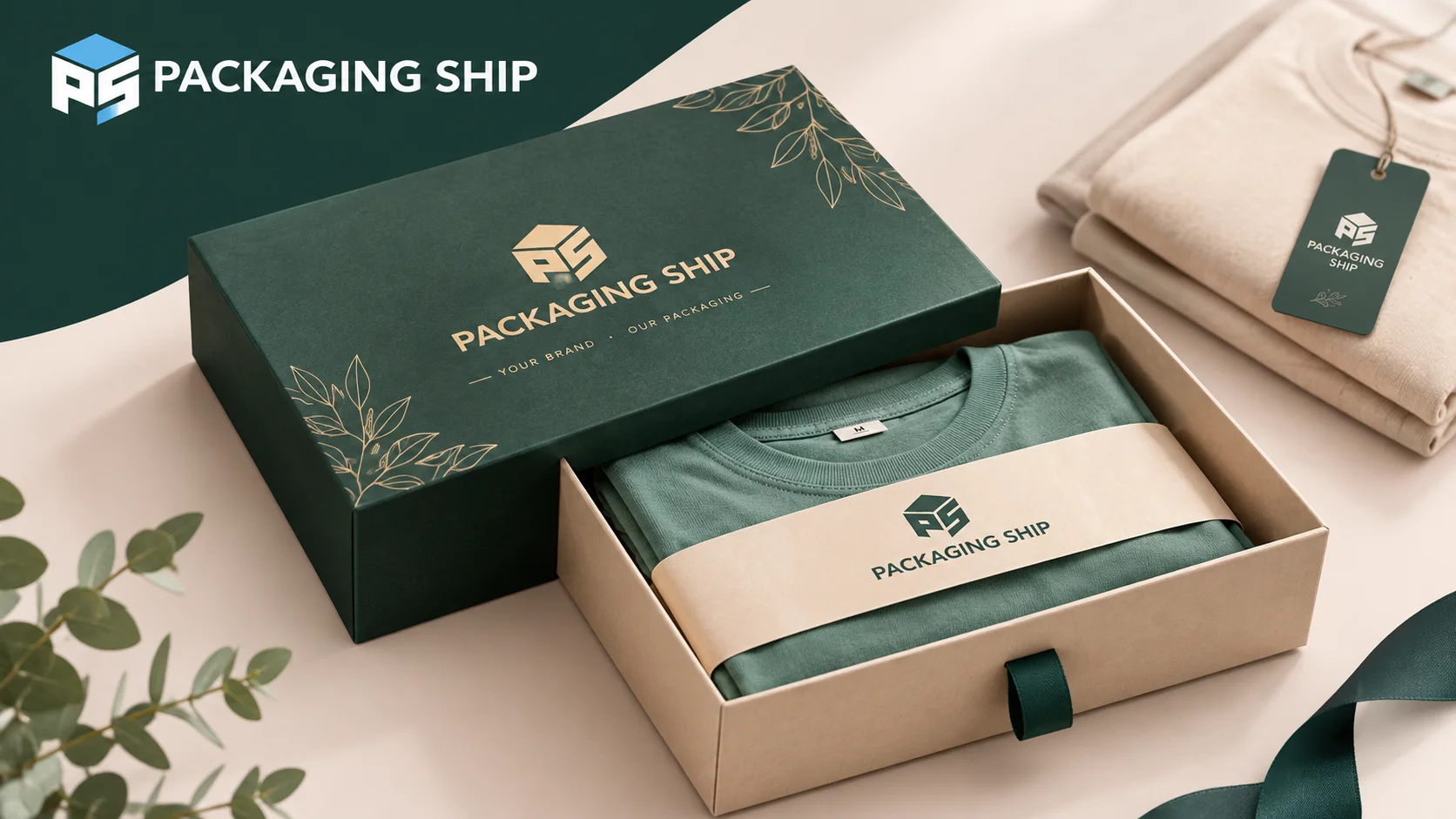
TL;DR: Custom apparel boxes protect clothing, cut down on return related damage, and let small fashion brands look a lot more established than their order size suggests. This guide walks through materials, sizing, pricing, sustainability, and what to check before ordering, along with real return and market data. There’s a quick FAQ near the end, plus a link to get a free quote from Packaging Ship.
Fashion moves fast. A new clothing brand can go from idea to first sale in a matter of weeks, yet most founders don’t think about the box until an order is sitting there ready to ship. That’s usually a mistake, and an easy one to avoid. Custom apparel boxes are one of the few places where a small label can genuinely look like a bigger one, without needing a bigger budget to pull it off.
This guide covers what custom apparel boxes actually are, roughly what they cost heading into 2026, which materials suit which products, and a few things worth checking before you place your first order.
Custom apparel boxes are branded, made to size packaging that clothing brands use to ship, store, or display garments. They’re typically made from kraft, rigid, or corrugated material, printed with a logo and brand colors, and shaped to fit specific items like shirts, dresses, scarves, or accessories, rather than being a generic shipping box that happens to have your logo slapped on it.
Packaging isn’t just decoration, though a lot of brands treat it that way until they see the numbers. It’s the first physical thing a customer touches after buying from you, so it colors how they judge the product before they’ve even opened it.
For clothing brands specifically, that first impression carries extra weight. Fashion buyers are already forming opinions about quality and finish the second they see the box, often before the garment comes out.
A study by the Paper and Packaging Board, conducted with Ipsos, found that 72% of consumers say packaging design influences their purchase decisions, and 67% say the same about the materials a product is packaged in.
So the box isn’t just a formality tacked onto the end of an order. It plays a real part in whether a customer walks away thinking your brand feels premium, or just kind of forgettable.
This isn’t a niche concern either. The corrugated packaging sector, which includes the wardrobe and ship ready boxes commonly used for garment shipment, is projected to reach approximately $80.8 billion by the end of 2026, according to Markets. E-commerce growth and global trade expansion are both pushing that number up, and both of those trends run straight through apparel.
That kind of growth says something. More brands are starting to treat the box as an actual line item worth planning for, instead of something you figure out the week before shipping.
The National Retail Federation’s 2025 Retail Returns Landscape report, produced with Happy Returns, found that online purchases come back at a rate well above in store shopping. Apparel is one of the categories consistently pushing that number higher, usually because of fit issues, shipping damage, or a product that just didn’t match what the buyer expected.
A well built custom apparel box won’t fix a sizing problem. What it will do is protect the garment from crushing and moisture, and it leaves a cleaner first impression than a plain poly mailer ever could.
| Metric | 2024 | 2025 |
| Overall retail return rate | 16.9% | 15.8% |
| Online return rate | N/A | 19.3% |
| Total returned merchandise | $890 billion | $849.9 billion |
Source: National Retail Federation and Happy Returns, 2025 Retail Returns Landscape report.
A founder shipping fifty units a month isn’t going to out price a big retailer, and honestly shouldn’t try to. What they can do is compete on presentation, and packaging happens to be one of the cheapest ways to do that.
This is really where custom apparel boxes prove their worth for a small brand, letting a one person operation look as finished as a company ten times its size.
Not every garment needs the same box, and treating them all the same tends to either waste money or risk damaging something delicate. A scarf and a wedding dress just don’t pack the same way.
Packaging Ship’s custom apparel boxes line covers folding cartons, rigid boxes, and mailer styles built specifically for clothing, so brands can match the box to the product instead of forcing one style to handle everything.
Specialty items usually get the worst packaging treatment, mostly because brands don’t realize a dedicated box already exists for them.
For lightweight accessories, custom scarf boxes keep delicate fabric from creasing while still looking gift ready on a shelf or inside a mailer.
For bridal and formal wear, a bridal dress storage box gives full length garments the structure and coverage they need. That matters a lot when a customer is paying a premium price and expecting the packaging to reflect it.
For everyday basics, custom socks packaging boxes work well for multi pack bundles, subscription drops, or shelf display in a retail setting.
And for layered pieces, custom vest packaging boxes offer enough depth so structured fabric doesn’t get crushed in transit.
Material choice affects both what you pay and how premium the box feels once it’s in someone’s hands. The right pick really comes down to your product, your price point, and how far the box has to travel.
| Material | Best For | Key Trait |
| Kraft board | Casual and streetwear brands | Lightweight, natural texture |
| Rigid board | Premium and bridal apparel | Sturdy, upscale feel |
| Corrugated board | Bulk or layered items | Extra strength for shipping |
Most orders under 500 units go with digital printing, which skips plates entirely and works well for smaller runs or seasonal drops. Once you’re past 500 units, offset printing usually makes more sense, since it gives sharper color matching and a lower cost per unit at that volume.
Custom apparel boxes can also be finished with soft touch lamination, foil stamping, or a printed window. Each of these adds to the price, so it’s worth knowing roughly how many units you need before you request a quote.
Three questions really decide whether a packaging order works for a small fashion brand. How many units do you have to commit to, how much does each one actually cost, and how long before they show up.
Plenty of large manufacturers won’t even quote a custom design under 1,000 to 5,000 units, which shuts the door on any brand still testing a new line. Packaging Ship accepts orders starting from 50 units, so a founder can run a small first batch of custom apparel boxes instead of committing to inventory they aren’t ready to carry yet.
The price you see should be the price you pay. Watch out for die charges and plate charges that show up after the quote, since these are common across the industry and can quietly add hundreds of dollars to an order that looks cheap at first glance.
A quote you can trust shows one number, not a base price with surprise fees bolted on later.
Turnaround tends to matter most around a launch date or a seasonal collection. Standard production usually runs 7 to 10 business days from proof approval, and rush options are available if the timeline is tighter than that.
Before placing an order, it’s worth taking two minutes to get a free quote with your exact dimensions, quantity, and timeline, so there aren’t any surprises once production actually starts.
Sustainability claims are easy to write and much harder to prove, so it’s worth asking a supplier for specifics instead of taking the phrase eco friendly at face value.
FSC certified kraft stock confirms the paper came from a responsibly managed forest. Water based, low VOC inks skip the solvent based inks that can off gas over time. Recycled content cardboard and biodegradable inner liners are also worth asking about if sustainability plays into your brand story at all.
| Question | Answer |
| What is the minimum order for custom apparel boxes in 2026? | Many suppliers require 1,000 or more units, but some manufacturers, including Packaging Ship, accept custom orders starting from 50 units with no minimum requirement. |
| How much do custom apparel boxes cost? | Pricing varies by material, size, and print complexity, and typically starts around $0.20 to $0.50 per unit at higher volumes, with digital printing common under 500 units. |
| How long does production take? | Standard production is usually 7 to 10 business days after you approve your design proof, with rush options available for tighter launch timelines. |
| What material is best for apparel boxes? | Kraft works well for casual and everyday brands, rigid board suits premium or bridal apparel, and corrugated board adds strength for shipping bulkier or bundled items. |
| Are custom apparel boxes eco friendly? | They can be, if the supplier uses verifiable materials such as FSC certified stock, recycled content board, or water based inks rather than a general eco friendly label. |
| Do I need my own artwork to order? | No. Most suppliers, including Packaging Ship, offer free design support and will build your artwork from a logo and brand colors if you don’t have print ready files. |
If you’re planning a launch, a seasonal drop, or your first wholesale order, now’s a good time to lock in packaging that actually matches what’s inside the box. Request a quote from Packaging Ship and get real pricing based on your product, quantity, and timeline, with no minimum order and no hidden fees waiting at checkout.
Packaging isn’t really an afterthought for fashion brands anymore, it’s part of the product itself. Custom apparel boxes protect garments in transit, cut down on damage related returns, and give a small label the same shelf presence as competitors many times its size, without asking for a warehouse sized commitment to get there. The brands treating packaging as part of the customer experience, not just a shipping step, tend to be the ones turning first time buyers into repeat ones. Pick the right material, order a realistic quantity, and work with a supplier who’s upfront about cost and timeline. The box will handle the rest quietly, while the clothing does the talking.