
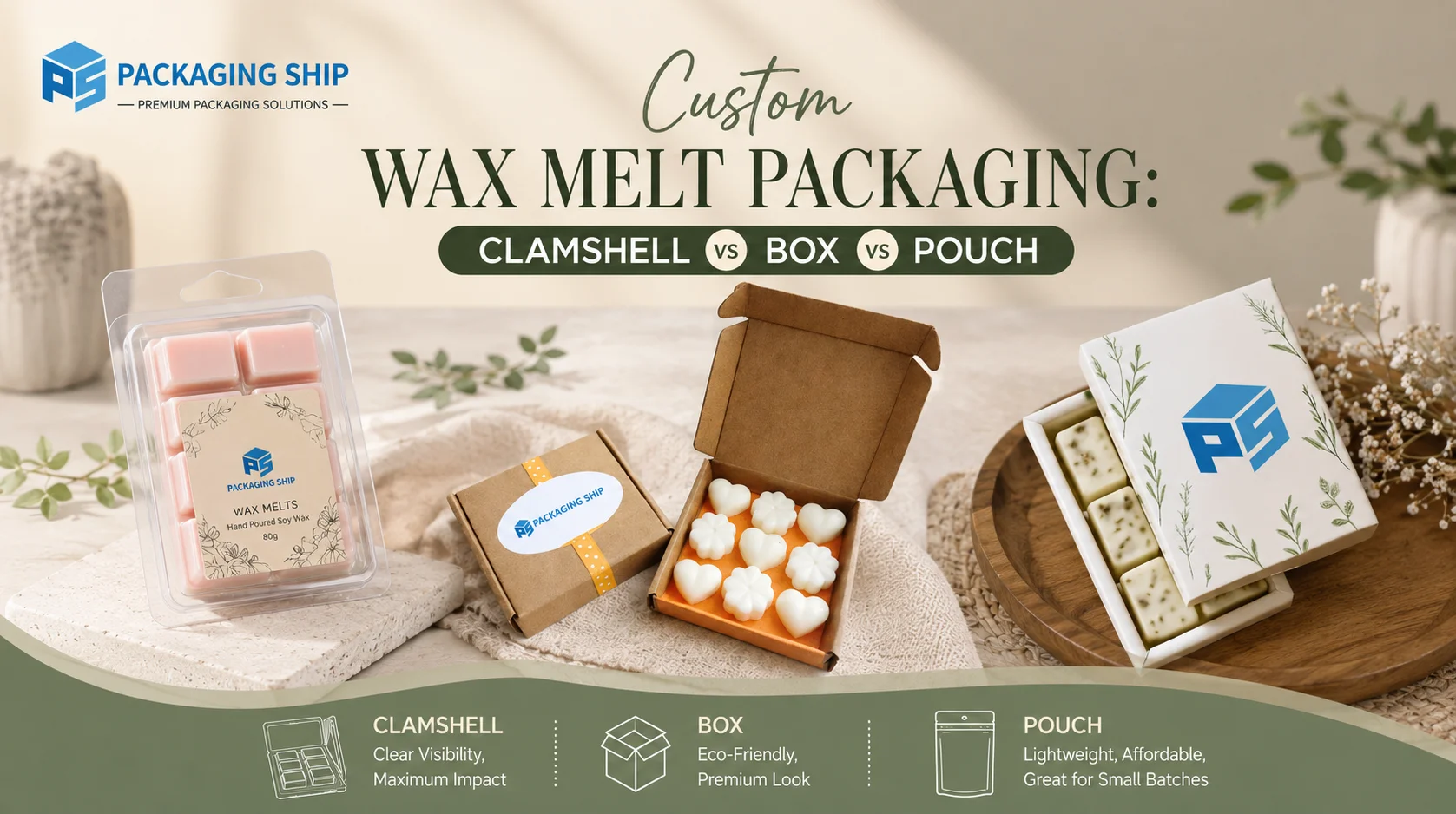
TL;DR: Custom wax melt packaging comes in three real formats, clamshell, box, and pouch. Clamshells look great on a shelf but don’t hold up well in a hot truck. Boxes are sturdier and print better, but cost more per unit. Pouches are the cheapest to ship, though they offer the least protection for the wax itself. Which one you need really comes down to where your customers live and how you’re actually selling.
Here’s a mistake I see constantly. A brand picks their wax melt packaging because it photographed well for the product shot, then finds out three months later that half their July orders arrived as a puddle of scented mush. Packaging isn’t just presentation. It has to survive a hot delivery van, a mailbox baking in the sun, and however roughly the carrier decides to handle the box that day.
The stakes are getting higher too. According to Grand View Research, the global wax melts market was worth 3.47 billion dollars in 2023 and is on track to pass 5.19 billion dollars by 2030. That’s a lot of new sellers crowding into the same space, which means packaging is fast becoming one of the only things that actually separates you from whoever else is selling the same scent on Etsy or Amazon this month. And it’s not just about standing out visually either. A study from Ipsos and the Paper and Packaging Board found that 72 percent of consumers say packaging design genuinely changes whether they buy something. So this isn’t a minor decision you can leave for later.
If you’ve bought wax melts anywhere, you already know this format. It’s the clear plastic clamshell, usually PET, hinged in the middle, showing off every cube inside before the customer even touches it.
It’s cheap. It’s familiar. Shoppers know exactly what they’re getting. And honestly, for local sales, farmers markets, or a boutique with climate control, it works fine.
Where it falls apart is shipping. Thin PET softens in a hot van. The hinge cracks if the box gets tossed around at a sorting facility, which, let’s be real, happens more than any carrier admits. And because it’s clear plastic, there’s not much room to actually tell your brand story beyond a small sticker label.
If most of your sales happen in person, don’t overthink this one. If you’re shipping nationwide from June through September, though, think twice.
A wax melt box is printed paperboard, usually kraft or SBS stock, built to hold loose cubes or a clamshell insert inside. This is really the first format where your packaging starts doing actual marketing work instead of just holding the product.
Full color print on every panel. Real structural protection in transit. A shelf presence a clear plastic clamshell just can’t compete with. The tradeoff is cost, boxes run more per unit than clamshells or pouches, and unless you add a die cut window, customers can’t see the wax before they open it.
This is also where it’s worth thinking beyond just wax melts. If your brand sells gift bundles, a custom candle gift box pairs naturally with a wax melt box using the same stock and finishing, so your whole seasonal set looks like it came from one brand instead of three different suppliers. Brands running a wick candle line alongside their melts often standardize on one box style and add custom tealight candle packaging for the smaller items in that same collection. And if part of your line uses a rigid lift off lid for a premium tin or jar, a custom two piece candle box gives you that structure without redesigning everything from scratch.
Pouches get overlooked a lot, which is a little strange given how much they can save you. A wax melt pouch, usually kraft paper or mylar, sometimes with a resealable zip top, is the lightest option out there by a wide margin.
That matters more than people expect once shipping cost enters the picture. At high volume, the savings on weight alone can be significant. Resealable versions also solve a problem clamshells never really address, keeping dust and moisture out between uses.
The catch is structural. A soft pouch doesn’t protect loose wax pieces the way a rigid box does, so cracking during transit is a real risk if you’re not careful with fill weight. And it’s just not going to feel as premium in someone’s hands as a printed box does.
Subscription brands and anyone shipping thousands of units a month tend to gravitate toward pouches simply because the math works out in their favor.
| Format | Best For | Shipping Durability | Shelf Appeal | Typical Cost |
| Clamshell | In person retail, local sales | Weak in heat | Strong visibility | Lowest |
| Box | Branding, gifting, national shipping | Strong | Premium feel | Mid to high |
| Pouch | Subscription, multi pack, high volume | Moderate | Decent | Low at volume |
There’s no universal answer here, but there is a decent way to think it through. Start with where your customers actually live. Shipping to Texas or Arizona in August is a different problem than shipping to customers in Seattle in March, so if you’re dealing with warm climates for a good chunk of the year, lean toward a box or a heavier pouch and skip the thin clamshell.
Then think about how you actually sell. Retail and market vendors benefit from a clamshell’s visibility. DTC brands lean toward boxes for the branding. High volume sellers usually end up on pouches because the shipping math wins out eventually.
And be honest about your budget at your current order size, because custom wax melt packaging pricing shifts a surprising amount between a 50 unit test run and a 5,000 unit reorder. Price it out for your actual numbers instead of guessing from a generic quote you saw somewhere else.
If there’s one rule worth keeping in your head, it’s this. Pick the packaging that survives your worst shipping day, not the one that looks best in your best case scenario.
If wax melts are just one piece of a bigger fragrance line, it’s worth stepping back and thinking about packaging as a whole collection rather than one SKU at a time. Glass jar candles crack under a lot of the same rough handling that ruins a clamshell, and if your box styles don’t match across products, your brand can end up looking less established than it actually is. Click here for our full guide on custom candle boxes if you want to see how two piece boxes, gift sets, and tealight packaging fit into the picture.
Packaging Ship makes custom wax melt packaging in all three formats out of our own facility in Valley Stream, New York. Clamshell inserts, printed boxes, resealable pouches, whatever fits your product. Orders start at 50 units, no minimum requirement forcing you into a bigger commitment than you’re ready for. No die charges, no plate charges added on at checkout either, the price you’re quoted is the price you pay. Standard production runs 7 to 10 business days after you sign off on your proof, and shipping is free by FedEx or UPS anywhere in the continental US.
You can look through the full range of sizes, materials, and finishes, including grease resistant paperboard built to handle fragrance oil without bleeding through the print, on our custom wax melt packaging product page.
Still not sure which format actually fits your product? Send us your specs, your shipping zone, and roughly how many units you’re thinking about, and we’ll help you land on the right one before you commit to a print run.
| Question | Answer |
| What is custom wax melt packaging? | Any branded clamshell, box, or pouch made to your own size, print, and material specs, built to hold scented wax pieces for retail sale or shipping. |
| What is the best packaging for wax melts? | Honestly, it depends on how you sell. Clamshells suit in person retail. Boxes suit branding and national shipping. Pouches suit subscriptions and bulk orders. |
| Do wax melts melt during shipping? | They can, especially in thin clamshells during hot months. Boxes and thicker pouches tend to hold up better against heat. |
| Is wax melt packaging recyclable? | Usually, yes. PET clamshells are often recyclable under resin code 3, and kraft paperboard is widely accepted through curbside recycling. |
| Is there a minimum order? | At Packaging Ship, no. Orders start at 50 units, so smaller brands can test a scent without committing to a huge print run. |
| How much does it cost? | It depends on the format, the material, and your order size, but the price per unit generally drops the more you order, especially past the point where offset printing makes sense. |
There’s no single right answer between clamshell, box, and pouch. There’s only the right answer for what you’re shipping, where it’s going, and what you can spend. Clamshells sell visibility. Boxes sell brands. Pouches sell efficiency. Once you know which one your business actually needs, custom wax melt packaging stops being a guess and starts being part of how you grow.