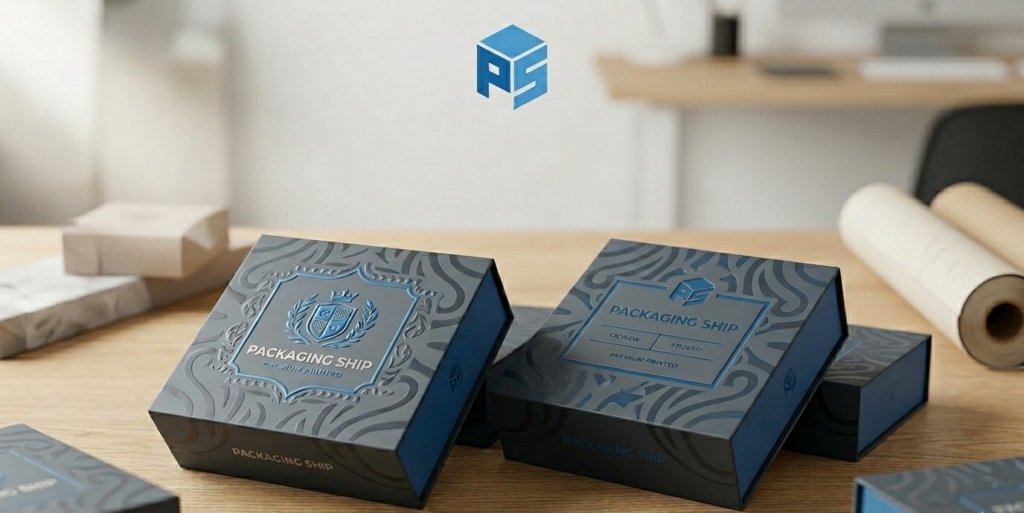
You’re at a trade show. Two products sit side by side. Same price. Same category. Same shelf. But one box has a logo that catches the light slightly raised off the surface, with a texture your fingertip feels before your eye can fully read it. You pick that one up. So does everyone else. That’s embossing. And alongside its counterpart, debossing is one of the most powerful finishing techniques available to any business that takes its packaging seriously. Yet most business owners either overlook these techniques entirely or assume they’re reserved for luxury conglomerates with enormous budgets. Neither is true. Whether you’re running a growing DTC brand, a cosmetics line, or a B2B product operation, embossing and debossing are accessible, high-ROI finishing tools that can transform how your packaging is perceived and how your brand is remembered. This guide covers everything: what these techniques are, how they work, their types, benefits, uses, and exactly how to decide which one is right for your brand. What Is Embossing in Packaging? Embossing raises part of your packaging design above the surface of the material. The logo, text, or pattern literally protrudes outward, creating a three-dimensional, touchable effect that no amount of ink or lamination can replicate. Think of it this way. A Chanel perfume box doesn’t scream “luxury” because of the color. It’s the fact that the double-C logo sits slightly proud of the surface, catching light from every angle, demanding your fingertip before your eye even processes what you’re looking at. That’s the psychology of embossing. It creates a tactile trigger that signals craftsmanship instantly, without words. How Does Embossing Actually Work? The process is more straightforward than most people assume: The result is permanent, durable, and structurally part of the material itself — not printed on top of it. Types of Embossing in Packaging What Materials Can Be Embossed? What Is Debossing in Packaging? Debossing does the opposite. Instead of raising the design above the surface, it presses the design into the material, creating a recessed, indented impression. If embossing shouts premium, debossing murmurs it. The effect is quieter. Cooler. More considered. Brands like Monday Haircare have built an entire visual identity around debossed packaging, a sunken logo on matte board that communicates confidence without needing to prove anything. It’s the difference between a brand that wants to be noticed and a brand that knows it will be. How Does Debossing Work? Debossing typically needs only a single female die, pressed downward from the top of the material: Because debossing uses one die instead of two, setup is generally simpler and slightly less expensive than embossing. Types of Debossing in Packaging What Materials Can Be Debossed? Embossing vs Debossing: Side-by-Side Comparison Factor Embossing Debossing Design Effect Raised above the surface Pressed into the surface Visual Character Bold, luxurious, eye-catching Subtle, modern, minimal Die Required Male and female die (two die) Female die only (one die) Cost Slightly higher (two dies) Slightly lower (one die) Process Complexity Higher Lower Durability Excellent Excellent Best Material Thick paperboard, rigid board Paper, leather, cardstock Brand Positioning Luxury, premium, bold Sleek, refined, minimalist Common Use Cosmetics, gifting, luxury retail Wine labels, lifestyle brands, stationery Works with Foil? Yes: registered emboss Yes: deboss with foil What Are Embossing Dies? Material Guide The die is the metal plate doing all the work. Not all dies are equal, and choosing the wrong one for your production volume is a mistake worth avoiding. Benefits of Embossing and Debossing in Packaging 1. First Impressions Happen Before the Box is Opened The moment a customer picks up embossed or debossed packaging, their brain starts registering quality. Not because they’re thinking about it consciously, but because they’re feeling it. That tactile signal happens before any visual assessment. It’s faster than reading a tagline. Faster than noticing a color. And it sticks. 2. Packaging That Gets Shared Unboxing content on social media is a genuine marketing channel now, not an afterthought. Packaging with tactile dimension gets picked up, turned over, and filmed in a way that flat-printed boxes simply don’t invite. That organic reach driven by a customer’s genuine delight is packaging ROI that doesn’t appear on a traditional marketing spreadsheet but absolutely affects brand growth. 3. The Perceived Value Effect Customers make rapid unconscious judgments about product quality based on packaging alone. A box that feels premium suggests a product that IS premium. That judgment happens in seconds and influences price sensitivity, purchase confidence, and repeat buying behavior. Embossing and debossing are among the most cost-efficient ways to shift that perception in your favor. 4. Durability That Outlasts Print Printed finishes scratch, fade, and scuff. Embossed and debossed impressions are structurally pressed into the material rather than layered on top of it. They maintain definition through warehousing, shipping, retail shelving, and customer handling without degradation. The effect you approved in production is the effect your customer experiences. 5. A Sustainable Route to Premium This one is worth paying attention to in 2026. Gloss plastic lamination, long used as the default “premium” packaging finish, creates recyclability problems. A debossed kraft board box with no plastic coating delivers an equally premium tactile feel while remaining fully recyclable. Leading packaging brands are actively making this switch, and it’s a genuine differentiator for businesses with sustainability commitments. Where Are Embossing and Debossing Used? Embossing dominates cosmetics packaging. Foundation boxes, serum cartons, perfume cases, and raised logos with gold foil are practically the category standard for anything positioned above the mid-market. If your beauty brand isn’t using embossing, your shelf presence is working harder than it needs to. Debossing has a long, established history in wine and spirits labeling. The slightly sunken label text on a premium wine bottle is almost certainly debossed. Artisan chocolate, specialty condiments, and premium gift food products are increasingly using blind embossing on kraft board. The combination of natural material and tactile finish reads as handcrafted in a way that resonates with the current consumer appetite for authenticity. Multi-level embossing and
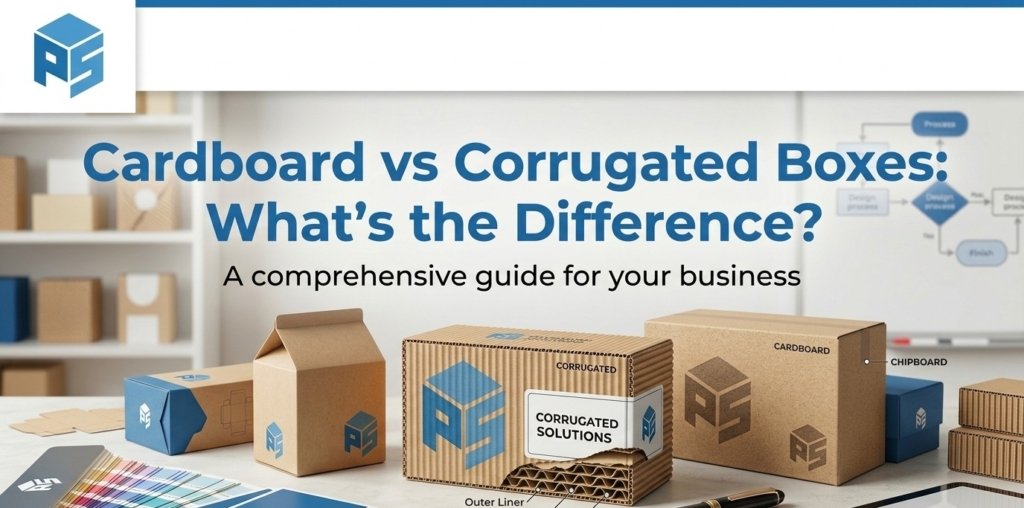
Picture this: You just received a call from your biggest retail client. Three pallets of your product arrived damaged. The boxes collapsed mid-transit. The items are unsellable. The client wants a refund, and they’re reconsidering the entire relationship. The culprit? Standard cardboard boxes that looked perfectly fine in your warehouse but failed completely under real shipping conditions. This scenario plays out across American businesses every single day. And in almost every case, the root cause is the same: someone treated cardboard vs corrugated boxes as the same thing. They’re not. And for any business that ships, stores, or displays products, understanding the difference isn’t just useful, it’s essential. What Most Businesses Get Wrong About Packaging Walk into any conversation about packaging, and you’ll hear “cardboard box” used to describe everything from a cereal box to a double-wall industrial shipping container. It’s one of the most common and costly misconceptions in the business world. To understand the scale of corrugated packaging in America, consider this: according to the Fibre Box Association’s 2024 Annual Report, the US corrugated industry shipped 381 billion square feet of corrugated board in 2024, with a combined industry value of $40.8 billion. Single-wall corrugated alone accounted for nearly 90% of all production. These are not niche numbers. Corrugated packaging is the backbone of American commerce. Yet businesses across every industry continue losing thousands of dollars annually from product damage caused by under-specifying their packaging simply because the terminology confuses them at the decision-making stage. What Is a Cardboard? A Clear Definition Cardboard, also called paperboard, is a single-layer, heavy paper-based material made from compressed wood pulp or recycled paper fibers. It is flat, lightweight, and flexible. You see it every day in cereal boxes, cosmetic cartons, greeting cards, and retail shelf packaging. How it’s made: Cardboard is produced by pressing and drying moist wood pulp fibers into a single uniform sheet. That straightforward manufacturing process is what keeps its cost low — but also what limits its structural capability. Common types used in packaging: Where cardboard truly excels is in retail environments, where visual appeal, print sharpness, and lightweight handling matter more than structural strength. It’s the right choice for cosmetic boxes, subscription inserts, apparel packaging, and point-of-sale displays. In other words, anywhere your packaging is seen, not stressed. How Is Cardboard Manufactured? Cardboard starts as raw wood pulp or recycled paper fiber mixed with water into a slurry, then pressed and dried under heat into flat, uniform sheets. The process is straightforward, which keeps costs low. But that simplicity also limits structural performance. A single pressed sheet can only bear so much before it bends, buckles, or tears under real shipping conditions. What Are Cardboard Boxes Used For? Cardboard performs best where packaging is seen, not stressed. It dominates retail shelf packaging, folding cartons for food and cosmetics, subscription box inserts and dividers, gift and luxury set-up boxes, and point-of-sale display faces. The moment your packaging needs to survive a freight carrier, a warehouse pallet, or long-distance transit, cardboard’s limitations become a liability. Benefits of Cardboard Packaging Cardboard offers superior print quality with sharper graphics and finer detail than corrugated. It costs less per unit due to simpler manufacturing. It’s lighter, which helps with dimensional weight pricing on appropriate products. It’s also highly versatile, die-cut, embossed, foiled, and shaped into complex structures easily. For retail-facing packaging where presentation drives purchase decisions, cardboard is genuinely the right tool. What Is a Corrugated Box? The Engineering Behind the Strength A corrugated box is a multi-layer packaging structure made of two flat outer linerboards sandwiching a wavy, fluted inner layer called the “medium.” This architecture creates a series of hollow columns that provide exceptional strength, cushioning, and resistance to compression — making corrugated the gold standard for shipping and freight. Here’s an analogy that makes it click: Roman engineers discovered over 2,000 years ago that the arch shape could distribute enormous weight without collapsing. The fluted medium in a corrugated box uses the exact same physics. Each wave is an arch. Hundreds of tiny arches running side by side create a material that supports far more weight than its individual components ever could alone. The three layers, explained: Types of Corrugated Boxes Type Layers Load Capacity Best For Single-Wall 2 liners + 1 flute Up to 65 lbs Standard e-commerce, retail shipping Double-Wall 3 liners + 2 flutes Up to 150 lbs Electronics, appliances, heavy goods Triple-Wall 4 liners + 3 flutes Up to 300 lbs Industrial, machinery, bulk freight Corrugated Flute Types: Which One Do You Actually Need? Flute Thickness Best Application A-Flute ~3/16″ Fragile items, glassware — maximum cushioning B-Flute ~1/8″ Cosmetics, canned goods, display boxes C-Flute ~3/16″ Standard e-commerce shipping (used in ~80% of boxes) E-Flute ~1/16″ High-end retail, luxury packaging, cosmetics F-Flute ~1/32″ Ultra-premium packaging, fine food cartons How Is Corrugated Manufactured? Corrugated manufacturing starts at the paper mill, where linerboard and medium paper are produced separately. The medium is fed through heated, ridged rollers on a corrugator machine, forming the distinctive wavy flute. It’s then bonded to the linerboards using starch-based adhesive. The finished board is cut, scored, slotted, and folded into the specific box dimensions you order. Printing is applied via flexographic or digital press. The result is an engineered structure, not just a box. What Are Corrugated Boxes Used For? Corrugated is the standard for everything that moves. E-commerce shipping, food and beverage transport, electronics protection, industrial freight, retail floor displays, and pharmaceutical shipping all rely on corrugation. Its combination of strength, cushioning, stackability, customization, and carrier compliance makes it the only responsible choice for any product that faces real-world logistics. Benefits of Corrugated Packaging Corrugated delivers where cardboard cannot. The fluted medium absorbs shock and distributes load, protecting fragile and heavy products through rough transit. It stacks reliably on pallets without collapsing. It meets all major carrier compliance requirements. It’s fully customizable in size, print, coating, and insert configuration. And it’s the most recycled packaging material in the United States,