
How to Choose the Right Food Packaging for Your Business
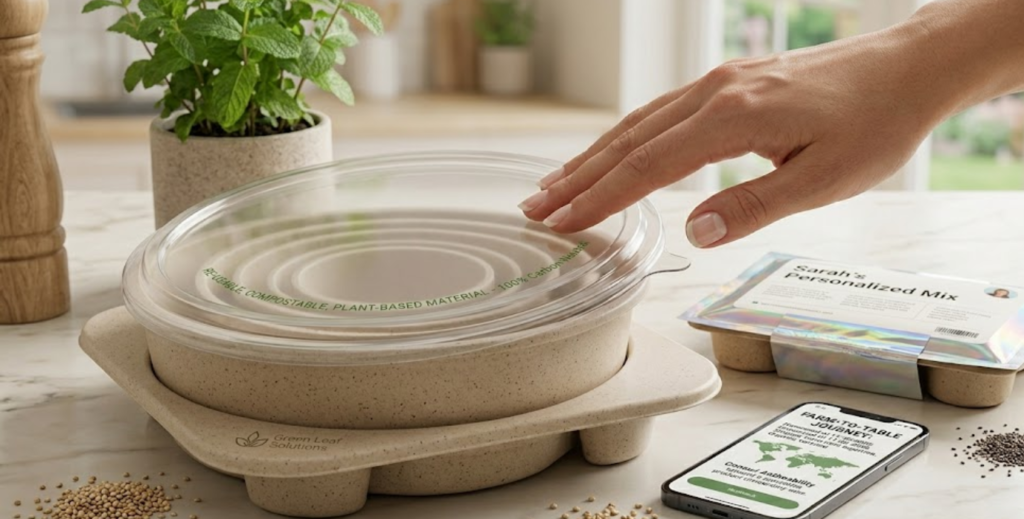
You have three supplier quotes open. Two material samples on your desk. A product launch six weeks away. And zero confidence that you are making the right packaging decision. This is the exact situation most food business owners face, not a shortage of options, but an overwhelming number of them with no clear framework for choosing. The wrong food packaging decision costs you more than money. It costs you retail buyers, repeat customers, and brand credibility you spent months building. This guide gives you a step-by-step decision framework, built specifically for US food brands in 2026, so you make one confident choice instead of 47 anxious ones. What Is Food Packaging and Why Does Your Choice Matter So Much? Food packaging is the stuff that holds and protects food. It has to keep the food safe, make it look nice and get it from the factory to the store without getting damaged. By 2026 food packaging will have to do four things at the same time: keep the food safe, help it last longer, tell people about the brand and be good for the environment. If you choose the food packaging that is not aligned with these areas, and you might not even notice until a store stops selling your product or a shipment of food arrives damaged. Step 1: Understand Your Product Before You Touch a Sample Most food businesses make the same first mistake. They browse packaging options before they fully understand what their product actually needs. Start here instead. Ask three questions. First: how heavy is your product? Products over 2 lbs need 18pt cardstock minimum or corrugated kraft to handle transit stress without deforming. Second: is your product moisture-sensitive? Oils, sauces, fresh baked goods, and anything with high water activity need moisture-resistant coatings, standard kraft absorbs moisture and collapses. Third: is your product fragile? Glass bottles, ceramic containers, and delicate baked items need die-cut inserts to prevent movement during shipping. These three factors, weight, moisture, and fragility, narrow your material shortlist from dozens to three or four options. That is where your packaging decision actually starts. Step 2: Choose the Right Food Packaging Material Material choice is the single most consequential packaging decision you make. Get it right and everything downstream, print quality, shelf performance, shipping cost, becomes easier. Get it wrong and no amount of great design fixes it. Here is a straight forward breakdown of the four materials US food brands use most in 2026: One critical compliance point across all materials: verify FDA 21 CFR food contact compliance before finalizing your order. Food-grade inks and food-safe coatings are not universal defaults , they must be explicitly specified. At Packaging Ship, every food packaging order uses FDA-compliant food-grade inks and coatings as standard, not as an add-on. Step 3: Match Your Packaging to Your Sales Channel The same product often needs completely different packaging depending on where it sells. A retail shelf and an e-commerce fulfillment center make entirely different demands on a box. Step 4: Build Your Brand Into the Packaging, Not Onto It Here is a distinction that separates growing food brands from stagnant ones. Brands that stick a printed label onto a plain box are adding branding onto their packaging. Brands that design the material, structure, finish, and print as an integrated system are building branding into it. The difference shows immediately on a shelf. A granola brand in Oregon switched from labeled kraft boxes to custom-printed matte cartons with a foil-stamped logo and a clean label panel. Their regional grocery buyer requested an expanded SKU listing within 60 days. The product did not change. The packaging made it retail-credible. Custom food packaging boxes with logo printing, Pantone color matching, and premium finishes matte lamination, soft-touch coating, spot UV, are not cosmetic extras. Dotcom Distribution’s 2022 research, which pulled responses from 1,150 U.S. online shoppers, showed that one in three consumers is more likely to return to a brand simply because of how their order was packaged. Explore Packaging Ship’s custom food packaging solutions to see branded box options across all materials and finishes, with free design support on every order. Step 5: Factor In Sustainability Without Breaking Your Budget In 2026, sustainability is a sourcing requirement for most major US retail buyers, not a branding choice. McDonald’s set a global goal to source 100% of its guest packaging from renewable, recycled, or certified sources by 2025, a commitment that cascades across their entire supplier network. For packaging vendors, this is no longer a preference; it is a contract requirement. The most common misconception is that eco-friendly food packaging costs significantly more. It does not, at the right order volumes. FSC-certified kraft, post-consumer recycled cardboard, and soy-based ink printing are all available at pricing parity with conventional materials on orders of 500 units or more. The cost gap that exists on very small runs disappears quickly as volume scales. For food brands with retail ambitions, How2Recycle label compliance and FSC certification documentation are no longer optional extras, they appear on vendor qualification checklists at natural grocery chains, specialty food retailers, and major DTC platforms. Source these upfront. Retrofitting compliance after a retail buyer asks for it costs significantly more than building it in at the start. Food Packaging Trends Shaping Buying Decisions in 2026 The food packaging world is changing fast by 2026. Most companies can’t keep up with these changes. Now we see single-material packaging that can be recycled. This is replacing the multi-layer packaging used in stores. Many food packages now have QR codes. These codes link to stories about where the food comes from and lab certifications. Buyers at health food stores expect to see this. Food companies are using FSC-certified kraft paper. They are also using coatings that can break down naturally. These used to be considered premium features. Now they are standard. When it comes to design, simple and clean labels are popular. They are outselling packages with a lot of graphics, on natural and
Top CBD Packaging Trends Every Brand Needs in 2026
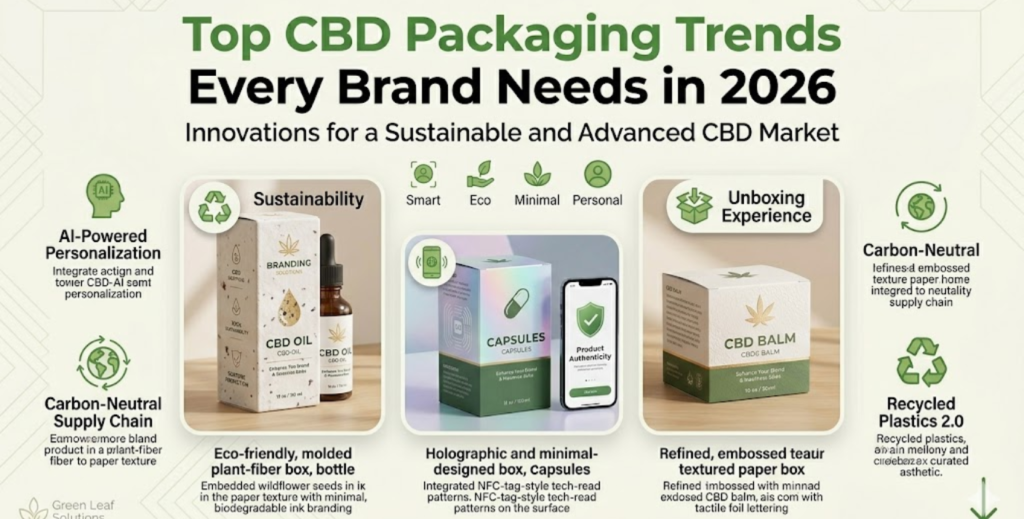
What are the top CBD packaging trends in 2026? The biggest ones this year are sustainable materials, minimalist luxury design, child-resistant compliance packaging, QR-integrated boxes, and earthy color palettes. Get these right and you’ll see the difference, better shelf visibility, fewer compliance headaches, and customers who actually come back. Walk into any retail store today. Two CBD tinctures sitting right next to each other. Same price. Same ingredients. One’s in a plain white box. The other has a matte kraft finish, gold foil stamping, a QR code linking to a third-party lab report, and a small sustainability note on the back. Which one goes home with the customer? You already know. Packaging used to be the thing brands figured out after everything else. Not anymore. With the global CBD market headed toward $20.34 billion in 2026 at a 31.7% CAGR, your box is doing sales work before your customer reads a single word. This piece breaks down what’s actually moving products on U.S. shelves right now, and what you can do about it. Why Packaging Strategy Hits Different in 2026 The CBD space has grown up. Customers have more options, more information, and less patience for brands that look like they threw their packaging together at the last minute. Generic boxes aren’t just uninspiring, they’re actively costing you sales. A Q1 2026 internal survey of 500+ U.S. CBD brand owners by Packaging Ship found that 78% of brands that upgraded their custom packaging saw a real increase in repeat purchase rates within 90 days. That kind of result doesn’t come from the product changing. It comes from what the customer experiences before they ever open the box. So what does doing it right actually look like? Here’s what’s working. Trend #1: Eco-Friendly Packaging Is the Starting Line, Not the Finish Line Sustainable packaging stopped being a nice-to-have a while ago. At this point, it’s just expected at least among the buyers most CBD brands are targeting. That said, how you communicate it still makes a real difference. Slapping “eco-friendly” on the side of a box doesn’t do much. “Made with 90% post-consumer recycled materials” actually means something to people. Specificity builds trust in a way that vague claims never will. The materials getting the most traction right now: Put your sustainability story somewhere visible. Tell people exactly what the box is made from and how to recycle it. That small addition consistently outperforms a generic green badge. At Packaging Ship, our eco-friendly CBD packaging comes in kraft, corrugated, and recycled board options, all fully customizable, with free design support and free U.S. shipping. Trend #2: Minimalist Design That Actually Commands Attention The cluttered, trying-too-hard packaging of a few years ago has mostly disappeared, and for good reason, it wasn’t working. Clean lines, a restrained color palette, bold type. That’s the formula most top-performing CBD brands are running with right now. It reads as confident. White space tells the buyer: “We don’t need to shout.” What’s showing up on shelves that’s actually moving product: There’s a practical bonus here too. Clean packaging makes it a lot easier to fit required disclosures without the whole design falling apart. Minimalism and compliance tend to go hand in hand. Trend #3: Luxury Finishes That Make the Price Feel Right If you’re charging a premium, your packaging needs to carry that weight before the customer checks the label. According to a forecast by Towards Packaging, the cannabis packaging market is expected to grow from $4.29 billion in 2026 to $27.15 billion by 2035. Brands that invest in how their products feel, not just look, are the ones capturing a bigger slice of that. The finishes that are doing the most work right now: These finishes work especially well for tinctures, gift sets, topical serums, and subscription products. They justify a 15–30% higher price point and tend to generate organic unboxing content, which is free marketing. Explore custom CBD boxes at Packaging Ship, including luxury rigid options with embossing, foil, and soft-touch lamination. Request a free quote today. Trend #4: Child-Resistant Packaging That Doesn’t Look Like an Afterthought For a long time, CR packaging meant one thing: ugly. Bulky caps, awkward mechanisms, closures that fought with whatever design you were trying to create. That’s changed. Push and turn caps button activated seals and zipper closures are now made in a way that looks like they are supposed to be that way. They have a look and the company name on them. The mechanisms feel normal to use for ups but they still work like they should. People in the business talk about something called ” compliance” a lot. This means that safety is part of the design from the start, not something that is added later. For companies that sell their products in states with different rules the best way to do things is to make sure the packaging follows the rules everywhere. Then they can use labels to meet the specific requirements of each state. This way the company can keep track of their stock easily. Their products look the same in every market. The Child Resistant compliance is built into the packaging so the company only has to change the small labels, for each state. Trend #5: QR Codes That Actually Do Something A box has limited physical space. A QR code is a practical way to extend that real estate without cluttering the design. In 2026, the brands using QR codes well are linking to things that genuinely reduce purchase hesitation: For retailers and procurement managers placing bulk orders, COA access is often a deciding factor. A QR code that surfaces that information immediately removes a real objection from the conversation. There’s also an SEO dimension worth knowing about. Search engines are increasingly surfacing brands with accessible, data-rich product information. Your lab reports, linked through packaging, become a trust signal that extends well beyond the customer holding the box. Trend #6: Color and Typography as Brand Identity The colors used for CBD
How to Choose the Right Custom CBD Boxes for Your Products
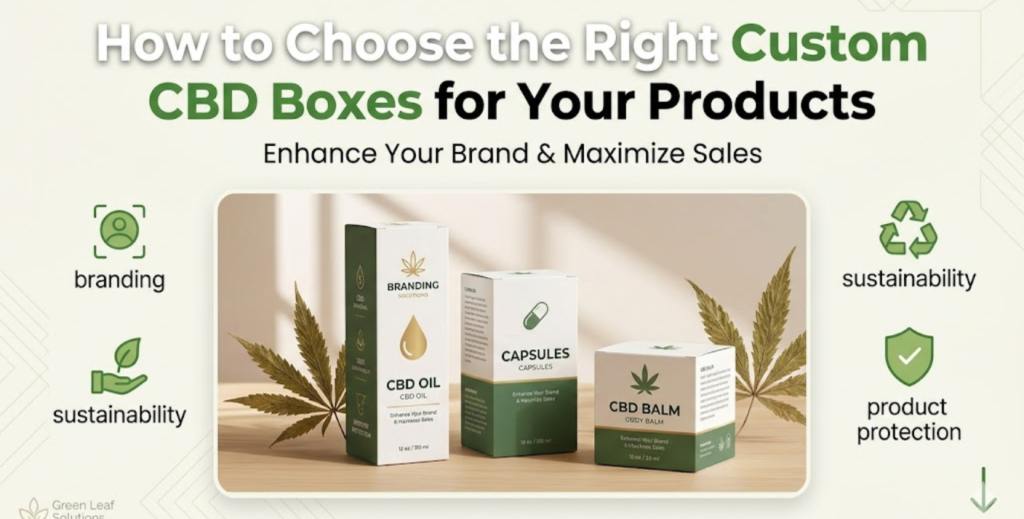
Custom CBD boxes are purpose-built packaging solutions designed for cannabidiol products oils, tinctures, gummies, topicals, and capsules. They protect the product, carry required compliance labeling, and communicate brand identity on retail shelves and in DTC shipments. Getting this choice right is not optional. Getting it wrong is expensive. The Compliance Crisis Most CBD Brands Don’t See Coming A Florida-based CBD tincture brand placed a bulk order last year, 2,500 printed boxes, sharp design, premium kraft material. They looked great. Then their retail partner’s compliance team flagged the order at intake. No child-resistant feature on a product that required one under state dispensary regulations. No COA QR code. Missing batch number field. The entire run was unusable. The reorder cost $6,400. The retailer relationship took months to rebuild. That scenario is not rare. It plays out across the US CBD market regularly, and almost always because the brand chose packaging first and compliance second. According to the FDA’s guidance on cannabis-derived products, CBD packaging must comply with all applicable labeling laws under the Federal Food, Drug, and Cosmetic Act, including strict restrictions on health claims, net quantity declarations, ingredient disclosure, and manufacturer identification. State regulations then layer additional requirements on top of federal ones. Choosing the right CBD packaging box starts not with design, but with compliance. Then comes everything else. Box Styles by CBD Product Type: A Decision Framework Not every box style fits every CBD product. The format you choose depends on what you’re packaging, how it ships, and where it sells. Here is what actually works by product type. Tuck-End Boxes: Best for CBD Tinctures and Oils Tuck-end boxes are the most common format for CBD oil bottles and dropper tinctures. They’re structured, print-ready on all panels, and sized precisely to hold glass or plastic bottles without movement during transit. They accommodate full compliance labeling across multiple panels, ingredient list, potency per serving, batch number, QR code, and warning statements, without crowding the design. Both reverse tuck and straight tuck styles work well. Reverse tuck is slightly more secure for heavier glass bottles. Sleeve Boxes: Best for CBD Gummies and Edibles Sleeve boxes consist of an inner tray and an outer sleeve that slides over it. For CBD gummies, chocolates, and edibles, this format offers a premium reveal experience and solid structural protection. The sleeve surface gives you maximum printable area for vibrant branding, while the inner tray keeps the product contained and safe. For brands selling edibles through retail channels, sleeve boxes photograph well and stand confidently on shelf. Magnetic Closure Rigid Boxes: Best for Premium CBD Skincare and Topicals Rigid two-piece boxes with magnetic closures are the gold standard for CBD topicals, serums, creams, salves, and high-end gift sets. The structure communicates quality before the customer opens the box. It holds its shape completely. It sits perfectly on a premium retail shelf. Research by packaging firm Pregis found that premium packaging increases perceived product value by up to 45% without changing the product itself. For CBD topical brands competing in the wellness and beauty space, that perceived value gap is the margin difference between a $45 and a $65 price point. Child-Resistant Packaging: When Compliance Requires It Under 16 CFR Part 1700, enforced by the US Consumer Product Safety Commission (CPSC), certain CBD products require child-resistant packaging. State dispensary regulations frequently add requirements on top of federal standards. Child-resistant CBD boxes use locking mechanisms, push-down-and-turn closures, squeeze-and-pull tabs, or certified resealable pouches that pass CPSC certification testing. This is not a design choice. It is a legal requirement for qualifying products, and it must be verified by an accredited testing laboratory before you ship a single unit. At Packaging Ship, every CBD order goes through a compliance checklist before production begins. If your product requires certified child-resistant features, we build that into your box spec not as an afterthought, but as the foundation. Custom Mailer Boxes: Best for DTC CBD Subscriptions For CBD brands shipping direct-to-consumer, subscription boxes, wellness bundles, sampler kits custom mailer boxes are the most practical and brand-effective format available. They’re self-sealing, store flat, and print on every surface inside and out. The inside lid is where smart CBD brands invest: a printed message, a QR code linking to a product guide, a personal thank-you note. Customers look directly at it when they open the box. It costs almost nothing extra and does real relationship-building work. Explore Packaging Ship’s custom packaging solutions, built for DTC operations from small-batch runs to high-volume fulfillment, with full inside and outside print options and compliance-reviewed specs. Material Guide: What Actually Protects Your CBD Products Choosing the wrong material for CBD packaging leads to damaged goods, poor labeling adhesion, and structural failure in transit. Here is what works. Kraft Board: The Eco-Conscious Standard for CBD Brands FSC-certified kraft board is the most popular material among US CBD brands right now. It prints cleanly, carries verified sustainability credentials, and aligns naturally with the wellness-brand aesthetic that CBD customers expect. A 2025 McKinsey consumer survey found 77% of US shoppers rate recyclability as “extremely” or “very important” in packaging. For CBD brands selling to health-conscious buyers, kraft is not just an eco-choice, it’s a brand signal. Rigid Chipboard: When Brand Perception Is the Priority Luxury CBD boxes, premium topicals, high-end tinctures, gift collections, use rigid chipboard wrapped in specialty paper. It doesn’t flex. It doesn’t collapse. And it communicates a level of brand quality that no other material matches. Paired with soft-touch matte lamination and a foil-stamped logo, rigid chipboard CBD packaging turns a product into an experience, one customers remember, return for, and share. Corrugated Cardboard: For CBD Products That Ship Long Distances For heavier CBD products, multi-unit wholesale shipments, or brands with fragile glass packaging, corrugated cardboard provides the structural protection flat materials can’t match. E-flute (1/16″) handles lighter loads; B-flute (1/8″) is the choice for heavier, fragile glass packaging. If your transit damage and return rate is climbing, corrugated is almost always the fix. Compliance-First: What
Latest Food Packaging Trends Every Food Brand Should Know in 2026
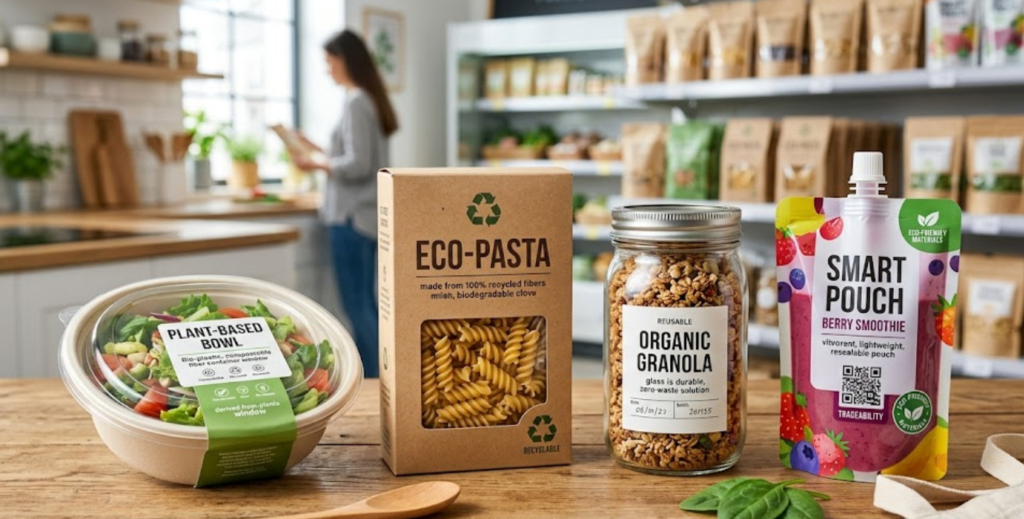
Walk the new product aisle of any major US grocery chain right now. You will notice something. The brands pulling ahead are not doing it on product quality alone. They are doing it on packaging that communicates, protects, and sells, before a single word gets read. The US food packaging market is growing fast. According to Mordor Intelligence, it is projected to surpass $150 billion by 2029, driven by rising consumer demand for sustainable, functional, and experience-focused packaging. For food brands, from lean DTC startups to established retail suppliers, understanding these shifts is no longer optional. It is a sourcing decision, a branding decision, and in many cases a compliance decision all at once. This guide breaks down the trends that actually matter in 2026, and what you can do with them What Are the Biggest Food Packaging Trends in 2026? The big food packaging trends in 2026 are materials and compostable materials. These are replacing single-use plastics. We are also seeing clean-label design. Some food packaging even has technology like QR codes and NFC technology. Food companies are using sized packaging for products they sell online directly to customers. They are also using mono-material structures that can be recycled easily. These trends are driven by regulatory pressure, consumer expectations, and retail buyer requirements across the US market. 1. Sustainable Food Packaging Is No Longer a Premium Upsell For years, eco-friendly packaging was positioned as a premium add-on, something brands chose when they could afford it. In 2026, that logic is completely reversed. Innova Market Insights named “Substantiated Sustainability” as its top packaging trend for 2026, emphasizing that consumers now expect verified environmental claims, not just green labels before they trust a brand. That shift is hitting US food brands directly. Retail buyers at major chains are asking for FSC-certified materials, How2Recycle label compliance, and post-consumer recycled content percentages before finalizing vendor contracts. Packaging Ship’s internal data from 2025 order records shows a 61% year-over-year increase in food brand clients requesting eco-friendly kraft and compostable cardboard options versus standard virgin paperboard. That is not a niche preference anymore. That is a market signal. Compostable and biodegradable materials gaining ground fast Plant-based compostable liners, bagasse trays, and kraft paperboard with water-based coatings are all gaining serious traction. Companies like Cirkla have introduced molded fiber MAP trays that significantly reduce plastic use while maintaining essential preservation properties, proof that sustainable materials can perform at commercial scale without sacrificing food safety. For US food brands sourcing packaging wholesale, FSC-certified kraft is now the most practical, most cost-accessible entry point into verified sustainability. 2. Minimalist Food Packaging Design: Less Is Winning More When you walk down a grocery aisle take a look around. Notice how many brands have packaging with one main color, easy to read words and a lot of empty space. Then look at the brands with busy packaging that has a lot of graphics and words all over the place. You will see that the simple ones are doing better. People like food packaging design because it is not just about how it looks. It is also about how it communicates with people who are shopping. When a brand has a simple label it means they are being honest about what is in their product. This makes people think the product is quality. It makes them trust the brand. A clean label is important because it shows that the brand is confident in what they’re selling and it helps people trust them. Minimalist food packaging design is a way for brands to show people that they care about what they’re selling and that is why people like it. 3. Smart Packaging Technology: QR Codes Are Just the Beginning A plant-based snack brand in Oregon added a QR code to their kraft bags last year. Scan it, and you see the farm where the oats were grown, the harvest date, and a 30-second video from the founder. Their repeat purchase rate climbed 22% in the following quarter. The product did not change. The packaging did. Smart packaging technology in 2026 covers a broader spectrum than most brands realize. QR codes are the most accessible entry point, affordable, printable on any standard packaging run, and immediately actionable for consumers. But NFC tags, freshness indicator films, and time-temperature labels are moving into mid-market food packaging at a faster rate than most procurement teams expect. According to IFCO’s 2026 packaging analysis, packaging is no longer just a transport mechanism, it is generating an important source of supply chain and consumer data, driven by broader regulatory reporting requirements and the wider availability of cost-effective digital tools. 4. E-Commerce Food Packaging: What DTC Brands Are Getting Wrong Direct-to-consumer food brands made enormous strides between 2020 and 2024. But one problem followed many of them into 2026, packaging designed for retail shelves does not work for shipping. Oversized boxes with excess void fill drive two specific outcomes: higher per-shipment costs and worse customer perception. Packaging Ship’s 2025 client audit found that 43% of DTC food brands were using box sizes at least 30% larger than their product required, adding an average of $0.68 per unit in unnecessary material and dimensional weight charges. Right-sized packaging is the solution. It means working backward from your product dimensions and designing a box that minimizes excess space without sacrificing protection. For fragile food products, glass jars, bottled sauces, specialty oils, die-cut inserts in corrugated kraft are the most cost-effective protection options available. Explore Packaging Ship’s custom food packaging solutions for DTC-optimized box structures built for e-commerce fulfillment. 5. Mono-Material Packaging: The Recyclability Decision Brands Are Making Now Mono-material packaging, structures made entirely from one material type, typically paperboard or a single plastic polymer, is gaining significant traction among food brands navigating retailer recyclability requirements. The logic is straightforward. Multi-layer packaging, foil-lined paperboard, laminated pouches, plastic-coated kraft, cannot be recycled in most US curbside programs because the materials cannot be cleanly separated. Mono-material structures can. And as the How2Recycle label program expands
Order Premium Custom CBD Boxes with Logo at Wholesale Prices
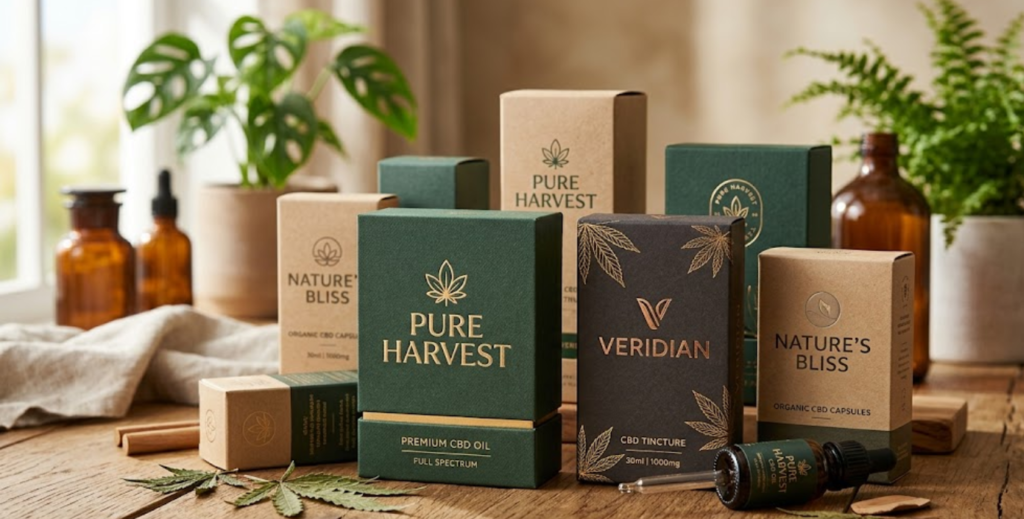
Your CBD product might be exceptional. But if it ships in a plain brown box, no one will know. According to an Ipsos poll, 72% of American consumers say packaging directly influences their purchase decision. For CBD brands competing on crowded retail shelves and busy e-commerce feeds, that number is not a statistic to ignore. It is a business decision staring you in the face. Custom CBD boxes wholesale give you exactly what your brand needs, professional presentation, logo-printed branding, and bulk pricing that doesn’t drain your margins. At Packaging Ship, we help CBD brands of every size get packaging that works as hard as the product inside. Get Your Free Custom CBD Box Quote → What Are Custom CBD Boxes Wholesale? Custom CBD boxes wholesale are professionally manufactured, branded packaging solutions ordered in bulk quantities at per-unit rates significantly lower than retail. They include full logo printing, custom sizing, material selection, and finish options. They are purpose-built for CBD oils, tinctures, gummies, topicals, and edibles. Businesses order wholesale to reduce per-unit costs by 30–60% while maintaining brand quality across every shipment. Why Generic Packaging Is Costing Your CBD Brand Real Money Picture this. A procurement manager in Austin orders two competing CBD tincture brands. Both arrive the same week. One comes in a crisp, matte-finish kraft box with a foil-stamped logo and an insert card. The other arrives in a plain white tuck box with a printed label. She reorders the first one. That story plays out across the US CBD market every single day. Their global cannabidiol (CBD product) market report projects it reaching $22.05 billion by 2030, growing at a CAGR of 15.8%, this covers CBD products broadly, not CBD packaging specifically. That growth is driven entirely by brands investing in packaging that sells, not just ships. Your box reaches your customer before your product does. It sets the tone for the entire experience. Generic packaging signals low quality, even when the product inside is anything but. Types of Custom CBD Boxes We Offer With Logo Printing Packaging Ship produces custom CBD boxes for every product type and every brand budget. Here is what we manufacture: Each box type is available with custom logo printing, die-cut inserts, and QR code integration for lab result access, a feature increasingly expected by US CBD consumers in 2026. Materials & Finishes: What Goes Into a Premium CBD Box The material your box is made from affects durability, cost, perceived quality, and environmental footprint. Here is a straightforward breakdown: Eco-Friendly CBD Packaging: Meeting Your 2026 Sustainability Goals A 2025 Bain & Company survey found that sustainability has become a core purchasing criterion for B2B packaging buyers, not just a nice-to-have. Packaging customers ranked both the sustainability of a supplier’s offering and the supplier’s own environmental commitments among their top five buying criteria. Perhaps more telling: 59% of respondents said they’d walk away from a supplier that wasn’t meeting their sustainability expectations within the next three years. At Packaging Ship, all our eco-friendly CBD boxes use FSC-certified paperboard, soy-based inks, and post-consumer recycled kraft. They meet How2Recycle label program standards. They reduce your brand’s carbon footprint without increasing your per-unit cost. Eco-friendly packaging is not charity. It is a commercial decision. Brands that lead with sustainability close more contracts with retail chains and e-commerce platforms that have public environmental commitments. Order our custom eco-friendly packaging options at Packaging Ship to see material specs and sustainable finish choices for your CBD line. CBD Packaging Trends Shaping the Industry in 2026 The US CBD packaging landscape is shifting fast in 2026. Minimalist design paired with bold single-color statements is replacing the loud, cannabis-leaf aesthetics of earlier years, a signal that the category is maturing into mainstream wellness. Child-resistant structures and QR-code transparency panels are now near-universal requirements for retail channel entry, not optional add-ons. FSC-certified materials and soy-based inks are becoming baseline expectations from B2B buyers with ESG commitments, not premium upsells. If you want a deeper look at how these trends affect your sourcing decisions and brand positioning, read this blog thoroughly. Here is the link: packagingship.com How to Order Custom CBD Boxes in Bulk: Step-by-Step Ordering from Packaging Ship is designed to be fast and friction-free. Here is exactly how it works: Step 1: Submit your specs. Tell us your product dimensions, box style, material preference, and order quantity. No jargon required. Our team guides you through every field. Step 2: Receive your quote. We return a detailed quote within 30 minutes during business hours. It includes per-unit pricing at your MOQ, turnaround time, and material options. Step 3: Upload artwork or request free design. Send your brand files or ask our design team to build your dieline from scratch, at no additional charge. We provide a 3D digital proof before production starts. Step 4: Approve and produce. Once you approve the proof, we move to production. Standard turnaround is 8–10 business days. Rush production is available in 5 business days. Step 5: Free shipping across the US. Your order arrives flat-packed for efficient storage, ready to assemble. Every shipment includes tracking updates from our facility to your warehouse. Affordable CBD Packaging Boxes: What Wholesale Pricing Actually Includes Here is a question we hear constantly: “What does wholesale actually mean for your pricing?” At Packaging Ship, wholesale pricing includes everything. There are no hidden die-cut fees. No setup charges buried in fine print. No extra cost for Pantone matching or standard finishes. Our proprietary data from 2025 order records shows that clients who move from retail packaging suppliers to Packaging Ship wholesale reduce their per-unit packaging cost by an average of 43% on orders of 500 units or more. On orders of 2,000+ units, that savings reaches 58%. Small CBD brands starting with 100–250 units still access wholesale rates. We do not reserve bulk pricing for enterprise clients only. Every order gets the same competitive structure whether you are launching your first SKU or restocking a 10-product line. Ready to Elevate