
How to Choose the Right Custom Apparel Boxes for Your Clothing Brand
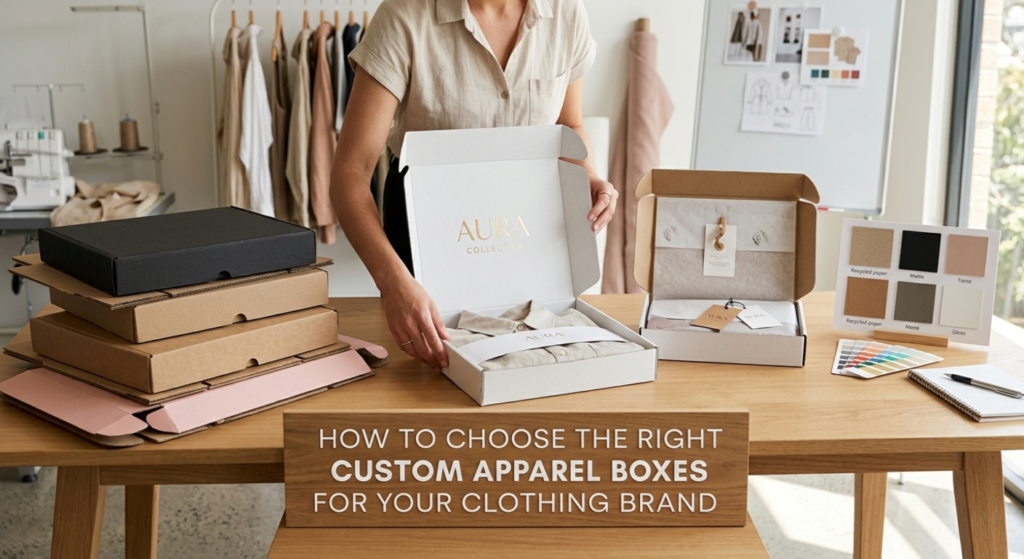
What are custom apparel boxes? Custom apparel boxes are boxes designed specifically for clothing brands. Apparel boxes are sized, printed and finished to fit your apparel and branded design needs. They keep clothes safe during transit, offer a branded unboxing experience and communicate product quality before your customer even touches the product. The Box Decision That Costs Brands Thousands A small streetwear brand in Atlanta placed their first big order last year, 1,500 units in generic corrugated boxes. Wrong flute. Too large. Garments shifted in transit, arrived creased, and three dozen boxes collapsed at the seams. Refunds, reshipping costs, and two one-star reviews later, they lost $4,800 fixing a $900 packaging decision they hadn’t thought through. That story isn’t rare. It plays out across US clothing brands every week. The stakes are concrete. A peer-reviewed systematic review published in Humanities and Social Sciences Communications (Nature Portfolio, June 2025) confirmed that 72% of consumers globally say packaging design plays a key role in their purchase decisions, a figure drawn from Ipsos global consumer research cited across the study’s 221 analyzed academic sources. Your box does real commercial work. Choosing the wrong one undoes it. So here’s how to get it right. Step 1: Match the Box Style to Your Product and Channel Not all clothing boxes are suitable for all garments. It depends on what you’re selling, how you’re shipping it, and the experience you want your customer to have. Research from nobelus university quotes that at least 1/3 of a consumer’s product decision-making results from personal preference as well as packaging. Custom Mailer Boxes: Best for Online Fashion Brands Custom mailer boxes are the dominant format in DTC clothing right now. They ship flat, store easily, self-seal without tape, and print cleanly on every surface, inside and out. The inside lid is where smart brands do their best work. Print a loyalty code there. A brand message. A care guide. Customers look directly at it when they open the box. It costs almost nothing extra and gets read almost every time. Mailer boxes weigh 30–40% less than rigid alternatives. At high volumes, that single factor meaningfully cuts your FedEx and UPS dimensional weight charges. For subscription clothing boxes and online boutiques, they’re the strongest value-to-impact format available. You can explore Packaging Ship’s custom mailer boxes, available in sizes suited to folded tees through full outerwear, with full inside and outside print options. Lid-and-Tray Rigid Boxes: Best for Premium and Gift Apparel When perceived value is the priority, lid-and-tray rigid boxes deliver it. The structured form, magnetic or friction-fit closure, and substantial feel signal quality before the garment appears. Brands selling dress shirts, bridal wear, tailored pieces, or high-end gifting use these because the box itself is part of the product. Customers keep them. They reuse them. They photograph them. That’s earned marketing you don’t pay for separately. Add soft-touch matte lamination and a single foil-stamped logo and you have packaging that rivals brands spending ten times your budget on retail experience. Folding Carton Boxes: Best for Retail and Lightweight Items Folding cartons work well for lighter garments, socks, underwear, ties, scarves, and for retail shelf display. They’re cost-effective, lightweight, and print in vibrant color. They’re not built for premium unboxing moments. But for retail-facing brands that need high-volume, shelf-ready packaging at competitive cost, folding cartons are a reliable workhorse. Tuck-End Boxes: Best for Accessories and Branded Add-Ons Tuck-end boxes close with folding flaps rather than a lid. They’re quick to assemble and efficient at scale. Many fashion brands use them for accessories, belts, hats, sunglasses, that ship alongside main clothing orders. They don’t project luxury. But they project professionalism, hold their shape in transit, and print well with your logo and brand palette. Step 2: Choose the Right Material for Your Garments Material choice is where most clothing brands make their most expensive mistakes. Wrong material means damaged goods, wasted budget, or packaging that contradicts the brand image you’ve spent years building. Kraft Board: The Eco-Friendly Foundation In the US, clothing brands prefer FSC-certified kraft boards in 2026. As a material it’s recyclable, prints cleanly in full color and has verified sustainable credentials that stand up to government and consumer audits. Kraft works for both budget-conscious small brands and premium labels. The natural texture reads as intentional, earthy, considered, on-brand for sustainable fashion. At bulk volumes, it frequently costs less per unit than coated plastic-adjacent alternatives. Corrugated Cardboard: When Structure Matters Corrugated cardboard, typically E-flute (1/16″) for lighter garments or B-flute (1/8″) for heavier or bulkier items, provides structural protection that flat materials can’t match. If your garments are heavy, if they ship long distances, or if your return rate from transit damage is climbing, corrugated is the right call. It handles stacking pressure, resists corner crush, and keeps its form through rough carrier handling. Rigid Chipboard: When Perception Is the Product Rigid chipboard is the premium tier. It doesn’t fold. It holds its shape completely. And it communicates a level of quality that no other material replicates. Custom luxury apparel boxes, the kind used for designer shirts, couture pieces, and premium gift packaging, use rigid chipboard wrapped in specialty paper, then finished with soft-touch lamination, embossing, or foil stamping. This is the material behind the unboxing moments customers film and share unprompted. SBS Cardstock: For Retail-Ready Clothing Packaging Solid bleached sulfate (SBS) cardstock offers a brilliant white surface that holds print with exceptional clarity. It’s the preferred material for folding cartons in retail environments, where print vibrancy and shelf presence matter more than structural depth. Step 3: Get Printing and Branding Right Custom apparel boxes with logos are only as good as the print process behind them. Two options dominate the US market. Offset Printing vs. Digital Printing Finishes That Add Perceived Value The finish on your custom garment boxes does more than protect the surface. It actively shapes how customers perceive your brand. None of these require a luxury price point. Even small brands applying one premium
Top Apparel Packaging Trends Every Fashion Brand Should Know in 2026
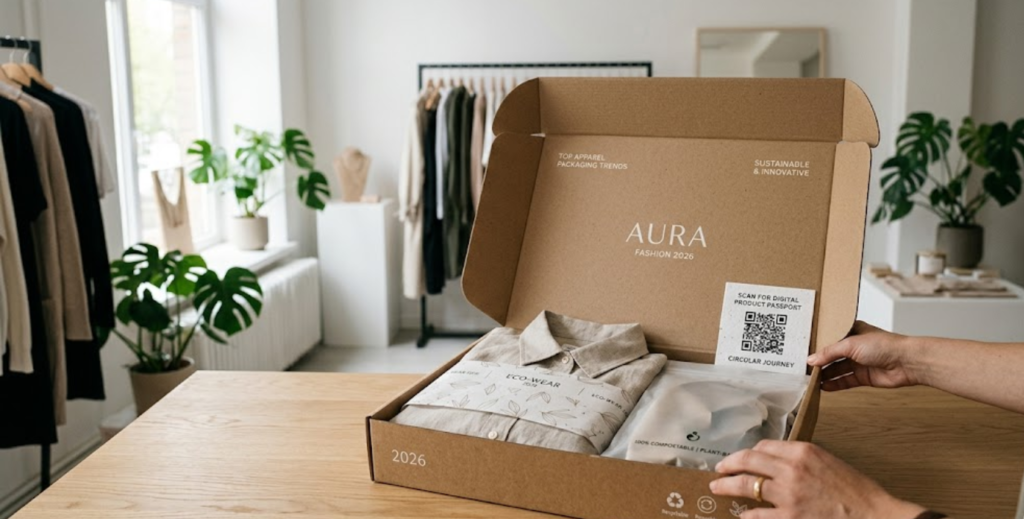
What are the top apparel packaging trends in 2026? The biggest apparel packaging trends in 2026 are eco-friendly kraft boxes, minimalist design, custom mailer boxes, luxury premium finishes, smart QR packaging, personalization at custom apparel boxes, and right-sized boxes. US fashion brands using these trends report stronger repeat sales, lower shipping bills, and sharper brand recognition with customers. Why This Matters More Than You Think Last spring, a mid-sized DTC clothing brand reached out to us at Packaging Ship. Sales were solid. Product reviews were strong. But repeat purchases had flatlined. Their packaging? A generic poly mailer, no branding, arrived crumpled. The garment inside was fine. But the experience wasn’t. They switched to a custom kraft mailer with inside-lid printing and a simple branded tissue wrap. Within 90 days, repeat orders climbed 28%. Nothing else changed. That’s not a coincidence. It reflects something Ipsos confirmed in research conducted for the Paper and Packaging Board, 72% of US consumers say packaging design directly influences their purchase decisions. Most fashion brands treat packaging as a cost line. The ones winning in 2026 treat it as a revenue driver. So here’s what’s actually working right now across the US apparel market. Trend 1: Eco-Friendly Apparel Boxes Are Now the Floor, Not the Ceiling Two years ago, using sustainable packaging gave a fashion brand a talking point. Today, not using it raises questions you don’t want to answer. US Extended Producer Responsibility laws are no longer proposals, several states are enforcing them. Retailers are asking suppliers for sustainability documentation. And McKinsey’s 2025 US consumer research found that 77% of American shoppers rate recyclability as either “extremely” or “very important” in their packaging expectations. That’s not a green niche. That’s the mainstream. What the smarter fashion brands are actually using: One thing that surprises clients when they switch: eco boxes often cost less. In bulk, FSC kraft typically undercuts plastic alternatives, before you factor in EPR compliance exposure. “Our clients who moved to kraft eco boxes saw a 22% average lift in positive post-purchase feedback within 60 days of switching.” — Packaging Ship Client Success Team Works best for: Every brand size. Non-negotiable if you sell to Gen Z buyers or supply any major US retailer. Trend 2: Minimalism Is Outselling Busy Design Go look at what Everlane ships in. Or A.P.C. Or any of the clothing subscription brands that consistently top customer satisfaction scores. They all share one thing: the packaging does almost nothing, and somehow says everything. A matte white box. One debossed logo. Tissue paper in a single neutral shade. A card with three lines of text. That’s it. And customers film the unboxing and post it unprompted. Minimalist packaging works because restraint communicates confidence. When a brand doesn’t need color explosions or bold callouts to make an impression, the product feels like it can stand on its own. Which is exactly the message a clothing brand should want to send. There’s a cost angle here too. Fewer ink colors means lower printing costs. Simpler construction means faster production. Less lamination means cheaper finishing. Minimalism is often the most cost-effective route to a premium look, which makes it particularly useful for brands that want to upgrade their packaging without blowing the budget. What it actually looks like when done well: a white or natural kraft box with a single debossed or foil-stamped logo. A mailer with one-color letterpress. A tissue wrap in the brand’s signature color. A card, not a pamphlet, just a card. Works best for: Mid-to-high-end fashion brands, premium DTC labels, streetwear with a design-forward identity. Trend 3: Custom Mailer Boxes Have Taken Over Online Fashion If you walk through any e-commerce fulfillment center serving fashion brands right now, you’ll notice something. The plain poly mailer, which dominated online clothing shipping just two years ago, is being replaced. The custom mailer box is taking its spot. There are real structural reasons for that shift. Custom mailer boxes weigh significantly less than rigid boxes, typically 30 to 40% less, which directly reduces dimensional weight charges from FedEx and UPS. They store flat, so they don’t eat up warehouse space. They’re self-sealing, which cuts packing time. And because they print on all six sides, inside and out, every surface becomes usable brand real estate. That last point matters more than it sounds. The inside lid is where customers look first when they open a box. Print a loyalty code there and print a personal message. Print a care guide. It costs almost nothing extra, and customers actually read it because they’re already looking at it. You can explore Packaging Ship’s custom mailer boxes, fully printable inside and out, available in sizes suited to everything from folded tees to full outerwear, with pricing that works at both low and high volumes. Works best for: DTC clothing brands, online boutiques, subscription apparel boxes. Particularly strong for brands where the unboxing experience is part of the marketing strategy. Trend 4: Luxury Finishes Are No Longer Just for Luxury Brands Here’s a number worth sitting with. Research by Pregis found that premium packaging increases consumers’ perceived product value by up to 45%, and the entire cost difference between standard and premium packaging came to $0.19 per unit. Nineteen cents a box. That’s the delta between a customer who thinks your brand is decent and one who thinks your brand is worth telling people about. Most fashion brands aren’t doing this math. The ones that have figured out that luxury packaging isn’t an indulgence, it’s one of the highest-ROI line items in their customer acquisition budget. In 2026, what premium apparel packaging actually involves: None of this requires a luxury price point to justify. A $60 jacket in a magnetic rigid box with foil stamping reads as a $120 jacket to most customers. Works best for: Premium and luxury labels, bridal apparel, high-end gifting, elevated streetwear brands. Trend 5: Smart Packaging Is Turning Boxes Into Sales Tools A fashion brand in Chicago recently added a QR