
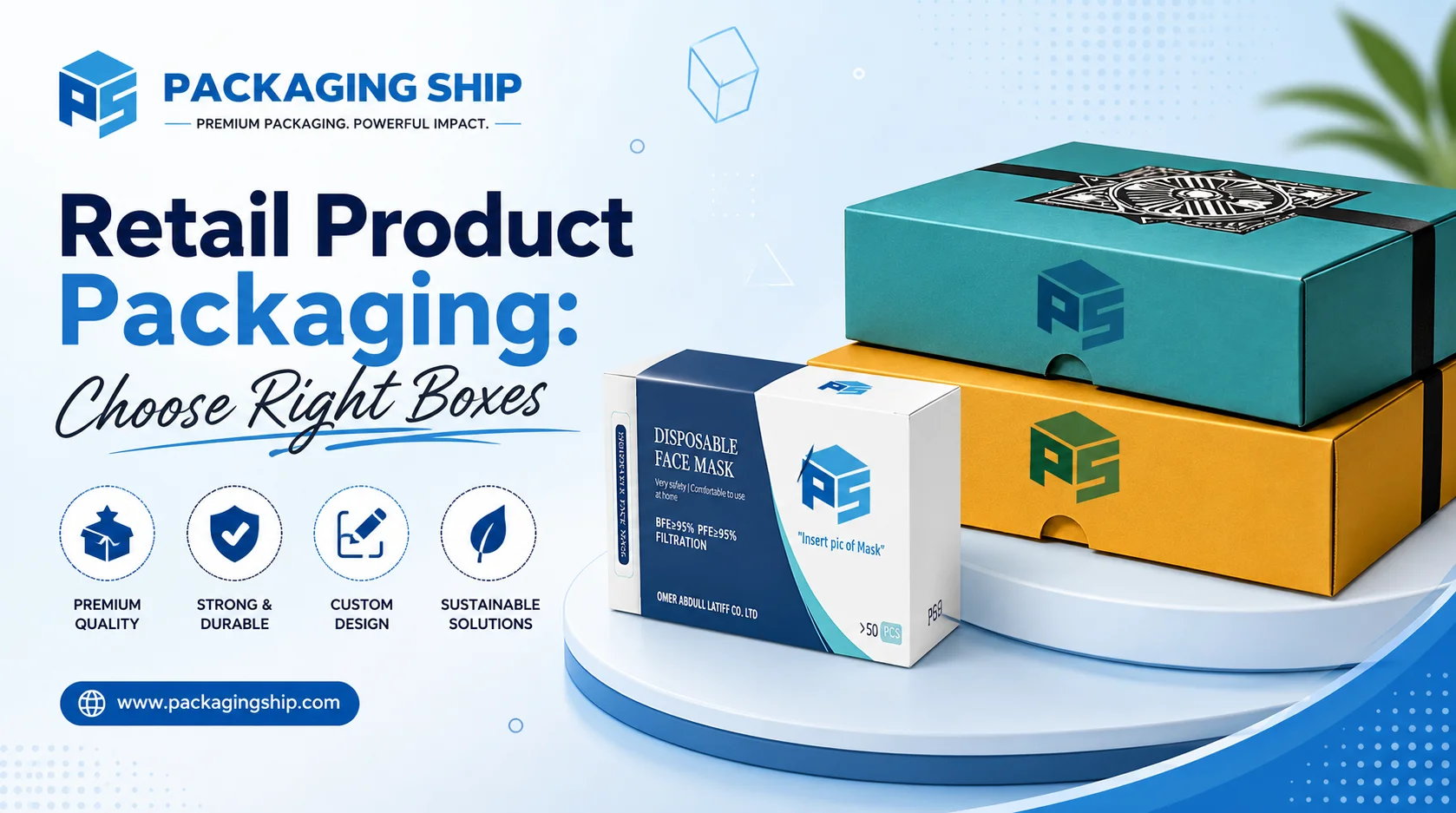
Retail product packaging is the outer structure that houses, presents, and protects your product on store shelves. Choosing the right box depends on your product type, retailer requirements, brand positioning, and budget. The wrong choice costs you shelf placement. The right one drives sales.
A wellness brand launched their flagship supplement line into three regional retailers last spring. The product was solid. The margins were good. The buyer was enthusiastic.
Within 60 days, the buyer pulled the SKU.
The boxes were delaminating under store lighting heat. The tuck-ends popped open during restocking. Barcodes were placed where a retail scanner couldn’t read them. None of these were product failures. Every single one was a packaging failure.
Here is the reality that most packaging content skips: 72% of buyers say packaging design directly influences their purchase decision, according to industry research compiled by LBBonline, in 2025. But in B2B retail, bad packaging doesn’t just lose a sale, it loses a buyer relationship.
This guide gives you the decision framework to get it right the first time.
Retail product packaging is the consumer-facing structure that holds your product during in-store display, transit to the retailer, and the point of customer interaction. It is distinct from shipping packaging, which prioritizes transit protection above all else.
Think of retail packaging as your brand’s silent salesperson. It communicates price point, quality, and trust before the customer reads a single word.
According to Printpack’s 2026 packaging trends report, packaging visuals strongly influence purchase decisions among 18 to 44-year-olds, particularly those who discover products through social media first and then encounter them on shelves. That means your packaging now has to perform in two environments simultaneously: the digital shelf and the physical one.
Most brands choose boxes based on price alone. That is the fastest route to a retailer rejection. Instead, evaluate these five factors in order.
Your packaging materials must survive the supply chain before they can sell anything. Corrugated cardboard handles crush pressure during palletized shipping. Chipboard works for lightweight retail display items with low handling risk. Rigid boxes offer maximum structure for premium or fragile products.
Ask yourself: What does this box face between my warehouse and the retail shelf?
This is the factor most first-time retail sellers underestimate. Major retailers have specific planogram dimensions, UPC barcode placement rules, and shelf-ready requirements. Packaging for retail products that does not meet these specs gets rejected at the receiving dock — not politely flagged.
Request the retailer’s packaging compliance guide before you finalize your dieline. This document exists. Most suppliers do not tell you to ask for it.
On a crowded retail shelf, your packaging competes for attention in under three seconds. Bold color contrast, clear hierarchy, and distinctive structure all drive pick-up rate. A study cited in Packaging Digest notes that products with strong shelf differentiation see up to 30% higher interaction rates compared to category-average packaging designs.
This is where specialty formats earn their cost premium. Custom Action Figure Boxes are a strong example, their structured window fronts and full-panel print coverage create visual dominance in collectible and hobby retail that standard tuck-end boxes simply cannot replicate.
Your retail boxes packaging must align with your existing brand system, color values, typography, finish preferences, and tone. Inconsistent packaging across a product line signals to buyers that you are not a mature brand. It also confuses customers at shelf.
Establish a brand packaging standard document before your first custom run. Define your Pantone colors, approved finishes, and structural preferences. This saves money at scale.
Custom retail packaging boxes do not have to be expensive. At PackagingShip, custom retail boxes start at $0.20 per unit with no minimum order quantity, no die charges, and free US shipping. That changes the math dramatically for brands scaling from startup to mid-market.
Run your cost-per-unit calculation at three volumes: your current order, double your current order, and 5x. The spread between these numbers tells you where your packaging strategy should be heading.
Choosing the right box structure is not about preference. It is about matching form to function.
When your product needs to stop the scan on a crowded shelf, structure itself becomes the strategy. Custom Triangle Boxes interrupt the visual pattern of standard rectangular packaging — creating a stop-the-scan moment that flat formats cannot achieve. Artisan food brands, specialty wellness products, and premium gift items benefit most from this approach.
For beverage and bottled product brands, Custom Bottle Neckers offer one of the highest ROI packaging investments available. They add promotional messaging, seasonal branding, or QR codes to existing bottle inventory without requiring a full packaging redesign.
The right packaging materials depend on three variables: product weight, retail environment, and brand positioning.
It is the standard for retail folding cartons. It prints cleanly, holds structure well for lightweight products, and works with CMYK or Pantone color systems. Most cosmetic, supplement, and small consumer goods packaging uses SBS board between 16pt and 24pt caliper thickness.
It is ideal when your product requires both retail display presence and transit protection in the same box. Double-wall corrugated handles crush loads that chipboard cannot. It is heavier, but the structural trade-off is worth it for fragile or heavy items.
It signals eco-consciousness and artisanal quality. This is increasingly requested by natural wellness, organic food, and sustainable lifestyle brands. Importantly, retailers like Whole Foods and specialty wellness chains often expect kraft-finished packaging from suppliers in natural product categories.
For bundled or multi-unit retail offerings, Custom Perforated Packaging solves a genuine shelf problem. It keeps units together during display while giving customers a clean, easy tear line at point of purchase.
The strongest custom retail packaging ideas share one characteristic: they serve both the brand and the buyer simultaneously. Matte lamination communicates premium quality for skincare brands priced at $30 and above. Window die-cuts drive pick-up rate for food, craft, and toy products where the product itself is the best salesperson. Spot UV printing on a single logo or pattern element creates a tactile shelf experience that photographs well and drives social sharing.
If you want more inspiration and creative direction for your next packaging refresh, explore our full collection of custom retail packaging ideas, click here to discover formats, finishes, and design strategies built for retail performance.
Not every packaging supplier is built for retail. Ask these four questions before you commit.
Many suppliers have MOQs of 500 or 1,000 units. This traps small brands into expensive inventory risk on untested SKUs. PackagingShip has no minimum order quantity — you order what you need, when you need it.
Hidden die and plate charges can add $200 to $800 to your first order. PackagingShip charges zero for die and plate setup, which means your quoted price is your real price.
Free design support is rare in wholesale packaging. At PackagingShip, every order includes design support from packaging specialists who understand retail compliance requirements, not just aesthetics.
Retail launch windows are not flexible. Free US shipping and reliable lead times are non-negotiables for any brand entering retail. PackagingShip ships free to any US address.
Retail product packaging is one of the highest-leverage decisions a brand makes before entering a store. The wrong box costs you a buyer relationship, a shelf position, or a reorder. The right box becomes your most consistent salesperson, working every hour the store is open.
Start with structure. Match material to product and retail environment. Build consistency across your SKU line. Then choose a packaging partner who understands retail compliance, not just print production.
PackagingShip offers custom retail packaging with no MOQ, free US shipping, free design support, and zero die or plate charges. Your next packaging run starts with a free quote.
Get Your Free Custom Packaging Quote Today →
No minimum order. No die charges. Free US shipping. Free design support.
Shipping boxes survive a pallet. Retail boxes sell a product. They have different structural requirements, materials, and compliance standards. Running the same box for both is one of the costliest mistakes first-time retail brands make.
At PackagingShip, custom retail boxes start at $0.20 per unit with no MOQ and zero hidden fees. Board weight, print colors, and finish choice move the number. Get a quote for your exact specs most brands are surprised how affordable custom actually is.
SBS chipboard between 16pt and 24pt is the retail standard for most folding cartons. Corrugated handles heavier or fragile products. Kraft is common in natural wellness and organic food categories, and several specialty retailers now actively expect it.
Yes, and this catches more brands off guard than anything else. Major retailers have planogram dimensions, barcode placement zones, and shelf-ready specs your dieline must hit. Always request the retailer’s packaging compliance guide before finalizing your structure. It exists. Most suppliers never tell you to ask for it.
Yes. PackagingShip has no minimum order quantity. Order 50 units for a retail test or 5,000 for a full launch of the same quality, same free US shipping either way.
Not as often as brands assume. Kraft and recycled content board are frequently cost-competitive with standard coated stock. Certified compostable materials cost more, but for most retail use cases, going sustainable does not mean going over budget.