
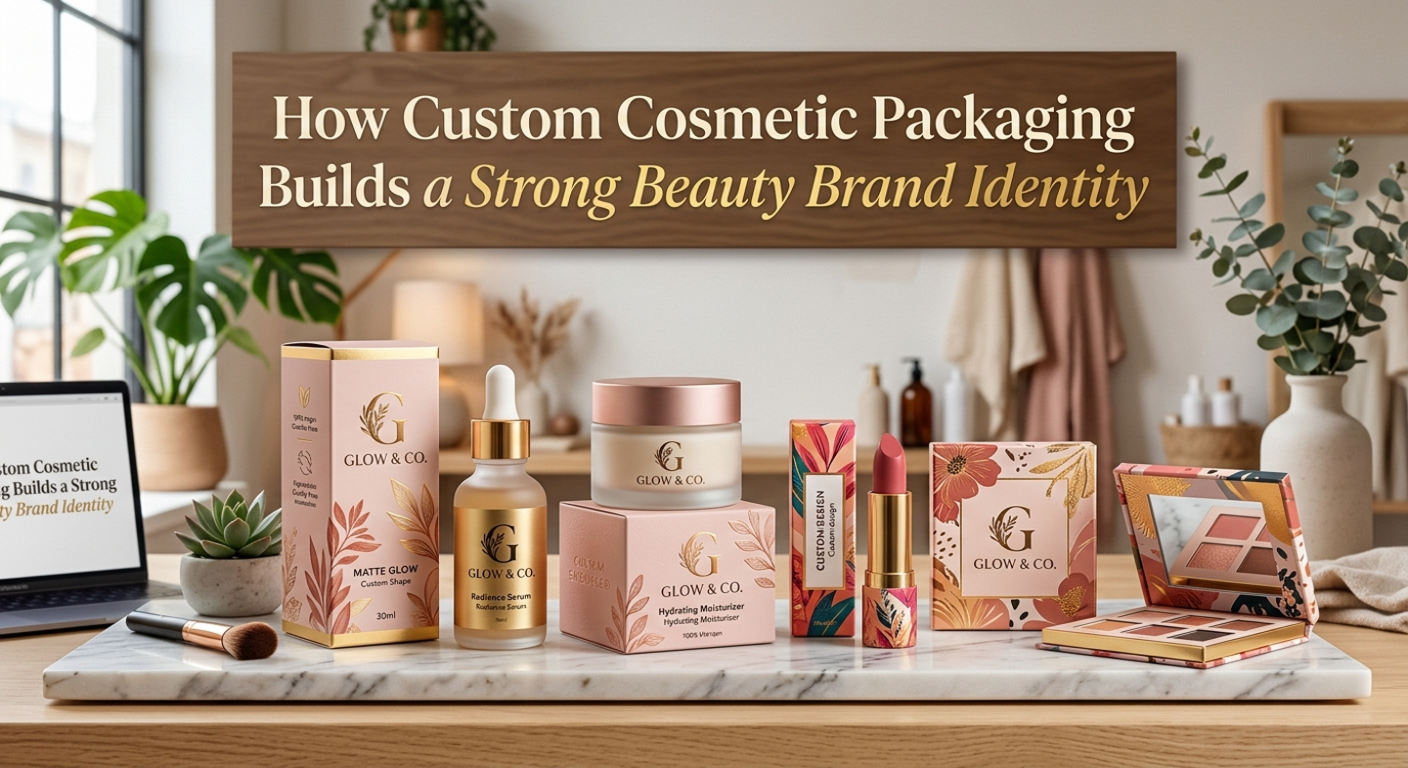
What Is Custom Cosmetic Packaging for Beauty Brands in 2026? Custom cosmetic packaging for beauty brands refers to boxes, cartons, and containers designed around a brand’s specific visual identity logo, color palette, finish, and structure applied consistently across lipstick, eyeshadow, skincare, and fragrance products to build recognizable brand presence across every sales channel.
A Houston indie lip brand had everything going for it in early 2024. The pigment quality was genuinely exceptional. A loyal following of 40,000 grew organically in under six months. Then came the moment every indie founder dreams about a wholesale inquiry from a boutique beauty retailer on the Lower East Side.
The buyer flew in samples. She tested the formula in person.
It was worth every dollar of the $28 retail price. The lipstick packaging box told a completely different story though. No texture with no weight. No finish that communicated anything beyond a drugstore price point. The buyer passed. Not on the formula. On what the box said about the brand.
Nine months later, after switching to 2mm chipboard rigid boxes with soft-touch lamination and foil-stamped logo, that same brand landed three boutique placements in their first month of outreach.
Custom cosmetic packaging for beauty brands is not a finishing detail you come back to once the formula is done. It is the first product your retail buyer and your customer evaluate. Getting it right changes every conversation that follows.
The US cosmetic packaging market was valued at $2.10 billion in 2025 and is on track to reach $3.44 billion by 2035, growing at a 5.05% compound annual rate, according to Towards Packaging’s 2026 US Cosmetic Packaging Market Report. That growth reflects a real shift in how beauty brands are treating packaging not as a protective container, but as a brand-building investment that influences purchase decisions before the product is ever tested.
Color cosmetics, the segment covering lipstick, eyeshadow, blush, and contour, is growing at the fastest rate within that market. The brands capturing the largest share of that growth have one thing in common. They commit to packaging strategy at the same time they finalize their formula, not after.
Globally, the cosmetic packaging market reached $30.19 billion in 2025 and is forecast to hit $40.33 billion by 2031, per Mordor Intelligence’s 2026 Cosmetic Packaging Market Report. The brands winning in that market are consistently the ones whose packaging communicates brand positioning before the product is touched, opened, or tested by anyone.
“In the beauty industry, the box is the brand’s handshake. It sets every expectation the customer brings to the product inside.” — Senior Packaging Consultant, Packaging Ship
Most beauty founders think about cosmetic boxes packaging in terms of how it looks. Retail buyers think about it in terms of what it signals.
A rigid box at 2mm chipboard signals a retail price point above $25. A standard folding carton at 250 GSM signals mass market. A matte lamination finish signals intentional, considered branding. Gloss lamination on a luxury lipstick packaging box signals cost-cutting at the manufacturing stage. Buyers read these signals in seconds, and those signals determine whether a product gets shelf space or a polite rejection email within the week.
There are three things retail buyers evaluate in cosmetic boxes packaging before they look at anything else. Structural integrity under shelf stacking pressure comes first. Visual consistency between the packaging and the brand’s stated price point comes second. Finish quality as a proxy for overall manufacturing standards comes third.
Getting all three right is not complicated once you understand which box structure and material combination communicates what. This is precisely where most indie beauty brands lose ground to larger competitors not on formula quality, but on packaging literacy.
Rigid boxes are the category standard for beauty products positioned above $25 at retail. The 2mm chipboard construction holds its shape under stacking pressure in a retail environment, signals weight and quality at first touch, and takes foil stamping and soft-touch lamination at a quality level that folding cartons simply cannot replicate. Packaging perfume design, high-end skincare gift sets, and seasonal collections belong in rigid boxes when the brand is positioned above the mass-market tier. There is no substitute at this price point.
For beauty brands moving into retail at scale, folding cartons in SBS board at 300 to 350 GSM provide the full-color printing surface needed for shelf presence at a per-unit cost that works at wholesale volumes. Cardboard boxes in this category suit custom eyeshadow box lines, makeup brush set packaging, and skincare product ranges where consistent retail shelf presence matters more than premium unboxing weight. At 2,000 or more units with offset printing, these deliver Pantone-accurate color and sharp detail across the full production run.
Magnetic closure boxes are purpose-built for the gifting channel. The opening moment carries emotional weight in gift retail: the magnet pulls cleanly, the interior reveals in a single controlled motion, and that experience is what gift buyers are actually purchasing. Holiday collections, brand collaborations, and limited-edition beauty sets belong in magnetic closure structures when unboxing sharability is part of the marketing strategy.
Clean beauty brands and minimalist cosmetic lines tend to perform well in sleeve boxes. They use less material than a full rigid structure, which keeps unit costs manageable at smaller volumes. They also carry a restrained visual language that resonates with wellness and natural beauty consumers who associate minimal packaging with honest formulation. The reveal, a tray sliding from a sleeve creates an intentional unboxing moment without the cost of a full rigid two-piece structure.
Kraft Boxes work particularly well for beauty brands where the sustainability story sits at the center of their brand identity. The natural brown surface communicates honesty and environmental commitment before a single word of copy is read. Pair it with soy-ink printing and a water-based matte coating and the packaging itself becomes part of the brand’s values narrative in a way no press release or marketing claim can replicate as efficiently.
Soft-touch lamination physically changes how a customer relates to a beauty product. The moment they pick it up, the tactile quality communicates premium positioning before they process a single word on the label. Packaging behavior research consistently shows that soft-touch surfaces increase the time a customer holds a product in-store, and time held correlates directly with purchase rates across beauty retail categories.
Foil stamping on a logo adds a dimensional quality that no print technique replicates. It catches light differently at every angle. And, it creates visual movement on a static shelf. It signals craftsmanship to a buyer who sees hundreds of products every week. For beauty brands at the premium tier, foil stamping on the logo is a baseline expectation from retail buyers, not a luxury upgrade.
Embossing and debossing add physical texture to the brand mark itself, making the logo something a customer feels rather than just sees. That tactile brand memory is what drives repeat purchase behavior, the kind that shows up in sales data, not just in social media engagement metrics.
Matte lamination on a rigid eyeshadow box or a fragrance carton reads as considered and confident. It does not compete with the product inside. It frames it. Gloss lamination reads as accessible and appropriate for mass-market beauty. For any brand positioning above $30 at retail, matte is almost always the right decision and experienced retail buyers notice when it is not.
Start Building a Beauty Brand That Leads with Packaging? Your formula took months to perfect. Your brand deserves packaging that communicates that quality the moment a retail buyer or a customer picks it up for the first time.
Packaging Ship works with beauty brands across the United States, from indie founders placing their first 100-unit order to established brands managing wholesale accounts across multiple retail channels. Free design support on every order. No minimum order quantity. Free shipping nationwide.
Get Your Free Custom Cosmetic Packaging Quote Today →
Free design support. No MOQ. Free US shipping. Quote returned within 24 hours.
Rigid boxes at 2mm chipboard with soft-touch lamination and foil-stamped logo are the standard for luxury cosmetic packaging in the US market. They hold structural integrity under shelf stacking pressure, communicate quality at first touch, and take premium finishes at a level no folding carton construction can match.
Start with your retail price point. Above $25, rigid or magnetic closure boxes. Between $12 and $25, premium folding cartons in SBS board at 300 to 350 GSM. Below $12, standard folding cartons. Then match the finish to your brand’s visual positioning, matte for premium, gloss for accessible, kraft for eco-conscious positioning.
There is no minimum order requirement at Packaging Ship. Digital printing works well from 100 units for indie beauty brand runs. Offset printing delivers Pantone-accurate color and the lowest per-unit cost at 2,000 units and above.
Standard production runs 10 to 15 business days from artwork approval. Rigid boxes and magnetic closure styles typically run 15 to 18 business days. Rush production is available. Always build production lead time into seasonal launch timelines and retail sell-in schedules.
Soft-touch lamination combined with a foil-stamped logo is the most premium finish combination available in cosmetic packaging. It changes the physical experience of holding the product and communicates craftsmanship before the box is opened. Matte lamination without soft-touch is the next tier, restrained, intentional, and appropriate for brands positioned above mass market.
Yes. Packaging Ship works with indie beauty brands from 100 units with no minimum order requirement. Free design support is included on every order regardless of volume or order size.
Offset printing at 2,000 units and above delivers the sharpest Pantone color matching and the most consistent output across a full production run. Digital printing suits smaller runs or multiple design variations at lower volumes without meaningful quality compromise.