
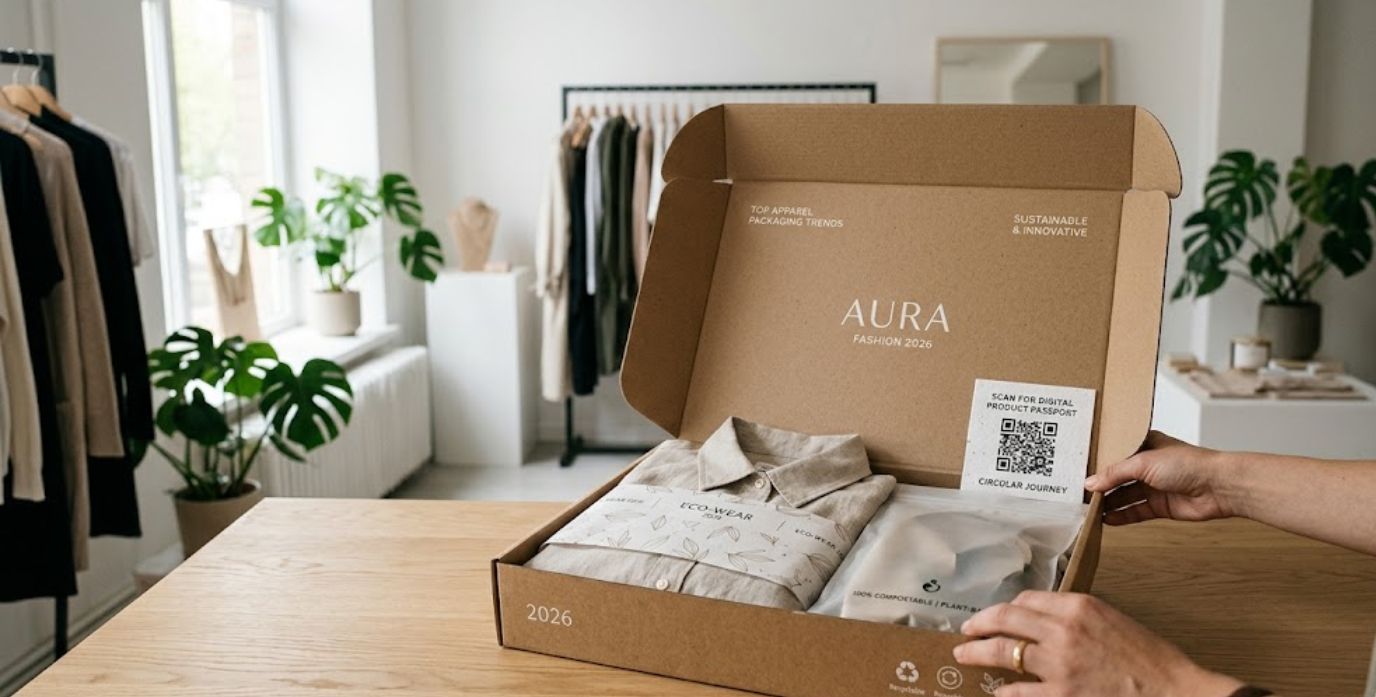
What are the top apparel packaging trends in 2026?
The biggest apparel packaging trends in 2026 are eco-friendly kraft boxes, minimalist design, custom mailer boxes, luxury premium finishes, smart QR packaging, personalization at custom apparel boxes, and right-sized boxes. US fashion brands using these trends report stronger repeat sales, lower shipping bills, and sharper brand recognition with customers.
Last spring, a mid-sized DTC clothing brand reached out to us at Packaging Ship. Sales were solid. Product reviews were strong. But repeat purchases had flatlined. Their packaging? A generic poly mailer, no branding, arrived crumpled. The garment inside was fine. But the experience wasn’t.
They switched to a custom kraft mailer with inside-lid printing and a simple branded tissue wrap. Within 90 days, repeat orders climbed 28%. Nothing else changed.
That’s not a coincidence. It reflects something Ipsos confirmed in research conducted for the Paper and Packaging Board, 72% of US consumers say packaging design directly influences their purchase decisions. Most fashion brands treat packaging as a cost line. The ones winning in 2026 treat it as a revenue driver.
So here’s what’s actually working right now across the US apparel market.
Two years ago, using sustainable packaging gave a fashion brand a talking point. Today, not using it raises questions you don’t want to answer.
US Extended Producer Responsibility laws are no longer proposals, several states are enforcing them. Retailers are asking suppliers for sustainability documentation. And McKinsey’s 2025 US consumer research found that 77% of American shoppers rate recyclability as either “extremely” or “very important” in their packaging expectations.
That’s not a green niche. That’s the mainstream.
What the smarter fashion brands are actually using:
One thing that surprises clients when they switch: eco boxes often cost less. In bulk, FSC kraft typically undercuts plastic alternatives, before you factor in EPR compliance exposure.
“Our clients who moved to kraft eco boxes saw a 22% average lift in positive post-purchase feedback within 60 days of switching.” — Packaging Ship Client Success Team
Works best for: Every brand size. Non-negotiable if you sell to Gen Z buyers or supply any major US retailer.
Go look at what Everlane ships in. Or A.P.C. Or any of the clothing subscription brands that consistently top customer satisfaction scores. They all share one thing: the packaging does almost nothing, and somehow says everything.
A matte white box. One debossed logo. Tissue paper in a single neutral shade. A card with three lines of text.
That’s it. And customers film the unboxing and post it unprompted.
Minimalist packaging works because restraint communicates confidence. When a brand doesn’t need color explosions or bold callouts to make an impression, the product feels like it can stand on its own. Which is exactly the message a clothing brand should want to send.
There’s a cost angle here too. Fewer ink colors means lower printing costs. Simpler construction means faster production. Less lamination means cheaper finishing. Minimalism is often the most cost-effective route to a premium look, which makes it particularly useful for brands that want to upgrade their packaging without blowing the budget.
What it actually looks like when done well: a white or natural kraft box with a single debossed or foil-stamped logo. A mailer with one-color letterpress. A tissue wrap in the brand’s signature color. A card, not a pamphlet, just a card.
Works best for: Mid-to-high-end fashion brands, premium DTC labels, streetwear with a design-forward identity.
If you walk through any e-commerce fulfillment center serving fashion brands right now, you’ll notice something. The plain poly mailer, which dominated online clothing shipping just two years ago, is being replaced. The custom mailer box is taking its spot.
There are real structural reasons for that shift.
Custom mailer boxes weigh significantly less than rigid boxes, typically 30 to 40% less, which directly reduces dimensional weight charges from FedEx and UPS. They store flat, so they don’t eat up warehouse space. They’re self-sealing, which cuts packing time. And because they print on all six sides, inside and out, every surface becomes usable brand real estate.
That last point matters more than it sounds. The inside lid is where customers look first when they open a box. Print a loyalty code there and print a personal message. Print a care guide. It costs almost nothing extra, and customers actually read it because they’re already looking at it.
You can explore Packaging Ship’s custom mailer boxes, fully printable inside and out, available in sizes suited to everything from folded tees to full outerwear, with pricing that works at both low and high volumes.
Works best for: DTC clothing brands, online boutiques, subscription apparel boxes. Particularly strong for brands where the unboxing experience is part of the marketing strategy.
Here’s a number worth sitting with. Research by Pregis found that premium packaging increases consumers’ perceived product value by up to 45%, and the entire cost difference between standard and premium packaging came to $0.19 per unit.
Nineteen cents a box.
That’s the delta between a customer who thinks your brand is decent and one who thinks your brand is worth telling people about. Most fashion brands aren’t doing this math. The ones that have figured out that luxury packaging isn’t an indulgence, it’s one of the highest-ROI line items in their customer acquisition budget.
In 2026, what premium apparel packaging actually involves:
None of this requires a luxury price point to justify. A $60 jacket in a magnetic rigid box with foil stamping reads as a $120 jacket to most customers.
Works best for: Premium and luxury labels, bridal apparel, high-end gifting, elevated streetwear brands.
A fashion brand in Chicago recently added a QR code inside their mailer box lid. It linked to a short video, the founder talking for 90 seconds about where the fabric came from and how the piece was made. Open rate on that QR? 34%. That’s 34 out of every 100 customers who opened a box, then watched a brand video they weren’t asked to watch and didn’t expect to find.
That’s what smart packaging is doing for fashion brands in 2026.
The numbers don’t lie, e-commerce packaging is a booming industry. According to Smithers, one of the most respected names in global packaging research, the market was worth $75.3 billion in 2024 and shows no signs of slowing down.
And fashion is leading the charge. The apparel sector isn’t just participating in that growth, it’s driving it. Of all the industries shipping products to customers’ doors, fashion brands represent the largest segment and are projected to grow faster than any other category through 2029.
What fashion brands are actually deploying:
For wholesale and B2B apparel operations, smart packaging also introduces traceability and authentication at the unit level, which is increasingly valuable as supply chain complexity grows.
Works best for: Mid-to-large fashion brands, luxury labels, streetwear brands with strong community followings.
There’s a DTC denim brand that prints the buyer’s first name inside every box lid. Not stamped with a rubber stamp, digitally printed, clean, part of the design. It costs them almost nothing extra per unit. And their post-purchase NPS score is 14 points higher than the industry average for DTC apparel.
Variable data printing made this possible. One print run can produce thousands of boxes with different names, different regional messages, or different seasonal artwork, all at costs close to a standard print job.
Here’s what personalization at scale looks like in practice. A name printed inside the lid. Regional copy, “Shipped from Seattle for someone in Austin.” Seasonal box artwork variations across a product line without reordering new die lines. A brand message that changes based on whether it’s a first-time purchase or a repeat order.
Why does it work? Because it shifts the customer’s experience from “I received a package” to “someone thought about me.” That shift is worth more than any discount program. Packaging Ship’s own client data shows that brands adding even one personalization element to their packaging reported a 28% higher re-order rate within the first 90 days.
Works best for: DTC fashion brands, subscription clothing services, luxury retail, limited-edition product drops.
This trend gets overlooked because it’s not glamorous. But it’s often the fastest way a fashion brand can improve its unit economics.
FedEx and UPS charge dimensional weight, meaning a light garment in a large box gets billed at a higher theoretical weight. If your boxes aren’t sized to your products, you’re paying a tax on dead air with every single shipment.
Right-sizing means having your boxes engineered specifically for your garments. Not close enough. Exactly right. Smithers, the globally recognized packaging research authority, projects the apparel packaging market will reach $116.1 billion by 2029, with brands driving much of that growth by switching from generic stock boxes to custom-engineered sizes that reduce per-shipment costs.
Beyond carrier savings, right-sized boxes perform better structurally. A box sized for its contents distributes pressure evenly in transit. A garment that doesn’t shift doesn’t wrinkle. A tighter box needs less void fill, which reduces both materials cost and pack time. And from a sustainability standpoint, using only the packaging you actually need is one of the most straightforward ways to reduce your brand’s material waste.
Packaging Ship engineers every apparel box to your exact garment dimensions. See our full range of custom packaging solutions, built around your products, not the other way around.
Works best for: Every fashion brand. Especially critical for high-volume operations where shipping costs compound quickly.
| Your Situation | Start Here |
| Small DTC brand, tight budget | Eco-friendly kraft mailer + right-sizing |
| Growing mid-market label | Custom mailer box + one personalization element |
| Luxury or premium positioning | Rigid box + soft-touch matte + foil stamp |
| High-volume e-commerce | Right-sizing + custom mailers + QR inside lid |
| Wholesale or B2B apparel | Eco-certified materials + smart traceability |
Start with one. Do it properly. Then add the next layer.
Custom mailer boxes and FSC-certified kraft apparel boxes are the two most common formats among US fashion brands right now. They’re the most versatile combination, cost-effective for shipping, strong for branding, and defensible on sustainability.
Bulk ordering and right-sizing are the two levers. Mono-material kraft is often cheaper than plastic at volume, especially once EPR compliance costs are factored in. At Packaging Ship, small-batch pricing is available for brands that aren’t yet at high volume.
Soft-touch matte lamination and a single foil-stamped logo do more work per dollar than almost any other finishing combination. The contrast between matte and gloss is tactile, customers feel the difference before they consciously register it.
Right-size the box so the garment sits clean inside. Add one sheet of branded tissue paper. Include a small printed card, not a catalog, just a card. Inside-lid printing on a custom mailer adds almost no cost and creates a genuine moment of surprise. That’s a premium experience for a few cents more per unit.
Yes. FSC-certified corrugated and kraft packaging is tested for compression, transit stress, and moisture resistance. The brands that have durability issues are typically those using undersized or improperly constructed boxes, not those choosing eco materials.
The brands pulling ahead in 2026 aren’t the ones with the biggest budgets. They’re the ones who figured out that packaging is a decision their customers make a judgment about, every single time an order arrives.
If your packaging isn’t doing that job, it’s working against you.
Packaging Ship works with US fashion brands of every size, from boutiques ordering their first custom run to established labels moving thousands of units a month. Every order includes free design support. Free US shipping. And a team that actually understands apparel packaging, not just boxes.
Get a Free Custom Packaging Quote: No Minimums, No Obligation
Bring your garment, your brand, your volume. We’ll build around all three.